


Northern Spain is compact enough for an unforgettable road trip yet diverse enough that choosing the right base can make or break your itinerary. From the pintxo bars of San Sebastián to the cliffs of Asturias and the green valleys of the Picos de Europa, each town has a distinct personality, price point and vibe. This guide compares the key bases in Northern Spain so you can match destinations like San Sebastián, Bilbao, Santander, Potes, Llanes, Oviedo, Cudillero and Santiago de Compostela to your style of travel, whether you are chasing food, beaches, hiking or an easy first-time road trip.
How to Choose Your Base in Northern Spain
Distances in Northern Spain look short on a map, but winding coastal and mountain roads mean a one-hour hop can easily turn into a two-hour drive. That makes it important to pick one or two strategic bases rather than changing hotels every night. For example, many visitors combine three to four nights in San Sebastián or Bilbao for food and culture, two nights in the Picos de Europa around Potes for hiking, and three to four nights somewhere on the Asturian or Cantabrian coast such as Llanes or Cudillero for beaches and slower days.
Prices are generally lower than Barcelona or Madrid, but vary sharply by town and season. In high summer, a simple guesthouse near La Concha beach in San Sebastián can start around mid-range nightly prices, while a comfortable rural hotel with a pool in inland Cantabria or Asturias might cost significantly less. Shoulder seasons such as May, June, late September and early October typically bring better value and milder weather, especially for hikers.
Think about what you want to do most days. If your priority is food and nightlife, staying within walking distance of an old town core like San Sebastián’s Parte Vieja, Bilbao’s Casco Viejo or Santiago’s historic center makes sense. If you picture lazy mornings on the sand and kid-friendly shallows, El Sardinero in Santander or the beaches around Llanes give you easy access with supermarkets and casual restaurants at hand. For serious hiking in the Picos de Europa, Potes offers quick access to the Fuente Dé cable car and valley trails, while still giving you bars, bakeries and gear shops on your doorstep.
Finally, consider logistics. Direct flights connect major hubs to Bilbao, Santander, Asturias Airport near Oviedo and Santiago de Compostela. Many travelers fly into Bilbao or Biarritz across the French border, rent a car and work west along the coast before departing from Asturias or Santiago. If you prefer to avoid driving, mid-sized cities like San Sebastián, Bilbao, Santander, Oviedo and Santiago have good train and bus connections, while villages like Potes and Cudillero are more practical with a car.
San Sebastián: Beachfront Gastronomy Capital
San Sebastián, or Donostia, is arguably the best single base in Northern Spain if you want to combine food, urban charm and an easy beach day without a car. The city lines the crescent of La Concha Bay, with additional sands at Ondarreta and the surf-friendly Zurriola beach. You can step out of a boutique hotel near La Concha, stroll the seafront promenade in ten minutes to the Parte Vieja and spend the evening hopping between pintxo bars, each serving bite-size creations of grilled prawns, slow-cooked beef cheeks or anchovies marinated in local olive oil.
For first-time visitors, staying between the Old Town and the Centro district works well. You are within a short walk of La Concha beach, the main shopping streets and the densest cluster of bars. Accommodation here ranges from classic Belle Époque hotels facing the bay to compact modern apartments above pedestrian streets. East across the river, the Gros neighborhood appeals to younger travelers, surfers and anyone wanting a slightly more local feel, with Zurriola beach only a block or two away from many guesthouses and apartments.
San Sebastián is particularly good for couples and food-focused travelers who prioritize walking everywhere and do not mind paying a small premium for location. A typical day might start with coffee and a pastry from a neighborhood bakery, followed by a morning swim at La Concha, an afternoon ride up Monte Igueldo for panoramic views, and then a self-guided pintxo crawl in the Parte Vieja. Families will appreciate calm water at La Concha and well-maintained playgrounds along the promenade, though budget-conscious visitors may prefer shorter stays if visiting in peak season when rates climb.
As a road-trip base, San Sebastián is practical for one to three nights at the start or end of an itinerary. From here you can make easy day trips along the Basque coast to fishing villages and cliff-backed beaches. Parking in the center is mostly in underground garages, so factor daily parking costs into your budget if you arrive with a car. For longer stays, some travelers choose accommodations a few blocks inland or in Gros to get more space and slightly lower prices while still being able to walk everywhere.
Bilbao: Culture, City Life and Gateway to the Coast
Bilbao has reinvented itself from industrial port to cultural hub, anchored by the titanium curves of the Guggenheim Museum. If you are drawn to architecture, contemporary art and nightlife, it can be a rewarding base for several days. The riverfront promenade around the Guggenheim and the Zubizuri footbridge is lined with cafés and hotels that place you within walking distance of both the museum quarter and the historic Casco Viejo.
For many visitors, the Casco Viejo is the most atmospheric place to stay. Its narrow streets are filled with pintxo bars, small independent shops and centuries-old churches, and you can walk to tram and metro stops that link quickly to the bus station for day trips. Slightly uphill in neighborhoods like Indautxu, you will find more modern hotels near Gran Vía, with easy metro access and a broader range of mid-range options that can be good value on weekends.
Bilbao is not a classic beach town, but it works well for travelers who want a city base with straightforward access to the coast. Frequent metro and train services connect the city to Getxo, Sopelana and other nearby beaches where you can surf or simply stroll the promenade. This arrangement is useful for families or groups with different interests, since some can spend the day in museums while others head to the sea using public transport without needing a second car.
As a road-trip node, Bilbao is one of the easiest arrival points in Northern Spain thanks to international flights and a well-connected bus and motorway network. You might spend two or three nights exploring the city itself, then pick up a rental car and drive west towards Santander, divert inland to the Picos de Europa or continue further into La Rioja for wine country. If you are traveling with a car, look for hotels that explicitly include on-site parking or discounts at nearby garages to avoid surprises in your daily costs.
Santander and Llanes: Classic Cantabrian Beach Bases
Santander offers a blend of city amenities and seaside resort atmosphere, especially in the El Sardinero area. Here two long urban beaches, separated by a small promontory, curve along the northeast coast of the city, backed by historic hotels, gardens and a promenade. Staying near Primera or Segunda Playa de El Sardinero means you can cross the street to reach the sand, then walk or take a short bus ride into the city center for shopping and tapas in the evening.
Families often favor Santander because the beaches are wide, lifeguarded in high season and backed by playgrounds, cafés and ice-cream stands. You can choose from traditional seafront hotels that recall the town’s Belle Époque resort days or modern apartments a few blocks behind the promenade that provide kitchen facilities for longer stays. Away from the beachfront, prices tend to drop, and you can still walk to the sand in about fifteen minutes from many residential streets.
Llanes, roughly midway along the Cantabrian coast between Santander and Gijón, makes an excellent small-town alternative. Its compact old town sits just inland from a working harbor, with several beaches scattered along the nearby coast. Many travelers base themselves in or around the center so they can walk to dinner in stone-paved streets, then drive or hike to beaches like Toró or Cuevas del Mar during the day. Summer weekends are busy, but outside peak dates you often find mid-range rural hotels and guesthouses within a 10 to 20 minute drive that offer parking, green views and good value.
For road trips, combining Santander and Llanes can give you a varied slice of Cantabria and eastern Asturias without long driving days. You could, for instance, land in Santander, spend two nights exploring the city and Magdalena Peninsula, then drive along the coast via viewpoints and small coves to Llanes for three nights. From there, day trips into the Picos de Europa or west to Cudillero and the Asturian coast become manageable, while you always return to a relaxing seaside base.
Potes and the Picos de Europa: Mountain Base for Hikers
Potes sits in the Liébana valley at the junction of several rivers and roads, making it a natural hub for accessing the Picos de Europa. The town itself has stone bridges, narrow lanes and an active weekly market, but the main draw is how quickly you can be on a mountain trail. The drive to the Fuente Dé cable car station, which lifts hikers to high viewpoints and trailheads, typically takes less than half an hour, and numerous shorter valley walks start almost from the edge of town.
Accommodation in and around Potes ranges from simple hostales and small hotels in the center to rural inns with pools in surrounding villages. Many hikers appreciate staying in town so they can pick up picnic supplies in local bakeries and supermarkets, then return after a day in the mountains to a choice of bars and traditional restaurants serving hearty stews and regional cheeses. Those seeking more seclusion may prefer lodgings in nearby hamlets, trading shorter evening strolls for quieter nights and wide valley views.
Potes is particularly well suited to active travelers, small groups and families with older children who enjoy hiking or scenic drives. A typical two or three-day stay might include one day using the cable car for high-altitude views, another day on a gentler valley walk suitable for mixed fitness levels, and a third exploring nearby monasteries or viewpoints reachable by road. Weather in the Picos can change quickly, so having a comfortable base where you can relax on rainy afternoons is as important as proximity to trailheads.
For a wider road trip, Potes slots neatly between coastal bases like Llanes or Santander and inland cities like León. Winding mountain roads mean distances are deceptive, so allow generous travel time between bases. Many itineraries plan at least two nights here to justify the journey into the mountains. If you are driving a rental car, check that your accommodation offers its own parking, as spaces in the historic core of Potes are limited during peak holiday periods.
Oviedo, Cudillero and Santiago de Compostela: Culture-Rich Western Bases
Moving west into Asturias, Oviedo provides a cultured city base within short driving distance of both mountains and coast. Its traffic-calmed old town is filled with cafés, cider houses and plazas, and you can spend a full day exploring pre-Romanesque churches on the city’s outskirts. Many visitors choose hotels around the old quarter so they can walk to dinner and morning markets, then use a rental car or regional buses to reach nearby beaches or rural villages during the day.
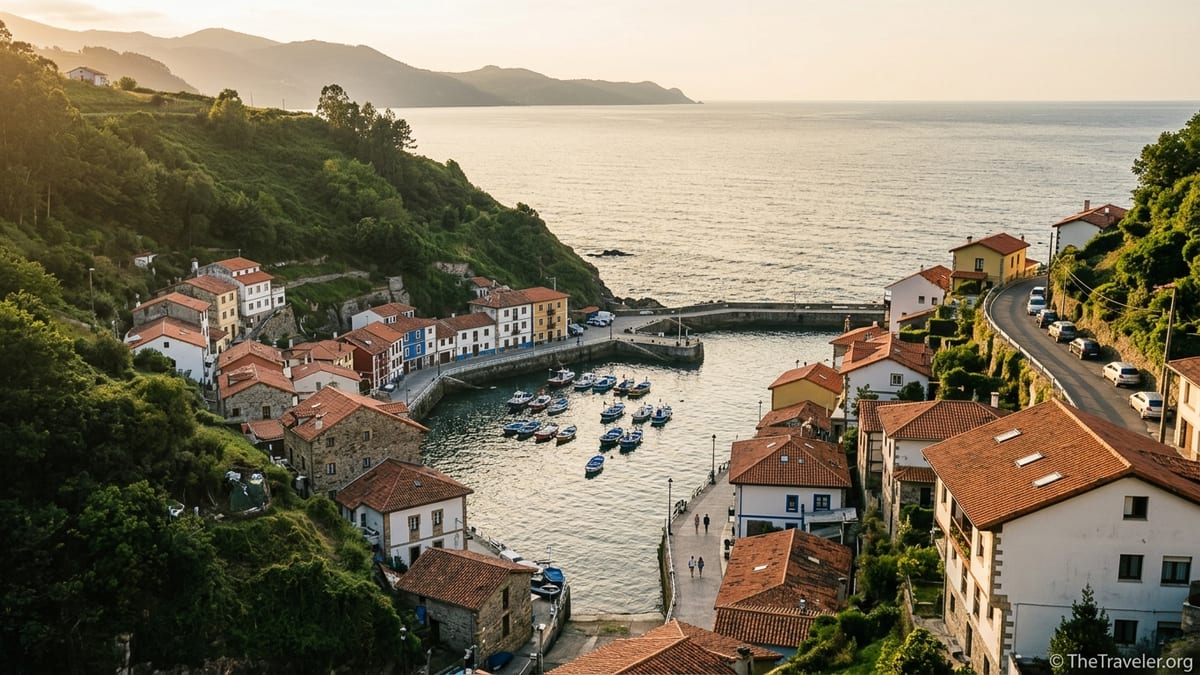
Cudillero, by contrast, is a compact fishing village dramatically stacked around a small harbor. Houses painted in pastel tones rise steeply from the water, connected by stairways that double as viewpoints over the Bay of Biscay. Accommodation is mostly small guesthouses and apartments, some directly on the waterfront and others higher up the hillside. Because parking in the lower village is restricted, staying slightly above the harbor often makes sense if you are traveling by car. From Cudillero you can drive to nearby coves and beaches within 15 to 30 minutes, then return in the evening to eat fresh fish on a terrace overlooking the boats.
Further west, Santiago de Compostela offers a very different kind of base. The city’s historic center is dominated by its cathedral and granite streets polished by millions of pilgrims. For many road-trippers, two to three nights here at the end of a Northern Spain circuit works well. You can stay in restored stone townhouses or modern hotels a few minutes’ walk from the cathedral square, giving you quiet nights while remaining close to the main sights. Although Santiago is inland, day trips to the Rías Baixas or Costa da Morte coastline are feasible by car or organized excursion, adding beaches and coastal scenery to your stay.
These western bases suit travelers who prioritize atmosphere, history and food over long days on the sand. Oviedo and Santiago in particular are appealing outside summer, when cooler days make city sightseeing pleasant and accommodation prices are often softer. Combined with coastal stops like Cudillero, they help round out an itinerary that begins in the Basque Country and ends among Galician seafood restaurants and wine bars.
Matching Destinations to Different Types of Travelers
If food is your main motivation, San Sebastián is hard to beat, but it is not the only option. Bilbao’s pintxo bars, Santander’s seafood restaurants near the harbor and Santiago’s traditional Galician eateries all offer excellent regional cuisines. You might, for example, spend three nights in San Sebastián to sample both informal pintxo bars and at least one special-occasion tasting menu, then two in Bilbao to mix museum visits with evenings in the Casco Viejo. Santiago makes a fitting finish if you are keen to try Galician octopus, seafood and wines in compact taverns.
For beach-focused family trips, Santander, Llanes and the coast near Cudillero stand out. Santander’s El Sardinero area offers urban comforts right behind wide, serviced beaches, while Llanes gives you a smaller-town feel with multiple coves within easy reach. Families might book an apartment within walking distance of the promenade so children can nap between beach sessions, and choose rural hotels with gardens slightly inland if they prefer quieter nights and free parking. Many beaches along this coast have gentle slopes and seasonal lifeguards, but conditions vary, so always check local flags and advice.
Couples often look for walkable centers with good restaurants and a romantic atmosphere. San Sebastián, with its bay views and Old Town alleys, naturally appeals, as does Santiago’s lantern-lit streets on rainy evenings. For a quieter escape, a small rural hotel near Potes with a pool and mountain backdrop or a hillside guesthouse above Cudillero’s harbor can feel tucked away without being remote. When comparing options, pay attention to whether rooms have balconies or terraces, as spending an evening with a bottle of local wine looking over the sea or mountains can be a highlight.
Dedicated hikers and road-trippers will probably want at least one mountain base in addition to coastal or city stops. Potes is the obvious choice for accessing the Picos de Europa, but you can also consider basing in smaller mountain villages if you are comfortable driving narrow roads. Combining two to three nights in Potes with stops in Llanes or Santander and either Bilbao or Oviedo keeps most drives under three hours while still showcasing beaches, peaks and cities. Travelers without a car can still enjoy walking by choosing larger hubs like Oviedo and using organized day trips into rural areas.
The Takeaway
Northern Spain rewards slow travel and smart base choices more than frantic box-ticking. Rather than trying to sleep in every town, choose two to four contrasting hubs that reflect what you enjoy most. A common pattern is to start with food and city life in San Sebastián or Bilbao, segue into beaches around Santander or Llanes, retreat into the mountains near Potes, and finish with culture-heavy days in Oviedo or Santiago de Compostela.
When comparing bases, look beyond postcard images to practical considerations such as parking, public transport, walking distances and the kind of restaurants and shops you want nearby. A hotel across from a family-friendly beach might be perfect if you plan lazy days on the sand, while a simple but central room two streets behind an old town square can be ideal for travelers who will be out exploring from morning to late evening.
Whatever combination you choose, planning around a handful of well-chosen bases lets you experience the full variety of Northern Spain without spending most of your holiday behind a steering wheel. With coastal resorts, mountain valleys and historic cities all within half a day’s drive of one another, you can tailor an itinerary that feels both relaxed and richly varied, whether you come for the food, the beaches, the hiking or a bit of everything.
FAQ
Q1. Is it better to base in San Sebastián or Bilbao for a first trip to Northern Spain?
San Sebastián is usually better if you want a compact, walkable city with beaches and world-class food all in one place, while Bilbao suits travelers who prioritize museums, architecture and easier access to an international airport and public transport links.
Q2. Do I need a car to enjoy Northern Spain?
You can visit larger cities like San Sebastián, Bilbao, Santander, Oviedo and Santiago de Compostela using trains and buses, but a car makes it much easier to reach smaller villages, remote beaches and mountain areas such as Potes and the Picos de Europa.
Q3. Where should families with young children stay for safe swimming and easy logistics?
Areas around El Sardinero in Santander and the beaches near Llanes are good choices, as they combine relatively gentle beaches, lifeguard presence in high season and accommodation within walking distance of playgrounds, cafés and supermarkets.
Q4. What is the best base for hiking in the Picos de Europa?
Potes is one of the most practical bases, with shops, restaurants and a range of accommodation, plus quick road access to the Fuente Dé cable car and numerous valley trails suitable for different fitness levels.
Q5. Which town is best for couples looking for a romantic short break?
San Sebastián is a classic choice thanks to its bay views and pintxo scene, but Santiago de Compostela, with its historic streets, and Cudillero, with its harbor terraces, also make atmospheric bases for shorter romantic stays.
Q6. How many bases should I plan for a 10-day Northern Spain road trip?
For a 10-day trip, three or four bases usually work well, for example San Sebastián or Bilbao for city life, Llanes or Santander for beaches, Potes for mountains, and either Oviedo or Santiago de Compostela for a cultural finale.
Q7. When is the best time of year to visit Northern Spain for a mix of hiking and beaches?
Late May, June, September and early October often provide a good balance, with generally milder temperatures for hiking, sea warm enough for many swimmers and fewer crowds compared with the peak school-holiday weeks of July and August.
Q8. Is parking difficult in coastal cities like San Sebastián and Santander?
Parking in central areas can be expensive and limited, particularly in summer, so it is sensible to choose accommodation that includes a space in an underground garage or offers clear guidance on nearby public parking.
Q9. Can I stay in one place and take day trips across the whole region?
While it is technically possible, road distances and slower coastal or mountain routes make this tiring; most travelers find it more enjoyable to use at least two bases so daily driving times stay shorter.
Q10. Which base offers the best value for money compared with more famous Spanish cities?
Smaller towns such as Llanes, Potes and Cudillero often offer better value in accommodation and dining than major tourist centers, especially outside peak holiday periods, while still providing strong access to beaches, mountains or coastal scenery.