


Northern Spain’s Atlantic coast is one of Europe’s great road‑trip frontiers. From the Rías Baixas in Galicia to the French border in the Basque Country, a ribbon of cliffs, wild surf beaches and compact seaside towns offers a very different Spain to the Mediterranean resorts. This guide compares the four key regions for beach‑focused travelers Galicia, Asturias, Cantabria and the Basque Country with a practical look at surfing, dramatic scenery, family‑friendly swimming, where to stay by the sea and how to plan a multi‑stop coastal drive.
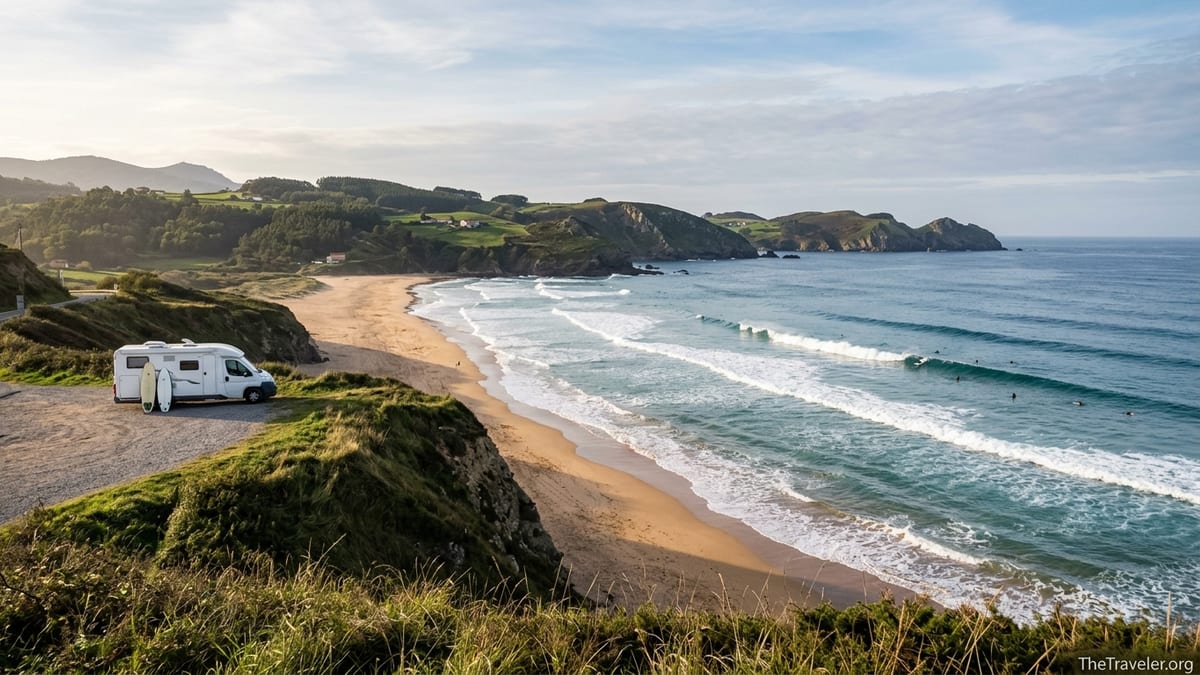
Galicia: Wild Atlantic Surf and Empty Clifftop Horizons
Galicia marks the northwestern corner of Spain, and it feels like the country’s wild edge. Long, crescent‑shaped bays are backed by dunes and low cliffs, with small fishing villages tucked into river estuaries. For surfers, the big names are Pantín, Razo and Soesto in the province of A Coruña, where consistent Atlantic swells roll onto wide sandy beaches. Pantín regularly hosts international competitions, so intermediate and advanced surfers plan trips here in late summer and early autumn when the sandbanks are usually well formed and the water, although cool, is at its warmest.
If you are new to surfing or traveling with mixed abilities, Razo is one of the easier Galician breaks to build a stay around. The beach is wide enough that surf schools can spread out, and there are usually soft, longer waves on smaller days closer to the village. Nearby Soesto feels wilder, with a backdrop of green headlands and fewer buildings on the shoreline, but it still has beach parking and seasonal lifeguards. Prices at local surf schools are broadly similar across northern Spain; in Galicia, allow roughly 35 to 45 euros for a group lesson including board and wetsuit, with discounts if you book a 3 to 5 day course.
Beyond the waves, Galicia shines for clifftop walks and empty viewpoints. Sections of the coastal route between Malpica, Laxe and Camariñas alternate between small farming hamlets and sheer drops to rock shelves and pocket coves. Pullouts at headlands like Cabo Ortegal and Cabo Vilán are ideal for short photo stops if you are driving. You will not find resort strips here; instead, expect simple guesthouses, stone‑built casas rurales set back from the coast, and small inns in fishing towns such as Muros or Muxía that you reach by narrow, twisting roads.
Swimming in Galicia demands more caution than on Spain’s Mediterranean shore. Water temperatures are cool for most of the year, currents can be strong and many beaches shelve quickly. Families generally do better inside the more sheltered rías, where estuary beaches like those around Noia or in the Ría de Arousa have calmer water, more cafés and easier parking. For travelers who like a road‑trip feel of discovery, and who are happy with cooler water and fewer built‑up facilities, Galicia offers perhaps the most “frontier” experience of the four regions.
Asturias: Green Mountains, Classic Surf Towns and Wide Sands
Driving east into Asturias, the coast feels more compact and varied. Here, the green foothills of the Picos de Europa mountains often drop directly to long sandy bays. For surfers, the standout name is Rodiles, on the eastern side of the region, where a rivermouth sandbar at the edge of a protected estuary produces one of Europe’s better‑known left‑hand waves. This is not a beginner spot, and on good days the lineup can be crowded with locals and visiting surfers, but for experienced riders it is a key reason to include Asturias in a surf‑focused itinerary.
For a more relaxed base, Salinas near Avilés has evolved into a small surf city along a broad urban beach. The town has a permanent surf scene, annual longboard events and plenty of rentals, so it suits visitors who want to park the car, walk to cafés and bars, and surf daily without worrying too much about tides or exposure. Xagó and the long, windswept Playón de Bayas west of the airport offer wilder options, with big dune systems and long sandy arcs that pick up swell in most conditions. These beaches often appeal to intermediate surfers who like space and are comfortable with beachbreak currents.
Asturias works especially well for mixed groups of surfers and non‑surfers because of its compact seaside towns. Gijón has a big city beach, San Lorenzo, with surfable waves in the right conditions, plus a lively old quarter and good public transport. Smaller towns such as Ribadesella or Llanes combine family‑friendly sheltered coves with nearby cliff walks and viewpoints. It is quite feasible to stay in one town for four or five nights and use it as a hub to drive 30 to 60 minutes to different beaches in either direction without moving accommodation constantly.
Water temperatures in Asturias are similar to Galicia, with most people wearing full wetsuits outside high summer. Families looking for calmer swimming generally gravitate to the smaller coves tucked into limestone cliffs east of Ribadesella, where rock formations help block Atlantic swell. Parking can be tight in high season, so arriving before mid‑morning in July and August makes a big difference. In shoulder seasons, by contrast, these same coves can feel almost private, especially on weekdays when only a few motorhomes and day trippers share the car parks above the cliffs.
Cantabria: Surf Schools, Natural Parks and Easy Coastal Access
Cantabria has branded itself strongly around surfing, and that shows in the density of schools and rental shops. Somo, on the eastern side of Santander’s bay, is one of the region’s best known surf beaches, with several kilometers of sand and a cluster of long‑established surf camps. For first‑timers, Somo is practical because you can arrive, park near the village, walk a few minutes to a surf school and be in the water shortly after. Multi‑day surf camps, often including shared accommodation and breakfasts, are common here; week‑long packages regularly appear at prices comparable to a mid‑range hotel stay elsewhere on the coast, but with instruction bundled in.
A short drive west, the beaches of Valdearenas and Canallave at Liencres sit inside a protected dune and cliff landscape. Both pick up swell reliably and offer a slightly wilder feeling than Somo while still having parking areas and seasonal services such as lifeguards and beach bars. The surrounding Dunas de Liencres natural park adds a dramatic backdrop of shifting sands and pine groves, and a short walk to the headlands gives classic Cantabrian views of layered cliffs and offshore rock stacks. These beaches are popular day‑trip destinations for visitors staying in Santander who want a bigger, more natural setting than the city beaches.
Further west again, around Suances and Comillas, surf spots such as Los Locos and Oyambre combine wave potential with some of Cantabria’s finest scenery. Oyambre sits beside a green estuary and rural farmland, with low‑rise campsites and small hotels set back from the dunes rather than on the sand. This area works well for road‑trippers who like to mix beach days with drives into the inland valleys of the Saja‑Besaya or the Picos de Europa, both easily reachable for day excursions. Accommodation options here range from basic bungalows on campgrounds to family‑run hotels in restored stone houses in Comillas village, giving plenty of price points.
For families, Cantabria is arguably the easiest introduction to northern Spain’s Atlantic beaches. Access roads to popular sands are often straightforward, with clear signage and sizeable parking areas that can handle summer crowds. Many of the main beaches, including those around Santander, have promenades, children’s play areas and cafés directly overlooking the water. The trade‑off is that in July and August, the most accessible stretches can feel busy, and you may need to drive 20 to 30 minutes to find quieter coves or to park at the edge of villages and walk down footpaths to less developed sands.
Basque Country: Iconic Waves, Elegant Cities and Cliff‑Hugging Roads
The Basque Country, at the eastern end of Spain’s northern coast, condenses surf culture, culinary travel and dramatic topography into a relatively small area. For seasoned surfers, the legendary left‑hand river mouth at Mundaka is a pilgrimage stop when conditions align. The wave breaks near the mouth of a UNESCO‑listed estuary reserve, so even non‑surfers can enjoy the setting as they watch from the harbor wall or nearby viewpoints. Because this is a powerful, technical wave that works best in specific swell and tide combinations, it is more of a special‑occasion surf than a daily training ground for most visitors.
For day‑to‑day beach life, Zarautz offers one of the Basque Country’s most reliable surf setups, with a long urban beach backed by a promenade and a dense grid of cafes, pintxo bars and surf lodges. It suits intermediate surfers particularly well; there is usually some rideable wave even on smaller days, and multiple schools operate along the front. Further east in San Sebastián, Zurriola is the city’s de facto surf beach, with a younger feel and more open exposure than the sheltered La Concha and Ondarreta bays across the river. This combination makes San Sebastián attractive to couples or groups who want both an elegant city break and quick access to surf.
Clifftop scenery is especially striking between Bilbao and San Sebastián. Short detours off the main highway lead to coastal villages like Getaria and Zumaia, where roads run close to the edge of steep, folded rock formations. It is common on a Basque coastal drive to combine a morning surf session with an afternoon pintxo crawl, museum visit or walk out to a headland chapel above the waves. Accommodation options are broad, from design hotels in Bilbao and San Sebastián to simple guesthouses in fishing ports and rural farmhouses in the hills behind the coast that double as quiet retreats from the busier towns.
Families should be aware that while the Basque coast has many beautiful beaches, not all are ideal for timid swimmers. La Concha is famously sheltered and better for paddling, stand‑up paddleboarding and beach games than surfing, while Zurriola and more open beaches like Zarautz can produce stronger shorebreak. Checking local flag systems and talking to lifeguards is important before entering the water. On the other hand, older children and teenagers who already surf will find the density of boards, schools and surf‑themed shops in places like Zarautz and San Sebastián motivating and fun.
Comparing Surf Conditions, Seasons and Suitability
Across all four regions, the north coast of Spain receives consistent Atlantic swell, especially from autumn through spring. In practical travel terms, that means advanced surfers tend to focus on late September to early November or late winter windows when the waves are larger and more frequent, accepting cooler water in exchange for quality. For most casual travelers planning a beach holiday or road trip, late June to early September brings milder sea temperatures and brighter weather, at the price of more crowded lineups and occasionally smaller or less reliable surf. Bringing or renting an appropriate wetsuit is essential; many visitors underestimate how cool the water feels compared with southern Spain.
Beginners generally find the most accessible conditions on mid‑sized beachbreaks in Galicia, Asturias and Cantabria, particularly at established surf towns like Razo, Salinas and Somo. Here, sand bottoms, wide open bays and numerous schools make it easier to match lesson times to tides and to change the plan if swell suddenly increases. Mundaka and Rodiles are better suited to experienced surfers comfortable with fast, powerful waves and crowded takeoff zones. Intermediate surfers can often get the most out of a trip by basing themselves near a versatile beach like Zarautz, Liencres or Oyambre, then using a car to check more sheltered or more exposed alternatives within a 30 to 60 minute radius.
Swimmers and families will probably prioritize sheltered bays over headline surf breaks. In Galicia, that might mean choosing an estuary town rather than an open Atlantic beach, and day‑tripping to larger surf spots to watch rather than participate. In Asturias and Cantabria, many towns have both a relatively calm town beach and a more open surf beach nearby, offering flexibility depending on the day’s conditions and the confidence of each family member. In the Basque Country, pairing a stay in San Sebastián or a similar sheltered bay with day trips to Zurriola, Zarautz or La Arena can provide the best balance between safety and surf culture.
For travelers who like dramatic cliffs and viewpoints as much as the sea itself, all four regions deliver, but in slightly different flavors. Galicia offers longer distances between major towns and a more remote feel, Asturias emphasizes the contrast between green mountains and beaches, Cantabria blends natural parks with easy access and Basque roads put you close to folded rock formations and cultural centers. Being clear about whether your priority is wave quality, family swimming, clifftop hiking or urban comforts will help determine which stretch of coast deserves the most days on your itinerary.
Planning a Coastal Road Trip: Routes, Logistics and Costs
A classic northern Spain road trip for beach lovers might run from A Coruña or Santiago de Compostela in Galicia to San Sebastián in the Basque Country over 10 to 14 days, breaking the journey into short hops of 100 to 200 kilometers. One practical pattern is to choose one main base per region: for example, a seaside village near Razo or Laxe in Galicia, a town like Gijón or Ribadesella in Asturias, the Somo or Comillas area in Cantabria and finally Zarautz or San Sebastián in the Basque Country. From each, you can explore nearby beaches and cliffs on half‑day drives without constantly packing and unpacking.
Car rental is almost essential for this kind of trip, especially if you want to reach smaller coves and viewpoints beyond the main rail and bus lines. Prices fluctuate with season and pick‑up location, but it is common to see compact cars priced noticeably higher in late July and August than in May, June or September. Booking early and considering a pick‑up in a less obvious location, such as an inland city rather than a peak‑season coastal airport, can sometimes reduce costs. Fuel prices along the route are broadly similar from region to region, and driving distances are modest by European standards, so fuel is unlikely to be the dominant expense on your budget.
Accommodation choice will shape your experience. Surf camps and hostels around Razo, Salinas, Somo and Zarautz appeal to solo travelers and groups who value community and instruction over privacy, often offering shared dorms, simple private rooms and communal kitchens. Families and couples may prefer self‑catering apartments or small hotels in quieter towns within a 20 to 30 minute drive of the busiest surf hubs. In high summer, minimum stays of several nights are common in coastal rentals, and prices can be significantly higher than in shoulder seasons, so flexible travelers often target June or September to save money and avoid the most crowded weeks.
Parking is an often‑overlooked part of trip planning. Popular beaches such as Salinas, Liencres or Zarautz have dedicated car parks that fill quickly on sunny weekends. Arriving early, especially if you are driving a campervan or larger vehicle, makes the day more relaxed. Some smaller coves restrict access in peak season, requiring you to park in the nearest village and walk down signed paths; this can actually enhance the sense of discovery but requires appropriate footwear and a willingness to carry gear. Checking local regulations on free camping and overnighting in vehicles is important, as rules can change between municipalities and regions.
Choosing the Right Region for Your Style of Beach Trip
If your main goal is uncrowded clifftop walks, quiet surf lineups and a feeling of being far from mainstream resort Spain, Galicia is likely to suit you best. You will trade some convenience in terms of transport links and dense services for the ability to drive long stretches of coastal road without ever seeing a high‑rise hotel. The surf can be powerful, and the water cool, but the combination of dune‑backed sands, stone villages and lighthouses makes the region memorable even if you spend much of your time in a jacket rather than a swimsuit.
Asturias works well for travelers who want a clear mix of mountains and sea. You can surf or swim in the morning, then drive inland for viewpoints over limestone peaks in the afternoon, all within an hour or two. Towns like Gijón, Ribadesella or Llanes offer enough cafés, walks and cultural stops to entertain non‑surfers on flat days, making Asturias a strong choice for groups with varied interests and abilities. For advanced surfers, the presence of Rodiles as a high‑quality option, along with more forgiving beachbreaks nearby, adds an extra layer of appeal.
Cantabria is arguably the easiest recommendation for first‑time visitors to northern Spain who are focused on surfing and families. The density of surf schools at Somo, the accessibility of Liencres and the scenic, family‑friendly atmosphere at Oyambre and nearby beaches give you options without requiring deep local knowledge. Santander provides an urban base with an airport, city beaches and day‑trip access to wilder stretches. For travelers who want the Atlantic experience but prefer not to drive long distances between services, Cantabria hits a useful middle ground.
The Basque Country, finally, is ideal for those who value cultural depth as much as beach days. A trip here can easily include visits to Bilbao’s museums, San Sebastián’s renowned food scene and small coastal towns, all within a short drive of serious waves at Zarautz or, for experts, Mundaka. Accommodation and dining can be slightly more expensive in the main cities than in rural areas of Galicia or Asturias, so budget travelers may choose to stay in smaller inland towns and commute to the coast. For many, though, the chance to combine world‑class gastronomy, photogenic architecture and Atlantic surf in a compact area justifies the higher prices.
The Takeaway
Northern Spain’s Atlantic arc offers far more variety than a simple string of surf spots. Galicia delivers wild coasts and a sense of remoteness, Asturias balances beaches with mountains, Cantabria offers user‑friendly surf hubs and family infrastructure, and the Basque Country layers in culinary and cultural highlights alongside its iconic waves. Matching your route to your priorities whether that is perfect lefts, safe swimming coves, dramatic cliffs or easy road access will turn a good trip into a memorable one.
For a first journey, many travelers choose a shorter section, such as Cantabria and the Basque Country, then return later to explore Galicia and Asturias in more depth. Others commit to the full sweep from A Coruña to San Sebastián in one go, accepting more driving in exchange for seeing the contrasts between each region. Either way, bringing flexibility in your plans to follow local weather, swell forecasts and personal energy levels will help you make the most of this coastline’s changing moods.
FAQ
Q1. Which region in northern Spain is best for beginner surfers?
For complete beginners, Cantabria and Asturias are generally the most straightforward choices, thanks to accessible beaches like Somo and Salinas with multiple surf schools and forgiving beachbreaks.
Q2. When is the best time of year to surf in northern Spain?
Advanced surfers often target late autumn and late winter for bigger, more consistent swells, while most casual travelers and learners prefer late June to early September for milder weather and water.
Q3. Is the water too cold for swimming in Galicia, Asturias, Cantabria and the Basque Country?
The water is cooler than in southern Spain, so many people use wetsuits outside high summer. Confident swimmers still enjoy the sea from roughly late June to early September, especially on calm, sunny days.
Q4. Can I travel the north coast of Spain without renting a car?
It is possible to use trains and buses between major cities and some coastal towns, but a rental car gives far more flexibility to reach smaller coves, surf spots and clifftop viewpoints.
Q5. Which region has the most dramatic cliffs and viewpoints?
All four regions offer impressive scenery, but Galicia and the Basque Country stand out for long stretches of cliff‑hugging roads and headlands with expansive Atlantic views.
Q6. Are northern Spain’s surf beaches suitable for families with small children?
Many towns have a sheltered family beach as well as a more exposed surf beach nearby. Parents should favor calm bays, pay attention to lifeguard flags and talk with locals about currents before swimming.
Q7. How expensive is accommodation along the northern Spanish coast?
Prices vary by region and season, with July and August typically the highest. Options range from simple campsites and surf hostels to mid‑range hotels and boutique guesthouses in larger towns and cities.
Q8. Can I learn to surf on a short holiday?
Yes. Many surf schools in Somo, Zarautz, Razo and Salinas offer 3 to 5 day courses that cover basic techniques and safety, giving most people enough time to stand and ride small waves.
Q9. Is it safe to drive the coastal roads in northern Spain?
Roads are generally well maintained, but some coastal stretches are narrow and winding. Allow extra time, avoid driving tired, and expect slower speeds on scenic secondary routes.
Q10. How should I split my time between Galicia, Asturias, Cantabria and the Basque Country?
On a two‑week trip, many travelers spend three to four nights in each region, using one or two bases per region as hubs for day trips to nearby beaches and towns.