


Northern Spain is not one single destination but a patchwork of distinct regions, and two of the most tempting are the Basque Country and Asturias. On one side you have San Sebastián’s elegant bay and Bilbao’s world-famous Guggenheim Museum. On the other you have Asturias, where the Picos de Europa mountains plunge almost straight into a rugged Atlantic coastline. If you have limited time, choosing between them can shape your entire trip. This guide compares both regions in practical detail so you can decide which one is better for your Northern Spain adventure.
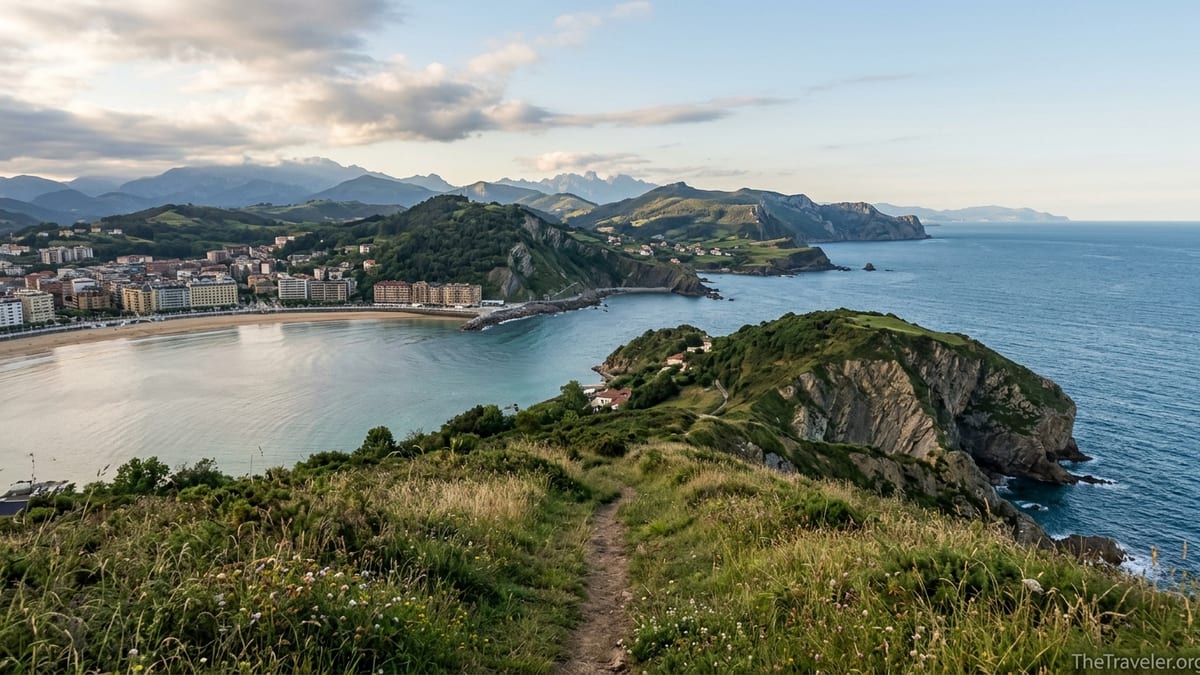
Overall Vibe: Sophisticated Basque Cities vs Wild Green Asturias
The Basque Country, especially around San Sebastián and Bilbao, feels cosmopolitan and polished. Think grand Belle Époque facades along San Sebastián’s La Concha bay, contemporary architecture on Bilbao’s riverfront and a strong sense of design in everything from metro stations to pintxo bars. You notice it immediately when you step into the sleek terminal of Bilbao Airport or stroll the manicured promenade in San Sebastián at sunset.
Asturias, by contrast, is quieter and more rural. Its capital Oviedo is cultured and clean, and Gijón brings a salty, lived-in port-city character, but much of the region is villages, farmhouses and fishing harbors. Drive 20 minutes from the motorway and you can easily find yourself alone on a country lane lined with stone horreos, the traditional grain stores on stilts, with cows grazing under impossibly green hills.
If you imagine your Northern Spain trip as urban strolls, gallery visits and polished tapas counters, the Basque Country fits more naturally. If what you want is dramatic nature, small-town life and a slower, less curated feel, Asturias is likely to win you over.
Many travelers end up combining both, using Bilbao or San Sebastián as an entry point and then driving west into Asturias. With at least a week you can comfortably sample both worlds, but if you have four or five days you will probably enjoy picking one region and going deep.
Cities & Culture: Bilbao and San Sebastián vs Oviedo and Gijón
Bilbao is the Basque Country’s big cultural calling card. The titanium curves of the Guggenheim Museum dominate the riverfront, and visiting is almost a rite of passage for first-timers. Inside, you will find a changing program of modern and contemporary art plus permanent works in the vast atrium and sculpture gallery. Even if you are not a museum person, walking around the buildings and the river promenade, with Louise Bourgeois’ giant spider sculpture and Jeff Koons’ flower-covered “Puppy,” is an experience in itself.
San Sebastián is less about blockbuster sights and more about atmosphere. You might spend a morning wandering the narrow streets of the Parte Vieja, ducking into churches and bars, then head to the San Telmo Museum to understand Basque history and identity. Afternoons often revolve around the crescent of La Concha, where locals jog, families paddle at Ondarreta beach, and surfers tackle the waves at Zurriola in the Gros neighborhood.
In Asturias, Oviedo offers a refined, almost Central European feel, with traffic-free streets around the cathedral and plenty of traditional cider houses. It is known in Spain for its pre-Romanesque churches on the nearby Monte Naranco hills and for hosting the annual Princess of Asturias Awards, which gives the city a low-key intellectual profile. Gijón, a 30-minute drive away, is more casual and maritime, with its long San Lorenzo beach, harborfront bars and repaired industrial waterfront that now hosts cultural spaces and public art.
Cultural depth is not limited to museums. Both regions celebrate strong local identities, from the Basque language and pelota courts to Asturian bagpipes and traditional dance. The Basque Country feels more densely packed with architectural icons and design-led spaces. Asturias’ culture expresses itself more in small-town festivals, local music and religious sites like the Covadonga Sanctuary, tucked into the cliffs at the entrance to Picos de Europa.
Food & Drink: Pintxos and Txakoli vs Cider and Fabada
Food alone is enough reason to go to the Basque Country. San Sebastián in particular has a long-held reputation for high-end gastronomy, with multiple Michelin-starred restaurants and a famously inventive bar scene. You might spend an evening hopping between pintxo counters around Calle 31 de Agosto or Fermín Calbetón, ordering one or two small bites and a glass of txakoli, the local slightly sparkling white wine, in each place. Typical prices for a pintxo range from about 2.50 to 4.50 euros in the city center, with a glass of house wine or beer often between 2 and 3 euros.
Bilbao’s newer food scene feels a little more casual but still creative. Around the old town and the Ribera market you will find bars ranging from traditional standing-room-only spots to contemporary gastro-bodegas. A mid-range sit-down dinner with shared starters, mains and wine tends to come in around 30 to 45 euros per person, more if you aim for tasting menus or classic fine-dining rooms.
Asturias has fewer headline restaurants but very strong everyday eating. This is the land of hearty stews, grilled meats and fresh seafood from the Cantabrian Sea. A typical menu del día in a small town, including starter, main, dessert and wine or water, can still hover around 15 to 20 euros, particularly outside peak summer weeks. Signature dishes include fabada asturiana, a rich bean stew with chorizo and morcilla, and cachopo, a large breaded veal fillet stuffed with ham and cheese, often big enough to share.
The regional drink divides the two destinations as clearly as the food. In the Basque Country, crisp txakoli and local reds from Rioja Alavesa dominate, poured in standard fashion. In Asturias, natural cider rules. In a sidrería you will watch servers pour green bottles from high above their heads into glasses held low to aerate the drink, splashing a little on the floor. You drink only the small shot poured for you immediately, then hand the glass back for the next round. Budget-wise, a bottle of cider in a traditional bar might cost about 4 to 6 euros, making it one of the best-value drinks experiences in Spain.
Beaches & Coast: Polished Urban Bays vs Wild Cliffs and Coves
San Sebastián’s La Concha is arguably one of Europe’s most photogenic urban beaches. Sheltered and gently curving, it has fine sand, striped changing tents in season and calm waters suitable for casual swimming and paddleboarding. Adjacent Ondarreta is similarly civilized, with views to the island of Santa Clara, while Zurriola to the east faces more open ocean and is the local surfing hub. In Bilbao, the city’s beach life lies a short metro ride away in Getxo, Sopelana and Plentzia, where golden sand meets eroded cliffs and paragliders drift overhead.
Asturias’ coastline feels more remote and dramatic. Between the fishing towns of Ribadesella, Llanes and Luarca you will find a string of beaches tucked beneath green headlands. Popular examples include Playa de Torimbia, a wide natural bay often reached by a short walk from a clifftop car park, and Playa del Silencio, framed by steep cliffs and rocks. Conditions can be rougher than in San Sebastián’s bay, with stronger waves and more changeable weather, but the scenery is spectacular.
Beach infrastructure differs noticeably. In San Sebastián you have changing areas, lifeguards in season, promenade showers and plenty of bars just across the street. In Asturias, many beaches remain half-wild, with minimal facilities beyond a parking area and perhaps a simple chiringuito for drinks and snacks in summer. Families with young children may find the Basque urban bays more convenient and predictable, while travelers seeking quiet coves and long coastal walks will gravitate to Asturias.
Season matters for both regions. The peak summer months of July and August often bring pleasantly warm days and water temperatures that are comfortable for swimming, but they also mean crowds. In San Sebastián, beaches can feel busy by mid-morning, and accommodation prices spike sharply. Along the Asturian coast you will encounter more Spanish holidaymakers, especially around Llanes and Gijón, but it remains easier to find breathing room on the sand or on coastal paths if you are willing to walk a little farther.
Mountains & Hiking: Basque Hills vs Picos de Europa
The Basque Country is not flat. Green hills surround Bilbao and San Sebastián, and there are satisfying day hikes like the climb up Monte Urgull or Monte Igueldo in San Sebastián and routes around the Urkiola or Gorbea natural parks. These trails deliver forest scenery, rural hamlets and ocean views, all reachable by short drives or even public transport.
Asturias, however, is on another scale for mountain lovers, thanks to the Picos de Europa and the wider Cantabrian range. The Picos are a compact limestone massif with sharp peaks, deep gorges and traditional shepherd pastures. One of the most accessible icons is the Lagos de Covadonga, a pair of small glacial lakes, Enol and Ercina, high in Picos de Europa National Park. In peak seasons a park access plan restricts private cars on the road up to the lakes, and visitors typically park lower down and continue on dedicated buses, which helps preserve the environment while keeping access fairly straightforward for day trippers.
Once at the lakes, marked paths loop around the water and up to viewpoints over the western and central massifs. These short routes usually take between one and three hours and suit a wide range of fitness levels. Elsewhere in the Picos, the Cares Gorge trail follows a narrow path through a dramatic canyon between León and Asturias, popular with experienced hikers comfortable with some exposure. There are also multi-day routes that connect mountain villages, often with refuges or small guesthouses along the way.
In practice, the Basque Country is better for casual walkers who want a few half-day outings between city sightseeing and food stops. Asturias excels for hikers who want the mountains to be the focus of their trip. Weather is an important factor: both regions can be wet and variable outside high summer, and low clouds can obscure mountain views. Packing proper waterproof layers and sturdy footwear is wise if Picos de Europa is high on your list.
Driving, Logistics & Costs: Getting Around and What You Will Spend
Bilbao is one of the main air gateways to Northern Spain, with direct connections to several European cities and good domestic links. From Bilbao Airport it is roughly a 15 to 20 minute taxi ride into the city center, and about an hour and a half by car to San Sebastián. Public transport between the two cities is frequent, with buses often taking under 90 minutes. If your focus is on these two Basque hubs, you can reasonably rely on trains and buses plus the local metro and tram networks, especially in Bilbao.
Asturias is also accessible by air, with flights into Asturias Airport near Avilés connecting to Madrid and other Spanish and European airports. From there, driving times are roughly 30 minutes to Gijón, 35 to Oviedo and around an hour and a half to the eastern gateway towns near Picos de Europa. Public transport exists, but services can be sparse in rural areas. Renting a car is strongly recommended if you want to explore villages, trailheads and small beaches beyond the main coastal highway.
When it comes to costs, many travelers find the Basque Country, and San Sebastián in particular, among the priciest parts of Spain. In high season, central three-star hotels in San Sebastián commonly charge rates that can reach into the mid to high hundreds of euros per night for a double room, especially around summer festivals and long weekends. Bilbao can be slightly more affordable, but prices still climb sharply at busy times like August city festivals.
Asturias is generally friendlier on the budget. Mid-range hotels or rural guesthouses in Gijón, Oviedo or near the coast can often be found at noticeably lower nightly rates than in San Sebastián, especially if you book outside mid-August. Eating out, parking and everyday expenses also tend to be lower, particularly once you are away from the busiest seaside towns. A couple traveling through Asturias by car can often enjoy comfortable accommodation, meals and petrol for less than what similar comfort might cost on a primarily San Sebastián-based stay.
Who Should Choose Which Region?
If your dream trip centers on architecture, design and food, the Basque Country is a strong first choice. A traveler who wants to visit the Guggenheim, spend late evenings on pintxo crawls and wake up to a postcard-perfect city beach outside the hotel door will likely feel that San Sebastián and Bilbao deliver exactly what they hoped for, even if the overall budget ends up higher than in other parts of Spain.
Asturias is ideal for travelers whose top priorities are nature, hiking and a slower pace. Couples who enjoy long drives through green valleys, mornings on almost empty beaches and afternoons on mountain trails, followed by hearty dinners in simple family-run restaurants, often speak of Asturias as the highlight of their Northern Spain itinerary. It suits photographers, walkers and anyone who prefers landscapes to nightlife.
Families can thrive in both regions but in different ways. In the Basque Country, easy logistics, urban beaches with lifeguards and plenty of indoor attractions make it simpler with younger children, especially if you stay car-free. In Asturias, older kids and teens who like outdoor activities may appreciate surfing lessons on wild beaches, zip-line parks in forests or beginner-friendly hikes at the Covadonga lakes more than city museums.
Solo travelers might choose based on their preferred social atmosphere. Bilbao and San Sebastián offer hostels, busy bar districts and a large international visitor presence, which can make meeting people easier. Asturias can feel quieter and less international, particularly inland, which some solo visitors love for the sense of immersion but others might find a little isolated. Comfort with basic Spanish makes travel in the more rural Asturian corners smoother.
The Takeaway
There is no single “better” choice between the Basque Country and Asturias. Both are safe, welcoming and packed with scenery, history and excellent food. The decision comes down to which combination of city energy, seaside atmosphere and mountain adventure matches your personal style and the time of year you are visiting.
Choose the Basque Country if you want world-class museums, elegant urban beaches, cutting-edge food and the convenience of moving easily between Bilbao and San Sebastián on public transport. Opt for Asturias if you picture yourself on clifftop trails above rugged coves, driving into deep green valleys and spending your evenings in cider houses after a day in Picos de Europa.
With more than a week, the most rewarding option may be not to choose at all: fly into Bilbao, enjoy two or three days of city and coastline, then drive west into Asturias for another four or five days among its beaches and mountains. Whichever region you pick, Northern Spain’s mix of Atlantic light, green hills and strong local culture makes it very likely you will start planning a return visit before you leave.
FAQ
Q1. Is the Basque Country or Asturias cheaper for accommodation?
Asturias is generally more affordable, especially outside peak August weeks, while San Sebastián and central Bilbao often command some of the highest hotel rates in Northern Spain.
Q2. Which region is better if I will not rent a car?
The Basque Country suits car-free travelers better, as Bilbao and San Sebastián are well connected by trains and buses and have excellent local public transport for getting around.
Q3. Where will I find better hiking, Basque Country or Asturias?
Asturias offers more dramatic mountain hiking, especially in Picos de Europa and around the Covadonga lakes, while the Basque Country is better for gentler coastal and hill walks.
Q4. Are the beaches safer for children in San Sebastián or Asturias?
San Sebastián’s sheltered urban bays, with lifeguards and calm waters in season, are typically more predictable for families, while many Asturian beaches are wilder and more exposed to swell.
Q5. Which region is best for high-end dining?
The Basque Country, especially San Sebastián, has a higher concentration of Michelin-starred restaurants and experimental gastronomy, though Asturias offers excellent value traditional cooking.
Q6. Is it easy to visit Picos de Europa on a short trip?
Yes, with a rental car you can base yourself in an eastern Asturian town and reach trailheads or the Covadonga lakes in under an hour, making one to three day visits practical.
Q7. Can I combine Basque Country and Asturias in one week?
Combining both in seven to ten days works well: many travelers spend two or three nights in Bilbao or San Sebastián and four or five nights on the Asturian coast or near Picos de Europa.
Q8. Do I need to speak Spanish to travel in these regions?
English is commonly understood in tourist areas of Bilbao and San Sebastián, while rural Asturias can feel more Spanish-speaking, so learning basic phrases helps in smaller towns.
Q9. When is the best time of year to visit?
Late May, June, and September often balance milder weather and fewer crowds; July and August bring warmer seas and festivals but also higher prices and busier beaches.
Q10. Which region is better for nightlife?
Bilbao and San Sebastián usually offer livelier nightlife with more bars and late-opening venues, while most of Asturias is quieter and more focused on relaxed evenings in cider houses.