


Central Spain rewards travelers who choose their base carefully. Distances look short on the map, but your experience will feel very different depending on whether you stay in big-city Madrid, a compact medieval gem like Segovia or Toledo, a student city such as Salamanca, or a quiet rural inn on the Castilian plains. This guide compares the main bases in central Spain and helps you decide where to stay for first-time visits, romantic getaways, family trips, road trips and journeys by train or bus.
How to Choose Your Base in Central Spain
Before booking anything, think about how you plan to move around central Spain and what rhythm you enjoy. Madrid is the main hub, with fast AVE and AVLO high-speed trains fanning out to Toledo, Segovia, Salamanca and Cuenca. If you want to rely on public transport, staying in Madrid or in a city directly connected by frequent trains usually makes the most sense. If you are driving, you can base yourself in a smaller town or countryside inn and use motorways such as the A-6 toward Segovia, the A-5 toward Toledo or the A-50 toward Salamanca for day trips.
Time is another key factor. With four to six nights, it is usually easier to choose one or two bases than to unpack every day. A common pattern is three or four nights in Madrid plus one or two nights in either Toledo or Segovia. With eight nights or more, you might add Salamanca or Cuenca and spend at least two nights in each secondary base so you can enjoy mornings and evenings when the day-trippers have gone.
Budget also shapes your choice. Central, well-reviewed midrange hotels in Madrid often start around 120 to 180 euros per night for a double room in the mid-2020s, while equivalent properties in Toledo or Segovia can be 80 to 130 euros. Apartments booked through major platforms can offer better value for families. Countryside casas rurales sometimes include breakfast and parking in daily rates that are competitive with city hotels, though you will spend more on fuel and tolls if you drive a lot.
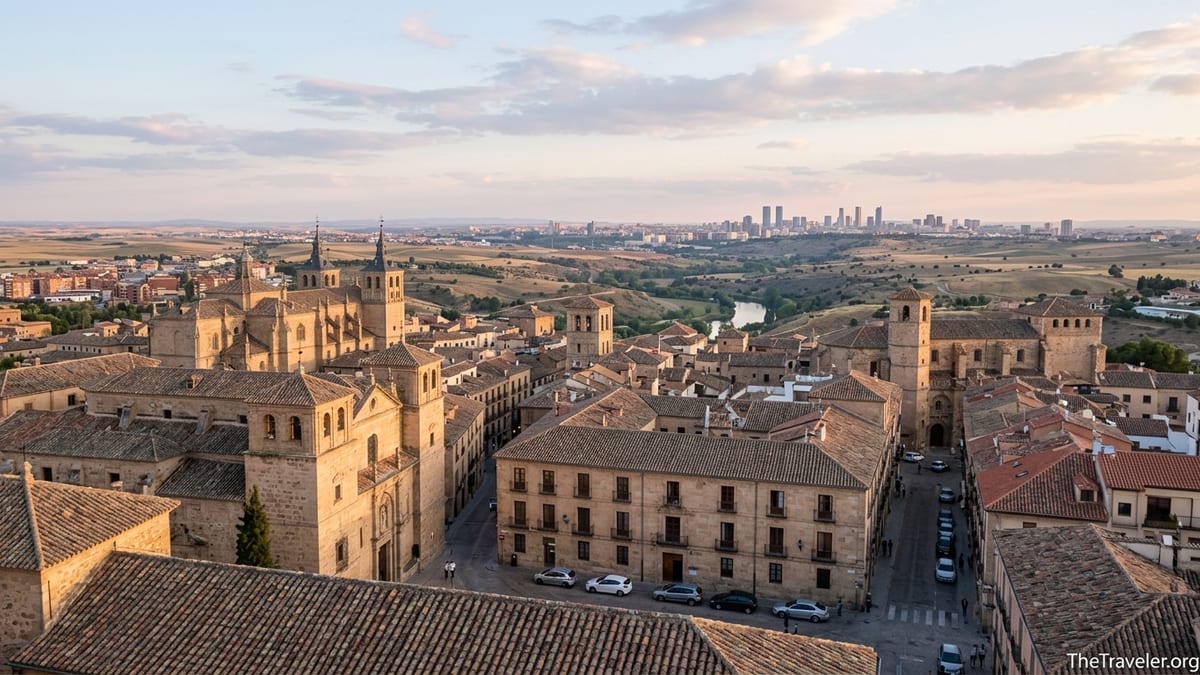
Finally, consider atmosphere. Madrid delivers nightlife, museums and a modern European city feel. Toledo and Segovia feel more like open-air history museums with winding streets and landmark monuments. Salamanca adds a lively student scene and bar culture around one of Spain’s most beautiful main squares, while Cuenca and rural bases along the Tagus or Duero rivers prioritize quiet, landscapes and starry skies.
Madrid: Best All-Round Base With Fast Transport Links
Madrid is the most flexible base in central Spain, particularly for first-time visitors and anyone using public transport. High-speed trains link the capital with Toledo in roughly 30 minutes, Segovia in around 30 minutes from Chamartín station, and Salamanca in about 90 minutes to two hours depending on the service. From Madrid you also have frequent buses to Cuenca and smaller towns, plus direct flights for longer itineraries across Europe and beyond.
For a first visit, many travelers choose to stay in the historic center between Puerta del Sol and the Royal Palace, or near Gran Vía. This area places you within a fifteen to twenty-minute walk of the Prado and Reina Sofía museums, Plaza Mayor and El Retiro park. Hotels here range from classic properties in 19th-century buildings with small balconies to modern boutique hotels tucked into side streets. Couples often appreciate atmospheric neighborhoods such as La Latina or Barrio de las Letras for their tapas bars and evening strolls, while Chueca and Malasaña appeal to visitors seeking a younger, creative feel with independent boutiques and late-night venues.
Families may prefer slightly quieter areas that are still central, such as Chamberí or the northern side of Retiro, where streets are wider and parks plentiful yet the metro reaches the center in ten to fifteen minutes. Apartment-style hotels with kitchenettes can make multi-day stays easier with children. Prices in these areas can be more moderate than right on Gran Vía, and you are less likely to be disturbed by late-night street noise.
For road trips, staying close to a major artery such as the M-30 or M-40 ring road simplifies day trips to Segovia, Ávila or the Sierra de Guadarrama. Some travelers split time between a few nights in the walkable historic core without a car, then pick up a rental near Atocha or Chamartín station for a second stage based around the outskirts or a town one hour away. This avoids parking challenges and low-emission zones in the busiest parts of Madrid while still giving you a taste of big-city life.
Toledo: Medieval Atmosphere and Easy Day-Trip Potential
Toledo is one of the most popular side-trips from Madrid, but staying overnight reveals a different personality once the tour buses leave. The compact hilltop old town is enclosed by ancient walls and the Tagus River, with the Gothic cathedral, former synagogues of the Jewish quarter and El Greco’s masterpieces all within walking distance. High-speed trains run from Madrid’s Atocha station in about 30 minutes, making Toledo uncomplicated to reach even for short stays.
For first-time visitors, the most convenient base is inside the old town itself. Here, historical inns and small hotels occupy former noble houses and convents with stone courtyards and views over terracotta rooftops. You will find everything from small guesthouses near the cathedral to more upscale properties perched on the city walls looking out to the countryside. Staying within the walls means dealing with steep streets and limited vehicle access, but you are close to cafés, monuments and sunset viewpoints like Mirador del Valle.
Couples often choose boutique hotels in the Jewish quarter or near quieter cloistered churches, where narrow lanes and soft evening light create a distinctly romantic mood. Prices for midrange doubles commonly sit in the 90 to 150 euro range depending on season, with premium rooms and suites costing more. Families may opt for serviced apartments that provide a separate bedroom and living room, allowing children to rest while adults enjoy a glass of local wine after dinner.
If you are driving a rental car, it can be easier to stay slightly outside the walls near the modern lower town or along the river road. Many hotels here offer on-site parking, and you can ride an escalator or short bus ride up to the old town during the day. This arrangement avoids navigating very tight medieval streets and paid car parks while still giving you easy access to Toledo’s center.
Segovia: Compact City With Iconic Monuments
Segovia is smaller and quieter than Toledo but equally rewarding, especially if you like to explore cities on foot. The UNESCO-listed old town stretches between the towering Roman aqueduct and the fairytale-like Alcázar palace. High-speed trains from Madrid’s Chamartín station reach Segovia-Guiomar station in roughly half an hour, followed by a short bus or taxi ride into the historic core. For drivers, a modern ring road and several car parks around the walled center make arrivals relatively straightforward.
The best base for most visitors is Segovia’s old town between the aqueduct and Plaza Mayor. Here you can wake up within sight of the ancient arches or the Gothic cathedral, and all major sights lie within a ten to twenty-minute stroll. Accommodation options range from simple hostales to boutique hotels in restored mansions. Typical midrange hotel prices often fall in the 80 to 130 euro bracket for a double room, with some historic properties and the hilltop parador commanding higher rates for their views and facilities.
For couples, staying close to Plaza Mayor offers a quieter, more intimate atmosphere after dark, with traditional wine bars and restaurants serving cochinillo asado, the region’s famous roast suckling pig. For families, the streets near the aqueduct provide easier access with strollers and a more straightforward walk to the bus stop, plus nearby playgrounds and open spaces where children can burn off energy. Travelers arriving by train without a car tend to favor this lower part of town because bus connections from Segovia-Guiomar usually terminate near the aqueduct.
Road-trippers looking for views and parking may consider accommodation just outside the center, including hillside hotels overlooking the old town silhouette. From some of these properties, you can watch sunset behind the cathedral and Alcázar, then drive down into town for dinner. Staying outside the walls sacrifices a little late-night stroll charm but can simplify logistics, particularly if you are continuing on to Ávila or north toward Valladolid.
Salamanca: University Energy and Grand Squares
Salamanca sits further west than Toledo or Segovia and works best as an overnight base rather than a day trip from Madrid. High-speed and regional trains link the two cities in approximately 90 minutes to a little over two hours, and long-distance buses also run several times per day. Once you arrive, the compact historic center makes it easy to explore on foot, from the twin cathedrals to the baroque Plaza Mayor and the University of Salamanca, one of Europe’s oldest.
Most visitors will want to stay in or immediately around the old town, especially near the Plaza Mayor and university quarter. This area places you within a few minutes’ walk of ornate sandstone facades, cloisters, museums and riverside paths along the Tormes. Hotels range from small guesthouses in historic townhouses to larger establishments and design-led hotels in converted convents. In recent seasons, midrange doubles here have often been priced in the 90 to 150 euro range, with budget rooms and higher-end suites above and below that band.
Salamanca’s strong student presence gives the city a youthful, social feel, particularly on weeknights when tapas bars around the university and Van Dyck area fill with locals. Couples and solo travelers who enjoy evening life will appreciate staying close to these streets, while families may feel more comfortable on quieter side streets just beyond the noisiest tapas clusters. Many hotels fit double-glazed windows and shutters, but asking for an interior or courtyard-facing room can reduce noise if you are a light sleeper.
For drivers, several underground car parks serve the historic center, and some hotels offer valet arrangements or discounted parking. Another option is to stay just across the river in neighborhoods that face the old town skyline. Here you typically find modern hotels and apartments at slightly lower prices, with pedestrian bridges leading back into the historic core within ten to fifteen minutes on foot.
Cuenca and Countryside Stays: Nature, Quiet and Road-Trip Bases
Cuenca, famous for its casas colgadas or hanging houses above a deep gorge, offers a very different feel from Toledo, Segovia or Salamanca. High-speed trains from Madrid reach Cuenca in roughly one hour, although the AVE station lies outside the old town and requires a bus or taxi connection. The historic upper town sits dramatically on a ridge between two river gorges, while the lower town spreads out along wider streets with more modern services.
In Cuenca, staying in the old town gives you immediate access to viewpoints, medieval streets and small museums, but you will contend with hills and limited car access. Couples often enjoy rustic-chic guesthouses carved into stone buildings or small hotels with panoramic dining rooms. Travelers relying on public transport may prefer to stay lower down near the modern center, where buses to the AVE station depart and supermarkets, cafés and services are more plentiful. Prices in Cuenca are often slightly lower than in the most touristed cities closer to Madrid, which can make it an attractive base for longer, slower stays.
Beyond Cuenca, rural accommodation options across Castile-La Mancha and Castile and León include farmhouses, restored mills and countryside inns. These casas rurales typically offer a handful of rooms, hearty breakfasts and sometimes on-site restaurants specializing in local dishes like lamb stews or game. They work best for travelers with a car who want quiet nights, starry skies and daytime excursions to small villages, castles and natural parks such as the Serranía de Cuenca or the Arribes del Duero.
For families and road trippers, a countryside base can be an appealing middle ground between cities. A common pattern is to fly into Madrid, spend two or three nights in the capital, then rent a car and drive one to two hours into the countryside for three nights in a rural inn. From there you can day-trip to smaller cities like Ávila or Sigüenza while children enjoy outdoor space and hotel pools. Just be aware that public transport options will be limited, so this style of stay is not ideal if you prefer to avoid driving.
Matching Bases to Trip Styles and Transport
For a first-time visitor relying on trains and buses, the most efficient strategy is usually to stay in Madrid throughout and use high-speed trains for long day trips. A four-night stay could include one full day for Madrid’s museums and parks, an evening of tapas in La Latina, then day trips to Toledo and Segovia on separate days. You would book accommodation near Atocha or Chamartín for easier early-morning train departures and returns, and you would not need to change hotels or handle luggage on intermediate days.
If your priority is atmosphere and slower travel rather than checking off many cities, plan to sleep in at least one of the historic smaller cities. For example, you might spend three nights in Madrid, two in Toledo and two in Salamanca. This lets you experience Toledo’s quiet lanes after sunset and Salamanca’s illuminated sandstone buildings late in the evening. Public transport still works for this plan because you can travel between cities by train or bus and skip a rental car entirely.
Couples planning a romantic trip might favor an itinerary like two nights in Madrid for culture and dining, two nights in Segovia or Toledo in a hotel with views, and two or three nights in a countryside inn surrounded by vineyards or rolling plains. In practice, that could mean booking a small hotel in Madrid’s Barrio de las Letras, then a boutique inn inside Segovia’s walls with cathedral views, followed by a rural property within an hour’s drive that offers a pool and on-site dinners. You could rent a car for only the second half of the trip to keep city driving to a minimum.
Families often benefit from reducing hotel changes. One approach is to stay in a spacious apartment in Madrid with good metro access, then make one overnight side-trip to a smaller city for variety. For example, five nights in Madrid plus one night in Toledo or Segovia works well, giving children both big-city parks and the novelty of a medieval castle or alcázar. If you do rent a car, look for hotels that clearly advertise parking and family rooms, and verify whether cribs, high chairs or kitchen facilities are available before booking.
The Takeaway
Choosing where to stay in central Spain is less about finding a single “best” city and more about matching your base to your priorities. Madrid offers unmatched transport links, museums and nightlife, making it ideal for first visits and public-transport itineraries. Toledo and Segovia deliver concentrated doses of medieval atmosphere and iconic monuments, rewarding travelers who stay at least one night to enjoy them after day-trippers depart. Salamanca adds university energy and one of Spain’s finest main squares, while Cuenca and rural inns emphasize landscapes, quiet and slower days.
Think practically about how often you want to change hotels, how comfortable you are driving, and whether you prefer café-lined plazas or countryside silence at night. Check recent traveler reviews for notes on noise, parking and access to train stations, and pay attention to seasonal factors such as heat, local festivals or university term times that can affect prices and crowds. With a realistic assessment of your style and schedule, you can combine two or three of these bases into a trip that balances big-city culture, medieval streets and open horizons on the Castilian plains.
FAQ
Q1. Is it better to stay in Madrid and day-trip, or sleep in the smaller cities?
Both approaches work, but if you have at least six or seven nights, sleeping in at least one smaller city such as Toledo, Segovia or Salamanca gives you quieter evenings and a richer sense of place. With four or fewer nights, staying in Madrid and using fast trains for day trips usually makes logistics easier.
Q2. Which base works best if I am using only public transport?
Madrid is the most practical base, with frequent high-speed trains to Toledo, Segovia, Salamanca and Cuenca, plus extensive metro and bus networks. You can add one extra base such as Toledo or Salamanca if you are comfortable traveling between cities with luggage by train or bus.
Q3. Where should couples stay for a romantic trip in central Spain?
Couples often enjoy boutique hotels inside the old towns of Toledo or Segovia, where narrow streets and illuminated monuments create a romantic backdrop at night. Combining two or three nights in Madrid’s historic center with two nights in one of these smaller cities works well.
Q4. What is the best base for families with young children?
Families usually do well with a spacious apartment or family room in Madrid near parks and metro stops, plus one short overnight in a smaller city such as Segovia or Toledo. Look for accommodation that offers cribs, kitchenettes and easy stroller access rather than steep, cobbled lanes.
Q5. Do I need a car to explore central Spain?
You do not need a car for Madrid, Toledo, Segovia, Salamanca or Cuenca because trains and buses cover these routes. A rental car is most useful if you want to stay in the countryside or visit smaller villages and natural parks that are not well served by public transport.
Q6. How far in advance should I book accommodation in these cities?
For visits during spring, early summer, autumn weekends and local festivals, it is wise to book popular central hotels one to three months in advance. In quieter winter weeks you can often find rooms closer to your travel date, although choice may be more limited.
Q7. Are central hotels noisy at night in cities like Madrid and Salamanca?
Some central streets, especially in nightlife areas, can be lively until late. If you are sensitive to noise, request an interior or courtyard-facing room and check recent reviews for comments about soundproofing and street activity.
Q8. Which city makes the best base for nightlife?
Madrid has the broadest nightlife, from tapas bars to live music and clubs. Salamanca also offers a strong evening scene driven by its large student population. Toledo and Segovia are generally quieter once day-trippers leave.
Q9. What about travelers on a tighter budget?
Staying slightly outside the very center of Madrid, or in cities such as Salamanca or Cuenca, can reduce accommodation costs compared with the busiest tourist zones. Budget guesthouses and simple apartments often offer good value if you book early and travel outside peak holiday periods.
Q10. Is it safe to stay in historic centers and walk back at night?
Central areas of Madrid, Toledo, Segovia, Salamanca and Cuenca are generally considered safe for visitors, especially along main streets. As in any city, use common sense, keep valuables secure and favor well-lit routes when returning to your accommodation after dark.