


Island-hopping around Spain’s Balearic and Canary archipelagos is easier than ever, but the fastest and best-value option is not always obvious. Ferries link most islands with frequent departures, while short-hop flights can save hours on longer routes. This guide brings together the main routes, realistic price ranges, and practical tactics to help you choose between ferries and flights, book smart, and avoid common time traps, with examples focused on Mallorca, Ibiza, Menorca, Formentera and the Canary Islands.
Key Players and How the Island Networks Work
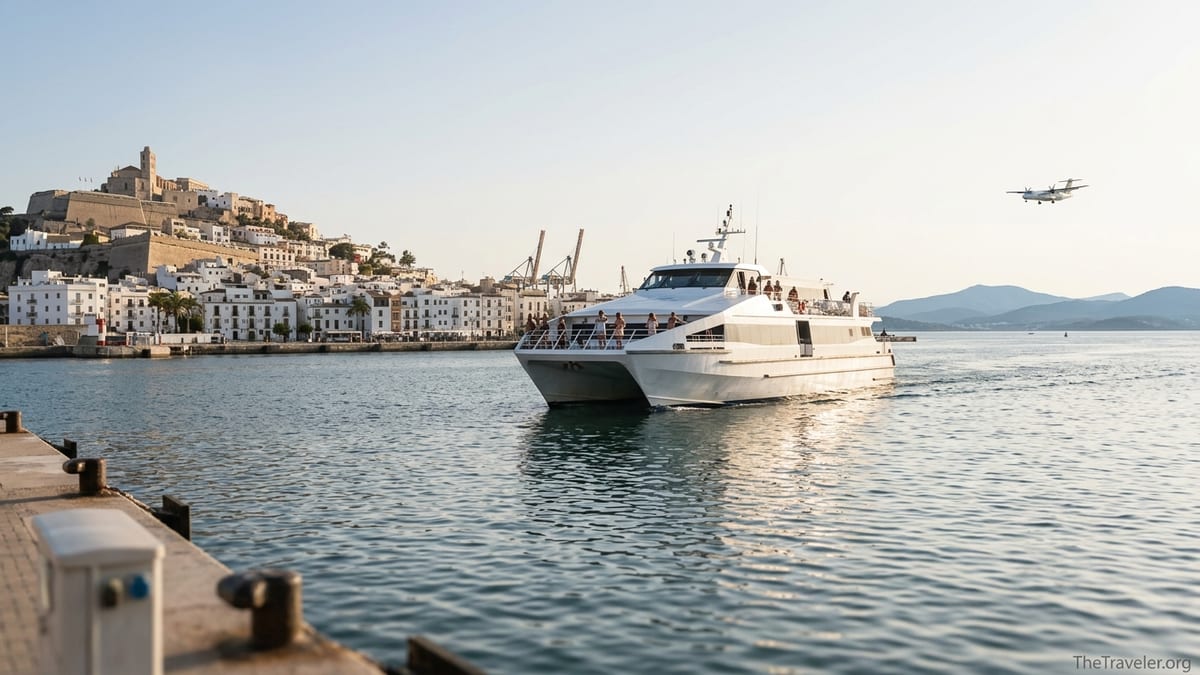
Two broad networks move people between Spain’s islands. In the Balearics (Mallorca, Menorca, Ibiza, Formentera), fast ferries operated by companies such as Baleària, Trasmapi, Formentera Lines and Menorca Lines run dense schedules between the main ports of Palma and Alcúdia on Mallorca, Maó and Ciutadella on Menorca, Ibiza Town on Ibiza, and La Savina on Formentera. The regional airports at Palma de Mallorca, Ibiza and Menorca add short-hop flights, mainly for longer legs like Mallorca to Menorca or mainland connections.
In the Canary Islands, ferries are dominated by Fred. Olsen Express and Grupo Armas Trasmediterránea, with Baleària increasingly present on former Armas routes as the industry consolidates. These companies connect the major islands of Tenerife, Gran Canaria, Lanzarote, Fuerteventura, La Palma, La Gomera and El Hierro, typically with multiple daily sailings on popular corridors such as Tenerife to Gran Canaria or Lanzarote to Fuerteventura. Local airlines Binter Canarias and Canaryfly operate frequent short flights that often feel more like intercity buses than traditional air travel.
On both archipelagos, ferries are the backbone for moving vehicles, freight and foot passengers between islands. Flying tends to be most attractive for time-poor travellers, for longer jumps, or when sea conditions are rough in winter. Most visitors end up using a mix of ferries and flights over the course of a multi-island trip, for example flying into Palma, then combining ferries between Mallorca, Ibiza, Formentera and Menorca before flying back to the mainland.
Seasonality matters. From roughly late June to early September, frequencies and prices both rise, especially around weekends. In shoulder seasons (April to early June and late September to October) you will usually still find daily ferries on the main inter-island routes and several flights per day between key airports, but the very early morning and late-night options may disappear, which can affect same-day connections.
Balearic Ferries: Routes, Durations and Typical Costs
Within the Balearics, some of the most useful ferry routes for island-hopping link Mallorca, Menorca, Ibiza and Formentera directly. For example, Baleària and other operators routinely schedule fast ferries between Alcúdia on Mallorca and Ciutadella on Menorca, with crossings often around 1.5 to 2 hours and at least one or two round trips per day in most seasons. On busy summer dates, a basic foot passenger fare booked in advance can be in the region of 35 to 60 euros one way, depending on the time of day and how flexible your ticket is.
Connections between Mallorca and Ibiza are slightly longer. Typical fast-ferry crossings between Palma and Ibiza Town are often around 2 to 3 hours. In high season, advance one-way prices for foot passengers frequently start near 45 to 70 euros, though promotional fares below that occasionally appear on early morning or late-night departures. Slower overnight ferries exist on some routes and can be cheaper, but they are less attractive for quick hops, especially if you are not booking a cabin.
Ibiza to Formentera is the classic short-hop ferry run. Companies like Baleària and Formentera Lines run fast catamarans that take roughly 30 minutes from Ibiza Town to La Savina, with intense frequencies in summer. In July and August it is common to find departures every 30 to 60 minutes through most of the day. Same-day return fares bought on the spot in summer often land around 35 to 50 euros per adult, though advance online purchases and resident discounts can reduce that significantly.
Direct ferries between some islands exist but tend to be seasonal or less frequent. For instance, in recent years there have been summer-only ferries linking Mallorca and Formentera or occasional direct links between Menorca and Ibiza, but schedules change each year and often drop to zero in winter. When planning a May or October trip, always check whether the specific direct route you see in a booking engine actually operates on your dates, and be prepared to route via a larger hub island such as Mallorca or Ibiza if needed.
Balearic Flights: When Flying Beats the Ferry
Short-hop flights in the Balearics are most relevant when you are connecting via Palma, especially to or from Menorca. The Palma to Menorca (PMI to MAH) route is typically around 35 to 45 minutes in the air, with airlines such as Iberia’s regional partners and seasonal low-cost carriers operating multiple daily flights in summer. For a traveller going from Menorca back to mainland Spain, routing Menorca to Palma by air and then onward to Barcelona or Madrid is often significantly quicker than trying to stitch together ferries.
Between Mallorca and Ibiza, typical flight time is around 50 to 60 minutes. Airlines often publish multiple daily rotations in summer, but frequencies can thin out from November to March. On a random midweek day in August, you may see several departures spread from early morning to late evening; in January, there might only be one or two. Prices fluctuate widely. In shoulder season, one-way tickets bought a few weeks ahead sometimes fall in the 40 to 80 euro range, while last-minute summer departures at peak times can exceed 150 euros one way.
Flying often wins when you calculate total door-to-door time for longer links that require detours by ferry. For example, travelling from Menorca to Formentera entirely by sea can involve an early ferry from Ciutadella or Maó to Mallorca, a transfer across Mallorca by road or another ferry, then a separate ferry to Ibiza and finally the 30-minute hop to Formentera. The total journey can easily stretch beyond 8 hours, especially if timetables do not align. In that scenario, it can be more efficient to fly Menorca to Ibiza via Palma and then take the short ferry to Formentera.
However, do not underestimate airport overheads. Even for domestic flights, you should allow at least 90 minutes at the departure airport in summer, especially at Palma where security queues can be long during morning banks. Add transfers to and from the airports, and the advantage over a central-to-central ferry may shrink, especially on shorter routes such as Palma to Ibiza where ferries depart from downtown ports close to hotels and rental apartments.
Canary Island Connections: Ferries vs Quick Hops
In the Canary Islands, ferries and flights are more equal competitors because distances between islands are greater and seas can be rougher in winter. On the heavily travelled Tenerife to Gran Canaria corridor, Fred. Olsen Express typically offers fast ferries between Santa Cruz de Tenerife and Agaete on Gran Canaria in around 80 to 90 minutes, often several times per day. Traditional ferries via Las Palmas de Gran Canaria can take longer but may be more stable in choppy conditions. Foot passenger fares booked ahead can frequently be found from roughly 35 to 60 euros one way, with vehicle fares on top.
For shorter hops, such as Lanzarote to Fuerteventura, ferries are the default. The crossing between Playa Blanca on Lanzarote and Corralejo on Fuerteventura is often about 25 to 35 minutes on a fast ferry, with multiple daily departures from morning through late afternoon. Prices for foot passengers commonly start from around 20 to 35 euros each way in high season, rising if you add a car. Travellers with early-morning flights sometimes take the first ferry of the day and then drive to the airport on the neighbouring island, but this leaves limited margin for delays.
Flights shine on longer routes or when seas are unsettled. Airlines like Binter Canarias often run 30 to 45 minute hops such as Tenerife North to La Palma or Gran Canaria to Lanzarote, with aircraft configured for quick boarding and short turnarounds. For example, a Tenerife to Lanzarote flight may block at around 50 minutes and allow a traveller to cross the archipelago in under two hours door to door, versus 5 to 7 hours of combined ferries and road transfers. In winter, many locals simply default to flying unless they need to move a vehicle.
For smaller western islands such as La Gomera and El Hierro, your choice is often constrained by timetables. Ferries from Tenerife to La Gomera typically take around 50 to 60 minutes, with most sailings concentrated in daytime slots. El Hierro has fewer ferries and flights, which makes advance planning essential. For example, you might find a single daily ferry from Tenerife and one or two flights per day; missing your connection can mean an unplanned overnight on the wrong island.
Booking Strategies, Prices and Time-Saving Tactics
For both archipelagos, booking direct with the ferry or airline often gives the clearest picture of schedules, especially for shoulder and low season when third-party sites may show outdated timetables. For high-demand routes such as Ibiza to Formentera in July or Tenerife to Gran Canaria around Christmas and Easter, advance booking at least several weeks ahead is recommended if you need a specific departure or want to take a vehicle. Foot passengers can sometimes risk a day-of purchase outside peak weekends, but queues at ticket offices can eat into beach time.
Prices fluctuate based on season, day of week and departure time. As a broad guideline, inter-island ferry fares in the Balearics in 2026 commonly fall between 25 and 70 euros for a one-way foot passenger ticket on major routes, with Canarias fares often in a similar or slightly higher range for longer crossings. Night or very early-morning sailings may be cheaper, while Friday afternoon and Sunday evening boats command a premium. Promotional codes occasionally appear in Spanish media or on operator newsletters but should be treated as a bonus rather than a guarantee.
If you are planning a multi-leg island-hopping itinerary, consider building in at least one “buffer” night in a hub port. For example, if you are connecting a late afternoon flight into Ibiza with an evening ferry to Formentera in July, a modest delay at Palma or Barcelona could cause you to miss the last boat. Booking a flexible or open ticket for the ferry, or simply planning to stay overnight in Ibiza Town before continuing to Formentera the next morning, can remove a lot of stress.
When comparing prices between ferries and flights, remember to factor in all the extras. Ferries may charge separately for cabin upgrades, pets, sports equipment and higher vehicle categories. Airlines add baggage fees and seat selection charges on many fares. In some cases, a slightly more expensive ticket that includes hold luggage or allows free changes can be better value than a rock-bottom fare that becomes inflexible once your plans evolve.
Taking Rental Cars on Ferries: Rules, Risks and Alternatives
Bringing a rental car on a ferry can be very convenient, but it requires careful checking of your contract. Many international rental brands operating in Spain include clauses restricting the vehicle to the island where it was picked up, or explicitly prohibiting carriage on ferries without written permission. Even when ferry staff allow you to drive aboard, you may void your insurance if the rental company has not authorised inter-island travel. This is particularly common for trips to smaller islands like Formentera or La Gomera, where local conditions and the cost of roadside assistance are factors.
In practice, some travellers do take hired cars between islands, especially on busy routes like Lanzarote to Fuerteventura or between Mallorca and Menorca, and report no issues as long as they inform the rental company in advance and pay any supplemental fees. Others find that their chosen brand refuses permission entirely, in which case the safest approach is to return the vehicle before boarding and rent a new car on arrival on the next island. This can feel inefficient, but it maintains full insurance coverage and avoids potential disputes over damages.
Costs for taking a vehicle on a ferry can add up quickly. On a typical Balearic inter-island crossing, adding a small car to your booking can easily double or triple the fare compared with travelling as a foot passenger. On a busy August weekend crossing between, say, Alcúdia and Ciutadella, a car plus two adults might pay several hundred euros one way, while the same journey on foot could cost a fraction of that. In the Canaries, the difference is similar: a driver and car on a popular short route like Playa Blanca to Corralejo can cost much more than a single walk-on ticket.
A practical compromise for many itineraries is to travel as a foot passenger between islands and rely on local transport at each destination. For example, on Formentera, many visitors step off the boat at La Savina and immediately rent bicycles or scooters from kiosks near the port, or pick up a small hire car for a couple of days. On La Gomera or Menorca, picking up a local rental on arrival gives you a vehicle better suited to narrow rural roads, and you avoid carrying the same car unnecessarily across multiple sea legs.
When Flying Really Saves Time (and When It Does Not)
Flying delivers the clearest time savings when you would otherwise have to piece together multiple ferry segments with awkward connections. A typical example is someone based in Palma who wants to spend a long weekend on Lanzarote. The ferry-only option might involve an overnight voyage from the Spanish mainland or a complex string of crossings via Ibiza and either mainland ports or the Canaries themselves, turning the trip into an expedition. A simple Palma to Madrid or Barcelona flight followed by a direct flight to Lanzarote will usually get you on the beach the same afternoon.
Within the Balearics, flying Palma to Ibiza or Palma to Menorca can also save several hours for travellers with tight schedules. A business traveller flying first thing in the morning for meetings and returning the same evening typically benefits from the reliability of air schedules, which are less affected by sea conditions. If a Palma to Ibiza flight departs at 8:00 and lands before 9:00, the traveller might be in a city-centre meeting by 9:30, which is difficult to achieve with a 2 to 3 hour ferry plus port transfers.
However, on short or straightforward routes, ferries often remain as fast door to door once you add check-in time and airport transfers. The Ibiza to Formentera relationship is a perfect example: there is no practical way for a flight to compete with a 30-minute fast ferry running every 30 to 60 minutes from a port that sits just a short walk or quick taxi ride from much of Ibiza Town. Similarly, in the Canaries, a 30-minute ferry between neighbouring islands that land you directly in resort towns may be more convenient than a flight into a distant airport followed by a long drive.
Weather and personal comfort are also factors. Some travellers dislike rough seas and prefer the predictability of air, especially on winter crossings between the Canary Islands or in the Gulf of Lion between mainland Spain and the Balearics. Others find small turboprop planes more stressful than a large modern catamaran and are happy to trade an extra hour at sea for less time in airports. Building a little slack into your schedule so you can choose the calmer option based on the forecast is often the most relaxing strategy.
The Takeaway
If your goal is to see multiple Spanish islands in one trip, both ferries and flights will almost certainly feature in your plans. Ferries dominate short hops, vehicle transport and point-to-point travel between ports like Ibiza and Formentera or Lanzarote and Fuerteventura, where fast catamarans run frequently and cost-effectively. Flights win on longer journeys or when you need to guarantee an arrival time, especially in winter or on complex routes that would otherwise require several ferry changes.
For most travellers, the smartest approach is to sketch a realistic route that minimises backtracking, then pick the mode that offers the best balance of time, comfort and cost on each leg. Examples include combining Palma to Ibiza by ferry with Ibiza to Menorca by air, or flying into Tenerife and then using ferries to explore Gran Canaria and La Gomera. Check ferry and flight schedules early, book key crossings in advance, and read the fine print on rental cars before driving onto a boat.
By understanding how the Balearic and Canary networks operate, what typical prices and durations look like, and where the time traps lie, you can turn logistics into part of the pleasure rather than a source of stress. With a little planning, you will spend more of your holiday on beaches and volcanic trails, and less of it refreshing timetables on your phone.
FAQ
Q1. Do I need to book Balearic inter-island ferries in advance in summer?
In July and August it is strongly recommended, especially for routes like Ibiza to Formentera and Mallorca to Menorca or if you are taking a car. Foot passengers sometimes find space on the day, but popular midday and late-afternoon sailings can sell out.
Q2. How long is the ferry from Ibiza to Formentera, and how much does it usually cost?
The fast ferry from Ibiza Town to La Savina on Formentera typically takes around 30 minutes. In high season, a same-day return for an adult often falls roughly in the 35 to 50 euro range when bought in advance, depending on operator and time of day.
Q3. Is it worth flying between Mallorca and Ibiza instead of taking the ferry?
It can be, particularly if you are tight on time. Flight time is usually under an hour, but you should add airport check-in and transfers. Ferries take around 2 to 3 hours port to port and depart from central locations. Travellers staying near Palma port or Ibiza Town often find the ferry more convenient overall.
Q4. Can I take my rental car from Ibiza to Formentera or between the Canary Islands?
Sometimes, but only if your rental contract explicitly allows it. Many rental companies restrict vehicles to the island where they were hired or require written permission and extra insurance to use ferries. Always check the terms in advance and get confirmation in writing.
Q5. What are typical inter-island ferry prices in the Canary Islands?
On major routes such as Tenerife to Gran Canaria or Lanzarote to Fuerteventura, one-way foot passenger fares frequently fall in the region of 25 to 60 euros in 2026, depending on season, time of day and how early you book. Adding a car significantly increases the cost.
Q6. Are flights between the Canary Islands frequent enough for day trips?
On popular routes like Tenerife to Gran Canaria or Tenerife to Lanzarote, yes. Airlines often schedule multiple daily flights, making day trips realistic. For smaller islands such as El Hierro or La Gomera, flight frequencies are lower, so you should check timetables carefully before planning a same-day return.
Q7. What is the best way to get from Menorca to Formentera?
There is rarely a simple direct link. The most efficient option is usually to fly from Menorca to Ibiza, often via Palma, and then take the 30-minute ferry from Ibiza to Formentera. Doing the whole journey by ferry in one day is possible but can be long and dependent on tight connections.
Q8. Do ferries run year-round between all the Balearic Islands?
Main routes such as Mallorca to Ibiza and Mallorca to Menorca typically operate year-round, though with reduced winter schedules. Some seasonal or secondary routes, including occasional direct services like Mallorca to Formentera, may only run in summer and disappear entirely in low season.
Q9. How much time should I allow before boarding a ferry?
For foot passengers, arriving 30 to 45 minutes before departure is usually sufficient in low and shoulder seasons. In peak summer or when travelling with a car, it is safer to be at the port at least 60 to 90 minutes ahead, especially on busy Canary and Balearic crossings.
Q10. Is sea sickness a big issue on Spanish island ferries?
On short, sheltered routes such as Ibiza to Formentera or Lanzarote to Fuerteventura, most travellers do fine, especially in calm summer conditions. On longer open-sea crossings, particularly in winter, motion can be significant, so those prone to sea sickness may prefer larger, slower vessels, central seating, or short flights instead.