


Island hopping across Spain’s Balearic and Canary archipelagos combines Mediterranean coves with Atlantic volcanoes in a single trip. The key to making it work is choosing smart island combinations, understanding ferry and flight links, and pacing your nights so you spend more time on beaches and calderas than in terminals and queues.
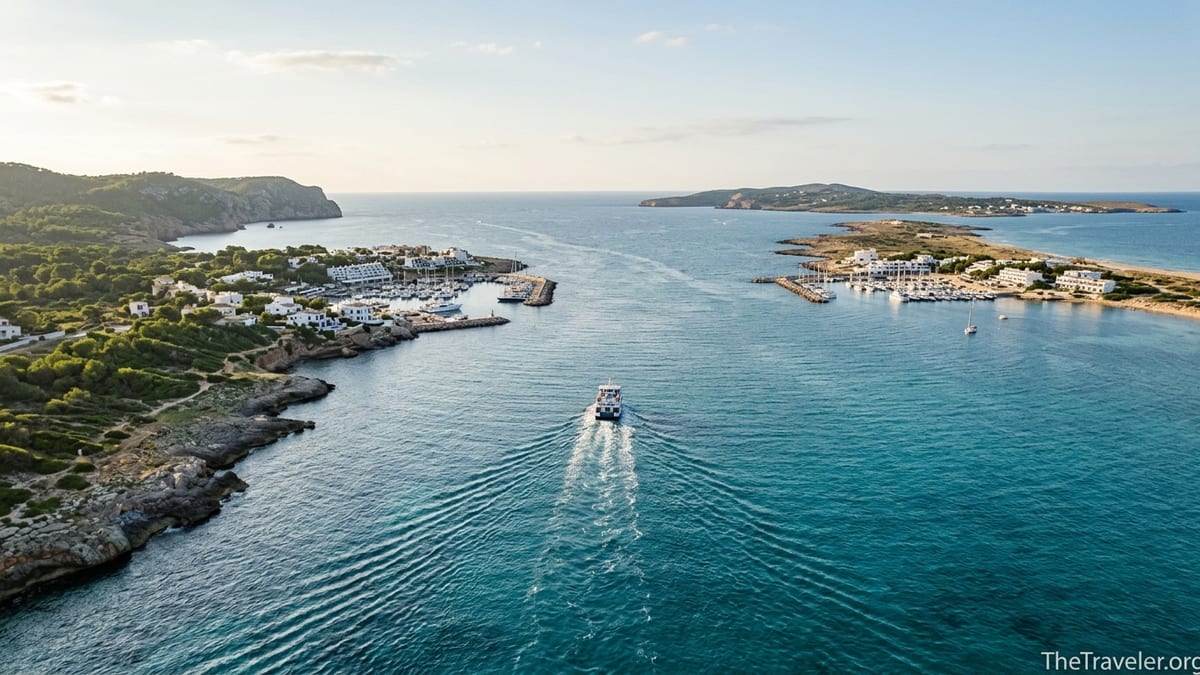
How Island Hopping in Spain Works in Practice
Spain effectively offers two separate island hopping playgrounds. In the east, the Balearic Islands sit in the Mediterranean, with Ibiza, Mallorca, Menorca and tiny Formentera tightly linked by fast ferries and seasonal flights. In the far Atlantic, the Canary Islands stretch off the coast of Morocco, with Gran Canaria and Tenerife acting as inter-island hubs served by frequent short flights and a growing ferry network. You can comfortably hop within one archipelago in a week; linking both in a single holiday usually means one week in each with a flight via mainland Spain.
The most efficient approach is to choose a core route rather than trying to “collect” islands. For example, many first-timers pair Mallorca with Ibiza and Formentera over 7 to 9 nights, while others focus purely on Tenerife and La Gomera for hiking and whale watching. In the Canaries, a classic first route is Gran Canaria to Tenerife to Lanzarote by air, or Tenerife to La Gomera and La Palma if you prefer ferries and nature. Trying to link more than three islands in one week almost always results in rushed checkouts and wasted travel days.
Connections also vary by season. In July and August, ferry schedules between Ibiza and Formentera can run almost hourly in daylight, and routes like Palma to Ibiza are reinforced with extra fast ferries. In the Canaries, airlines such as Binter Canarias and partner carriers typically increase frequencies on popular legs like Tenerife North to Lanzarote or Gran Canaria to Fuerteventura for the winter-sun high season. Always check current timetables within a few weeks of departure and be ready to shift your nights by a day if you see a better connection.
Best Balearic Island Combinations and How Long to Stay
The Balearics are compact enough that you can realistically link two or three islands in 7 to 10 days without feeling rushed. A tried-and-tested route for a first visit is Mallorca, Ibiza and Formentera, typically with 4 nights in Mallorca, 3 in Ibiza and a long day or overnight in Formentera. Mallorca gives you the Serra de Tramuntana mountains and Palma’s historic center as a base, while Ibiza adds nightlife and calas, and Formentera is your one or two days of white-sand escapism in the style of the Caribbean, but with Spanish beach bars.
If you prefer quieter coves and low-rise resorts, swap Ibiza for Menorca. A balanced route might be 3 nights in Palma de Mallorca, 4 in Menorca and 1 final night back in Palma before flying out. Menorca’s compact size means you can cross the island by car in under an hour, so even a 4-night stay gives time for Ciutadella, Mahón’s harbour, and several south-coast beaches. Travelers who enjoy road trips sometimes give Mallorca 5 nights and Menorca 3, using a rental car to explore Mallorcan hill towns like Valldemossa and Sóller in a single loop.
Shorter trips of 4 to 5 nights are best kept to just one island plus a day hop. For instance, if you only have 5 nights based in Ibiza Town, you can still enjoy one or two day trips to Formentera on the early fast ferries. With limited time, it rarely makes sense to relocate hotels and haul luggage for just one extra night on a different island when you can simply treat it as a full-day excursion with a late return ferry.
Balearic Ferries and Flights: Routes, Duration and Booking Tips
Within the Balearics, ferries do most of the heavy lifting. Major operators such as Baleària and Trasmed link Palma de Mallorca with Ibiza and Menorca, and run dense shuttles between Ibiza and Formentera using fast catamarans. On the popular Mallorca to Ibiza route, fast ferries in peak season often complete the crossing in around 2 hours to 2 hours 30 minutes, with at least one or two departures most days between Palma and Ibiza Town. Slower conventional ferries can take longer but may be cheaper and more stable in choppier seas.
The shortest and busiest connection is the Ibiza to Formentera ferry. Multiple companies operate fast ferries on this 35-minute route, and on midsummer weekends the timetable can feel almost like a bus service, with sailings roughly every 30 to 60 minutes across the main daylight hours. Prices vary widely depending on how far in advance you book and whether you choose a standard or flexible ticket, but in high season many travelers pay in the region of 25 to 40 euros one way per adult for a fast ferry, with small surcharges for checked luggage or bikes.
Bookings are best made online a few weeks ahead during July and August, especially if you are traveling with a car or motorhome. Vehicle spaces on routes such as Barcelona to Palma or Valencia to Ibiza can sell out on peak weekends, even when foot-passenger seats remain. Most ferry operators allow digital boarding passes, but you are usually asked to be at the port 60 to 90 minutes before departure for foot passengers, and 90 minutes or more if you are checking in a vehicle, particularly at large hubs like Palma or Barcelona. Some travelers report that an advertised 3-hour check-in window is conservative; arriving 90 minutes ahead is often enough outside absolute peak changeover Saturdays.
Short inter-island flights exist between Mallorca, Ibiza and Menorca, but they are generally less frequent than ferries and often cost more once luggage is factored in. Airlines sometimes run 30 to 40 minute hops such as Palma to Ibiza or Palma to Mahón using turboprop aircraft, which can be useful in winter when ferry schedules are thinner, or when seas are rough. For most summer travelers keen on sea views and flexible luggage allowances, ferries remain the default choice for Balearic island hopping.
Practical Balearic Itineraries With Time and Cost Expectations
A realistic 8-night Balearic island hopping itinerary might start with flying into Palma de Mallorca, spending 3 nights in the city or nearby beach areas, then taking a morning fast ferry to Ibiza for 3 more nights, and finally ending with 2 nights on Formentera before returning by ferry to Ibiza and flying out. Total ferry time on this loop would be around 4 to 5 hours across three sailings, leaving most days free for beaches and sightseeing. At 2026 high-season prices, a foot passenger might expect to spend roughly 150 to 250 euros per person on these three ferry segments, depending on how early they book and whether they travel on peak weekend departures.
Travelers with 6 nights could trim this to 3 nights in Palma and 3 in Ibiza, taking Formentera as a single long day trip. You would take the first fast ferry from Ibiza in the morning, rent a scooter or bicycle directly at the Formentera port, explore beaches like Ses Illetes and Migjorn, then return on an evening ferry. This avoids checking out of hotels, juggling luggage and paying higher accommodation prices on Formentera, where midsummer nightly rates for seafront apartments can be significantly higher than in central Ibiza Town.
For a quieter route, consider a Mallorca and Menorca combination over 9 nights. Fly into Palma, spend 4 nights exploring the city and west coast by rental car, then take a daytime ferry, often in the 3 to 5 hour range depending on route and operator, across to Ciutadella in Menorca for 4 nights of relaxed coves and coastal walks, before returning by ferry to Mallorca for a final night near the airport. Because this itinerary involves longer open-sea crossings, it is sensible to budget for possible weather-related delays in spring and autumn and avoid scheduling onward flights immediately after a ferry day.
Canary Island Hubs, Routes and Typical Stay Lengths
The Canary Islands are spread farther apart than the Balearics, so flights play a bigger role and travel times are slightly longer, although still short by international standards. Gran Canaria and Tenerife North act as primary aviation hubs, with Binter Canarias and partner airlines offering frequent short hops linking Lanzarote, Fuerteventura, La Palma, El Hierro and La Gomera. Typical flight times between islands are around 30 to 50 minutes, so an island hop often feels more like taking a suburban train than a long-haul flight, especially with smaller ATR aircraft and quick turnarounds.
For a first-time, one-week trip focused on beaches and towns, many visitors choose a two-island combination, such as Gran Canaria and Tenerife, or Lanzarote and Fuerteventura. A common pattern is 4 nights in Gran Canaria and 3 in Tenerife, with a mid-trip flight between Las Palmas and Tenerife North. Alternatively, beach-focused travelers might spend 4 nights on Fuerteventura’s long dunes and 3 on Lanzarote for volcanic landscapes and vineyards. Because the islands all have their own microclimates, combining two gives you a useful hedge against occasional cloud or wind on one island.
If you are more interested in hiking and quieter rural stays, a 10 to 12 night itinerary works better. You could spend 4 or 5 nights in Tenerife, using the Teide National Park as your anchor, then 3 nights in La Gomera for laurel forests and viewpoints, followed by 3 to 4 nights in La Palma for caldera hikes and stargazing. These smaller “green islands” have fewer flights and ferry departures, so it is especially important to build in a buffer night close to your departure airport at the end of the trip, rather than connecting directly from a remote island into an international flight home.
Unlike the Balearics, where you might realistically visit three or even four islands in 10 days, the Canaries reward slower travel. Distances are longer, and some islands like El Hierro or La Graciosa feel particularly laid-back, so 3 to 5 nights per island is a better minimum. With 10 nights available, aim for a maximum of three Canary islands; with just 7 nights, two islands is usually the sweet spot.
Flights and Ferries Within the Canaries: What to Expect
Inter-island flights in the Canaries are dominated by Binter Canarias and associated regional carriers, which run dense networks between the major airports of Gran Canaria, Tenerife North, Lanzarote, Fuerteventura, La Palma, El Hierro and La Gomera. In high season, trunk routes such as Gran Canaria to Tenerife North or Tenerife North to Lanzarote often have multiple departures per day, giving you flexibility to travel mid-morning or late afternoon. Base fares on short legs can start in the region of 40 to 60 euros one way for non-residents when booked in advance, rising closer to departure or on Friday and Sunday evenings.
For visitors arriving from mainland Spain or Europe on a Binter ticket, the airline’s airpass-style offers sometimes allow discounted add-on legs between islands, effectively encouraging island hopping. You may find examples where adding a Tenerife to Lanzarote leg to a ticket from Madrid to Tenerife increases the total price by only a modest amount compared with buying the island hop separately. Whatever the deal, carefully read luggage rules, because while many inter-island fares include a checked bag, some promotional tickets may only include cabin baggage and charge for checked luggage at the airport.
Ferries also link many Canary Islands. Routes such as Tenerife to La Gomera, Tenerife to La Palma, Gran Canaria to Fuerteventura and Lanzarote to Fuerteventura are commonly used by both residents and visitors, with a mix of conventional ro-pax ferries and high-speed catamarans. Typical sailing times range from around 30 to 45 minutes on the short Fuerteventura to Lanzarote hop, to roughly 2 to 3 hours between Tenerife and La Palma or Gran Canaria and Fuerteventura, depending on the operator and sea conditions. In summer 2026, operators have been reinforcing services with additional ships on popular routes, increasing capacity for both passengers and cars.
As with the Balearics, it pays to book Canary ferries in advance if you are bringing a rental car, particularly around local holidays, Christmas, New Year and Easter. Foot passengers often have more flexibility, though shorter island hops can still sell out on specific midday or late-afternoon departures. Seats are generally assigned by cabin or seating class rather than by specific seat number, and luggage policies for foot passengers tend to be fairly relaxed, with many travelers rolling onboard medium-sized suitcases and cabin bags without issue.
Sample Canary Island Hopping Itineraries and Timing
A classic 9-night Canary itinerary might start in Gran Canaria for 4 nights, continue to Tenerife for 3 nights and finish on La Gomera for 2 nights. You would likely fly into Gran Canaria Airport, stay in Las Palmas or the south-coast resorts, then take a 30 to 40 minute flight to Tenerife North mid-morning on day 5. After exploring Teide and the north coast, you would travel by ferry from Los Cristianos in southern Tenerife to San Sebastián de La Gomera, a sailing of around 50 minutes to 1 hour. After 2 nights on La Gomera, you could return by ferry to Tenerife and fly home from Tenerife South, building at least a half-day buffer in case weather or sea conditions delay the crossing.
Another practical 7-night route for beach lovers is Lanzarote and Fuerteventura. Fly into Lanzarote, spend 4 nights around Costa Teguise or Playa Blanca, then take the short ferry from Playa Blanca to Corralejo in Fuerteventura, a hop often under 30 minutes on fast ferries. After 3 nights exploring Fuerteventura’s dunes and lagoons, you can either fly back to Lanzarote for your international flight or depart directly from Fuerteventura Airport to mainland Spain or selected European cities. Because the two islands are so close, some travelers even treat one as a base and make repeated day trips to the other.
For hikers with 12 nights, a slow route such as Tenerife, La Palma and El Hierro is rewarding. You might spend 5 nights in Tenerife with a rental car, 4 nights in La Palma accessed by a short flight or a 2 to 3 hour ferry from Tenerife, and 3 nights on El Hierro reached via smaller aircraft or ferry. These legs require more attention to timetables, as departures are less frequent than on trunk routes. If you are visiting in winter, when Atlantic storms can occasionally disrupt schedules, it is sensible to position yourself on one of the main hubs such as Tenerife or Gran Canaria at least one full day before your long-haul flight home.
Luggage, Check In Times and Booking Strategy
Luggage rules can be surprisingly different between ferries and flights, and even from one airline to another, so clarifying them early helps avoid last-minute fees. On most Balearic ferries, foot passengers are allowed to roll standard suitcases onboard and store them in racks near the entrance or in designated luggage areas, with no strict weight checks unless you are transporting oversized items. Traveling with a rental car is even more forgiving; you keep all bags in your vehicle and simply drive onboard, with charges based on vehicle length rather than the number of suitcases.
On Canary inter-island flights, cabin baggage is more tightly controlled. Typical allowances are similar to European short-haul standards, often around a small cabin trolley plus a personal item. Checked baggage rules depend heavily on your fare type and whether you are a resident of the Canaries or booking a through-ticket from mainland Spain or abroad. Non-resident visitors who buy separate domestic island hops sometimes find that adding a checked bag at booking is cheaper than paying at the airport; it is worth comparing both options on the airline’s booking page before confirming.
Check in times vary by operator and route. For Balearic and Canary ferries, being at the port 60 minutes before departure as a foot passenger is usually sufficient outside extreme peak weekends or if terms and conditions specify an earlier time. If you are driving a rental car onto a ferry, plan to arrive 90 minutes ahead to handle paperwork and boarding queues, particularly on popular Friday and Sunday crossings. For inter-island flights, many routes allow online check in and airport bag drop up to 45 or 60 minutes before departure, but you will want a slightly bigger margin if you are unfamiliar with the airport layout.
From a booking strategy perspective, it is wise to lock in inter-island flights as soon as you have your international flights in place, since seat numbers and cheaper fare classes are limited on small aircraft. Ferries, especially on busy short routes like Ibiza to Formentera or Lanzarote to Fuerteventura, can be booked a little later, though securing your preferred departure times a few weeks out avoids frustration. Dynamic pricing is common, so prices for popular midday sailings in high season may creep up as the departure date approaches.
The Takeaway
Spanish island hopping is most enjoyable when you treat the Balearics and Canaries as two distinct playgrounds, each with its own rhythm and logistics. In the Balearics, ferries make it easy to weave Mallorca, Ibiza, Menorca and Formentera into a single trip, with travel times short enough that you can change islands midday and still be on the beach by afternoon. In the Canaries, short flights and strategic ferries let you combine volcanic landscapes, black-sand beaches and cloud forests, provided you allow generous buffers around your international flights and accept that Atlantic weather occasionally dictates the schedule.
If you focus on two or three islands per archipelago, allow at least three nights per stop, and book key ferries and flights in advance, you can move smoothly without feeling rushed. Think of your itinerary as a chain of mini-breaks: a few nights in Palma before a hop to Ibiza, or a long weekend in Gran Canaria before heading to Tenerife and on to La Gomera. With realistic travel times, clear luggage expectations and flexible connections, island hopping in Spain becomes less about timetables and more about sunrise swims, tapas in harbour towns and watching the sun set behind distant silhouettes of your next island across the sea.
FAQ
Q1. How many islands can I realistically visit in one week?
For most travelers, two islands in the Canaries or two to three in the Balearics is realistic in one week, with at least three nights per island to avoid constant packing and travel fatigue.
Q2. Is it better to use ferries or flights in the Balearic Islands?
In the Balearics, ferries are usually the easiest and most economical option, especially between Ibiza and Formentera or Mallorca and Ibiza, while short flights are mainly useful in winter or when seas are rough.
Q3. Do I need to book inter-island ferries in advance?
In high season and when traveling with a car, advance booking is strongly recommended, particularly on routes like Palma to Ibiza or Tenerife to La Gomera; foot passengers have more flexibility but risk limited choice of departure times.
Q4. How early should I arrive at the port for a ferry?
Plan to arrive at least 60 minutes before departure as a foot passenger and around 90 minutes ahead if you are boarding with a vehicle, allowing extra time on peak summer weekends or holidays.
Q5. What is a typical budget for inter-island travel in one Balearic trip?
For an 8 to 9 night trip linking Mallorca, Ibiza and Formentera, many travelers spend roughly 150 to 250 euros per person on three or four ferry legs as foot passengers, depending on season and booking timing.
Q6. Are Canary inter-island flights expensive?
Short hops typically start around 40 to 60 euros one way for non-residents when booked early, with higher prices on busy days or close to departure, and some tickets include checked luggage while others do not.
Q7. Can I island hop with a rental car?
Yes, many visitors take rental cars on ferries in both archipelagos, but you must confirm the company’s inter-island policy in advance and reserve car spaces early on popular routes where vehicle capacity sells out.
Q8. What is the best time of year for island hopping?
Late spring and early autumn offer a good balance of frequent connections, warm weather and slightly lower prices, while midsummer has the densest schedules but higher fares and busier ferries and flights.
Q9. Is sea sickness a concern on Balearic and Canary ferries?
Short sheltered routes like Ibiza to Formentera are usually calm, but longer open-sea crossings in the Canaries or between Mallorca and the mainland can be choppy, so motion sickness tablets and choosing larger vessels can help.
Q10. Should I keep a buffer day before my flight home?
It is prudent to spend your final night on the island you are flying out from, especially in the Canaries, so that any weather-related ferry or flight delays do not cause you to miss your international departure.