


Spain is one of Europe’s easiest countries to love but not always the easiest to plan. From Andalusia’s white villages and Moorish palaces to Barcelona’s Modernist architecture and the wild Costa Brava, there are countless ways to structure an itinerary. Choosing between a fully escorted Spain tour, a small-group circuit in Andalusia, a series of private tours, or completely independent travel will shape everything from your budget to how tired you feel at the end of each day. This guide walks through the main options, using real, current examples so you can see what each style looks like in practice and when organized travel can genuinely make your life easier.
How Spain Tours Work Today
Spain’s tour market in 2026 is broad, ranging from classic coach tours that cross the country in 10 to 15 days to hyper-focused three-day private city programs. Large operators such as Trafalgar and Tauck continue to offer multi-city escorted Spain itineraries that link hubs like Madrid, Seville, Granada and Barcelona over one or two weeks, typically with set departure dates and groups of around 30 to 45 travelers. These tours emphasize convenience, logistics handled for you, and a predictable structure with daily sightseeing and some free time built in.
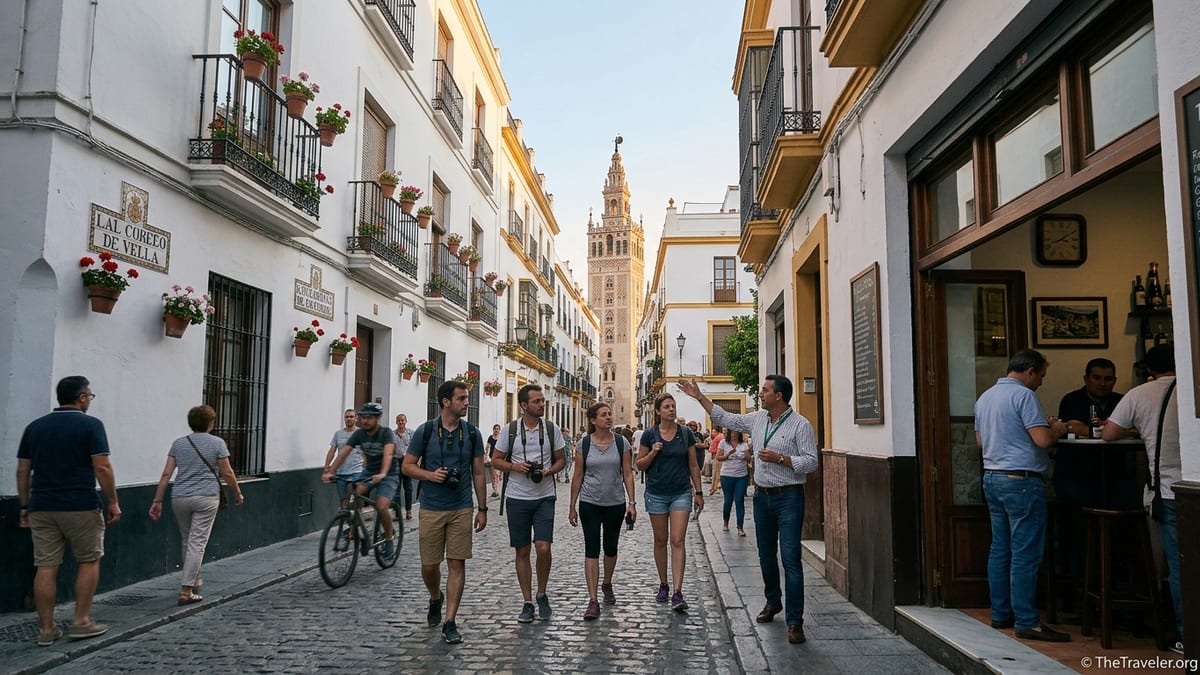
There is also a strong layer of regional specialists, particularly in Andalusia. For example, Andalusia-focused companies publish small-group circuits that spend a full week or more visiting Seville, Córdoba, Granada and Málaga, often with a maximum group size under 16 and departures tied to pleasant seasons like spring and autumn. These circuits zero in on southern Spain’s highlights such as the Alhambra, Seville Cathedral and Córdoba’s Mosque-Cathedral, which are among the country’s most logistically challenging monuments to visit independently due to ticket demand.
At the same time, Spain’s infrastructure makes independent travel appealing. High-speed AVE and AVLO trains connect Madrid with Barcelona, Seville, Málaga, Valencia and beyond in a few hours, and regional buses link Andalusia’s smaller cities and white villages. It is realistic to build a do-it-yourself circuit using public transport and then layer in targeted day tours or private guides only where they add the most value, such as complex monuments or rural areas with limited public options.
Private tour companies round out the picture. In major cities like Barcelona and Madrid, long-established outfits sell full-day private city tours priced per vehicle or per guiding day instead of per person. In Barcelona, for instance, a full-day private city tour that includes Sagrada Família, the Gothic Quarter and Park Güell can run around 800 to 1,000 euros for the group, depending on vehicle type and inclusions, which can be cost effective for four or more travelers who prefer a tailored pace.
Escorted Spain Tours: What You Really Get
Typical escorted Spain tours are multi-day, multi-city packages with a fixed itinerary, a professional tour director and included transportation. A common format is a 9 to 15 day circuit that starts in Madrid, moves south to Córdoba, Seville and Granada, sometimes continues east via Valencia, and ends in Barcelona. A mid-range operator’s “Best of Spain” 15-day escorted tour in 2026, for example, visits Madrid, Seville, Córdoba, Granada, Valencia and Barcelona, with coach transport, daily breakfasts, several dinners and city sightseeing included, and prices starting in the neighborhood of 4,000 to 5,000 US dollars per person excluding flights.
Escorted tours are usually priced per person in a twin room and may add a single supplement that can be several hundred dollars for solo travelers. Inclusions often cover airport transfers on the first and last days if you arrive and depart on the group schedule, hotel porterage, local city guides in key stops such as the Prado Museum in Madrid or the Alhambra in Granada, and reserved entrance tickets. What you sacrifice is flexibility. You will see Córdoba, but it might only be a half-day stop between Madrid and Seville rather than an overnight stay. There is limited scope to deviate from the set route, and early starts are common.
An escorted tour works particularly well if you want to cover a lot of Spain in relatively little time, you are nervous about language barriers, or you simply want someone else to manage logistics. Consider a traveler who has 10 vacation days in late May and wants to see Madrid, Andalusia and Barcelona without dealing with train reservations or museum tickets. Joining a 9-day or 11-day escorted circuit with guaranteed departures during that period allows them to lock in a full route, including headline sights like Seville Cathedral and Park Güell, with one booking.
The main drawbacks are that your daily rhythm is dictated by a group schedule and long coach days can be tiring. If you prefer slow mornings, lingering lunches or spontaneous detours, a classic escorted Spain coach tour can feel regimented. It is also typically more cost effective for couples or pairs sharing a room than for solo travelers once single supplements are factored in.
Small-Group & Andalusia Circuits: Slower & Deeper
Small-group tours occupy a middle ground between big-bus escorted travel and private touring. Group sizes are often capped at 12 to 16 travelers, itineraries focus on one region and the pace tends to be slower. In Andalusia, for example, a number of operators offer 7 to 10 day circuits that visit Seville, Córdoba, Granada and sometimes Ronda or Málaga, staying two or three nights in each base. One 8-day “immersive” Andalusia program currently on the market focuses solely on Seville, Granada and Córdoba, combining guided visits with free afternoons and optional evening flamenco experiences.
Pricing for these small-group Andalusia trips usually falls a little higher than large-coach tours on a per-day basis because costs are split among fewer travelers and hotels are often boutique rather than chain. A week-long small-group Andalusia circuit in shoulder season might start around 2,000 to 3,000 euros per person for a double room, including breakfasts, some dinners, private bus or van transport and guided visits to headline monuments such as the Alhambra, Seville Cathedral and the Mezquita in Córdoba. The trade-off is a more personal atmosphere, easier interaction with the guide and other travelers, and less time spent loading and unloading a full-size bus.
Andalusia circuits are especially convenient for first-time visitors whose priority is to experience the Moorish heritage of southern Spain. Tickets for the Alhambra can sell out days or weeks in advance during peak months, and Seville’s Alcázar also sees heavy demand. On a reputable Andalusia circuit, these tickets and time slots are pre-arranged, and you may benefit from timed entries that avoid the hottest part of the day. This can be decisive during late spring or early autumn when daytime temperatures in Seville and Córdoba can still climb well above 30 degrees Celsius.
Another use case is multi-generational trips. For example, a family group of ten planning a May vacation might find that joining a small-group Andalusia departure or chartering it as an exclusive group solves questions about who is responsible for driving, navigating narrow historic centers, and queuing for tickets. With transport, hotels and key entrances bundled, each generation can focus on sightseeing and shared meals rather than logistics.
Private Tours in Spain: Customization at a Price
Private tours in Spain range from a three-hour walking tour of the Gothic Quarter in Barcelona to multi-day, fully customized itineraries across several regions. In major cities, well-established private guides and agencies sell full-day tours that include hotel pick-up, vehicle, and priority access at headline sights. In Barcelona, for instance, a full-day private city tour with an English-speaking guide and driver, covering Sagrada Família, Park Güell and the waterfront, can easily cost around 900 to 1,000 euros for up to six people plus entrance fees. Per person, that can compare favorably to higher-end small-group excursions if you are traveling as a family or group of friends.
In Madrid and Andalusia, private city tours often follow a similar pricing structure. Private full-day tours in Madrid that include the Royal Palace, the Prado and a tapas-focused evening walk may hover around several hundred euros for the guiding and vehicle, with entrance tickets and food on top. In Andalusia, multi-day private circuits starting in Málaga or Seville can be arranged, linking Córdoba, Granada and hill towns such as Ronda. One example from the Costa del Sol market is a three-night private circuit from Málaga that visits Córdoba, Seville and Granada with private guides in each city and hotel stays included, priced in the low thousands of euros for two travelers, with the price per person falling for larger groups.
Private touring makes the most sense when you value flexibility and personal attention more than minimizing upfront cost. You can start later in the morning, skip sights that do not interest you, or focus deeply on a specialty such as contemporary Spanish cuisine, flamenco history or Jewish heritage. It is also a strong choice in destinations where self-driving is stressful, such as navigating the narrow one-way streets of historic centers, or in rural wine regions where you do not want to combine tastings with driving.
However, private tours are not automatically luxurious. Quality varies, and inclusions should be scrutinized carefully. Low advertised rates may not include entrance tickets, fuel surcharges or overtime for guides. For value, look for clear descriptions of what is included, and compare a full-day private tour for your group against the equivalent in small-group day tours. A couple might find that two well-chosen small-group excursions plus independent sightseeing give similar depth at a lower cost than a string of private days, whereas a group of six or eight may find private touring cheaper per person and far more convenient.
Day Tours vs Independent Day Trips
One of the most useful ways to blend organized and independent travel in Spain is to move independently between hubs and then use day tours to access specific destinations. Classic examples include day tours from Madrid to Toledo or Segovia, from Seville to Córdoba or white villages, and from Barcelona to Montserrat or the Costa Brava. Group day tours by coach from Madrid to Toledo or Toledo plus Segovia typically cost around 70 to 120 euros per person, including transport and basic guiding. This can be competitive with the combination of public train tickets, local transport and individual entrance fees if you value ease and commentary.
Private day tours, especially in historically dense cities like Toledo, tend to cost considerably more in absolute terms but deliver a very different experience. It is common to see private Toledo walking or vehicle-based tours for small groups priced somewhere between roughly 200 and 500 euros depending on duration, language and whether entrance tickets are included. For a family of five, that might translate into 50 to 100 euros per person for a full day with a dedicated guide, which can be attractive compared with five spots on a high-end small-group tour.
In Andalusia, structured day tours can be particularly valuable when distances are long and public transport is indirect. A day tour from Málaga to Granada that includes timed Alhambra entrance, transport and a local guide removes the need to secure one of the limited daily Alhambra ticket slots yourself. Similarly, organized excursions from Seville that combine a white village such as Ronda with scenic countryside viewpoints or short hikes are hard to reproduce efficiently by bus unless you are comfortable renting a car.
Independent day trips remain very viable along major train corridors. Madrid to Segovia on the high-speed line takes about half an hour, and Barcelona to Girona is a similar ride, allowing do-it-yourself visits with pre-booked monument tickets. In these cases, choosing a day tour becomes a question of whether you want curated commentary and seamless transfers or prefer the lower cost and flexibility of planning the details yourself.
Cost, Convenience & When Organized Travel Wins
When you compare escorted tours, small groups, private tours and independent travel in Spain, the key trade-offs are cost per person, time saved and stress reduced. A two-week escorted coach itinerary might average 300 to 400 US dollars per person per day including hotels, many meals and sightseeing. Independent travelers staying in mid-range hotels, using trains and buses, and booking a handful of day tours might keep daily costs closer to 200 to 300 dollars per person if they are disciplined, though this depends heavily on hotel choices and timing.
Organized travel shines in specific scenarios. First, during peak season in hot regions like Andalusia between late June and early September, a good escorted or small-group tour can mitigate heat and crowd stress by scheduling early morning monument entries and providing air-conditioned transport door to door. Second, for complex multi-region itineraries, such as combining Madrid, Andalusia and Barcelona in 9 or 10 days, escorted itineraries remove the friction of coordinating internal flights or high-speed trains, transfers and luggage logistics across multiple cities.
Third, organized travel is often the safer bet for travelers with mobility limitations, older parents, or young children. Having a tour director or private driver who can adjust walking distances, arrange accessible entries, or locate shade on hot afternoons can make the difference between a trip that feels like work and one that feels like a holiday. For example, multi-generational groups commonly choose private vans for day tours in Barcelona or Seville so grandparents are not navigating steep streets or standing in long queues.
Conversely, independent travel wins when your schedule is longer and more flexible and when you are comfortable with online booking tools. Travelers who can spend three or four weeks in Spain often find better value by combining self-booked trains and apartments with a few targeted guided experiences, such as a food tour in San Sebastián, a Gaudí-focused architecture walk in Barcelona, or a specialist wine tour in La Rioja. In these cases, paying a premium for a fully escorted circuit adds less incremental benefit.
Designing Your Own Spain Itinerary with Tours Added In
For many travelers, the best solution is not “tour or no tour” but a hybrid. One common pattern is to fly into Barcelona or Madrid, travel independently between a handful of bases, and plug in tours where they provide clear advantages. A couple might spend three nights in Barcelona, four in Seville, two in Granada and two in Madrid over a 12-day trip, booking their own trains between cities and reserving only a few organized experiences: a private Gaudí tour in Barcelona, a small-group Alhambra visit in Granada and perhaps a guided tapas walk in Seville’s Triana neighborhood.
Another approach is to book a regional circuit as an anchor and then add independent days before or after. For example, you might join an 8-day small-group Andalusia circuit that starts and ends in Málaga, then add three independent nights in Barcelona at the front and two nights in Madrid at the back. This way, your most logistically complex segment, which includes Alhambra tickets, city transfers and cultural guiding, is structured, while your time in Spain’s two largest cities remains open for self-directed exploration.
Travelers who want more hand-holding but dislike large groups can look at custom itineraries planned by specialist Spain-based agencies. These companies design tailored routes, book trains or rental cars, and arrange a mix of private and small-group tours in each location, handing you a digital roadbook and support line rather than a tour director who travels with you. Pricing varies widely but typically sits between pure independent travel and luxury fully private touring since some services, such as airport transfers and select private guides, are included, while other days are free.
Whichever route you choose, it helps to sketch a realistic pacing framework. In Andalusia, for instance, many travelers underestimate distances and summer heat. Trying to cover Málaga, Granada, Córdoba, Seville and Cádiz in five days often leads to rushed visits and little time to appreciate evening street life or tapas culture. A more comfortable plan would be to prioritize three cities, such as Seville, Granada and Córdoba, and either rely on a small-group circuit or build your own route with two to three nights in each and a single longer transfer day in between.
The Takeaway
Spain invites both structure and spontaneity. Escorted coach tours and small-group Andalusia circuits simplify a complex destination, handling logistics and essential tickets so you can focus on the experiences themselves. They are especially strong for first-timers with limited time, summer travelers facing heat and crowds, and multi-generational or mobility-challenged groups for whom door-to-door transport is a major advantage.
Private tours add a layer of flexibility and depth, particularly valuable in cities dense with history and art or in rural and wine regions where logistics are less straightforward. For families and groups of friends, the per-person cost of private guiding can be reasonable compared with high-end group excursions, with the added benefit of complete control over pace and priorities.
Independent travel remains highly practical in Spain thanks to fast trains, reasonably priced regional flights and a sophisticated accommodation market. By combining self-planned travel between hubs with targeted day tours and carefully chosen private experiences, many travelers can keep costs manageable without sacrificing richness. Your choice ultimately depends on how much planning you are willing to do yourself and how much you value having someone else make Spain run smoothly behind the scenes.
Whenever you are uncertain, use a simple test: if a day or destination feels logistically complex, ticket-restricted or physically demanding, consider adding an organized element. If it feels straightforward to reach and explore at your own pace, keep it independent. Striking that balance is often what turns a good Spain trip into a great one.
FAQ
Q1. Are escorted Spain tours worth the cost compared with planning everything myself?
They can be worth it if you have limited time, want to see several regions in one trip, or dislike managing logistics such as trains and ticket reservations. If you are comfortable booking transport, hotels and monument tickets online, you may save money and gain flexibility by traveling independently and adding only a few guided tours.
Q2. How far in advance should I book an Andalusia circuit or Alhambra-inclusive tour?
For peak periods like April, May, late September and October, aim to secure Andalusia circuits and any tour that includes Alhambra tickets at least two to three months ahead. In high summer and major holiday weeks, earlier booking improves your chances of getting preferred dates and time slots.
Q3. What is a realistic budget per day for a mid-range escorted Spain tour?
Many mid-range escorted Spain tours that include hotels, most breakfasts, some dinners, transport and sightseeing fall roughly in the 300 to 400 US dollars per person per day range, not including international flights. Luxury escorted or very small-group options can be significantly higher.
Q4. Is it better to join a tour for all of Spain or just for Andalusia?
If you want a simple, single booking and are comfortable with a structured schedule, a full Spain escorted tour can work well. However, many travelers find that using a tour only for Andalusia, where tickets and heat add complexity, and exploring Madrid and Barcelona independently strikes a good balance of convenience and freedom.
Q5. Do small-group tours in Spain really feel different from big coach tours?
Yes. Small-group departures typically have fewer than 16 travelers, which means faster hotel check-ins, easier interaction with guides, more flexible restaurant choices and a more informal atmosphere. They often cost more per person than large-coach tours but provide a more intimate experience.
Q6. When is independent travel in Spain a better choice than organized tours?
Independent travel is usually best if you have a longer trip, enjoy planning, are comfortable with online bookings and speak at least basic English. It works particularly well along major train corridors and in big cities where local transit and walking cover most needs.
Q7. How do private tours compare in price to group day tours?
Private day tours in Spanish cities often range from a few hundred to several hundred euros per day for a small group, while group day tours might cost 70 to 150 euros per person. For two people, group tours are usually cheaper; for four or more, private guiding often becomes competitive or even better value per person.
Q8. Is it safe to rent a car for touring Andalusia instead of joining a circuit?
Renting a car is generally safe and gives maximum flexibility, especially for visiting small white villages and rural sights. However, driving and parking in historic centers like Granada or Seville can be stressful. Travelers who dislike city driving or narrow streets often prefer small-group or private circuits that include a driver.
Q9. How much free time will I have on a typical escorted Spain tour?
Most escorted itineraries include some free afternoons or evenings, especially in major cities. That said, early starts and full sightseeing days are common. If free time is a priority, look for itineraries that specify at least one unscheduled half-day in key cities, or consider small-group or semi-escorted formats.
Q10. Can I customize an escorted Spain tour itinerary?
Fully escorted group tours have fixed routes and schedules, so customization is limited to optional excursions and pre- or post-tour nights. For real customization, you would need either a private version of the itinerary, if the operator offers it, or a tailor-made trip designed by a specialist agency.