


Designing a Spain itinerary is often a balancing act between big-name cities like Madrid and Barcelona, the whitewashed villages of Andalusia, foodie capitals in the north and tempting island escapes. The good news is that Spain’s broad high speed rail network, short domestic flights and efficient ferries make it surprisingly feasible to combine several regions in one trip, as long as you are realistic about distances and overnight stays. This guide sets out practical 5, 7, 10, 14 and 21 day routes that link Madrid, Barcelona, Andalusia, Valencia, northern Spain and the islands, built around current travel times and logical pacing.
How to Think About Distances and Transport in Spain
Spain looks compact on the map, but it is the second largest country in Western Europe, so planning needs to start with travel times. High speed AVE and other fast trains link major cities such as Madrid, Barcelona, Seville, Malaga and Valencia in roughly 1.5 to 3 hours in most cases, with frequent departures on busy routes like Madrid to Barcelona. On these AVE-style services, trains typically cruise at up to 300 km/h on dedicated high speed lines, which keeps city to city travel competitive with flying once airport transfers are included.
Regional trains and buses are slower but very useful for mid-range hops. As an example, Madrid to Granada by fast train takes around 3.5 to 4 hours on current timetables, while Seville to Granada is often just under 3 hours, and Barcelona to Valencia by rail tends to sit in the 2.5 to 3.5 hour range depending on the service. Bus routes often mirror these corridors and can be slightly slower but cheaper, which is useful for budget travelers on longer stays.
Flights come into play when you begin to add the Balearic Islands or Canary Islands. Barcelona or Valencia to Palma de Mallorca typically takes about 50 minutes in the air, while Madrid to Tenerife or Gran Canaria is closer to 2.5 to 3 hours. There are also overnight and daytime ferries from Barcelona and Valencia to the Balearics; the fastest ferries between Barcelona and Mallorca generally take around 3.5 hours one way, with conventional ships taking longer, which means they are better suited to itineraries of 10 days or more where you can stay several nights on the island rather than doing a rushed in and out day.
As a rule of thumb, treat any travel day involving a train or ferry of 3 hours or more as a half day of sightseeing lost, and remember that regional lines into the north and some cross-country routes are slower and curvier. When you read the sample itineraries below, assume that each travel segment uses an early departure or mid-afternoon slot so that you still have usable time at your next stop.
A Compact 5 Day Spain Itinerary: Madrid and Barcelona
A five day trip does not leave much room for criss-crossing the country, so the most realistic approach is to focus on Madrid and Barcelona, connected by high speed rail. On the core Madrid to Barcelona route, current AVE and rival operator schedules usually show journey times of around 2.5 to 3 hours, though timetables can occasionally lengthen slightly due to network works. That makes it a comfortable half day transfer, especially if you choose a mid-morning train and arrive in time for a late tapas lunch and an afternoon stroll in your new city.
One simple pattern is to start in Madrid for two nights and finish with three in Barcelona. Day 1 is your arrival and an easy loop around central Madrid: the Plaza Mayor, the Royal Palace exterior and early evening churros near Puerta del Sol. Day 2 can be devoted to the Golden Triangle of art, combining the Prado, Reina Sofia and Thyssen-Bornemisza, with a sunset walk through Retiro Park. After a relaxed tapas dinner around La Latina, call it an early night so you can board a late morning train to Barcelona on Day 3.
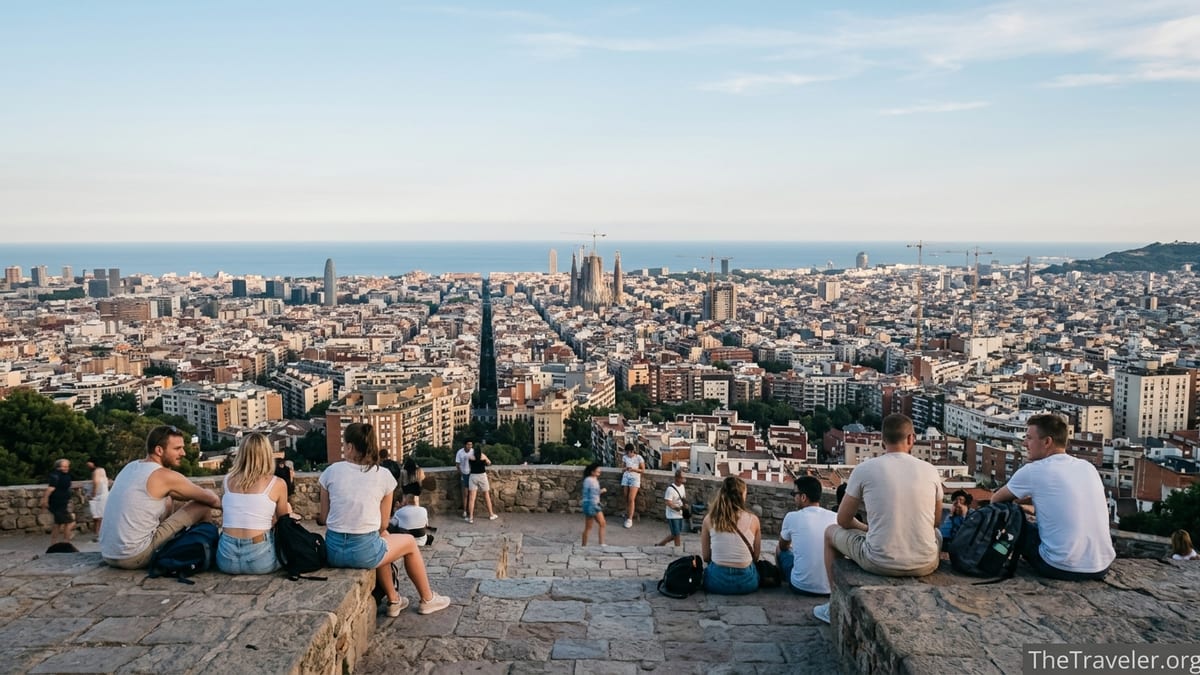
On arrival in Barcelona, check into a hotel in Eixample or near Plaça de Catalunya, then walk down Passeig de Gràcia to see Gaudí’s Casa Batlló and La Pedrera from the outside before ending with drinks in El Born. Day 4 is your big Gaudí and waterfront day: prebook a timed entry for the Sagrada Família in the morning, wander Park Güell around midday, and spend your late afternoon between Barceloneta Beach and the marina. Day 5 is an overflow day that you can spend at the Picasso Museum, shopping for design pieces in Gràcia, or taking a short commuter train to the coastal town of Sitges, which is usually under an hour away, before heading back to Barcelona for your final night.
This itinerary keeps everything on rail, avoids flying and changes hotels only once, which is ideal for a short visit. If you are flying in and out of different airports, it is easy to land in Madrid and depart from Barcelona or vice versa, using a multi-city ticket on your transatlantic or long haul carrier.
One Week in Spain: Adding Andalusia or Valencia
With seven days you gain enough slack to add a third region. Many travelers choose either an Andalusia triangle of Madrid, Seville and Granada, or a Mediterranean line that strings together Barcelona, Valencia and Madrid. The choice often comes down to whether you prefer Moorish palaces and flamenco plazas or contemporary architecture, paella and seaside promenades.
A classic Madrid and Andalusia route works well if you fly into Madrid and out of Malaga. Spend your first two nights in Madrid as in the 5 day plan, then on Day 3 catch a mid-morning AVE to Seville, which often takes roughly 2.5 hours. After checking in near the Santa Cruz quarter, dedicate your afternoon to the Seville Cathedral and Giralda tower, followed by an evening in the narrow lanes of Barrio Santa Cruz. Day 4 is for the Real Alcázar and the Plaza de España in María Luisa Park, while the evening might feature a flamenco show in a small tablao.
On Day 5, travel by train or bus from Seville to Granada in about 2.5 to 3 hours. Settle into accommodation in the Albaicín or near the historic center, and spend your afternoon exploring the old Moorish quarter’s alleys and viewpoints. Day 6 is centered on the Alhambra, for which advance timed tickets are essential in most seasons; visiting the Nasrid Palaces, Generalife gardens and Alcazaba will typically fill a good part of the day. You can then take an evening bus or next-morning train down to Malaga in about 1.5 to 2 hours for your final night on the Costa del Sol before flying out.
If you favor the Mediterranean and slightly shorter hops, a Barcelona, Valencia and Madrid loop is attractive. After two or three nights in Barcelona, take a Barcelona to Valencia train, which normally clocks in at around 3 hours on intercity services. In Valencia, stay around the Ciutat Vella or the Ruzafa neighborhood and split your time between the futuristic City of Arts and Sciences complex and the beach district of Malvarrosa. From Valencia back to Madrid, fast services can take roughly 1.5 to 2 hours, making it one of the most efficient transfers in the country and a good way to end your week with one last evening in the capital.
10 Days: Combining Madrid, Barcelona and Andalusia
Ten days allows you to link Madrid, Barcelona and key Andalusian cities without rushing every stop. One common pattern works as a gentle arc: Madrid, Barcelona, Seville and Granada, with overnight allocations that keep most stays at two or three nights. This assumes an open jaw flight arriving in Madrid and departing from Malaga or back out of Madrid after looping through.
Start with three nights in Madrid to overcome jet lag and explore the museums, markets and nearby Toledo on a day trip. High speed trains from Madrid to Toledo take around 30 minutes, making it a very manageable excursion without changing hotels. On Day 4, take a midday AVE to Barcelona in around 2.5 to 3 hours, giving yourself the late afternoon and two more full days to explore Gaudí’s sites, the Gothic Quarter, Montjuïc and the city’s food markets.
On Day 7, fly or take a train from Barcelona to Seville. Flight times between Barcelona and Seville are about 1 hour and 40 minutes in the air, but you should budget close to half a day once airport security and transfers are added. There are usually also train combinations via Madrid that can take roughly 5.5 to 6.5 hours; these are sensible if you prefer staying on the rail network and do not mind a longer scenic ride.
Spend two nights in Seville, focusing on the cathedral, Alcázar, Triana district and riverside bars. On Day 9, travel to Granada in roughly 2.5 to 3 hours by train or bus, then devote your full final day to the Alhambra’s palaces and gardens before a last evening wandering the Mirador de San Nicolás area with views back over the complex. You can fly out of Granada, connect by bus or train to Malaga for more flight options, or return north to Madrid if your airline requires a round trip ticket.
14 Days: Adding Valencia, Northern Spain and an Island
A two week trip opens the possibility of adding both Valencia and a taste of the north, as well as a short island stay, if you are willing to accept a few one night stops. More commonly, travelers choose one additional region to keep things relaxed. A balanced route that still feels human might look like this: Madrid, Barcelona, Valencia, Seville and Granada, with a side trip by plane to Mallorca.
Begin with three nights in Madrid, then take the fast train to Barcelona for three nights. On Day 7, transfer by mid-morning train to Valencia in around 3 hours and stay two nights. In Valencia, leave one day for the historic center and Turia Gardens, and another for cycling out to the Albufera lagoon or spending time on the city beaches. On Day 9, fly from Valencia to Palma de Mallorca, often in under an hour, and stay for three nights to justify the extra leg.
In Palma, you can base yourself near the old town and port, exploring the cathedral, Bellver Castle and harbor promenade, with a day trip by local bus to Sóller, Deià or nearby coves. Rental cars on the island are common and can make it easier to reach calas and viewpoints, but parking in the city center is tight, so look for accommodation that includes a garage if you plan to drive. Ferries back to the mainland from Palma to Barcelona or Valencia can range from roughly 3.5 hours on fast ships to longer overnight sailings, so for a 14 day itinerary you will usually want to fly instead to shorten transfer times.
For travelers drawn to Spain’s green north, another 14 day variant connects Madrid, Barcelona and the Basque Country. After the usual three nights in Madrid and three in Barcelona, catch a direct or connecting train or a short flight to Bilbao or San Sebastian. At present, rail links from Barcelona to Bilbao or San Sebastian are slower than the main AVE trunk routes, often in the 6 to 7 hour range with changes, which makes a 1 hour flight a more time-effective option. Once there, you can spend three or four nights divided between Bilbao, with its Guggenheim Museum and riverside regeneration, and San Sebastian, famed for its pintxo bars and beautiful crescent beach.
21 Days: A Grand Route Linking Cities, North and Islands
With three full weeks you can attempt a grand circuit that meaningfully covers Madrid, Barcelona, Andalusia, Valencia, a slice of the north and an island, provided you still respect the need for rest days and minimize one night stops. A workable pattern starts in Barcelona, loops inland and south through Madrid and Andalusia, cuts across to Valencia and the Balearics, and ends in the north before returning for your flight home.
One realistic blueprint might allocate three nights in Barcelona, three in Madrid, four across Seville and Granada, three in Valencia, four on Mallorca and four in the Basque Country. After flying into Barcelona and easing into Spanish rhythms for three nights, you could take the high speed train to Madrid and stay centrally in neighborhoods such as Huertas or Chamberí. From Madrid, continue south by AVE to Seville in about 2.5 hours, spending two nights there and two more in Granada, linked by a 2.5 to 3 hour rail or bus journey.
From Granada or Malaga, travel by train or bus to Valencia. This cross-country leg does not run on continuous high speed lines and typically takes anywhere between 5 and 7 hours with changes, so it is truly a travel day. Once in Valencia, recover with three nights enjoying the city’s blend of historic architecture and futuristic design. Then fly to Palma de Mallorca for four nights, using at least two full days for island road trips along the Tramuntana mountains and coastal villages while keeping another day free for the capital itself.
To reach the north, return from Palma to either Barcelona or Madrid and connect to Bilbao or San Sebastian by plane or train, depending on schedules when you book. The evolving high speed network into the Basque Country is gradually shortening travel times from Madrid to Bilbao and San Sebastian, but they are still generally longer than the flagship Madrid to Barcelona or Madrid to Seville segments, so a short domestic flight often makes sense if you are squeezing the north into a larger loop. Use your final four nights to enjoy Atlantic breezes, seafood and pintxos before a last hop back to your departure city.
Practical Tips for Booking Transport and Staying Sane
When you start connecting regions, understanding how to buy tickets and passes can save both money and hassle. Most long distance trains in Spain require seat reservations and are sold with dynamic pricing, which means it often pays to book popular stretches such as Madrid to Barcelona or Madrid to Seville several weeks in advance, especially in peak summer months and major holiday periods. If you are planning multiple rail legs within a month, the Renfe Spain Pass offered by the national operator is worth investigating, as it allows non-resident travelers to prepay a set number of long distance trips in either standard or comfort class and then reserve individual trains as needed during a validity window.
For many travelers, however, simple point to point tickets bought directly from train companies or reputable international retailers remain the easiest route. As an example, a midweek Madrid to Barcelona high speed ticket booked several weeks out can sometimes be found for a moderate price in basic class, while last minute fares in popular time slots might climb significantly. In the north and on some regional lines, conventional trains run on classic tracks and can be slower, but they also tend to be cheaper and more scenic, passing through farmland, river valleys and small towns that you would miss from the motorway.
Buses fill in gaps where trains are sparse or indirect, such as certain cross-Andalusia routes or connections into smaller coastal towns. For island segments, keep in mind that low cost carriers and national airlines operate multiple daily flights in high season between mainland cities and Palma, Ibiza or Tenerife, but early booking is essential if you need to travel on specific days. Ferries from Barcelona and Valencia to the Balearic Islands offer the romance of sea travel and the option to bring a car, but the shortest sailings are still usually several hours one way, so factor that into your plans.
Finally, build white space into every version of your itinerary, whether it is five days or twenty one. A single unscheduled afternoon in Seville for getting lost in Santa Cruz or an open evening in Barcelona to follow your nose from bar to bar often becomes a highlight that no guidebook can script. Spain rewards slow evenings, late dinners and long conversations as much as it does museum checklists and palace tours.
FAQ
Q1. Is it realistic to visit Madrid, Barcelona and Andalusia in just one week? It is possible but tight. Most travelers will be happier focusing on Madrid plus Andalusia or Madrid plus Barcelona in seven days, unless they accept very quick one or two night stays.
Q2. What is the best way to travel between Madrid and Barcelona? The high speed train is usually the most convenient option, taking around 2.5 to 3 hours between city centers, with multiple departures per day and no need for early airport check in.
Q3. How many nights should I spend in each city on a 10 day trip? A common pattern is three nights in Madrid, three in Barcelona and four divided between Seville and Granada, which gives at least two full days in each major stop.
Q4. Can I add Mallorca or another island to a 7 day itinerary? You technically can, but it will feel rushed. Reaching Mallorca by plane involves at least half a day of transfers each way, so islands work better in 10, 14 or 21 day plans.
Q5. Are Spain rail passes good value for these itineraries? They can be for travelers planning several long distance train rides within about a month, but for a short 5 or 7 day itinerary with only one or two major legs, point to point tickets are often simpler.
Q6. Do I need to rent a car for Andalusia or the north? In cities like Seville, Granada, Bilbao and San Sebastian, you can rely on walking and public transport, but a car becomes useful if you want to explore smaller villages, white towns or rural coastlines between hubs.
Q7. How far in advance should I book train tickets in Spain? For busy routes such as Madrid to Barcelona or Madrid to Seville, booking several weeks ahead usually gives more departure choices and better prices, especially in summer or during holidays.
Q8. Is it better to fly or take the train to the Basque Country? From Madrid or Barcelona, a short flight is often faster in total travel time, while trains can take longer but offer a more relaxed, scenic journey. Choice depends on your schedule and tolerance for airport formalities.
Q9. Can I do day trips to other regions without changing hotels? Yes, from Madrid you can day trip to Toledo or Segovia, from Barcelona to Girona or Sitges, and from Seville to Cordoba, all in around one to two hours each way by train.
Q10. Is three weeks too long for Spain if I only visit big cities? Three weeks is ideal for combining big cities with smaller towns, northern or southern coasts and at least one island. If you only visit major urban centers, you may prefer to shorten the trip or add neighboring countries.