


Southern Spain is compact enough for an unforgettable road or rail trip, yet rich enough that poor planning can leave you rushing past Moorish palaces, white villages and coastline in a blur. This guide lays out realistic 5, 7, 10 and 14 day itineraries that link Seville, Córdoba, Granada, Málaga, Ronda, Cádiz and the Costa del Sol, with practical overnight allocations, travel times and concrete examples of how to make it all work on the ground.
How to structure a Southern Spain itinerary
Andalusia looks small on the map, but its highlights are spread across several provinces. The good news is that the main cities you are likely to visit, including Seville, Córdoba, Málaga and Granada, are linked by modern motorways and high speed trains. For example, driving Seville to Granada takes around 2 hours 30 minutes to 3 hours, while the direct high speed train typically takes just under 3 hours. That makes it feasible to move every couple of days without feeling like you spend your holiday in transit.
Most travelers start and end in either Seville or Málaga, which both have busy international airports with direct services from major European hubs such as London, Paris and Frankfurt. A common pattern is to arrive in Seville for history and flamenco, loop east through Córdoba and Granada, then finish with sea views in Málaga or a smaller Costa del Sol town like Nerja before flying out. If you prefer a road trip feel, you can add Ronda and Cádiz as characterful overnight stops between the big hitters.
Public transport is strong enough that you do not need a car for the whole trip. High speed trains link Seville, Córdoba, Málaga and Granada multiple times per day, and buses fill in the gaps to hill towns and coastal resorts. Renting a car only for the Ronda and white village portion is often a sweet spot. For instance, many travelers pick up a car in Málaga, drive a 2 hour mountain route to Ronda, continue to Cádiz, then drop the car back in Seville to avoid city parking hassles and one way drop fees on cross country rentals.
Season matters for pacing. In July and August, Seville and Córdoba often reach afternoon highs well above 35°C, so two night stays with long siesta breaks and early or late sightseeing are more comfortable than trying to tick everything off in a single intense day. In shoulder seasons like April, May, late September and October, cooler weather and longer daylight make it easier to squeeze more into each stop.
5 day Southern Spain itinerary: Seville, Córdoba and Granada
With only 5 days, prioritizing is essential. A realistic, high impact route is Seville 2 nights, Córdoba 1 night and Granada 2 nights, travelling mostly by train. On Day 1, arrive in Seville, check into a central hotel in the Santa Cruz or Arenal neighborhoods, then stretch your legs around the cathedral and riverfront without trying to “see it all” after a flight. Many visitors book a simple tapas dinner at a place like a traditional bodega near Plaza del Salvador and get an early night.
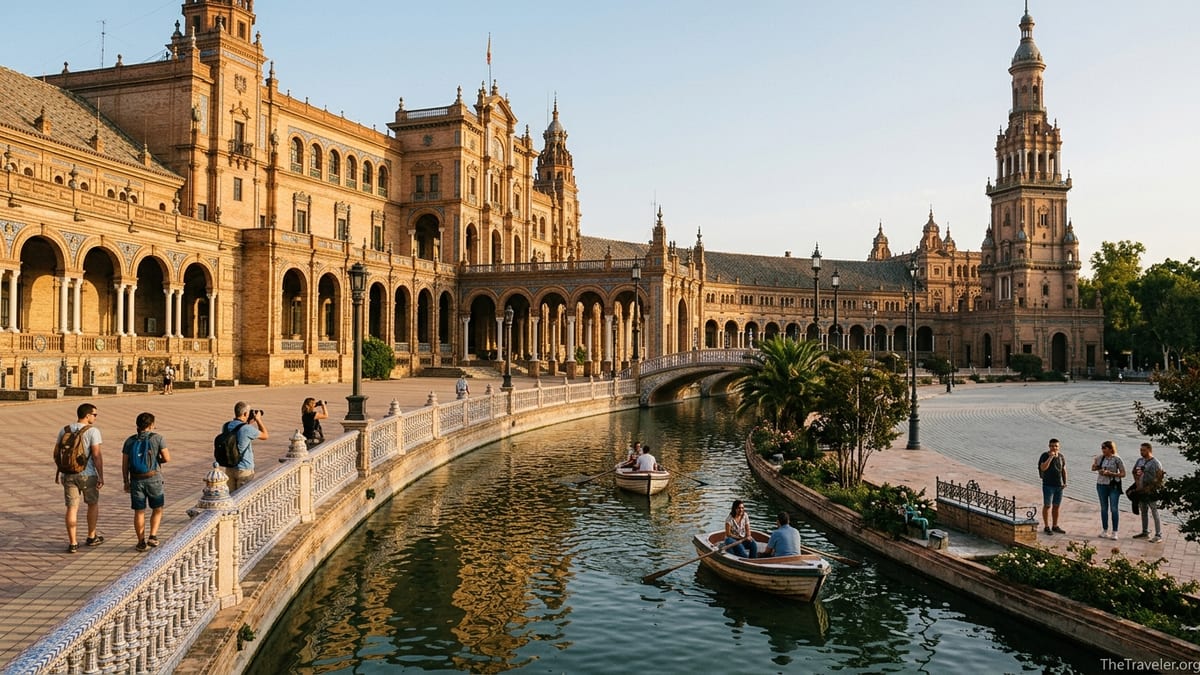
Day 2 is your full Seville day. Pre booking timed entry for the Royal Alcázar and the cathedral avoids the longest lines, especially in spring. You could visit the Alcázar at 9.30am, climb the Giralda tower before lunch, then escape the afternoon heat in Maria Luisa Park and Plaza de España. Flamenco is at its most atmospheric in intimate venues; in practice that might mean a 7pm show in a small tablao in Triana rather than a large bus tour performance.
On Day 3, travel Seville to Córdoba in the morning. High speed trains cover the route in roughly 45 minutes, and if you book a few weeks ahead, point to point tickets often cost in the range of 20 to 35 euros per person in standard class. Dropping your bags at a hotel near the Jewish Quarter lets you walk to the Mezquita in ten minutes. By staying one night in Córdoba rather than day tripping, you can visit the mosque cathedral first thing or last thing when it is quieter, and still stroll the Roman bridge at golden hour.
Days 4 and 5 belong to Granada. Morning trains from Córdoba to Granada usually take around 2 hours. Once checked in to a hotel near the Albaicín, walk the Carrera del Darro and book a sunset drink at a mirador bar facing the Alhambra. You should reserve Alhambra tickets several weeks in advance, and many travelers find a 3 hour morning slot for the Nasrid Palaces, Generalife and Alcazaba is the minimum to appreciate the site without rushing. On Day 5, you can either leave late in the day for your onward flight from Málaga, catching a bus of around 1 hour 45 minutes, or spend the remaining hours exploring Sacromonte’s cave houses before an evening departure.
7 day route: adding Málaga or Cádiz for the coast
A week in Southern Spain lets you add proper coastal time. Two popular options are Seville 2 nights, Córdoba 1 night, Granada 2 nights, Málaga 2 nights, or a western variant of Seville 3 nights, Cádiz 2 nights and Málaga 2 nights with a train connection between the coasts. These itineraries balance culture and relaxation while keeping daily travel to roughly 3 hours or less.
On the Granada to Málaga leg, you can choose between bus and car. Direct buses, often operated by well known companies like ALSA, typically take around 1 hour 45 minutes and run several times a day, which makes it easy to leave after breakfast and be on the Costa del Sol by lunchtime. If you prefer to drive, the motorway distance is roughly 125 kilometers and takes around an hour and a half in normal traffic. Either way, you could be checking into a seafront hotel near Málaga’s La Malagueta beach in time for a late afternoon swim.
In a 7 day version that includes Cádiz, train is your friend. The rail line between Seville and Cádiz takes roughly 1 hour 30 minutes on a direct service. This enables you to base for two nights in Seville, then ride the train down the AP 4 corridor to Cádiz without renting a car. Cádiz itself rewards slow evenings: think seafood at a casual marisquería near the central market, a sunset walk along La Caleta beach, and morning coffee under the arcades of Plaza de San Juan de Dios before heading to your next stop.
Málaga at the end of a 7 day itinerary works well for flights home and final days at the beach. Staying at least two nights allows one relaxed day in the old town for the Alcazaba, Picasso Museum and cathedral, and another day dedicated to the waterfront. Some travelers use a full day from Málaga to make a side trip east to smaller coastal towns like Nerja or west to the Caminito del Rey gorge hike, booking a guided excursion that includes bus transport and entry permits.
10 day loop: including Ronda and the white villages
With 10 days, you can complete a satisfying loop that combines the major cities with mountain scenery and classic pueblos blancos. A practical order starting and ending in Málaga is Málaga 2 nights, Granada 2 nights, Córdoba 2 nights, Seville 2 nights, Ronda 1 night and back to Málaga 1 night. Alternatively, if flying in and out of Seville, flip the sequence to Seville, Córdoba, Granada, Málaga, Ronda and Cádiz before returning to Seville.
Ronda sits roughly 100 to 110 kilometers from Málaga, with public buses often taking around 2 hours 15 minutes due to mountain roads. Services commonly depart from Málaga’s main bus station, and one way tickets can be in the ballpark of 15 euros. Although a day trip is possible, an overnight stay lets you enjoy the famous Puente Nuevo gorge views at dusk and dawn when the day trippers have gone. Many boutique hotels and guesthouses here offer terraces that face the ravine, so you can watch griffon vultures riding thermals with a glass of local wine in hand.
The white villages lie scattered across the hills between Ronda and the coast. If you are comfortable driving, renting a small car for two or three days gives you flexibility to explore places that buses reach infrequently. The drive from Ronda through villages such as Grazalema and Zahara de la Sierra to Arcos de la Frontera becomes a highlight in itself. Distances are short in kilometers, but expect winding roads that slow you down to under 60 kilometers per hour in many stretches; building in extra time means you can linger over a menu del día lunch on a village square rather than racing the clock.
On a 10 day trip, adding Cádiz as your final coastal stop instead of returning straight to Málaga can be compelling. From Ronda, driving to Cádiz via the A 374 and A 382 roads is roughly a 2 hour 30 minute journey through rolling countryside. Dropping your rental car at Cádiz or nearby Jerez avoids the need to circle back, and from there you can catch a train or bus to Seville or Málaga the day before your flight. Travelers on a moderate budget often find that mid range hotels in Cádiz’s old town during shoulder season cost less per night than equivalent properties in central Seville or beachfront Málaga.
14 day grand tour: slow travel through Seville, Córdoba, Granada, Málaga, Ronda and Cádiz
Two weeks opens the door to a more relaxed grand tour that touches each of the key destinations without constant packing. A balanced 14 day itinerary might look like Seville 3 nights, Córdoba 2 nights, Granada 3 nights, Ronda 2 nights, Cádiz 2 nights and Málaga 2 nights, arranged according to your entry and exit airport. This gives most stops at least two nights, which is usually the threshold at which a place starts to feel familiar rather than a blur of check ins.
In Seville, three nights means you can dedicate one day to the Alcázar and cathedral, another to Triana, the river and Metropol Parasol, and a third for a day trip if desired. Popular day trips include a wine focused visit to Jerez de la Frontera or a long day to Doñana National Park with a local operator. With this schedule, you can also comfortably attend a late night flamenco show without sacrificing an early start the next morning.
Granada with three nights enables you to experience the Alhambra at a non rush hour slot and still have time for tapas culture, hammam baths and a possible half day in the Sierra Nevada foothills. Many visitors book a guided walking tour of the Albaicín and Sacromonte on their second day, which typically lasts around three hours and costs somewhere in the 20 to 40 euro range per person depending on group size and inclusions. By your last evening, you can skip the main sights and instead simply follow your nose through tapas bars where small plates are still served free with each drink in many venues.
Ronda, Cádiz and Málaga form a satisfying western arc for the final week. Two nights in Ronda gives you a full day to walk the gorge trails and visit the historic bullring museum. The move from Ronda to Cádiz by bus or car takes roughly 2 to 3 hours, putting you on the Atlantic coast with its wider, windier beaches. Another 2 nights in Cádiz gives you a full day simply to wander the tangled streets, visit the camera obscura in the Torre Tavira and perhaps join a small group walking tour that explains the city’s role in Spain’s trading history with the Americas. Ending with 2 nights in Málaga makes flight logistics easy and keeps your last days low stress with short strolls from hotel to beach and airport transfers often under 30 minutes by taxi or express bus.
Transport choices and realistic travel times
Choosing between train, bus and car is one of the most important practical decisions when planning a Southern Spain itinerary. High speed and regional trains are usually the fastest and most comfortable for direct routes between major cities on the Seville, Córdoba, Málaga and Granada axis. For example, Seville to Córdoba by train can be around 45 minutes, Córdoba to Málaga about 1 hour by high speed service, and Seville to Málaga roughly 2 hours. Booking in advance on the main national rail operator or through well known ticket aggregators can unlock discounted fares, but even flexible tickets on shorter hops often stay below 50 euros.
Buses play a crucial role where tracks do not run, particularly to Ronda and some coastal towns. From Málaga to Ronda, buses generally take around 2 hours 15 minutes and depart several times per day from the city’s main station. Vehicles are typically modern coaches with air conditioning and underfloor luggage storage, making them practical even with large suitcases. For mountain and rural routes, do not assume hourly services; checking the latest timetable a few days before travel avoids the scenario where you discover the only afternoon bus has been moved or cut outside the high season.
Driving a rental car gives maximum flexibility for white villages, countryside wineries and out of the way beaches, but it introduces trade offs. Daily rental rates vary by season and demand, yet for a compact car with manual transmission in spring or autumn, you might budget in the range of 30 to 60 euros per day before fuel and tolls. City centers such as Seville, Granada and Córdoba all have low emission zones, narrow lanes and limited parking. Many travelers avoid these headaches by renting only for the Ronda and hill town segment, or by choosing accommodations on the edges of historic centers where private parking is available for an added nightly fee.
When estimating travel days, add buffer time for navigating stations, checking into hotels and eating. A three hour train ride from Granada to Seville rarely means only three hours door to door; by the time you factor in checkout, walking or taxi transfers, potential waiting at the station and settling into your next room, it can consume most of a half day. Planning no more than one intercity move on any given day, and avoiding back to back early morning departures, usually keeps the trip feeling like a holiday rather than a logistics exercise.
Sample budgets and seasonal considerations
Costs in Southern Spain are moderate by Western European standards, but they vary significantly by city, season and how much you prioritize central locations. As a broad guideline, a mid range couple might expect to spend approximately 120 to 200 euros per night for centrally located hotels in Seville, Granada and Málaga during shoulder seasons, slightly less in Cádiz and Ronda outside peak festivals and holidays. Breakfast can often be added for 8 to 15 euros per person at hotels, though many visitors simply wander to a local café for coffee and toast for less.
Sightseeing adds up quickly if you hit every paid attraction. Major sites such as the Alhambra in Granada and the Alcázar in Seville require paid tickets with timed entries, and combined tickets or guided tours can easily run between 20 and 50 euros per person depending on inclusions. On the other hand, many cities maintain free entry windows for certain museums or offer reduced prices for late evening visits, allowing budget conscious travelers to plan visits accordingly. Tapas culture can keep meal costs manageable, especially in Granada where small plates are often included with drinks in traditional bars, letting a couple dine for under 30 to 40 euros without feeling deprived.
High summer from late June through August brings very high temperatures inland and higher hotel prices along the coasts as Spanish schools break for holidays. In Seville and Córdoba, many locals shift their routine to avoid the afternoon heat, and travelers are wise to copy them: sightseeing in the morning and evening, with long shaded lunches and siestas between. If your dates are fixed in mid summer, consider allocating more nights to breezier coastal bases like Cádiz or smaller Atlantic towns in the Bay of Cádiz region, and fewer nights in landlocked cities.
Spring and autumn are generally the sweet spots for a Southern Spain itinerary. In April and May, orange blossoms scent Seville’s streets and daytime highs are warm but not extreme, though the Semana Santa and Feria de Abril festivals can send prices soaring and make rooms scarce. Late September and October often provide pleasant beach weather along the Costa del Sol and Costa de la Luz while cultural sites are less crowded than in high summer. Winter travel is also possible, with milder temperatures in cities like Málaga and the chance of snow visible on the Sierra Nevada peaks above Granada, but shorter daylight hours and some seasonal closures in smaller resorts.
The Takeaway
Designing a Southern Spain itinerary is less about cramming as many cities as possible into a fixed number of days and more about picking a realistic rhythm that suits your travel style. Five days is ideal for a focused triangle of Seville, Córdoba and Granada linked by fast trains. A week allows you to touch the sea in Málaga or Cádiz. Ten days enables a scenic loop that includes Ronda and the white villages. Two weeks gives you breathing space to linger in each place without your suitcase constantly in hand.
Whichever length you choose, grounding your plan in real travel times and overnight allocations will keep expectations realistic. Using Seville or Málaga as anchor points, relying on trains for the main city hops, and reserving a rental car for targeted countryside exploration strikes a practical balance. Booking essential tickets like the Alhambra and Alcázar several weeks ahead, checking the latest bus and train schedules, and remaining flexible enough to slow down when a place captures your heart will ensure that your days in Southern Spain feel rich rather than rushed.
FAQ
Q1. Is it better to start a Southern Spain trip in Seville or Málaga?
Both work well, but Seville is often better for culture first, while Málaga suits those wanting to end or begin with the beach and has a particularly wide range of flight connections.
Q2. Do I need to rent a car for this Southern Spain itinerary?
No, you can do most routes by train and bus, especially between Seville, Córdoba, Granada and Málaga, but a short car rental is helpful for Ronda and smaller white villages.
Q3. How far in advance should I book Alhambra and Alcázar tickets?
In popular months, booking several weeks ahead is sensible, and during peak dates like Easter or major festivals, securing tickets as soon as your travel dates are fixed is safest.
Q4. Are 5 days enough for Seville, Córdoba and Granada?
Five days is enough for a fast paced introduction, allocating around 2 nights in Seville, 1 night in Córdoba and 2 nights in Granada, but you will only see the main highlights.
Q5. What is the best time of year to follow these itineraries?
April, May, late September and October usually offer the best balance of pleasant temperatures, open attractions and manageable crowds, especially for inland cities.
Q6. How much should I budget per day in Southern Spain?
For a mid range trip, many couples find a daily budget of roughly 150 to 250 euros, covering accommodation, meals, local transport and some entrance fees, is a reasonable planning figure.
Q7. Is it realistic to visit Ronda as a day trip from Málaga?
It is possible using buses of about 2 hours each way or driving, but an overnight stay is more relaxing and lets you enjoy the gorge and old town outside day trip hours.
Q8. Can I swim in the sea in spring and autumn?
Yes, in many years the sea is swimmable from late May to early October near Málaga and the Costa del Sol, though water temperature comfort depends on individual preference.
Q9. Are the cities in Southern Spain walkable?
Historic centers in Seville, Córdoba, Granada, Málaga, Ronda and Cádiz are compact and largely walkable, though you may use taxis or local buses for certain hills or outlying districts.
Q10. Is Southern Spain safe for solo travelers?
In general it is considered safe, with most issues limited to typical petty theft in crowded areas, so standard urban precautions with valuables and documents are usually sufficient.