


How much does a trip to Catalonia really cost once you add up Barcelona nights, coastal detours, mountain trains, wine tastings and those deceptively small parking fees? To move beyond vague daily averages, I tracked every euro during a 12 day trip in April 2024 that combined Barcelona, the Costa Brava coast and a short stay in the Catalan Pyrenees. What follows is not a theoretical budget but a grounded look at what I actually paid, where and when, and which expenses felt worth every cent versus quietly overpriced.
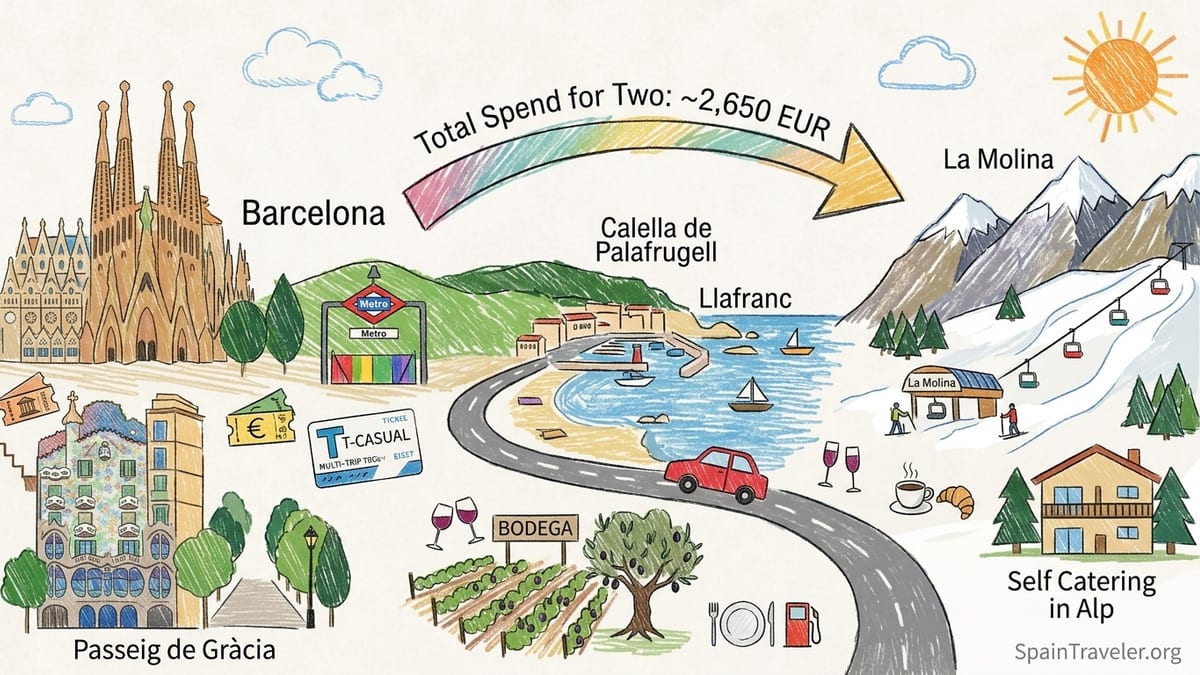
The Shape of the Trip and Overall Spend
Across 12 days in April 2024 I traveled as a couple, flying into Barcelona, spending four nights in the city, four along the Costa Brava coast near Calella de Palafrugell and Llafranc, and three in the Catalan Pyrenees near La Molina. This was shoulder season outside Easter and major festivals, which kept prices below July and August highs but still reflected the post pandemic rise in hotel and restaurant costs in Catalonia documented by regional tourism reports in 2023 and 2024. The style was mid range rather than backpacking: private rooms, a mix of casual restaurants and self catering, and both public transport and a rental car.
Across the 12 days the total spend for two people, excluding flights into Europe but including an intra European flight into Barcelona, accommodation, all internal transport, attractions, wine tours, parking, groceries and luggage storage, came to roughly 2,650 euros. That worked out to about 110 euros per person per day. Barcelona nights were consistently the most expensive part of the trip, followed by car related costs on the coast, while rural and mountain days were cheapest when we did not pay for ski lifts or special excursions.
Crucially, this overall figure hides large day to day swings. Our most expensive day was the first full day in Barcelona, between a timed visit to the Sagrada Família, an audio guided tour of Casa Batlló and a long dinner with wine in Eixample, which reached around 220 euros for two. The least expensive day was a quiet hiking and village day based out of the Pyrenees, when we spent just under 70 euros for two, mostly on groceries, coffee and fuel. The cost of a Catalonia trip is therefore driven less by a neat daily average and more by how many big city museum days, wine heavy dinners and car based excursions you book.
What also pushed the budget up was the choice to use three different bases in 12 days. Each hotel change meant extra transport, check in and check out gaps that we bridged with luggage storage or lingering cafe time, and the inevitable small waste of food and supplies we could not carry onward. Travelers who slow down and use one or two bases instead of three or four will usually see lower per day costs even if they stay in similar standard rooms.
Barcelona: Accommodation, Metro Cards and Big Ticket Attractions
I spent four nights in Barcelona in mid April 2024, staying in a mid range hotel just off Passeig de Gràcia. For a double room with private bathroom and simple breakfast buffet, booked about eight weeks in advance, we paid around 155 euros per night. That price included the Catalan tourism tax and the extra city surcharge that Barcelona applies to hotel rates. This was not a luxury hotel, simply a clean, modern three star level property in a convenient central area, which underlined how much accommodation dominates the Barcelona budget even in shoulder season.
For airport transfers I chose the Aerobús from Barcelona El Prat into Plaça de Catalunya on arrival, paying around 6.75 euros per person one way at the airport machines in April 2024. On departure we used the RENFE suburban train from Passeig de Gràcia to Terminal 2, with a single zone ticket that cost just over 4 euros per person, slightly cheaper but less convenient with luggage because of changes in some terminals. Within the city we shared a T Casual style multi trip ticket bought at a metro station in Eixample for 12 euros in total, which gave us ten rides that we used over three days for metro and some suburban rail journeys. That worked out to roughly 1.20 euros per ride when shared between two people, which felt excellent value compared to single tickets.
The largest single line items in Barcelona were paid attractions. In April 2024 we booked a timed visit to the Sagrada Família directly through the official sales channel, paying about 32 euros per person for entry with the basic audio guide. Later that afternoon we toured Casa Batlló with the standard immersive visit, which cost approximately 35 euros per person when purchased two weeks out. Over two days these two Gaudí sites alone came to more than 130 euros for two people. They were among the most memorable experiences of the trip and I would pay for both again, but they did anchor Barcelona as the most expensive stop once you add metro rides and meals around them.
Food and drink in Barcelona varied widely depending on neighborhood and style of dining. On our first night we stopped at a simple bar in the Eixample district and paid 2.50 euros for a small draft beer and about 3.20 euros for a glass of house cava in April 2024, along with a shared plate of patatas bravas for around 6 euros. The next night, a sit down dinner of shared tapas and a bottle of Priorat red at a well known but not cutting edge restaurant in El Born cost 58 euros for two including service. Coffee and breakfast pastries from a bakery near our hotel typically cost 6 to 8 euros for two croissants and two cappuccinos. These numbers matched the impression from current Barcelona budget guides that food is not cheap but still reasonable if you avoid the busiest tourist strips around La Rambla and Plaça Reial.
Coastal Catalonia and Costa Brava: Car Rental, Fuel, Beaches and Wine
After Barcelona we picked up a rental car near Sants station to drive the Costa Brava coast. In April 2024 a compact manual car booked with a major rental brand about six weeks in advance cost 38 euros per day for a four day hire, picked up in the city and returned at the same location. The rental price was low compared to some other parts of Europe, but the final bill rose once we added full to full fuel, a moderate level of excess insurance bought at the counter and small parking charges in several coastal villages. The total for four days of car rental, basic insurance and fuel came to around 260 euros, or about 65 euros per day.
Fuel prices along the AP 7 and smaller coastal highways in April 2024 averaged close to 1.70 euros per litre for standard petrol. Over four days of relaxed driving that included Girona, Begur, Calella de Palafrugell and Cadaqués we covered roughly 500 kilometers and spent around 65 euros on fuel. Parking was a more surprising line in the budget. In Cadaqués the main village car park on the edge of town charged 3 euros per hour or around 20 euros for a full day in April 2024, and we paid 9 euros for about three hours while we explored the harbor and seaside promenade. In Calella de Palafrugell a cliff top pay and display lot near Platja Canadell cost around 1.80 euros per hour, and our afternoon beach stop there added another 7 euros. These numbers are consistent with recent Costa Brava driving guides that note daily parking caps of around 10 to 20 euros in the most popular towns.
Beach costs themselves were modest. In mid April the water was cool and there were no sun lounger concessions operating on the smaller coves, so we spent nothing on chair rentals. In a busier beach town closer to summer, two loungers and an umbrella typically start around 18 to 25 euros per day on the central strips. Food and drink at the coast shifted upward compared with the mountains but were similar to Barcelona if you stayed one street inland from the sea. In Llafranc, a seafront restaurant charged just under 20 euros for a grilled seafood platter and 4 to 5 euros for a glass of white wine. A simple menu del dia lunch in a quieter inland village between Girona and the coast cost 14 euros per person in April 2024 and included bread, two courses, dessert and a drink, which felt like excellent value.
One deliberate coastal splurge was a small group wine and olive oil tasting at a family owned bodega near Palamós. Booked online a week before the visit, the tasting cost 25 euros per person and included a tour of the vines plus generous pours of three wines and local snacks. This was one of the most satisfying value for money experiences of the whole Catalonia trip. The cost was modest compared with private tours at larger estates closer to Barcelona, which often start from 70 or 80 euros per person including transport, yet the intimacy and time with the winemaker felt like a premium experience I would repeat.
The Catalan Pyrenees: Rural Stays, Mountain Transport and Ski Costs
The final leg of the trip was three nights in the Catalan Pyrenees in late April 2024, based near Alp, a short drive from La Molina ski resort. We booked a simple self catering apartment in a chalet style building on the edge of town for 105 euros per night, including parking. Compared with Barcelona this felt like very good value, especially because the apartment had a kitchenette, which allowed us to self cater most meals and reduce restaurant spending. A similar hotel room in the village without kitchen facilities was pricing around 130 euros per night when I checked in March, reflecting the premium charged by hotels that sit almost directly at the base of the slopes.
Because it was the tail end of the ski season and snow cover was limited, we spent only one full day on the slopes at La Molina. A same day adult lift pass bought at the ticket office in April 2024 cost just under 50 euros per person, which was consistent with official 2023 to 2024 rate tables for Catalan ski resorts that show day passes in the 45 to 60 euro range. Ski and boot rental for one day from a small hire shop in the village added 28 euros per person for standard equipment. For two people the total cost of a single ski day, including passes and gear but excluding food, came to around 156 euros. This made it one of the highest cost individual days of the trip, even though our accommodation was cheaper than in Barcelona.
On non ski days mountain transport and activities were much less expensive. A scenic return trip on the rack railway from Ribes de Freser to Vall de Núria, another popular mountain destination in northern Catalonia, was priced around 32 euros per adult in spring 2024 when booked on the official rail website. We did not ride it on this trip, but several other travelers in our guesthouse shared receipts that matched those figures. In our case we chose to drive mountain roads and hike free trails instead. Groceries for simple dinners of pasta, salad and local cheese bought at a supermarket in Puigcerdà cost around 22 euros for food that fed two people for two nights. Splitting a bottle of mid range Catalan red wine from a village shop added 7 euros. These rural prices were noticeably lower than supermarket shops in central Barcelona, where the same brands of pasta, olive oil and cheese were typically 10 to 20 percent more.
Overall, the Pyrenees segment highlighted how activities dominate mountain budgets. On quiet hiking days without ski passes or special railways, our spend fell to roughly 35 euros per person including food and fuel. On the ski day, costs jumped to nearly 80 euros per person. Travelers can therefore keep mountain regions affordable by limiting paid lift days and planning self guided hikes and scenic drives, but those who ski several days in a row should be ready for a rapid increase in the total trip budget.
Food, Drink and Groceries Across Regions
Across Barcelona, the coast and the mountains, food and drink absorbed close to half of the daily spend, which matches the emphasis on dining in recent Catalan tourism expenditure reports. In Barcelona, where we relied mainly on cafes and restaurants, we averaged around 70 euros per day for two people on food and drink. This usually covered a bakery breakfast, a light lunch and a sit down dinner with a glass or two of wine. In the coastal towns the average dropped slightly to about 55 euros per day because we had one or two picnic lunches and more modest dinners. In the mountains the food budget fell further to around 40 euros per day once we began cooking most dinners in our apartment kitchen.
Restaurant meals that felt overpriced were almost all in heavy tourist zones. A lunch just off La Rambla of paella for two and two drinks came to 46 euros in April 2024, and the quality was noticeably below the meals we had in Gràcia or Poble Sec for similar or slightly lower prices. By contrast, a menu del dia in a small restaurant in Girona, away from the main cathedral square, cost 17 euros per person for three courses and a glass of wine and felt like excellent value for money. On the coast, seafront restaurants charged a clear premium of 20 to 30 percent for location compared with those a short walk inland.
Grocery prices offered one of the simplest ways to manage the budget across Catalonia without feeling deprived. A typical supermarket basket in April 2024 that included eggs, bread, fruit, yogurt, pasta, sauce and cheese for two or three meals usually came in between 18 and 25 euros depending on the brand choices. A six pack of local lager in cans was often around 4 euros, while a perfectly drinkable local red wine started around 4.50 to 5.50 euros per bottle. Stocking up on basics in the mountains and then picnicking on hiking days significantly reduced our daily spend compared with Barcelona, where we lacked kitchen access and tended to eat out more often.
Wine specific experiences contributed meaningfully to the budget when we chose premium options. The 25 euro per person small group tasting near Palamós was one example. Had we added a chauffeured day trip from Barcelona to the Penedès wine region, the cost would have been far higher, with current group tour prices commonly starting around 80 to 100 euros per person and private tours even more. Travelers who appreciate wine but want to manage costs can focus on tasting flights at wine bars in Barcelona, where three small pours may cost 10 to 15 euros, or on direct visits to smaller bodegas reachable by regional trains or short drives instead of fully packaged experiences.
Transport, Luggage Storage and the Hidden Cost of Moving Around
Transport inside Catalonia combined several modes and their costs added up gradually. Within Barcelona and Girona, local public transport was relatively inexpensive. As noted earlier, a shared ten journey ticket for metro and some trains in Barcelona cost around 12 euros. In Girona, a single urban bus ticket purchased onboard in April 2024 was around 1.40 euros. Regional trains between Barcelona Sants and Girona ranged from 12 to 20 euros per person each way depending on whether we rode a slower regional service or booked a faster Avant or AVE high speed train closer to departure.
The largest internal transport cost was the four day car rental and fuel total of around 260 euros. Tolls were minimal because many former toll roads in Catalonia have become free to use, but smaller tolls on certain coastal sections still added roughly 6 euros over the four days. Parking associated with the car added another 25 euros across various coastal towns and mountain villages. When spread across four days these amounts felt reasonable, but they highlight how road tripping adds a consistent fixed cost above simple train and bus travel.
Luggage storage was a small but notable budget item that resulted directly from changing bases three times. On the day we checked out in Barcelona and took an evening train toward the coast, we used a staffed left luggage office near Plaça de Catalunya that charged around 7 euros per bag for six hours in April 2024, for a total of 14 euros. In Girona, before an evening train back toward the mountains, we used an automated locker system by the station that charged 6 euros for a medium locker for the afternoon. These individual amounts were not high, but the pattern showed that every extra hotel change day tends to attract extra fill in costs that a slower, two base itinerary could avoid.
Flights into and out of Catalonia will vary considerably by origin, so this trip deliberately excludes the long haul flights from the total. However, the short flight from another European city into Barcelona in April 2024 with a low cost carrier cost 95 euros per person including one checked bag of 20 kilograms. At the airport, a small extra charge of 12 euros was added when we needed to check an additional cabin size suitcase on the return leg because of stricter enforcement of carry on limits at the gate. This underlined how luggage choices can influence both flight and city transport costs, especially in destinations like Barcelona where escalators and lifts are not always present in metro stations.
The Real Cost Drivers and What I Would Pay For Again
Looking back at the 2,650 euro spend for two people across 12 days, a handful of factors clearly drove costs far more than others. The first was Barcelona accommodation. At roughly 155 euros per night for a mid range room with breakfast, those four nights accounted for around a quarter of the entire trip budget by themselves. Travelers willing to stay slightly further from Passeig de Gràcia or to book private rooms in high quality hostels can certainly push this figure down, especially outside peak season, but central Barcelona beds remain a major cost driver.
The second factor was the number of distinct regions visited. By combining a major city, coast and mountains in less than two weeks, we accepted the repeated costs of transport, luggage storage and some wasted food and supplies each time we moved on. Had we limited the trip to Barcelona and the Costa Brava, or to Barcelona and the Pyrenees, our total spend would likely have been lower by at least several hundred euros even if daily habits stayed the same. Travelers who want to see all of Catalonia in one go trade money for variety.
The third driver was premium experiences tied to place. In Barcelona this meant Gaudí sites and other paid attractions. On the coast it was the wine tasting and the extra costs of driving twisty roads to small coves where parking is controlled and sometimes expensive. In the mountains it was the ski day at La Molina, where a single lift day with equipment added more than 150 euros to one day’s ledger. None of these costs were unexpected, but they show how a few concentrated splurges outweigh scores of small cafe stops and museum donations.
Finally, food and drink habits shaped the background level of spending. Choosing sit down dinners with wine most nights in Barcelona and along the coast was one of the pleasures of the trip and something I would pay for again, but switching to more lunches from markets or bakeries and reserving restaurant dinners to every second night would have cut the overall food budget noticeably without sacrificing the sense of place. In the Pyrenees, the combination of cheaper rural grocery prices and a kitchen showed how quickly costs fall when you have the option to cook.
FAQ
Q1: How much did you actually spend per person per day in Catalonia? I spent roughly 2,650 euros for two people over 12 days in April 2024, which worked out to about 110 euros per person per day, though some days with ski passes or major Gaudí attractions were much higher and quiet hiking or self catering days were significantly lower.
Q2: Is Barcelona really that much more expensive than the rest of Catalonia? Yes, accommodation in central Barcelona in April 2024 cost us about 155 euros per night for a mid range double, compared with around 120 euros on the Costa Brava and 105 euros for a self catering apartment in the Pyrenees, and paid attractions like Sagrada Família and Casa Batlló added more large line items than we experienced on the coast or in the mountains.
Q3: How much should I budget for food and drink per day? Based on this trip, a mid range traveler can expect to spend around 35 euros per person per day on food and drink in Barcelona if eating out for most meals, closer to 25 to 30 euros per person on the coast with some picnics, and around 20 euros per person in rural or mountain areas where self catering is easier.
Q4: Are car rentals and fuel in Catalonia affordable? In April 2024 a compact rental car from Barcelona for four days cost about 38 euros per day before fuel and insurance, and we spent around 65 euros on petrol to cover 500 kilometers along the Costa Brava and into the foothills, which felt reasonable, though parking fees in popular towns and at some beaches added another 25 euros across the four days.
Q5: How much does a ski day in the Catalan Pyrenees cost? A single ski day at La Molina in late April 2024 cost just under 50 euros per person for a day lift pass and about 28 euros per person for standard ski and boot rental, so two people spent roughly 156 euros before food on that day, which made it one of the most expensive individual days of the trip.
Q6: Were any experiences clearly overpriced that you would skip next time? The only experiences that felt overpriced were meals in the most touristy restaurant rows, such as a 46 euro paella and drinks lunch near La Rambla that was underwhelming compared with better and slightly cheaper food in neighborhoods like Gràcia or Poble Sec, so next time I would save my restaurant budget for areas where locals are eating.
Q7: Which premium experiences were worth paying for? I would happily pay again for the timed visit to the Sagrada Família at around 32 euros per person, the Casa Batlló tour at about 35 euros per person, the 25 euro wine and olive oil tasting near Palamós, and the single ski day at La Molina, as each of these felt central to experiencing a different side of Catalonia.
Q8: How did changing bases three times affect your costs? Using Barcelona, a Costa Brava town and a Pyrenees village as bases in only 12 days increased our budget through repeated transport costs, extra parking and luggage storage fees on travel days and some wasted groceries, and I estimate that visiting three regions instead of two probably added a few hundred euros to the overall spend.
Q9: When is the best time to visit Catalonia for good value? Shoulder seasons like April, May, late September and October tend to offer better value because hotel prices in Barcelona and along the coast are lower than peak summer, beaches and mountain roads are less crowded and you can still enjoy outdoor activities, although some seasonal services like full beach chair rentals or extensive ski terrain may not be running.
Q10: Can you do a Catalonia trip on a much tighter budget than this? Yes, a budget conscious traveler willing to stay in hostel dorms or modest guesthouses, cook more meals, limit paid attractions and rely entirely on trains and buses rather than rental cars or ski days could probably bring costs closer to 60 or 70 euros per person per day, especially outside high summer and major holidays, but this would involve different choices from the mid range, experience focused trip described here.