


Catalonia is one of Europe’s most family-focused regions, with an official Family Tourism Programme that certifies destinations which work especially well for holidays with children. From the shallow bays of the Costa Daurada to the coves of the Costa Brava, the broad sands of Costa Barcelona and the high valleys of the Pyrenees, the challenge is not finding places that welcome kids, but deciding what is realistic for your children’s ages and your travel style.
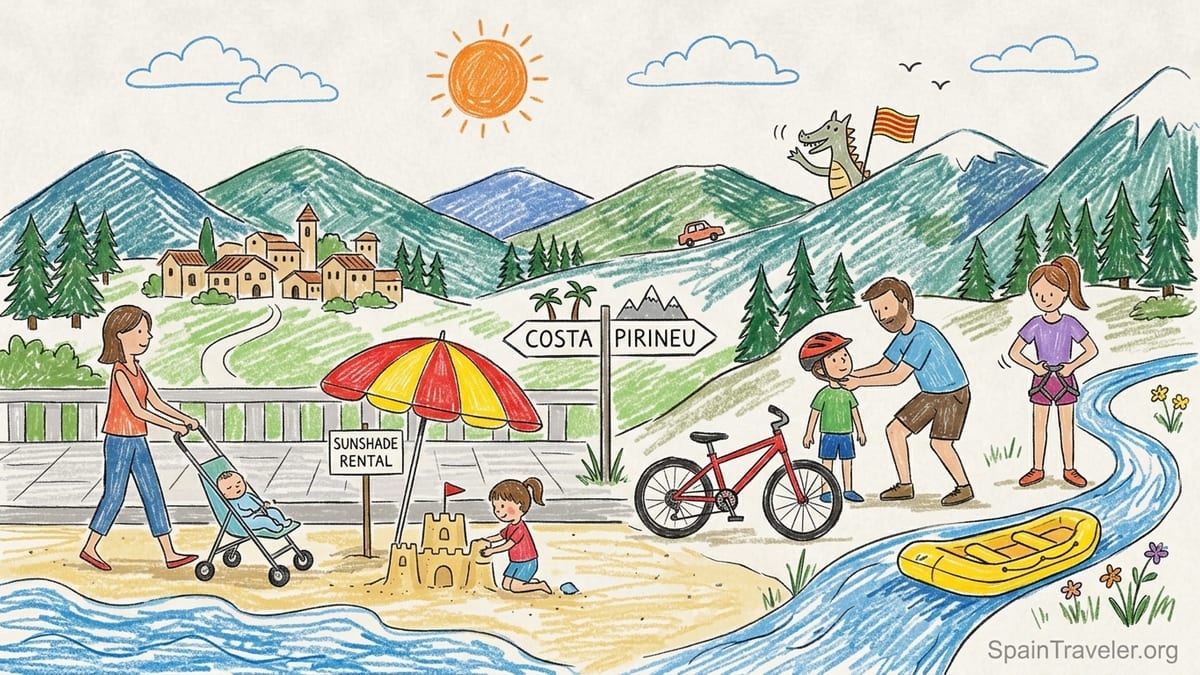
How Catalonia’s Family Tourism Programme Helps Parents Plan
Catalonia’s Family Tourism Programme, managed by the Catalan Tourist Board, certifies towns and resorts that meet specific criteria for family services. That includes things like playgrounds and children’s clubs, lifeguarded beaches, accommodation with cots and highchairs available, kid-focused menus and a calendar of family activities. Certified destinations range across the coast and mountains, including Calella and Castelldefels on Costa Barcelona, Blanes and Roses on the Costa Brava, Salou and Cambrils on the Costa Daurada, and inland mountain areas such as Vall de Boí and Pallars Sobirà in the Pyrenees.
For a parent trying to choose between regions, this seal can be a practical shortcut. For example, in Salou and Cambrils many hotels listed by the local tourism board highlight children’s pools, mini-clubs and stroller-friendly promenades, reflecting the obligations of certification rather than being optional extras. In Roses, the Family Tourism mark is tied to specific facilities such as supervised play areas on the seafront and a roster of water-based activities for kids. While not every family needs the full package, knowing that a destination has been audited for family services can reduce the guesswork, particularly if you are visiting Catalonia for the first time.
The certification is especially relevant if you are visiting without a car or during peak summer when crowds can make logistics more stressful. Towns with the Family Tourism seal tend to coordinate beach lifeguard schedules, organize children’s events in the evening and maintain accessible information offices where staff can point you to baby-supply shops, pharmacies and pediatric clinics. When comparing destinations like Calella, Blanes or Castelldefels, checking whether your accommodation is individually certified within the programme can help you filter down a long list of seemingly similar hotels and apartments.
Choosing the Right Region by Age and Trip Type
For toddlers and pre-schoolers, easy beaches and short transfers are usually the top priorities. Costa Daurada towns such as Salou, Cambrils and La Pineda stand out because the beaches are long, wide and gently shelving, which means shallow water and relatively small waves on many summer days. Salou’s main Llevant Beach, for example, is backed by a flat promenade where parents can push strollers under shade trees, with playgrounds and small chiringuito cafés at frequent intervals. The transfer from Reus Airport to Salou is often around 20 to 30 minutes by taxi in normal traffic, which keeps arrival-day fatigue to a minimum for very young children.
For school-age children who enjoy variety, combining beaches with theme parks, historic towns and wildlife works particularly well. On the Costa Daurada, PortAventura World near Salou and Cambrils is a major draw, with a combined train-and-park ticket sold through the Rodalies de Catalunya network that covers rail from Barcelona and a day’s entry during the main 2026 season between late February and early January. Older primary school children can spend one day on PortAventura Park’s gentler rides and shows, and another at the Caribe Aquatic Park when it is open in the warmer months, while parents alternate beach days for recuperation.
Teenagers often push families away from purely sand-and-sea holidays toward activities like rafting, canyoning, cycling or skiing. The Pyrenean districts of Vall de Boí and Pallars Sobirà have leveraged the Pirineu365 initiative, which groups local ski areas under a single mountain brand and promotes year-round outdoor activities. In summer, outfitters based in towns like Sort in Pallars Sobirà run rafting and kayak trips on the Noguera Pallaresa River suitable for different age brackets, while hiking routes around the Aigüestortes i Estany de Sant Maurici National Park appeal to older teens who are ready for half-day ascents and scenic viewpoints rather than short stroller walks.
If you are trying to satisfy different age groups in a single trip, an all-coast itinerary that focuses on one stretch, such as Costa Barcelona plus Barcelona city, can be easier than attempting to combine the Costa Brava, Costa Daurada and the Pyrenees in ten days. For instance, a week split between Castelldefels, with its quick suburban train links into Barcelona, and a few nights in the city itself gives teens access to urban culture and possible bike tours, while younger siblings enjoy calm beach days and a shallow shoreline. Moving between too many regions can add several hours of car or train travel at the exact moment when children most need rest.
Beaches With Babies and Toddlers: Where Strollers and Shade Matter
Parents of babies and toddlers generally benefit from sticking to beach towns with broad, easy-access sands, predictable facilities and flat terrain. On Costa Barcelona, Calella and Castelldefels both have long, straight seafronts backed by promenades paved for strollers. Calella, which is part of the Family Tourism network, offers supervised children’s play zones on the sand in high season and rent-by-the-day sunshade options that allow parents to avoid carrying bulky beach tents. In Castelldefels, the wide beach is broken into supervised sections with lifeguard posts, and the distance from the train station to the seafront is walkable even with a compact stroller and luggage.
On the Costa Daurada, Cambrils has a reputation for its family-focused Passeig Marítim, where a dedicated cycling lane is separated from the wide pedestrian boardwalk, letting parents push prams without having to negotiate busy roads. Several certified hotels in Cambrils advertise free cots for infants, childproof socket covers and the option to rent baby bathtubs and bottle warmers, reflecting the Family Holiday Destination standards. In Salou, the central Llevant and Ponent beaches have ramps down to the sand in multiple spots, which is useful if you are manoeuvring a lightweight stroller or need step-free access for a grandparent.
If you prefer the more rugged Costa Brava but have a toddler, choosing towns that still offer some stretches of flat sand can make days far easier. Blanes, which sits at the southern gateway to the Costa Brava and is certified as a family destination, has a broad main beach right in front of town. The walk from many seafront hotels to the sand is measured in a few minutes rather than steep staircases or cliff paths. This is very different from smaller coves further north where reaching the water requires negotiating numerous stone steps, something that can be tricky with a sleeping baby in a carrier in the midday heat.
When it comes to supplies, certified family destinations such as Calella, Blanes, Roses, Salou and Cambrils usually have supermarkets and pharmacies close to accommodation clusters, so you can buy nappies, baby food and sunscreen locally instead of packing everything from home. In the height of summer, planning beach time around the heat is essential. Many families with toddlers adopt a schedule of an early-morning beach visit, a long indoor siesta when the sun is strongest and a second outing after 5 pm, when sea breezes make the seafront more comfortable and shaded playgrounds begin to fill with local children.
School-Age Highlights: Theme Parks, Trains, Castles and Wildlife
Once children are in primary school, Catalonia opens up a wider menu of experiences that combine fun with a sense of discovery. PortAventura World remains the headline attraction for many families. In 2026, promotional tickets for two days and two parks have been advertised from approximately 27 to 30 euros per park for some advance online purchases with limited quotas, while regular day tickets bought closer to the visit tend to cost significantly more. Budget-conscious families often choose one main day in PortAventura Park, focusing on mid-intensity roller coasters, themed shows and child-friendly areas such as SésamoAventura, and then decide on a second day at either Caribe Aquatic Park or Ferrari Land depending on their children’s preferences and the season.
Trains can also form part of the adventure rather than being simply transport. From Barcelona, a regional train line runs north toward the Costa Brava and France, with services stopping at coastal-access towns such as Blanes before continuing to Girona. Families who base themselves in Barcelona for several days sometimes plan a “train day” where the journey itself is part of the fun, picking a seaside town on the same line, riding up in the morning and returning in the late afternoon. Meanwhile, the combined Skitren and SkiBus services operated in conjunction with Ferrocarrils de la Generalitat de Catalunya connect Barcelona with the La Molina ski area in winter, turning the outbound journey into a novelty for children who may never have ridden a mountain cable car before.
Catalonia’s fortresses and castles are another strong card for school-age children. Coastal towns like Tossa de Mar and Begur on the Costa Brava have hilltop towers and old defensive walls that can be explored on foot, though parents should be aware that cobbled climbs can be steep for younger legs in hot weather. Inland, smaller castles and walled villages in the Empordà or near the Pyrenees can be folded into day trips from Roses or Platja d’Aro, mixing a morning at the beach with an afternoon exploring ramparts and learning basic historical facts in a very tangible setting. Many local museums and heritage sites publish family-oriented visit leaflets in Catalan, Spanish and English, which help break up the visit into short, story-like sections suitable for children.
For wildlife, several destinations associated with the Family Tourism Programme weave environmental education into excursions. Around the Ebro Delta, south of the main Costa Daurada resorts, boat trips on the river and walks through wetland paths introduce children to birdlife such as herons and flamingos. In the Pyrenean zones of Pallars Sobirà and Vall de Boí, some outfitters offer gentle nature walks focused on spotting marmots, birds of prey and high-mountain flora. These sorts of outings can be a good balance if you have already devoted many days to beach activities and want to introduce something different that still feels like a holiday rather than a formal lesson.
Teen-Friendly Catalonia: Rafting, Cycling, Snorkeling and Skiing
Teenagers who enjoy physical activity often see Catalonia through the lens of adventure sports. In summer, Pallars Sobirà stands out as one of the main bases for rafting on the Noguera Pallaresa River. Local companies based in Sort and nearby villages run half-day rafting trips with different difficulty grades. Families with teens often book mixed boats where parents and older children paddle together under a guide’s instructions, while younger siblings, if present, join easier sections in calmer waters or stay back in town with another adult. Prices vary by operator, but a half-day family rafting trip is typically positioned as a mid-range holiday expense, comparable to a full day out at a mid-sized water park.
Cycling is another area where teens can take the lead. Catalonia has a growing network of greenways and signposted cycling routes, particularly in Girona province and the foothills of the Pyrenees. Families based in coastal resorts such as Roses or l’Escala can rent hybrid or electric bikes for a day and follow relatively flat rural tracks inland toward small villages, while more ambitious families with older teens can consider multi-day itineraries that follow former railway lines. Local rental shops usually stock a mix of adult bikes and smaller frames or child seats, so a group with mixed ages can ride together, though it is wise to reserve equipment in high summer.
Along the coasts, snorkeling is one of the easiest active options for teenagers who love the sea. The rocky headlands of the Costa Brava, particularly north of Palamós, create coves with clear water where fish and sea life are visible just a few metres from shore. Towns such as Roses and L’Estartit host operators that organise guided snorkeling outings, sometimes combined with boat trips to nearby marine reserves and islets. For independent families, simply packing masks and snorkels and choosing a sheltered cove on a calm morning can be enough for a satisfying session, as long as parents keep a close eye on currents and boat traffic.
In winter and early spring, skiing brings families into the Catalan Pyrenees. La Molina, one of Catalonia’s best-known resorts, has around 70 kilometres of pistes spread across a variety of difficulty levels and is marketed with family facilities such as a fun park and gentle beginner areas served by conveyor lifts. The resort’s inclusion in the Pirineu365 group highlights a broader strategy to position these mountains as a year-round playground rather than a strictly seasonal ski hub, with activities like tubing, snowshoeing and scenic gondola rides available even for non-skiers. For teens, this can translate into some members of the family skiing while others focus on snow-play zones, so no one feels left out.
Practicalities: Heat, Transfers, Public Transport and Car Seats
Understanding distances and travel times is critical when travelling with children. From Barcelona, reaching the main Costa Daurada family resorts such as Salou and Cambrils typically involves a direct regional train of around 1.5 hours or a drive of about the same length in normal summer traffic. Reus Airport sits slightly inland and serves some charter and low-cost flights; a taxi from Reus to Salou often takes less than half an hour. In contrast, getting to much of the Costa Brava without a car can involve a combination of train and bus, or long direct coach rides that approach two hours or more if you are heading to the northern coves. That is one reason families with very young children sometimes prioritise Costa Daurada or Costa Barcelona for a first Catalan beach trip.
Public transport around Barcelona itself is generally efficient, with integrated tickets covering metro, commuter trains and most buses. Strollers are a common sight on the city’s metro and suburban trains, and many stations offer elevators, though not all. When connecting from Barcelona to out-of-town destinations, intercity buses such as those run by Moventis link the city with Costa Brava towns, and regional trains serve parts of Costa Daurada and Costa Barcelona. Families should be prepared for occasional delays and platform changes, especially in high season, and may want to build in buffer time if they have pre-booked accommodation check-in slots or theme park entries.
Car travel can add flexibility, especially if you want to string together smaller towns on the Costa Brava or reach mountain valleys in Vall de Boí and Pallars Sobirà. Spanish law requires appropriate child seats based on weight and height, and while some taxi apps in large cities allow you to request vehicles equipped with child seats, availability can be limited. Hiring a car with properly fitted seats from the outset generally makes sense for road-heavy itineraries. For urban segments, many families choose to rely on public transport and occasional taxis, switching to a rental car only for the coastal or mountain section, in order to avoid navigating Barcelona’s traffic and parking with children in the back.
The summer heat is a non-negotiable factor. In July and August, mid-afternoon temperatures in lowland Catalonia often exceed 30 degrees Celsius. Families with toddlers or heat-sensitive relatives may find June or early September more comfortable, particularly on the Costa Brava, where sea breezes temper the heat. If your only holiday window is high summer, prioritising accommodation with air conditioning and access to shade, and planning an activity rhythm that respects siesta hours, is more important than squeezing in a long list of excursions. The same applies to city visits: a morning exploring Barcelona’s Gothic Quarter or Park Güell can be magical, but it is rarely wise to stack city sightseeing and a crowded beach afternoon back-to-back with young children in the peak of summer.
Where to Stay: Apartments vs Hotels and Rainy-Day Options
The choice between apartments and hotels in Catalonia is heavily influenced by your children’s ages and your tolerance for disruption. For families with babies and toddlers, self-catering apartments or aparthotels in destinations like Cambrils, Salou, Blanes or Roses can be a lifesaver. Having a separate sleeping space allows adults to stay up after bedtime, and a small kitchen makes it easier to handle fussy eaters or early-morning wake-ups. Many family-certified buildings advertise extras such as cots, highchairs and on-site laundry, which reduce the amount of gear you need to bring. Booking agencies and local tourism sites often highlight which complexes carry the Family Holiday Destination seal.
On the other hand, full-service hotels can simplify life if you are travelling with older children or want structured entertainment. Properties in Salou, Cambrils and Calella that are listed by their respective tourism boards as family-certified usually run kids’ clubs, early buffet sittings and evening shows that give parents some breathing space. Some 4-star hotels near Salou, for example, are listed with facilities such as slides in the pool, animation teams and separate teen spaces. This can be especially valuable on partial beach days when wind or jellyfish make long swims less appealing, as children can still enjoy supervised activities without leaving the property.
Rainy days are less common in high summer but should still be planned for, particularly if you are heading to the Pyrenees, where mountain weather can change quickly. In Barcelona, indoor options include science museums, aquariums and art museums that offer family trails. Along the Costa Daurada and Costa Brava, towns such as Tarragona and Girona provide a mix of covered Roman ruins, medieval streets and compact museums that can fill a morning if rain closes the beach. In mountain areas like Vall de Boí and Pallars Sobirà, cultural options might include Romanesque churches, small local museums and artisan workshops where children can engage in short hands-on activities rather than sitting through long tours.
For ski trips, rainy or slushy weather at resort level might prompt families to pivot from the slopes to alternative activities promoted under the Pirineu365 umbrella. At La Molina, for instance, non-ski offerings can include tubing tracks, snowshoe walks and indoor relax areas where non-skiing family members wait while others finish runs. This flexibility is one reason many parents choose accommodation right at or near the base station; it makes it easy for a tired child or accompanying grandparent to retreat to the room while the rest of the group continues outside.
Barcelona With Kids and Costa Brava With Kids
Barcelona’s appeal for families lies in its blend of beaches, parks, culture and transport convenience. Many visiting families choose to stay near the waterfront neighbourhoods of Barceloneta or Vila Olímpica, combining short morning visits to central sights such as La Sagrada Família or the Gothic Quarter with afternoon breaks on the city beaches. The city’s parks, including Parc de la Ciutadella and Parc Güell, offer shaded areas and playgrounds where children can reset between museum visits. For teens, guided bike tours along the seafront or through less busy districts can be a satisfying way to cover more ground without long walks in the heat.
However, Barcelona should not necessarily serve as the only beach base in Catalonia. The Costa Brava offers a very different coastline of headlands and coves, with a more natural feel in many areas. For families, the key decision is how much walking and vertical movement everyone can handle. Towns such as Blanes and Roses, both associated with the Family Tourism Programme, provide a compromise between accessible main beaches and opportunities to explore more rugged nearby coves. Blanes combines a long sandy bay with a botanical garden on the cliffs, while Roses offers boat trips into the Cap de Creus area as well as wide central beaches suited to younger children.
Without a car, basing yourself in a well-connected Costa Brava hub like Blanes, and using local buses or boats to reach neighbouring coves, can work well for families with school-age children. With a rental car, you can reach more scattered beaches and inland medieval villages, but driving and parking in high summer require patience. Families who want to reduce logistical stress might consider a two-centre trip of Barcelona plus a single Costa Brava town, rather than trying to hop along the entire coast. This way, city days, beach days and perhaps a short mountain excursion can be balanced without constant packing and unpacking.
Teenagers with an interest in marine life and outdoor sports often appreciate the northern Costa Brava near L’Estartit, which serves as a gateway for boat and snorkeling trips around the Medes Islands marine reserve. Families with younger children may find the southern Costa Brava around Blanes or the neighbouring resort towns more manageable, as they tend to have wider, more accessible beaches and shorter climbs between accommodation and the sea. In all cases, checking whether your chosen town and lodging participate in Catalonia’s Family Tourism Programme provides additional reassurance that basics like lifeguards, play areas and kid-friendly menus receive extra attention.
The Takeaway
Planning Catalonia with kids starts with an honest assessment of your family’s energy levels, ages and appetite for moving around. The region’s official Family Tourism Programme can guide you toward resorts such as Calella, Castelldefels, Blanes, Roses, Salou, Cambrils, Vall de Boí and Pallars Sobirà where infrastructure for families has been externally assessed. Toddlers and babies typically do best in flat, easy-access beach towns with short transfers and shaded promenades, while school-age children benefit from a mix of beaches, theme parks, castles and light wildlife experiences.
Teenagers often pull the family into the mountains and onto the water through rafting, cycling, snorkeling and skiing, which point toward regions like Pallars Sobirà, Vall de Boí and the adventure-focused corners of the Costa Brava and Pyrenees. Across all ages, practical issues such as stroller-friendliness, the reality of summer heat, the pros and cons of apartments versus hotels, and the strength of public transport links should weigh at least as heavily as the photos that first inspired you to consider Catalonia. In some cases, an all-coast itinerary focusing on one area, perhaps with a short Barcelona city segment tacked on, will provide more genuine rest than an ambitious circuit tying together every headline region.
If you keep transfers short, build in time for naps and late dinners, and match activities to each age group’s bandwidth, Catalonia’s mix of certified family resorts, lively seaside towns and accessible mountains can deliver a holiday that feels like it was designed with your children in mind. With a little advance research using the Family Tourism Programme as your framework, you can choose the region, resort and accommodation type that best fits your family now, knowing that on your next visit, Catalonia will still have new corners to discover as your children grow.
FAQ
Q1. Is it better to base in one region of Catalonia with kids, or to combine several?
For most families, especially with children under 10, it is usually easier to focus on one main coastal region plus Barcelona, or on a single mountain valley for ski or hiking trips. Combining Costa Brava, Costa Daurada and the Pyrenees in one week often leads to long transfer days and tired children.
Q2. Which Catalan beaches are best for babies and toddlers?
Gentle, wide beaches with shallow water such as those in Salou, Cambrils, La Pineda, Calella, Castelldefels, Blanes and Roses work well. These resorts offer stroller-friendly promenades, nearby services and, in some cases, certified family facilities like shaded play areas and children’s clubs.
Q3. How hot does Catalonia get in summer, and how should we plan around the heat?
In July and August, daytime temperatures in coastal Catalonia often exceed 30 degrees Celsius. Plan outdoor activities for early morning and late afternoon, make use of siesta hours, choose accommodation with air conditioning and seek shade on promenades or in parks during the hottest part of the day.
Q4. Do we need a car to enjoy the Costa Brava or Costa Daurada with children?
You can reach many resorts on both coasts by train or coach from Barcelona, and families without very young children often manage well using public transport. However, a car offers more flexibility for exploring smaller Costa Brava coves or mountain valleys in Vall de Boí and Pallars Sobirà, especially outside high season.
Q5. Is PortAventura World suitable for younger children as well as teenagers?
Yes. PortAventura Park includes themed zones and gentler rides designed for small children, such as the SésamoAventura area, while also offering large roller coasters for teens. Families with mixed ages often focus on one full day in the main park and then decide whether to add Ferrari Land or Caribe Aquatic Park depending on height requirements and interests.
Q6. How child-friendly is Barcelona itself?
Barcelona is generally very child-friendly, with parks, playgrounds, beaches and a compact historic centre. Public transport accommodates strollers, and there are many family-suitable attractions, including the aquarium, science museums and cable cars. The main challenges are summer heat, crowds at popular sights and the need to keep an eye on belongings in busy areas.
Q7. What should we know about car seats and taxis in Catalonia?
Spanish regulations require children to use appropriate car seats in private vehicles, including hire cars. Some taxi services and apps in larger cities may offer cars with seats, but availability is not guaranteed. Families who plan to drive extensively usually find it easiest to rent a car with child seats included or bring their own travel-friendly models.
Q8. Are the Pyrenees suitable for families who do not ski?
Yes. Pyrenean areas like Vall de Boí and Pallars Sobirà offer year-round activities including hiking, lake visits, beginner snow-play zones, tubing and cultural visits to Romanesque villages and churches. In resorts like La Molina, gondola rides, tubing parks and designated fun areas mean non-skiers can still enjoy the mountain environment.
Q9. How do apartments compare with hotels for family stays in Catalonia?
Apartments and aparthotels provide extra space, kitchen facilities and more flexible routines, which many families with babies and toddlers appreciate. Hotels, especially those certified within the Family Tourism Programme, often offer kids’ clubs, entertainment and pools that appeal to school-age children and teens. The best choice depends on your need for space versus organised activities.
Q10. When is the best time of year to visit Catalonia with kids?
For beach-focused trips, June and early September often provide warm seas with slightly milder temperatures and fewer crowds than late July and August. For mountain and activity holidays, late spring to early autumn works well for hiking and rafting, while skiing in the Pyrenees usually takes place from roughly December to early April, depending on snowfall and resort opening dates.