


Northern Spain’s Atlantic coast is one of Europe’s great underrated road trips, and the choice that most divides travelers is simple: Galicia or Asturias. Both offer emerald-green hills, quiet coves, serious food and cooler summer temperatures than the Mediterranean. Yet they feel very different on the ground. This guide compares the two regions in practical detail so you can decide where to spend more of your limited days, with concrete examples of beaches, villages, food, driving routes and accommodation styles.
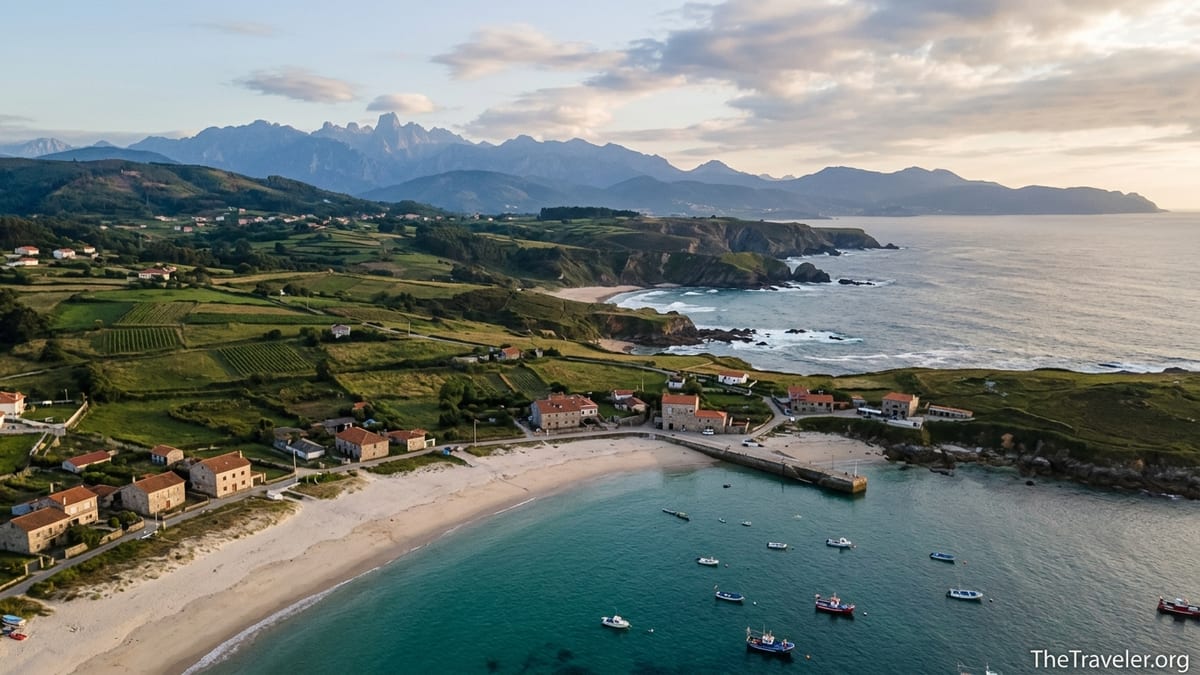
Coastal Character: Wild Atlantic vs Compact Green Coast
Galicia sits at the northwestern tip of Spain, facing both the open Atlantic and a series of deep estuaries known as rías. The result is a coast that feels broken and intricate, with long fingers of sea cutting inland. Driving from A Coruña down to the Rías Baixas can mean constant detours to reach headlands, lighthouses and hidden coves. You get moments like standing at Cabo Fisterra watching huge Atlantic swells, then twenty minutes later finding a calm sandy inlet where local families swim in shallow water.
Asturias, by contrast, hugs a relatively continuous stretch of Cantabrian coastline, backed almost immediately by mountains. The drive along the A-8 highway between Llanes and Gijón gives you repeating views of green pastures, cliffs and small river valleys that open suddenly onto beaches. It feels more compact: in under an hour you can move from the center of Oviedo to surfable beaches like Playa de Salinas or Playa de Rodiles, or from the fishing village of Ribadesella up into the Picos de Europa foothills.
In practical terms, Galicia’s coast rewards time and patience. Distances on the map can be deceptive because secondary roads wind around rías and through small stone villages. In Asturias, you typically cover ground faster, with most key coastal towns strung just off the A-8 and signposted from the highway. If you like long scenic drives that feel adventurous, Galicia’s broken coastline will appeal. If you prefer shorter hops between bases without constant navigation decisions, Asturias is easier to manage.
Weather is another subtle difference. Both regions have cool, changeable Atlantic conditions, but Galicia’s western and southern coasts tend to be slightly milder and sunnier in summer, while Asturias often feels fresher and cloudier, particularly close to the Picos. For travelers fleeing intense Mediterranean heat, either region works, but Galicia may deliver a few more genuinely warm beach days in July and August.
Beaches and Swimming: Rías Baixas vs Asturian Coves
For classic white-sand beaches and turquoise shallows, Galicia, especially the Rías Baixas, has a clear edge. Around the Ría de Vigo and Ría de Pontevedra you find long arcs of pale sand such as Praia de Samil on the edge of Vigo, A Lanzada near O Grove, and smaller coves around the O Salnés peninsula. Offshore, the Cíes Islands and other protected archipelagos offer sheltered, Caribbean-looking beaches with fine sand and clear water, although sea temperatures remain bracing even at the height of summer.
Farther north in Galicia, beaches become wilder. The Costa da Morte and the Rías Altas around Muxía, Laxe and Valdoviño are more exposed to Atlantic swell, which means powerful waves, surfers and often strong currents. Famous spots like Praia das Catedrais near Ribadeo are spectacular but require planning: at busy times you often need a free timed reservation and must arrive at low tide to walk under the rock arches. It is a coastline for dramatic walks and photography as much as for relaxed swimming.
Asturias’ beaches are generally smaller coves or river mouths framed by cliffs and green hills. Around Llanes alone, more than a dozen beaches lie within a short drive of town, from wide, family-friendly Toró to tiny blowhole-backed Gulpiyuri, which fills via underground channels. Ribadesella’s long Santa Marina beach curves in front of mansions and a promenade, while Playa de Silencio west of Cudillero is a classic Asturian scene of steep steps down to shingle and rock formations.
For travelers with children who want sheltered water and easy facilities, basing in southern Galicia’s Rías Baixas can work very well. Many beaches have beach bars, lifeguards in summer and gently shelving sands. Asturian beaches are often more rugged and can require a short hike down from clifftop parking, though there are also accessible urban beaches such as San Lorenzo in Gijón. Surfers will find consistent waves in both regions, with spots like Pantín and Razo in Galicia, and Xagó and Rodiles in Asturias, each with local surf schools offering board rental and beginner lessons.
Villages, Cities and Santiago de Compostela
Galicia’s headline city for many travelers is Santiago de Compostela, the end point of the Camino routes. Its granite old town, cathedral squares and arcaded streets justify at least two nights, even if you are not walking the pilgrimage. From Santiago, day trips by car or guided excursion to the coast are straightforward: it is about an hour to the Ría de Arousa and a similar time to rugged Finisterre. However, Santiago itself is inland, so you will not be strolling to the beach from your hotel.
On the Galician coast, mid-sized cities like A Coruña and Vigo combine urban energy with sea views. A Coruña offers an attractive compact center, the Roman-era Tower of Hercules lighthouse and city beaches like Riazor; Vigo looks more industrial at first glance but has a lively food scene, boat trips to the Cíes Islands and easy access to Rías Baixas beach towns like Baiona and Nigrán. Smaller villages such as Combarro, Cambados, Muros and Muxía show the region’s quieter side, with stone houses, granaries on stilts and small harbors full of fishing boats.
Asturias has fewer cities but more classic fishing villages within easy reach of one another. Cudillero clings to a steep amphitheater of pastel houses above a small port, with terraces serving grilled fish and cider. Llanes mixes medieval streets, seaside promenades and colourful harbor art. Ribadesella stretches along a river mouth with a deep sandy beach, while Lastres spills down to the water below a hilltop church. These are places where you park on the edge of town and explore on foot, often climbing stairways and narrow alleys to viewpoints.
For travelers who like a big-city base with all services and occasional day trips, A Coruña, Vigo or even Oviedo and Gijón in Asturias all work. For those who want to wake up each morning in a small seaside community, Asturias arguably has the higher concentration of postcard villages along a short stretch of coast. Galicia counters with a broader mix: more cities, more tiny hamlets and the cultural pull of Santiago, which is a strong argument for giving the region at least a few days even if your main goal is the sea.
Food and Drink: Seafood, Wines and Cider
Both regions are serious destinations for travelers who plan their days around meals. In Galicia, the focus tilts heavily toward seafood. Ports like Vigo, A Coruña and smaller towns in the Rías Baixas are known across Spain for shellfish and crustaceans. On a typical night in a Vigo or Baiona marisquería you might see plates of steamed mussels, razor clams, cockles, scallops and occasionally goose barnacles, alongside grilled turbot or hake and the regional emblem, octopus served on a wooden board with olive oil and smoked paprika.
Galicia also shines for fresh fish cooked simply, empanadas filled with tuna or cockles, and cheeses from the rural interior. To drink, local white wines such as Albariño and Godello pair naturally with seafood. In practical budget terms, a generous seafood dinner for two with house Albariño in a mid-range coastal restaurant might run to a moderate sum by western European standards, but prices vary with what you order, and specialties like barnacles can be noticeably more expensive.
Asturian cuisine leans more toward hearty mountain dishes, though the coast still provides plenty of fish and shellfish. The signature dish is fabada, a rich stew of large white beans and cured pork, served in traditional cider houses and rural restaurants throughout the region. You also find game stews in the interior, grilled meats, strong blue cheeses from the Picos and simple fish dishes at the coast. Travelers hiking in the Picos de Europa often end the day with thick caldo or bean stews that feel designed for unpredictable mountain weather.
The drink that defines Asturias is natural cider. In towns like Gijón, Oviedo and Ribadesella, sidrerías line certain streets, with waiters pouring cider from bottles held high above their heads into wide glasses to aerate it. Ordering cider by the bottle and sharing a few simple plates is a very local way to spend an evening, usually at a lower per-person cost than a full multi-course restaurant dinner. If you are choosing between the regions primarily for food, Galicia offers world-class seafood and fresh whites, while Asturias offers rustic mountain cooking and cider culture, with enough coastal fish to keep variety on the table.
Road Trips and Driving Experience
From a road trip perspective, Galicia feels like a region you traverse more slowly, with a greater emphasis on detours and side roads. A typical one-week Galician route might run from A Coruña down the Costa da Morte to places like Muxía and Finisterre, then curve into the Rías Baixas via towns such as Muros, Noia, O Grove and Baiona before finishing in Santiago de Compostela. Distances between overnight stops look modest on a map, but it is easy to spend an entire day exploring a single ría, stopping at multiple beaches, viewpoints and fishing ports.
Driving conditions in Galicia are generally straightforward, with modern highways connecting the main cities and well-maintained smaller roads along the coast, but you should expect occasional narrow village streets, stone walls and livestock on rural lanes. Fuel, supermarket and ATM access are good around the larger towns, but once you venture onto peninsulas and outlying headlands you may go a while without services. Drivers who enjoy spontaneity will appreciate the number of small guesthouses and rural hotels that can be booked a day or two ahead outside peak August.
Asturias lends itself to a more linear coastal road trip, particularly if you are linking it with the Basque Country and Cantabria. A common route runs from east to west via Llanes, Ribadesella, Lastres, Villaviciosa, Gijón, Cudillero and Luarca, with short daily drives of under an hour and plenty of scenic stops. From several of these towns it is a relatively quick inland detour to the Picos de Europa for a day of hiking. Parking in the small villages can be tight in high season, with designated parking areas outside historic centers and some walking required into the core.
For drivers nervous about long mountain passes or cliff-edge routes, most main Asturian roads are comfortable, with mountain access routes generally wider and better engineered than many visitors expect. The one caution in both regions is weather: rain and fog can be common outside high summer, and coastal storms occasionally bring spray and debris onto minor roads. If your priority is an easy first-time European driving experience, the Asturian coastal spine with occasional inland excursions is marginally simpler than Galicia’s web of rías.
Picos de Europa Access and Inland Landscapes
If close access to the Picos de Europa mountains is a major factor, Asturias is clearly better placed. Towns such as Cangas de Onís and Arenas de Cabrales sit right at the gateway to the national park, and from the Asturian side you have straightforward access to classic routes like the Lakes of Covadonga and the Cares Gorge, subject to seasonal traffic controls and shuttle bus systems. Many visitors base for several nights in or near Cangas de Onís, combining one or two full hiking days with lighter coastal excursions.
From the Asturian coast, it is realistic to breakfast in a fishing village and be on a trailhead in the Picos before late morning. For example, driving from Ribadesella or Llanes to Cangas de Onís generally takes under an hour, making day trips easy without changing accommodation every night. This coastal-mountain combination is one of Asturias’s strongest selling points and a key reason hikers tend to allocate more time here than in Galicia.
Galicia’s interior landscapes are gentler but still rewarding. The Ribeira Sacra region, where the Miño and Sil rivers carve deep canyons lined with terraced vineyards, offers viewpoints, boat trips and walking routes. Inland areas around Ourense and Lugo are known for hot springs, forests and Roman remnants. However, these landscapes are farther from the Atlantic coast than the Picos are from the Asturian coast, so you will typically structure them as separate trip segments rather than simple day trips from beach towns.
If your dream itinerary is a single base that offers both regular mountain hiking and easy beach access, Asturias should receive more of your days. If you are content with gentler river valleys, vineyard scenery and occasional thermal baths to complement your coastal time, Galicia’s interior may be enough and can be combined with the coast in a single, slower loop.
Accommodation and Trip Cost Feel
Both regions offer a wide range of accommodation, from simple pilgrim hostels to restored farmhouses and small boutique hotels. In Galicia, you will encounter many casas rurales and pazos, former manor houses turned into family-run inns, especially in the countryside around the Rías Baixas and the Ribeira Sacra. On the coast, mid-range hotels and pensiones in towns like Baiona, Sanxenxo or Muxía often cater to domestic tourism, with sea-view rooms at prices that feel moderate compared with better-known Mediterranean resorts, though peak August rates do rise significantly.
Santiago de Compostela has a dense mix of pilgrim-oriented hostels, budget hotels and a handful of luxury properties, including historic buildings in the old town. Because of the Camino, there is a strong culture of one-night stays and early check-outs, which can affect atmosphere: in high season, you may find streets busy early in the morning and quieter mid-afternoon as walkers rest. If you prefer longer, more relaxed stays, consider splitting your time between Santiago and a coastal base in the Rías Baixas or Costa da Morte.
In Asturias, traditional rural accommodation includes stone farmhouses, mountain inns and small guesthouses, particularly around Cangas de Onís and the Picos. Coastal towns like Llanes, Ribadesella and Cudillero offer modest hotels and apartments that attract Spanish families and increasingly international visitors. Prices in Asturias are often comparable to or slightly lower than in the more famous corners of Galicia’s Rías Baixas, particularly outside August and Spanish holiday periods, which makes it attractive for longer stays or slow travel.
In practical budget terms, travelers often find that daily costs in both regions sit below those in Madrid, Barcelona or San Sebastián. A casual lunch menu of the day in a non-touristy town can be quite reasonable, and even seafood-heavy dinners, while not cheap, usually feel fair for the quality. Galicia can become more expensive if you lean heavily into shellfish feasts and premium wines, while Asturias rewards simple cider houses and hearty, shareable dishes that keep per-person spending more contained.
Which Region Deserves More Time?
When forced to choose, the answer depends largely on your priorities. If your mental picture of this trip centers on beaches, seafood and the magic of Santiago de Compostela, Galicia deserves more days. A balanced first itinerary might give Galicia around ten days, split between Santiago, the Rías Baixas and a slice of the wilder Costa da Morte, with short city stops in A Coruña or Vigo if you enjoy urban flavor. This allows you to sample both the gentle rías and the open Atlantic, with several unhurried days on the sand.
If instead you are drawn to mountain hiking, green coastal cliffs and evenings in cider houses, Asturias should take precedence. In that case, consider a minimum of a week in Asturias itself, perhaps combining three or four nights on the coast in places like Cudillero or Llanes with three or four nights inland around Cangas de Onís or another Picos gateway. From these bases you can reach multiple beaches and trailheads without feeling rushed, and still add a brief stop in Galicia for Santiago or a couple of Rías Baixas days if your schedule allows.
Travelers on a tighter timetable, such as five to seven days, might be better served by focusing on one region rather than trying to cover both. Because Galicia is geographically larger and more fragmented, a short trip risks becoming a blur of driving if you attempt to span the entire coast. Asturias, with its compact combination of sea and mountains, often fits more cleanly into a week. For a first-timer wanting a simple but rewarding introduction to northern Spain without constant long drives, basing in Asturias and adding a two-night visit to Santiago at either end can be a smart compromise.
Ultimately, many repeat visitors conclude that the ideal split is emotional rather than mathematical: they favor Galicia for its coast and food, and Asturias for its mountains and rural life. If you imagine doing more than one northern Spain trip over the years, you could easily devote a full journey to each, exploring Galicia’s rías in detail on one occasion and roaming Asturian villages and Picos valleys on another.
The Takeaway
Galicia and Asturias share a broadly similar climate, price level and welcoming, slow-paced culture, yet they give very different flavors of Atlantic Spain. Galicia offers intricate rías, standout beaches in the Rías Baixas, the cultural magnet of Santiago and some of Europe’s best everyday seafood. Asturias concentrates its charms along a more compact green coast, with fishing villages, easy access to the Picos de Europa and a distinctive cider and mountain-food tradition.
If you want sunny days on wide Atlantic beaches, long seafood lunches and time in a historic pilgrimage city, giving Galicia more days is a logical choice. If you imagine alternating coastal walks and serious hikes, ending each day in a sidrería with a bowl of bean stew, then Asturias should anchor your itinerary. Both regions reward slow travel and curiosity: pull off the main road when you see a sign for a mirador, try the dish you do not recognize, and accept that the weather will sometimes send you into a bar instead of onto the sand.
Whatever balance you choose, the key decision is not which region is objectively better, but which landscape and rhythm best matches how you like to travel. With that in mind, it becomes easier to decide whether Galicia’s layered rías or Asturias’s tight embrace of sea and mountains deserves more of your time on this stretch of Spain’s Green Coast.
FAQ
Q1. Is Galicia or Asturias better for a first northern Spain road trip?
For a first trip with limited time, Asturias often feels easier because its main sights line a relatively direct coastal route with quick access to the Picos de Europa. Galicia is larger and more fragmented by rías, which is wonderful if you have more days but can mean longer, more winding drives.
Q2. Where are the best beaches, Galicia or Asturias?
For wide sandy beaches and turquoise shallows, especially suitable for families, southern Galicia’s Rías Baixas generally win. Asturias has many beautiful coves and dramatic cliff-backed beaches, but they tend to be smaller, more rugged and sometimes involve steeper access paths.
Q3. Which region is better if I want to hike in the Picos de Europa?
Asturias is clearly better placed for the Picos de Europa. Bases like Cangas de Onís or Arenas de Cabrales sit right on the park’s edge, and coastal towns such as Llanes and Ribadesella are close enough for easy day trips into the mountains.
Q4. Is Santiago de Compostela on the coast?
No. Santiago de Compostela lies inland, roughly a short drive from the nearest Atlantic rías. It makes an excellent cultural stop and base for day trips but does not offer a beach within walking distance of the old town.
Q5. How do food and drink differ between Galicia and Asturias?
Galicia focuses on seafood, simple fish dishes and white wines such as Albariño, especially along the Rías Baixas. Asturias is known for hearty bean stews, mountain dishes, blue cheeses and natural cider served in traditional sidrerías, with plenty of coastal fish and shellfish as well.
Q6. Which region is more budget friendly?
Overall costs are broadly similar and usually lower than in Spain’s big cities. Asturias can feel slightly more budget friendly day to day, especially if you eat often in cider houses and rural restaurants. Galicia becomes pricier when you focus on premium shellfish and sought-after coastal resorts in peak season.
Q7. Do I need a car to enjoy Galicia and Asturias?
A car is the most flexible way to explore both regions, particularly for reaching smaller beaches and inland viewpoints. It is possible to combine trains, buses and occasional taxis for a slower trip focused on a few hubs, but public transport rarely reaches the most scenic minor coves and villages on a convenient schedule.
Q8. How many days should I spend in each region?
With around ten to fourteen days, many travelers give six to eight days to Galicia and four to six to Asturias if they prioritize beaches and Santiago. Hikers and mountain lovers often reverse that, giving more days to Asturias and treating Santiago and the Rías Baixas as a shorter add-on.
Q9. When is the best time to visit Galicia and Asturias?
Late spring and early autumn usually offer a good balance of mild temperatures, fewer crowds and lower prices. July and August bring the warmest beach weather and lively festivals but also higher accommodation demand, especially in small coastal towns.
Q10. Can I comfortably visit both regions in one trip?
Yes, if you have at least ten days, you can visit both without rushing, for example combining Galicia’s Rías Baixas and Santiago with Asturias’s coast and a couple of Picos de Europa hikes. With fewer days, it is usually wiser to focus on one region and plan to return for the other.