


The Costa Brava coastline is full of glossy brochure beaches, but after several trips and a lot of hot, crowded experimentation, there are only a handful of coves I would happily plan an entire day around again. These are not theoretical favorites chosen from a map. They are beaches where I have hauled my own bag, hunted for parking, climbed the stairs, tested the water and sat long enough for the sun to change angles and the crowd to change character. What follows is a subjective but hard-earned list of the Costa Brava spots I would personally return to, with the kind of practical detail that actually matters when you are the one carrying the towels.
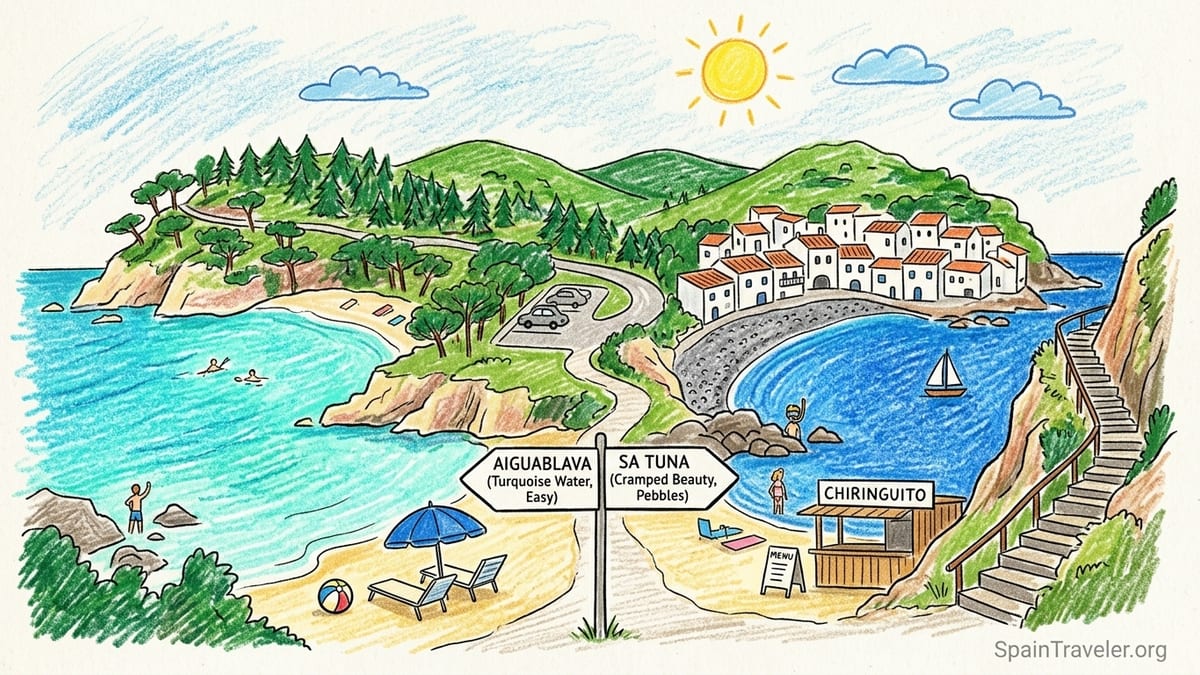
Aiguablava: Easy Beauty and Turquoise Water
If I had to pick a single Costa Brava beach that balances drama-free logistics with real coastal beauty, it would be Aiguablava, in the municipality of Begur. The first thing you notice when you walk down from the parking area is the intense turquoise of the water set against pale sand and low cliffs. I have been here both in late September, when the light is soft and the water still warm, and in June, when the sun is high and the colors look almost unreal. Each time, the cove has felt like an easy win rather than a project that requires strategy.
On the practical side, Aiguablava is one of the more accessible beaches in this stretch of coast. There is a dedicated parking area a short walk from the sand, with clearly signed access from the main road. In shoulder season I have always managed to find a space close enough that you can comfortably carry a day bag and a cooler. In high summer the official lot fills by mid-morning, but even then the walk in from overflow roadside parking is on paved surfaces, not a scramble. The approach is mostly flat, with a short ramp and some steps near the back of the beach. It is not “stroller perfect” in the city sense, but compared with many Costa Brava coves, it is forgiving.
The beach itself is fine, light-colored sand rather than pebbles, which makes it easy on bare feet and ideal if you are here with children or plan to sit directly on the ground. The entry into the water is gentle: you can walk in gradually without any sudden drop-off, and I have happily stood waist-deep within a few meters of the shore chatting or watching kids splash. On calm days the water is strikingly clear, to the point that you can see tiny fish around your ankles without even putting your head under. I have spent long, lazy hours here alternating between reading in the shade of a rented umbrella and short swims to the sides of the cove where the rocks begin, which are good for casual snorkeling when visibility is good.
Facilities at Aiguablava are better than average. There are showers and toilets at the back of the beach, and a handful of restaurants and bars along the promenade. On my last visit, a basic coffee or soft drink was within the typical Spanish coastal range and a simple plate of calamari or a menu del día ran at a price that felt fair for the location, not a tourist trap surcharge. Shade can be limited if you arrive late, so I usually either rent a lounger and umbrella early in the day or bring a compact sunshade. After several hours, the overall feeling at Aiguablava is of a place where you do not have to fight the logistics, which leaves more mental space for actually enjoying the setting.
Sa Tuna: Pebbled Postcard With Tight Space
Sa Tuna, also part of Begur, looks like it was crafted specifically for the cover of a Costa Brava postcard. The cove is a neat crescent of pebbles under steep, green hills, framed by whitewashed fishermen’s houses and a tiny promenade with a few restaurants. The water is extremely clear and deepens quickly, which gives it a sheltered, fjord-like feel. From my first visit I understood immediately why this place appears so often in destination guides. It is tiny, photogenic and feels self-contained, as if the world outside the cliffs could not easily intrude.
The trade-off for that beauty is space. Access is via a narrow, winding road from Begur, and parking is limited to a small designated area near the entrance to the village plus marked spaces along the road above. In late spring I have found a space in the main car park closer to midday, paying a modest day rate comparable to other Costa Brava lots. On a July visit, arriving after 10:00 meant the car park was already full and we had to use one of the official pull-offs further up, then walk down along the old access road. That descent is not technically demanding, but it is steep in places and you feel it more on the climb back up at the end of the day, especially carrying a bag and damp towels.
On the beach, forget about soft sand. Sa Tuna is almost entirely pebbles and small stones. I would not come here without sturdy sandals or water shoes; even after several visits I still wince if I try to walk barefoot from towel to water. The upside is that the pebbles keep the water impressively clear. Within a few strokes you are over a dark, rocky bottom that makes the turquoise surface color stand out even more. The cove is quite sheltered, so waves are usually gentle, but the depth increases quickly and weak swimmers or small children need close supervision. I usually bring a mask and snorkel and drift along the rocks toward the side paths of the coastal trail, spotting fish among the submerged boulders.
A small promenade at the back of the beach holds a couple of restaurants and a bar, plus basic services like showers. Toilets are tucked behind the buildings and can have a short queue in high season, but they are there, which is not always the case in smaller coves. Shade is more complicated. In the early morning and late afternoon the cliffs throw generous shadow over parts of the beach, but in the middle of the day the pebbles can feel like a griddle. There is very limited space for umbrellas and, on busy summer weekends, towels end up almost overlapping. After several hours here, Sa Tuna feels intense: visually stunning and memorable, but also cramped once the cove fills. It is a place I love for a half-day swim and wander, rather than an all-day base.
Sa Riera: Big Beach Energy Near Begur
Sa Riera sits a short drive north of Begur and feels very different from Sa Tuna. This is a larger, more open bay with a longer stretch of sand, a small residential area behind it and a low-key, family atmosphere. It is one of the few Costa Brava beaches where I have happily spent an entire day without feeling the need to move on to a second cove. There is enough space for everyone to spread out, enough services to be comfortable and, crucially, a balance between natural surroundings and small-scale development.
Access is straightforward by car, with a winding but manageable road from Begur that brings you down into the village. I have always been able to find parking in one of the pay lots or marked street spaces within a few minutes’ walk of the sand, though in August we did need a short patience lap before a spot opened up. Expect a modest daily parking fee in season, similar to what you pay at other managed beaches in the area. The walk-in is on paved streets with only mild inclines. You step directly from the seafront promenade onto the beach without significant stairs, which is a relief after days exploring more vertical coves.
The sand here is coarser and darker than at Aiguablava, but it is still comfortable underfoot. The central stretch is wide, so you are not fighting for every square meter of towel space. The water entry is again gradual, albeit a bit steeper near the southern end where the rocky headland begins. I have experienced Sa Riera on calm days when the surface was almost glassy and on slightly breezier afternoons with small waves that were fun for older kids but still safe. The water is not as vividly turquoise as in some smaller coves, but it is clean and inviting, and on clear days you can see the sandy bottom and scattered rocks without trouble.
What keeps drawing me back to Sa Riera is how livable it feels for a long stretch of time. Behind the beach are several cafes, simple seafood restaurants and a small supermarket where you can buy cold water, fruit and basic picnic supplies. Prices are closer to what you see in inland Catalan towns than high-end resort levels. There are public toilets and showers at intervals along the back wall of the beach, and I have never found them unusable, even at peak times. Shade is limited in the center, so I usually rent an umbrella and loungers from one of the concession stands for the day, which turns the outing into something much closer to a living room by the sea. After six or seven hours here, Sa Riera feels like a temporary neighborhood rather than a tick-box stop on a coastal tour.
Platja de Castell: Wild Sand With Organized Access
Platja de Castell, just north of Palamós, is the closest thing I have found on this stretch of coast to a wild, undeveloped sandy bay that still welcomes ordinary day trippers. Standing on the shore, you see no high-rise apartments and no built-up promenade, only a deep, crescent-shaped beach backed by pine forest and low dunes. An old Iberian settlement sits on the headland to one side, and coastal paths thread off toward smaller, rockier coves. It feels secluded compared with many Costa Brava resorts, but behind that sense of wildness there is actually a fairly organized system that shapes how you arrive and where you leave your car.
The key detail for Platja de Castell is the dedicated parking area set back from the sand. In high season there is a large paid car park at the end of the access road, a few minutes’ walk from the beach, with clear signage as you leave the main C-31. On my last summer visit, the day rate for parking sat around ten euros, collected as you entered, with attendants managing the flow of cars. The walk from the far end of the lot to the sand takes roughly five to ten minutes on a flat dirt and boardwalk path through pines. It is not a difficult walk, but if you are loaded with gear it feels long enough that you will want to pack efficiently.
The beach itself is broad and sandy, with a fairly even surface and plenty of space even on busy days. The sand is medium-grain and golden, comfortable for bare feet and easy to shake out of towels compared with the finer dust of some Mediterranean beaches. Entry into the water is gradual, and I have waded out twenty or thirty meters before the depth reached my shoulders. On clear days the water has good visibility and a green-blue color, though not the intense cove turquoise you get in smaller inlets. The bay is more open to wind, so there can be a bit of chop, but I have never seen conditions here that felt unsafe for average swimmers during typical summer weather.
Despite its natural feel, Platja de Castell offers the basics that make a long stay comfortable. There are seasonal chiringuitos set back from the sand serving coffee, soft drinks and simple food, plus portable toilets and a few fixed facilities near the entrance paths. Showers are available at discrete points along the edge of the beach. Shade is scarce on the open sand, so on very sunny days I either rent a parasol on site or walk toward the edges of the beach where the pines cast some afternoon shade. After several hours, the atmosphere remains more relaxed than in heavily urbanized areas: many visitors bring coolers and stay quietly at their own patch of sand rather than coming for a quick dip and a drink.
One extra advantage of Platja de Castell is how it works as a hub for short walks. In the cooler parts of the day I have left my towel in place and followed the marked coastal path up to the Iberian settlement or toward smaller coves like Cala s’Alguer. These detours take as little as fifteen to twenty minutes each way and give you different vantage points into the same bay. Returning to your spot, still within reach of toilets and the car park, feels like the best of both worlds: the romance of a wild coastline with the reassurance that you can pack up and be back on the main road without elaborate logistics.
Cala Montgó: Sheltered Arc Between Forested Slopes
Cala Montgó, near the border between L’Escala and Torroella de Montgrí, is a broad, horseshoe-shaped cove that manages to feel both sheltered and open. The setting is classic Costa Brava: deep green pines on the headlands, white and terracotta houses climbing the slopes and clear water in a shallow arc of sand. It is more developed than Platja de Castell, with apartment blocks and campsites feeding visitors down to the water, but the overall impression when you look out to sea is still of a natural bay rather than an urban beach.
Access here is comparatively straightforward. Roads from L’Escala and Torroella lead directly to several parking options behind the beach, including a main lot and additional spaces on residential streets. In shoulder season I have parked within three to five minutes’ walk of the sand without difficulty. At peak summer times, the official lot fills and you may need to circle through the side streets, paying attention to local signage to avoid restricted or resident-only spaces. The approach to the beach itself is on paved surfaces with negligible elevation change. You simply cross a low promenade and step onto the sand.
The sand at Cala Montgó is soft and light-colored, and the bay is wide enough that there is usable space across its length even on busy weekends. The water entry is very gentle: I have seen families with toddlers happily sitting at the shoreline, and as an adult you can walk out quite a distance before losing your footing. This, combined with the shelter provided by the headlands, keeps waves modest on most summer days. The water clarity is good, especially near the rocky sides of the bay, where you can snorkel over patches of seagrass and rock. In the middle, the sandy bottom gives the water a pale blue-green hue rather than the deep turquoise of narrower coves.
Services are comprehensive. There are multiple bars, cafes and restaurants lining the back of the beach, with menus that range from takeaway sandwiches and ice creams to sit-down seafood lunches. Prices vary, but you can easily find a basic bocadillo and drink within a budget-friendly range. Public toilets and showers are available near the main access points, and I have never had trouble locating them. Shade comes from a mix of rented umbrellas and some natural shadow from buildings and trees later in the day. After several hours at Cala Montgó, the feeling is of a classic, easy-going holiday beach where most practical needs are taken care of and the main decision is whether to nap, swim again or order another coffee.
Tossa de Mar’s Platja Gran: Castle Views and Urban Comfort
Platja Gran in Tossa de Mar is hardly a secret. Photos of this beach, with the medieval castle and fortified old town rising directly above the sand, are used in nearly every Costa Brava marketing campaign. The surprise for me was not that it looks the way it does in the pictures, but that it remains a place I would willingly return to despite being far more urban and busy than the small coves around Begur. The combination of easy town amenities and postcard scenery makes it a very forgiving base for a day at the sea, especially if you are traveling without a car.
If you do drive, there are several paid car parks a short walk from the beach, including multi-storey garages and open lots near the riverbed. In my experience, arriving before mid-morning in summer or almost any time outside July and August yields a space within ten minutes’ walk. The route to the sand is along flat streets through the compact town center. If you are coming by bus, the station is also an easy stroll away. There are no significant stairs involved in reaching the beach itself, which is useful for anyone with limited mobility or rolling luggage.
The sand at Platja Gran is coarse and slightly gravelly compared to finer coves. It is not uncomfortable, but it does not have the powdery feel of Caribbean beaches. The bay is open and relatively wide, with a gentle but noticeable slope into the water. On calm days you can wade out gradually; on windier days there can be more of a shore break, which families with small children should factor in. Water clarity is decent but understandably affected by the sheer number of bathers and boat traffic near the harbour end. For a quick swim with a castle view, it more than delivers, but it is not where I go when I want that glassy, untouched-water experience.
Urban comfort is where Platja Gran excels. Behind the beach you have a full town at your disposal: supermarkets for picnic supplies, bakeries for fresh bread, a wide range of bars and restaurants at all price points and multiple ATMs. Showers line the back edge of the sand, and there are several sets of public toilets, some free and some with a small charge. Loungers and umbrellas are available to rent across much of the beach. Shade is minimal in the middle of the day, but the proximity of the old town means you can retreat to narrow, cooler streets for a break, grab a coffee or explore the castle walls before returning for another swim. After spending most of a day here, Platja Gran feels less like an escape into nature and more like a Mediterranean living room where beach, history and daily needs sit comfortably on top of each other.
Tamariu: Compact Cove With a Village Heart
Tamariu, a small former fishing village in Baix Empordà, offers one of the most balanced beach experiences I have had on the Costa Brava. The main cove is compact, framed by low cliffs and a tidy crescent of white facades with ground-floor restaurants and small hotels. Standing on the promenade in late afternoon, with the sun dropping behind the hills and families finishing lingering lunches, the overall mood is intimate rather than crowded, especially outside the very peak weeks of summer.
Reaching Tamariu by car involves a descent from the main inland roads on a winding but well-maintained route. Parking is the one aspect that requires some forethought. There is a signed public car park set back from the seafront where I have paid a daily or hourly fee comparable to other Costa Brava villages, but in July and August this fills quickly. At those times, expect to loop through upper residential streets watching for legal white-lined spaces and to walk ten or fifteen minutes down to the waterfront. The walk itself is not dramatic, but it is sloped, and you notice the climb on the return in the heat.
The beach is mostly coarse sand mixed with small pebbles, softer underfoot nearer the waterline. It is split into a main central section and smaller side pockets near the rocks. The entry into the sea is fairly quick; within a few steps you are waist deep, which I find pleasant for swimming but less ideal for toddlers who want a long, shallow run. On calm days the water clarity is excellent, especially toward the edges of the cove, and I have often seen snorkelers hugging the rocky sides where fish congregate. The cove is sufficiently enclosed that strong wave action is rare during summer, although boat traffic outside the swimming zone can stir up light chop.
For a long stay, Tamariu’s biggest advantage is the village infrastructure pressed right up against the sand. The seafront promenade is lined with restaurants where you can eat grilled fish, paella or simply have a drink while facing the water. Prices reflect the location but I have found lunch menus and coffee costs to be within reasonable Spanish coastal levels rather than extravagant. Several places are happy to serve you in a swimsuit and cover-up, so you can break up the day with a shaded meal instead of relying entirely on picnic supplies. Public toilets are located near the promenade and, while sometimes busy, are a clear step up from temporary facilities. After spending most of a day here with alternating swims, walks along the coastal path and long, slow lunches, Tamariu leaves a strong impression of a human-scale village built around its cove rather than a resort constructed around a generic strip of sand.
The Takeaway
After several trips up and down this coastline, what stands out is not a definitive ranking of “best” beaches but a sense of which coves I would engineer my day around again. Aiguablava wins when I want that combination of powdery sand, clear water and manageable parking. Sa Tuna is the place I show friends who need to understand why people speak about the Costa Brava with almost unreasonable affection, accepting the tight space and pebbles as part of the deal. Sa Riera and Cala Montgó are where I go for full days that feel easy, with room to breathe and enough cafes and services that I do not have to overplan. Platja de Castell gives me a taste of wilder shoreline without completely abandoning toilets and an organized car park, and Tossa’s Platja Gran offers the rare pleasure of stepping almost directly from a medieval town wall into the sea.
If there is one lesson from these beaches, it is that practical details shape your experience as much as water color or headland silhouettes. A glamorous cove reached only after a thirty-minute scramble or an hour of circling for parking can feel more like a chore than a treat by midday. The places listed here are the ones that, after hours in the sun, salt on my skin and sand in my bag, still felt worth the effort on the walk back to the car. They are where I would send a friend with only a few days on the Costa Brava and the understandable wish for the beach to feel like a genuine pleasure instead of a logistical puzzle.
FAQ
Q1. Which Costa Brava beach is easiest for parking and access without a long walk?
Aiguablava is one of the simplest options, with a dedicated car park close to the sand and a mostly flat, short walk in, especially outside peak summer weekends.
Q2. Where can I find the clearest water for swimming and snorkeling?
Sa Tuna and Tamariu both offer very clear water on calm days, with rocky sides that attract fish and make for enjoyable casual snorkeling near the shore.
Q3. Are there Costa Brava beaches with fine sand rather than pebbles?
Aiguablava, Cala Montgó and Platja de Castell all have mostly sandy bottoms and shorelines, which are kinder on bare feet than the pebble coves like Sa Tuna.
Q4. Which of these beaches works best for families with small children?
Cala Montgó and Sa Riera are strong options, thanks to their wide sandy areas, gradual water entry and easy, mostly flat access from nearby parking and services.
Q5. Is it possible to spend a full day at a more natural-feeling beach without giving up services?
Platja de Castell strikes that balance, with a largely undeveloped backdrop but a managed car park, seasonal chiringuitos, showers and toilets within walking distance.
Q6. How early should I arrive in summer to avoid parking problems?
For small coves like Sa Tuna and Tamariu, arriving before 9:00 in July and August greatly increases your chances of finding a space in the closest lots or streets.
Q7. Which beach offers the best mix of historic setting and swimming?
Tossa de Mar’s Platja Gran stands out, allowing you to swim with a view of the medieval castle and then step directly into the old town for food or shade.
Q8. Do I need water shoes for these Costa Brava beaches?
Water shoes are highly recommended for pebble coves such as Sa Tuna and parts of Tamariu, while they are optional but still useful on rockier sections of the other beaches.
Q9. Are there toilets and showers at all of the beaches you describe?
Each of these beaches has at least basic toilet and shower facilities in season, though at smaller coves they may be limited and can involve short queues at busy times.
Q10. If I am based without a car, which beach is most convenient?
Tossa de Mar’s Platja Gran is the easiest choice, as it sits directly in town within a short walk of the bus station, accommodation, shops and a wide range of restaurants.