


I first went to the Costa Brava expecting a classic beach break and left feeling like I had walked through an outdoor gallery of cliffs, coves, whitewashed villages and surrealist daydreams. On a recent return trip, I set myself a rule: repeat only the experiences I would genuinely make time for again, and layer in a few new ones that matched how locals actually use this coast. The result was a week that mixed hiking, swimming, kayaking, wine, food and Dalí in a way that felt far from a generic checklist. These are the experiences that earned a place on my personal “do again” list, with the detail I wish I had before I went.
Walking One of the Wildest Camí de Ronda Sections
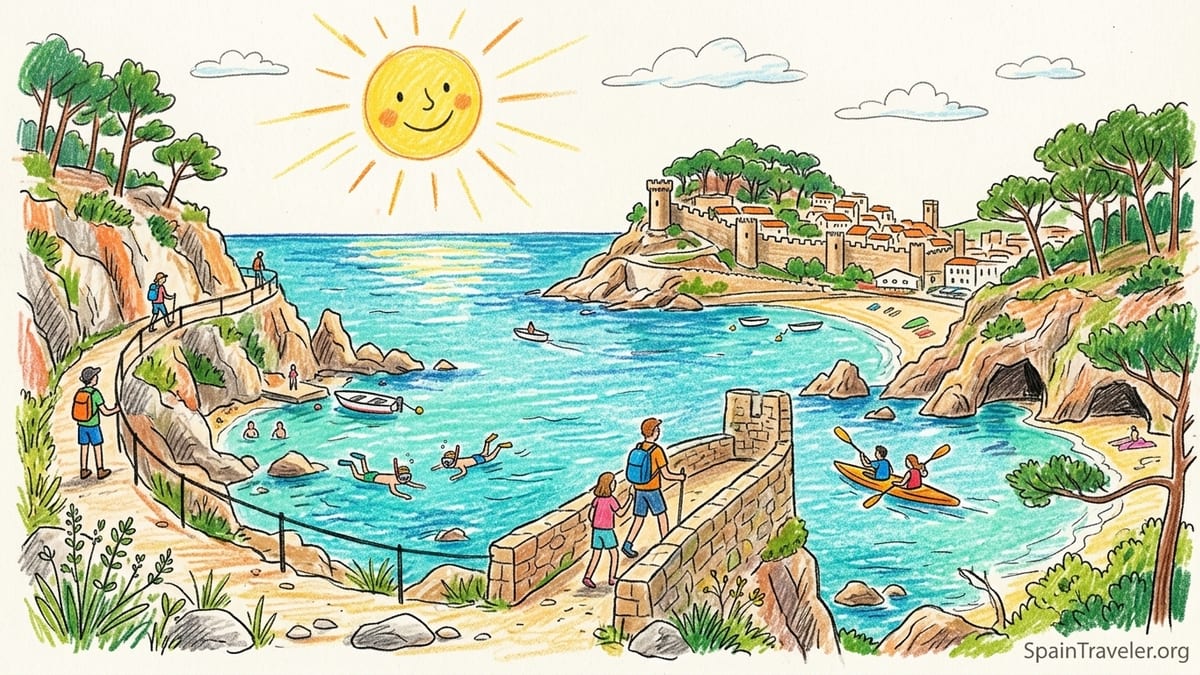
If you only have time for one big experience on the Costa Brava, make it a stretch of the Camí de Ronda, the historic coastal path that follows the shoreline between cliffs, pines and fishing coves. On my latest trip I walked the section between Calella de Palafrugell and Llafranc, then continued on to the lighthouse at Sant Sebastià. It took me about three hours at a relaxed pace with photo stops and a coffee break in Llafranc. The path is well signposted as part of the GR-92 long-distance route, a fact backed up by regional hiking guides and official tourism documents that describe it as meeting international trail standards, which helped me feel comfortable setting off with only a daypack.
The route itself is a series of small surprises. You leave Calella along a stone promenade that threads behind villas and descends into pocket coves, then climb gentle staircases carved into the rock to reach shaded pine sections with wide sea views. Access is straightforward: I caught a Sarfa bus from Girona to Calella de Palafrugell and walked straight from the bus stop to the seafront in under ten minutes. There is no fee for the trail, but I did budget around 10 to 15 euros for a terrace coffee in Llafranc and a drink by the lighthouse at the end.
Difficulty-wise, this is very manageable for anyone comfortable with stairs and a few short, steeper ramps. I passed families with older children and walkers in trail runners rather than heavy boots. What surprised me was how close the path runs to everyday life: one minute you are passing fishing boats pulled onto the sand, the next you are looking through gardens of second homes that tumble down to the water. I would repeat this walk in a heartbeat, especially outside high summer, when the light is clear and the path feels like a front-row seat to the Mediterranean.
On a separate day I tried a rougher Camí de Ronda section near Roses and Cap Norfeu, reached by local bus from Roses. Municipal hiking information describes this as one of the most beautiful but more demanding stretches, with sharper climbs and rocky underfoot sections. That aligned with my experience: in about four hours I covered less distance than the Palafrugell walk, but with more effort. I would still do it again for the dramatic headland views, but I would only recommend it to reasonably fit walkers with proper shoes and plenty of water.
Swimming and Snorkeling in the Coves Around Begur
Begur’s coves were the Costa Brava memory I most wanted to test against reality. On my first trip they were a revelation. On my second, they still held up. I based myself in Begur town, a hilltop village about 15 minutes by car from the coast, and spent two full days dropping down to different calas: Sa Riera one afternoon, Aiguablava the next morning and Aiguafreda as a quieter wild-card. From Begur you can reach them by shuttle bus in summer or, if you have a car, via steep but well paved access roads with paid parking close to the sand.
Each cove has a slightly different personality. Sa Riera is the widest, lined with modest low-rise apartment buildings and a clutch of beach bars that gave me plenty of options for a simple menu del día lunch around 20 euros, including seafood and wine. Aiguablava is more scenic, with clear turquoise water framed by pines. Here, snorkel rentals from simple kiosks on the beach were about 10 to 15 euros for a mask and tube for a few hours, according to posted price boards and recent operator information I checked before going, and that matched what I paid for a half day. Aiguafreda, essentially a tiny harbor wedged between cliffs, had concrete platforms instead of a sandy beach but the calmest water and fewer people once I walked away from the entry ramp.
Access can be the biggest challenge. In high season parking fills by mid-morning and roadside parking is actively controlled, so I tried to arrive at Aiguablava by 9:00 a.m. By midday there were queues for restaurant tables and a steady stream of paddle board rentals. The coves are free to enter, but I easily spent 30 to 40 euros per beach day once I added parking, a sunbed or umbrella where available and a simple lunch. What surprised me most was that even on a return visit I still found stretches of rock ledge where I could sit almost alone with my feet in the water at Aiguafreda.
Would I make time for Begur’s coves again? Yes, especially if I could combine them with early morning snorkeling. The rocky bottoms and posidonia sea grass beds created more fish life than at many larger resort beaches, and the calm conditions meant I felt safe floating around the headlands even as a casual swimmer. For me, the trade-off of dealing with summer parking and crowds was worth it, though on a future trip I would strongly consider going in late June or September to get the same magical color with half the people.
Exploring Tossa de Mar’s Walled Old Town and Bay
Tossa de Mar is one of the few Costa Brava places that manage to be both wildly photographed and still feel real on the ground. On my recent trip I gave it a full day and part of an evening, arriving by bus from Barcelona in about 1 hour 20 minutes and walking five minutes from the station to the seafront. The sightline when you reach the main beach and look across to the fortified Vila Vella on its headland is one of the most cinematic on the coast, but the experience that stuck with me was actually the climb through the old town’s alleys and the time I spent lingering on the smaller Platja d’es Codolar behind the walls.
I spent around two hours wandering the Vila Vella itself, ducking through stone archways, pausing at small viewpoints and stepping off the main route whenever a side lane looked interesting. There is no general admission fee to enter the walled quarter, although there are paid sites inside, such as the small lighthouse museum if you want to go in. The main cost here was my time and a leisurely coffee at one of the simple terrace bars for 3 to 4 euros. Access is easy if you are comfortable with cobbles and slopes; there are handrails on steeper sections but no lifts, so travelers with reduced mobility may find some viewpoints off limits.
What surprised me, on a second visit, was how much life still happens just out of frame of the classic viewpoints. I watched children ride bikes on the square at the base of the walls and locals chat in Catalan over afternoon drinks on side streets where the menus were in one language instead of five. Down at Platja d’es Codolar, the small fishermen’s cove behind the headland, I swam off the pebbly beach in calm water with only a handful of other people in the early evening. There were a few small boat excursion kiosks on the main beach offering coastal trips and glass-bottom visits to nearby caves. Prices for short coastal cruises started in the 20 to 30 euro range per adult when I checked boards along the promenade, although I chose to skip them and keep the focus on the town itself.
I would absolutely make a side trip to Tossa again, but I would time it carefully. In high summer the main sands fill early and the narrow lanes can feel crowded. On this visit I arrived on a shoulder-season weekday in early June, and it was just busy enough to feel lively while still letting me find a bench on the walls to sit alone with a view of the bay. If you have one day on the southern Costa Brava and you want a blend of beach, heritage and atmosphere without needing a car, Tossa remains my top choice.
Kayaking Hidden Coves near Tamariu and Platja de Castell
On my first Costa Brava trip I admired the kayakers sliding into caves beneath the cliffs and promised myself I would join them next time. I kept that promise by booking a sit-on-top kayak rental at Tamariu with a local operator that runs beachside rental points at several coves, including Tamariu and Platja de Castell. Their general information notes that rentals include the kayak, paddle and life jacket, and that they operate directly from the sand, which matched my experience. I paid just under 30 euros for a two-hour tandem kayak, shared with a friend, in line with the posted 2026 season prices.
The route from Tamariu is wonderfully simple but scenic. After a short safety briefing, the staff suggested we follow the coast north toward Aiguablava, hugging the cliffs and stopping in small inlets along the way. At a relaxed paddling pace and with several swim stops, we covered perhaps five to six kilometers in two hours. The water was calm in the morning, with only gentle swell where the coast opened out, and I never felt out of my depth as a casual paddler. The biggest effort was carrying the kayak a short distance down the sand at launch and back up again at the end, which the staff helped with.
What surprised me was how different the coast feels at water level compared with hiking above it. From the kayak I could see the striations in the rock, smell the pines leaning over the water and slide into narrow gaps where the sea turned a deeper shade of blue. We stopped in a tiny cove only accessible from the water, where a couple of other kayaks bobbed and people snorkeled over submerged rocks. There was no extra fee for landing in the coves, although the operator was clear that we needed to stay within a defined coastal zone and keep a safe distance from moored boats.
On another day I repeated the experience at Platja de Castell, a wilder beach backed by forest with strict limits on building. Here the coastline is less developed, and within an hour of paddling we had reached caves and arches that felt far from the sunbeds. Access to Platja de Castell itself is via a narrow access road with a paid parking area near the sand, where I paid around 6 euros for several hours. The kayak rental pricing was similar to Tamariu. I would gladly work kayaking into any future Costa Brava trip, especially in the morning when the sea is calmest. It gave me access to a quieter side of the coast without needing a car or technical skills, and it layered adventure onto what might otherwise be just another beach day.
Diving and Snorkeling in the Medes Islands Marine Reserve
The Medes Islands, off the town of L’Estartit, are the one place on the Costa Brava where my expectations of marine life were exceeded. This small archipelago forms a protected marine reserve where fishing is restricted and access for divers and snorkelers is regulated. Official park information and local dive centers stress that numbers are capped and that there is a daily conservation fee per person per dive, around 5 euros in recent seasons. One of the established centers I checked before booking listed a separate Medes tax of just over 5 euros per dive on its 2026 price sheet, in addition to the dive price itself, so I went in expecting a premium experience and cost.
I completed two boat dives here, booked with a local dive center in L’Estartit. As an existing Open Water Diver, I joined a standard guided group. Each two-dive trip, including full equipment rental and the Medes fee, came to roughly 120 to 140 euros for the day by the time taxes and extras were added. The center’s published rates showed single dives in the 45 to 60 euro range with equipment, plus the park tax. From gearing up at the base to returning in the afternoon, the experience took almost a full day, about six to seven hours. Boats left from the harbor a short walk from the dive shop, and the ride to the islands took less than 20 minutes.
Underwater, the reserve status was immediately obvious. Giant groupers hovered near rock walls, schools of damselfish and bream pulsed in the blue, and there were dense patches of sea fan and soft corals that I had not seen elsewhere on this coast. Depths on my dives ranged between 18 and 25 meters, suitable for my certification level, although some sites drop deeper and are reserved for more advanced divers. A recent conversation with other divers and operator notes confirmed that only certified divers are taken into the reserve and that beginners usually start with coastal check dives before moving onto the islands, which matches what I observed on the boat.
For non divers or anyone who prefers to stay near the surface, several operators in L’Estartit offer guided snorkeling trips around the Medes by boat. Regional experience guides describe eco-snorkel outings that combine interpretation of the marine reserve with time in the water. Prices I saw at harbor kiosks started roughly in the 35 to 50 euro range per adult for a half-day trip including mask, snorkel and wetsuit, depending on the provider and season. Access is straightforward if you are staying in town, as the harbor and most centers are clustered within a ten-minute walk of the seafront hotels.
Would I dive the Medes again? Without hesitation, yes. The only caveat is cost and planning: you need to reserve ahead in summer, fill in a medical questionnaire and build in a full day, and the price is higher than for shore dives elsewhere on the Costa Brava. For me the combination of reserve-level marine life, organized infrastructure and the feeling of being on a small expedition rather than just a casual splash easily justified setting aside the budget and time.
Following Dalí’s Footsteps: Figueres, Portlligat and Púbol
The cultural counterweight to all that sea and sun is Salvador Dalí, whose life and work form an informal triangle across the inland town of Figueres, the cove of Portlligat near Cadaqués and the village of Púbol. On my recent trip I set aside two full days for what many travelers call the Dalí Triangle. Official cultural sites and regional tourism materials treat these as separate, bookable museums with distinct opening hours and ticketing, so I planned accordingly. I started with the Dalí Theatre Museum in Figueres, set in the old municipal theater and transformed into what Dalí considered one of his major works. From the RENFE station it took me around 12 minutes on foot to reach the entrance, consistent with published visitor information.
I had prebooked a morning time slot and paid just under 20 euros for an adult ticket bought directly, in line with current museum pricing that sits in the mid-teens to around 20 euros depending on options and combinations. Once inside, I spent about three and a half hours moving through the maze of galleries, courtyards and installations. The museum is dense, with paintings, sculptures and optical illusions layered into spaces that feel closer to a cabinet of curiosities than a white-cube gallery. The biggest surprise on this second visit was how much detail I had missed the first time, particularly in smaller paintings and in the crypt area. I would return again with a guide or audio tour to draw out even more of the stories behind the works.
The next day I focused on the coast, taking a bus toward Cadaqués and then a taxi on to Portlligat, where Dalí’s house studio looks over a calm natural harbor. Entry is timed and strictly limited, and advance reservations are essential, something every official mention of the house reinforces. I paid around 15 euros for a guided visit in a small group that moved through the rooms in about 45 minutes, followed by as much time as I wanted in the outdoor spaces. The house itself is intimate: whitewashed rooms joined like a labyrinth, filled with strange objects and details that make clear how much Dalí and Gala curated even their private spaces as works of art.
Púbol, the third point of the triangle, required a rental car to visit comfortably on my schedule, though it is also reachable by regional bus with some planning. There I visited the Gala Dalí Castle, the house Dalí gave to Gala, with its own admission fee similar to the other sites. I spent about two hours exploring the interiors and garden, much quieter than Figueres and Portlligat. Overall, the Dalí Triangle cost me the better part of two days and roughly 50 to 60 euros in admissions, plus transport. I would absolutely do it again, but I would advise most travelers to split it over at least two days rather than attempt all three in one, which can turn a fascinating pilgrimage into a rushed checklist.
Slow Afternoons in Medieval Villages and Vineyards
The Costa Brava’s official tourism material often mentions medieval inland villages and wine routes, and on this trip I made a point of trading one potential beach day for stone lanes and vineyard views. My base was Pals, a picture-postcard hill town whose old quarter rises above rice fields and lowland farms. Over the course of an afternoon and evening I climbed the tower, wandered narrow streets, browsed small artisan shops and lingered over a glass of Empordà wine on a terrace with a view. There is no ticket to enter the village, though some individual monuments charge small fees. My main cost here was a 5 to 7 euro glass of local red and a 25 euro dinner built around grilled meats and local rice.
Access to Pals is relatively simple by car, with several signposted car parks on the edge of the old town where I paid a few euros for several hours. Without a car, regional buses from Girona and coastal towns connect to Pals and nearby villages like Peratallada, although frequencies can be limited outside summer. What surprised me was how quickly the atmosphere shifted from coastal bustle to medieval quiet once I turned inland by just a few kilometers. In Peratallada, another stone-built village nearby, I wandered almost empty lanes at sunset, hearing only the clink of cutlery from a handful of restaurants.
To bring local wine into the experience, I booked a basic tasting at a nearby Empordà winery, one of many that appear in regional gastronomic guides. For around 15 to 20 euros I joined a small group tour of the cellar followed by a tasting of three wines, including a fresh white well suited to seafood and a fuller-bodied red. The visit took about an hour and a half, plus travel time. I am not a wine expert, but what I appreciated was the explanation of how the tramuntana wind and proximity to the sea shape the vineyards, tying the inland landscape back to the coastal one I had been hiking and swimming through all week.
Would I give up beach time for villages and vineyards again? Yes, especially on days when the tramuntana picks up on the coast or when I want a slower pace. These inland afternoons gave my trip a sense of depth and context, grounding the Costa Brava in centuries of human history instead of just seasonal tourism. On a future visit I would probably build a full day around a loop of Pals, Peratallada and a winery, with a late dinner back on the coast.
The Takeaway
Across two trips and many small adjustments, the Costa Brava has shifted in my mind from a line of beaches to a layered region where sea, cliffs, villages and art all hold equal weight. When I look back at the experiences I would actively make time for again, they are the ones that felt both distinctly local and personally absorbing: a morning on the Camí de Ronda with the sound of waves below, a quiet swim in a Begur cove before the crowds arrive, the sense of descending into Dalí’s imagination in Figueres and Portlligat, a kayak bow nudging into a cave, a glass of Empordà wine in a medieval square.
Practically, they also share a few traits that might help shape your own plans. Each took at least half a day to feel satisfying, and often a full day once travel and lingering were included. Most required modest but real costs, whether in admissions, equipment rentals or parking, though coastal paths and village lanes themselves remain free. Access ranged from straightforward bus rides to more complex combos of regional trains and local taxis. All of them rewarded going slightly earlier, later or off season to step sideways from the heaviest crowds.
If you are planning your own Costa Brava itinerary, I would suggest choosing two or three anchor experiences from this list rather than trying to tick off every cove and village. Give the Camí de Ronda a morning, the Medes a full day if you dive or snorkel, Dalí one or two days, and leave open pockets of time where you can simply follow a side lane or a coastal path sign to see what unfolds. The coast will still be there on your next visit, and if your experience is anything like mine, there will definitely be a next visit.
FAQ
Q1. How many days do you really need on the Costa Brava to do these experiences?
For a relaxed trip that includes hiking a Camí de Ronda section, visiting at least one Dalí site, enjoying a cove day and either kayaking or a Medes Islands outing, I would plan a minimum of five full days on the Costa Brava, not counting arrival and departure. With seven to nine days you can slow the pace, add medieval villages and vineyards, and repeat favorite coves without feeling rushed.
Q2. Is it possible to enjoy the Costa Brava without a car?
Yes, although it limits your spontaneity. Coastal towns like Tossa de Mar, L’Estartit, Roses and Calella de Palafrugell have bus connections from Barcelona or Girona, and once there you can walk or use local taxis for short hops. Car free it is still realistic to hike Camí de Ronda sections, book boat trips to the Medes, visit the Dalí Theatre Museum in Figueres and enjoy at least a couple of coves. Inland medieval villages and some wineries are harder to reach, so you may want to join organized excursions or allocate budget for taxis.
Q3. When is the best time of year to visit the Costa Brava for these activities?
Late May, June, September and early October strike the best balance. In these months water temperatures are usually warm enough for comfortable swimming and snorkeling, most seasonal services like kayak rentals and cove restaurants are operating, and the Camí de Ronda is pleasant to walk without intense heat. July and August bring the fullest range of services but also the biggest crowds and parking pressure at popular beaches, while winter reduces some options, especially for water sports and coastal boat trips.
Q4. How expensive are the main experiences like Medes diving and Dalí sites?
Expect marquee experiences to be significant but not prohibitive line items. A day of guided diving with full equipment in the Medes Islands, including the required marine reserve fee, typically lands in the 120 to 150 euro range for two boat dives, depending on the center and season. Guided snorkel trips are cheaper, often starting around 35 to 50 euros per adult. Dalí site tickets tend to fall in the mid-teens to around 20 euros per adult per site when purchased directly, and visiting all three major locations over two days will usually add up to 50 to 60 euros in admissions alone.
Q5. Do you need to be very fit to hike the Camí de Ronda?
The Camí de Ronda is made up of many sections with different levels of difficulty. The stretch between Calella de Palafrugell and Llafranc, and on to the Sant Sebastià lighthouse, is suitable for anyone comfortable with moderate hills and staircases, and I saw families with older children handling it well. Rockier sections near headlands like Cap Norfeu require more stamina and better footwear. If you can comfortably walk three to four hours in a day with some stairs and carry water and sun protection, you can enjoy at least one rewarding section.
Q6. Is snorkeling from the shore worth it, or should I book a boat trip?
Both can be rewarding. From the shore, coves around Begur such as Aiguablava and Aiguafreda have rocky bottoms and clear water with enough fish life to make casual snorkeling enjoyable, and you only pay for basic gear rental if you do not bring your own. Boat based trips, especially around the Medes Islands, access sites with greater biodiversity and clearer water, and usually include equipment, guidance and explanations about the marine reserve. If budget allows, I would do at least one guided boat trip and then use shore snorkeling in coves to fill extra beach days.
Q7. How far in advance should I book Dalí tickets and Medes activities?
For the Dalí Theatre Museum in Figueres and the Dalí House in Portlligat, I recommend buying timed tickets as soon as you know your dates, especially for summer and weekends, because daily entries at Portlligat are strictly limited and popular slots can sell out. A lead time of one to several weeks is sensible in peak months. For Medes diving and snorkeling, reserve at least several days in advance in high season so that centers can secure boat spots and the necessary permits, while in shoulder seasons a few days’ notice is usually enough.
Q8. What should I pack specifically for a Costa Brava trip like this?
In addition to standard Mediterranean travel clothes, I found three items especially useful: sturdy yet breathable walking shoes with good grip for Camí de Ronda stairs and rocky paths, a compact snorkeling set if you plan to swim in multiple coves, and a lightweight long-sleeve layer for breezy evenings, particularly if the tramuntana wind picks up. A small dry bag or waterproof phone pouch is also helpful for kayak outings, and a reusable water bottle is essential on hikes, where fountains are not guaranteed.
Q9. Are the medieval villages and wineries child friendly?
Yes, with some caveats. Villages like Pals and Peratallada are small enough that children can explore without long walks, though surfaces are often cobbled and not ideal for strollers. Many Empordà wineries welcome families and offer short tours where children can see vineyards and cellars while adults taste, but they are not playgrounds, so it helps to schedule visits after a beach morning or village wander when younger travelers are less restless. Always check directly with wineries about age policies and facilities before visiting.
Q10. If I only have three days, which experiences would you prioritize?
With three full days I would choose one strong experience per day. Day one could center on a Camí de Ronda walk between coastal villages, anchored by a swim. Day two might focus on culture, pairing the Dalí Theatre Museum in Figueres with a stroll and dinner in a nearby town. Day three I would dedicate either to the Medes Islands, if diving or snorkeling appeals, or to a mix of coves around Begur and a short inland detour to Pals. This way you touch hiking, sea and culture without spending most of your time in transit.