


Spending part of a Costa Blanca holiday out on the water sounds idyllic, but the reality of boat trips can vary a lot: some runs feel like polished experiences that glide by too quickly, others drift into overcrowded party territory or underdeliver on the promised schedule. Over several visits I booked a mix of excursions from Alicante and Dénia, including the official Tabarca tour advertised through Alicante’s tourism board and short catamaran cruises along the Dénia coast. What follows is a comparison based on those actual outings, with researched alternatives clearly marked so you can decide which kind of day at sea really fits you.
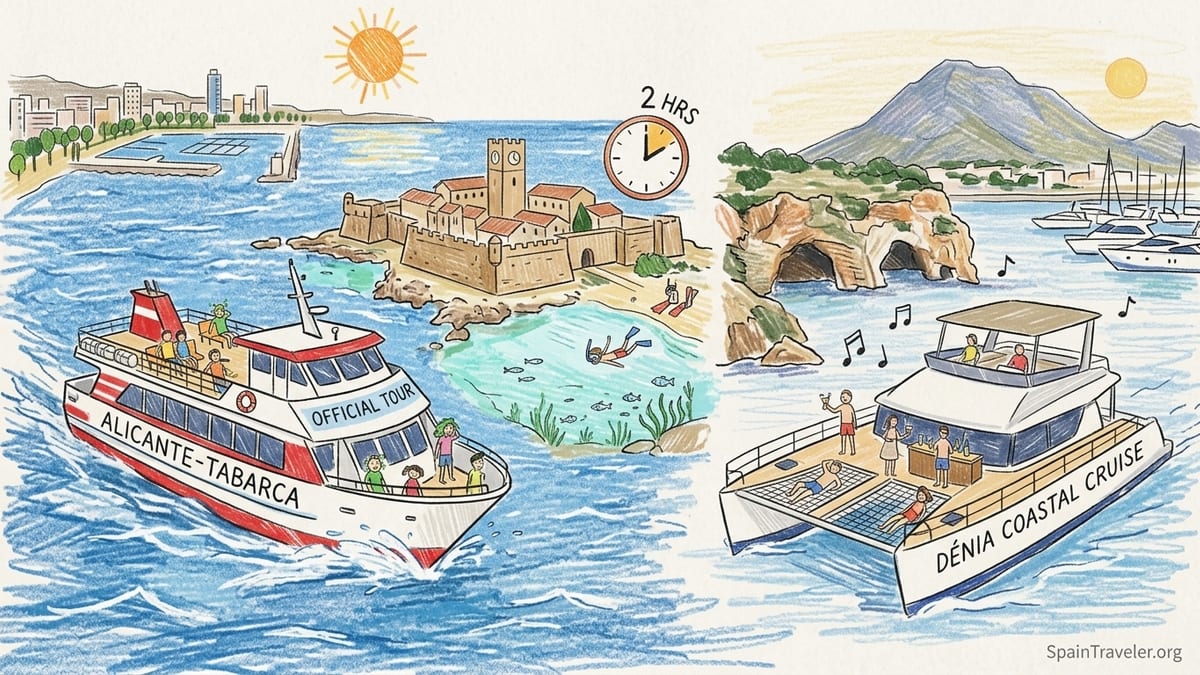
Alicante to Tabarca on the Official Tourism-Board Boat
The most structured boat excursion I booked on the Costa Blanca was the Tabarca tour promoted through Alicante’s official tourism channels. The current version, listed for the 2026 season, sets clear expectations: a 45-minute outward navigation from Alicante’s port to Tabarca, around two hours of free time on the island, and a 45-minute return. Departures show up on the city’s tourism calendar between mid-May and late September, and I booked a peak summer departure that matched this format almost exactly in practice.
Booking was straightforward. The tourism site directed me to the operating company, where I reserved online the day before. I paid slightly under 40 euros per adult, with a modest discount for children, and received a digital ticket with a specific departure time. Check-in took place at a kiosk on the promenade within Alicante’s main marina, a few steps from the Esplanade. Staff were clear that boarding would begin 15 minutes before departure, and when I arrived there was already a short line of families, couples and a few small groups of friends.
The vessel itself was a mid-sized passenger boat rather than a sailing catamaran: two enclosed decks with indoor seating and a partially open top deck. Shade was plentiful downstairs, while the upper deck offered a mix of shaded benches and exposed seating that filled quickly with sunseekers. Toilets were available on the lower deck and were basic but clean at the start of the day; by the return leg they felt more like a ferry restroom at the end of a busy crossing, which is worth knowing if you are particular about facilities.
The advertised 45 minutes each way felt accurate. We left within five minutes of schedule, motored out of the harbor, and followed a fairly direct line toward Tabarca. Sea conditions on my August crossing were moderate: a rolling swell that had a few passengers looking slightly green but nothing dramatic. There was no swimming stop built into this excursion; the focus was clearly on transport plus time on the island. Drinks were sold from a small bar inside, mainly bottled water, soft drinks and simple beers, at prices comparable to a waterfront café. No music was played beyond a bit of background radio inside, which kept the mood closer to a quiet ferry service than a party cruise.
Time on Tabarca: Snorkeling, Crowds and the Reality of “Two Hours”
Once we docked at Tabarca’s small harbor, a crew member reminded everyone that we would have about two hours on the island and clearly stated the return departure time. Accounting for disembarkation and the need to be back on board 10–15 minutes before leaving, the free window worked out to around one hour and forty minutes. It is enough for a first introduction, but not a full beach day.
I spent that time walking through the walled old village, grabbing a quick drink in one of the small bars just off the main square, and fitting in a short swim. Tabarca sits within a protected marine area, and the water clarity around the rocky coves is impressive, with patches of seagrass and small shoals of fish visible even close to shore. However, this specific excursion did not include guided snorkeling or equipment. Most people who wanted to snorkel brought their own mask and fins, which I would strongly recommend if that is a priority for you.
In high season, the island feels busy. My visit coincided with a sunny weekend in August, so the main beach was crowded, and restaurant terraces were full of day-trippers from Alicante and Santa Pola. If you walk a few minutes beyond the central sandy area toward the rockier coves, the atmosphere becomes calmer and the swimming more pleasant. Even so, the two-hour slot encourages a slightly rushed rhythm: swim, towel off, maybe a quick seafood lunch if you order efficiently, then back to the boat.
On the return, the schedule again held true to the 45-minute advertised duration. The sea had picked up slightly and spray reached parts of the bow, but the boat’s size and enclosed salon meant that anyone prone to seasickness could stay sheltered. Overall, the official tourism-board Tabarca tour delivers exactly what it promises: transport with a fixed timetable and minimal embellishments. For travelers who like predictability and do not need onboard entertainment, it is a solid way to tick off Tabarca without worrying about private operators or last-minute changes.
Dénia Coastal Catamaran: A Short Cruise with Big Views
In contrast to Alicante’s point-to-point Tabarca shuttle, the catamaran excursion I joined from Dénia was all about the journey along the coast. I booked a late-afternoon cruise that followed the cliffs toward the Cova Tallada area and back, similar in format to the sunset and one-hour coastal outings advertised by local operators that leave from Dénia’s main port near the Esplanada Cervantes. Prices when I sailed were in the mid-teens to under 20 euros per adult, with children slightly less, placing it firmly in the “easy add-on activity” category rather than a major splurge.
Boarding took place directly from the marina, with the catamaran moored alongside other tour boats. The vessel was a motor catamaran with a broad deck, netting at the bow, a shaded central section and an upper viewing area reached by a short ladder. Unlike the Tabarca boat, this felt like an excursion craft first and a transport vessel second. Crew members greeted passengers at the gangway and handed out paper tickets or scanned mobile confirmations before directing everyone to spread out along the deck.
The advertised duration for my cruise was around 60 to 90 minutes depending on the exact product. In practice, we spent just over an hour on the water from casting off to tying back up at the same berth. Some Dénia trips in this category include a dedicated swimming stop, particularly mid-day cruises toward the Marine Reserve between Dénia and Jávea, while others function more as scenic rides. On my outing the focus was on views: we motored along the coast past beaches and toward the rocky headland, slowed to linger near the cliffs and caves, then turned back as the light softened over the Montgó massif.
Shade was available under the central awning and along the sides, but the bow nets were completely exposed. Many passengers alternated between the two, enjoying the breeze at the front, then retreating once the sun felt too strong. Toilets were located in the hulls and were more compact than those on the larger Alicante boat, but adequately maintained for such a short trip. There was a small bar counter near the stern where the crew served the included drink, typically a plastic cup of white wine, cava, beer or a soft drink, with additional beverages available to purchase.
Onboard Atmosphere: Music, Crowds and Space to Move
One of the biggest differences between the Dénia catamaran cruise and the Alicante Tabarca run was the onboard atmosphere. The Dénia boat felt deliberately relaxed. Background music leaned toward chill-out and soft pop, loud enough to create a holiday mood but not so intrusive that it drowned out conversation. People chatted in small groups, took turns lying on the nets or standing by the railings for photos, and generally treated the outing as an hour of sea air before dinner.
In terms of crowd level, my sailing from Dénia was comfortably busy without feeling stacked. Every seat was taken, but there was still room to move. The netted bow area hosted clusters of couples and friends stretched out side by side, while families with younger children tended to stay in the shaded benches closer to the bar. Because the route did not involve disembarking at another port, there was no sense of rush; the crew simply reminded everyone to keep clear of certain areas during maneuvering and to avoid sitting on railings.
The Tabarca boat, by contrast, prioritized capacity and function. On my departure from Alicante the lower indoor deck filled quickly, especially with older passengers seeking shade and stability. The upper deck offered a more open-air experience but was still essentially rows of plastic seats facing forward. Conversations were lower-key, families checked watches to manage their island time, and the lack of music kept the feeling closer to public transport on water than to a leisure cruise. Both approaches have their merits; it just depends whether you want your time afloat to feel like the main event or simply the most scenic way of getting from A to B.
From a space and movement perspective, catamarans generally win on comfort for shorter leisure-focused outings. The wide deck and open layout make it easier to wander, take photos from different angles and follow the shade as the sun shifts. On a more conventional passenger boat, once you have picked a seat, there is less incentive to move around, especially if you rely on the stability of the fixed benches.
Swimming Stops and Snorkeling: Expectations vs Reality
Travel brochures for Costa Blanca boat trips often spotlight photos of people diving from catamarans into glass-clear water, masks and fins at the ready. In reality, whether you actually get to swim or snorkel on a given excursion depends heavily on the specific product and the day’s sea conditions. On the Tabarca tour I took from Alicante, there were no swimming stops from the boat itself. All swimming happened from the island’s beaches and rocky entries once we had disembarked, entirely self-guided and without any equipment provided.
In Dénia, some coastal cruises include a swim break when conditions and regulations allow, especially those marketed as visits to the nearby marine reserve. On a separate Dénia outing that I researched but did not personally sail, operators described anchoring near the Cova Tallada area for a brief swim from the stern ladder, sometimes with basic masks available. However, feedback from recent travelers suggests that these stops can be short and dependent on both sea state and passenger numbers, with perhaps 15 to 20 minutes actually in the water before it is time to climb back aboard.
None of the trips I booked along this stretch of coast provided full snorkeling equipment sets as standard. Passengers either swam without gear or brought their own mask and snorkel. This is consistent with what local promotional material indicates: excursions emphasize coastal scenery, relaxed sailing and, at most, casual swimming over structured underwater exploration. If your priority is extended snorkeling with high-quality equipment and guided spots, you might be better off booking a specialist charter or a dedicated marine tour rather than relying on generalist coastal cruises.
Water clarity during my summer and late-spring visits was generally excellent, but underwater life was modest close to popular beaches, with more interesting seagrass beds and fish activity around rockier coves. For many travelers, simply sliding into cool, saltwater after an hour in the sun is sufficient reward. If you expect coral-reef levels of marine interest or long supervised snorkel sessions, you will need to seek out operators who explicitly focus on that style of excursion.
Sea Conditions, Comfort and Motion at Different Times of Day
Sea conditions along the Costa Blanca can shift throughout the day, and those changes were evident across the excursions I joined. My morning departure to Tabarca from Alicante encountered a moderate swell on the open stretch between the city and the island. The boat, being relatively large, handled it without drama, but there was noticeable up-and-down motion. A few passengers reached for the complimentary motion-sickness bags placed discreetly near the stairwell. Inside the lounge, windows occasionally caught spray; on the upper deck, the breeze and views made the movement feel more manageable unless you were extremely sensitive.
By contrast, the late-afternoon and near-sunset catamaran cruises from Dénia felt significantly calmer on both outings I joined and observed. With the coast providing partial shelter and the day’s wind often easing toward evening, the sea surface developed gentle ripples rather than pronounced swells. The catamaran’s twin-hull design also blunted some of the side-to-side rocking that monohull boats experience. People walked around comfortably with drinks in hand, and I did not notice anyone showing signs of discomfort.
If you are prone to seasickness, the timing and type of vessel are worth considering. Larger, more enclosed boats like the Tabarca transport offer stability and the option to sit low and centered, but they also spend more time in fully open water. Catamarans on coastal routes may feel more exposed to wind and spray, especially at the bow, yet their routes often hug the coastline where conditions can be milder. Booking an evening coastal cruise from Dénia or Jávea, when available, can be a good compromise: enough movement to feel like you are really at sea, without the more sustained heave of a longer crossing.
Regardless of departure port, all the operators I encountered were clear that sailings were subject to weather and sea-state decisions taken on the day. In marginal conditions, schedules may be adjusted or trips canceled. When that happened on an earlier spring attempt to book a coastal cruise from Alicante, the company offered either a full refund or a transfer to a later date, which aligns with current consumer-protection expectations in Spain but is still reassuring to experience in practice.
Booking Practicalities and Price Points Along the Coast
From a planning perspective, the Costa Blanca’s main boat-trip hubs around Alicante and Dénia are well organized but slightly different in flavor. In Alicante, the official tourism calendar groups together city bay cruises, coastal runs and the Tabarca boat, and directs you toward authorized operators. The Tabarca excursion I booked through this channel used transparent pricing, clear departure dates running broadly from mid-May to the end of September, and required only a simple online form with card payment. The process was straightforward enough that I felt comfortable booking just one day ahead in August.
In Dénia, the marina area clusters several excursion kiosks right on the waterfront. When I booked my catamaran outing, I did so in person on the same day around lunchtime. The salesperson walked me through several options: a short one-hour coastal ride, a 90-minute sunset cruise with a drink, and slightly longer trips toward the marine reserve that included a swim stop. Prices at the time ranged roughly from the mid-teens to just under 25 euros per adult, depending on duration and inclusions. Paying in cash or by card was equally accepted, and tickets explicitly stated check-in and departure times.
What struck me when comparing receipts and brochures afterward was that advertised durations were mostly honest, but travelers’ expectations sometimes stretched them into imagined half-day events. A 60-minute or 90-minute cruise passes quickly when boarding, safety briefings and docking times are factored in. On my Dénia trip, the time between casting off and starting to head back arrived sooner than many passengers seemed to anticipate, especially those hoping for a long swim stop that was never part of this particular product.
For researched alternatives I did not personally sail, such as longer combined sailing and swimming catamaran tours from Dénia and Jávea or private charters from Benidorm, recent descriptions indicate broadly similar pricing tiers: relatively affordable short scenic runs under two hours, mid-range half-day experiences combining coastline viewing with swim time and drinks, and higher-priced private or small-group charters with more flexibility. Because I have not taken those specific outings myself, I would treat brochure promises about extended snorkel time or included meals with healthy skepticism and look up independent, recent reviews before committing.
How the Tours Compare: What I Would Book Again
Having now tried both a structured point-to-point excursion and open-coast catamaran cruises, I would choose each for different kinds of days. If I wanted a simple, reliable way to visit Tabarca without renting a car or dealing with smaller private boats, I would happily repeat the Alicante tourism-board tour. Its key strengths are predictability and alignment between advertising and reality: the 45-minute navigation each way and roughly two hours on the island were accurate, the price was clearly stated at booking, and the experience unfolded almost exactly as the schedule outlined.
However, as a boat trip in itself, the Tabarca run feels functional. The vessel favors capacity over character, and the lack of onboard extras such as commentary, music or organized activities means the crossing can feel a little plain unless you bring your own entertainment or simply enjoy quietly watching the coast slide by. For families, older travelers or anyone anxious about dealing with less formal operators, that trade-off will be worthwhile. The big advantage is that, once the tickets are in hand, there are few surprises.
For travelers who see the boat ride as the highlight rather than a means to an island, I think the Dénia-style catamaran cruises deliver more enjoyment per minute. My short coastal outing managed to pack scenic views, a touch of sea breeze excitement at the bow nets, music, and a convivial shared drink into just over an hour. The atmosphere was sociable but not raucous, and the gently shifting light on the cliffs made the route feel special even without a swim stop. I would repeat a sunset version of that cruise in a heartbeat, particularly at the relatively modest price point compared with other holiday activities in the area.
If I were planning another Costa Blanca trip with friends, I might also explore small-group or semi-private catamaran options from Dénia or Jávea, accepting the higher cost in exchange for more space and potentially longer, quieter swim sessions. But I would go into those bookings with my recent experiences in mind: checking carefully whether the advertised duration includes time moored at anchor, confirming whether snorkeling gear is truly provided, and clarifying passenger capacity in advance to avoid feeling crammed on what was marketed as a “boutique” trip.
FAQ
Q1. How long does the official Alicante to Tabarca boat trip really take door to door?
The excursion I took matched the published outline closely: about 45 minutes of navigation each way, plus roughly two hours of free time on Tabarca itself, making the total outing just over three and a half hours when you include boarding and disembarkation.
Q2. Are drinks and food included on the Tabarca tour from Alicante?
On my sailing, drinks and food were not included in the base ticket price. There was a small bar on board selling bottled drinks, and once on the island you pay separately for any cafés or restaurants you choose to visit.
Q3. Do the Dénia catamaran cruises feel crowded?
On my late-afternoon coastal cruise from Dénia, the boat was full but not uncomfortably so. All seats were taken, yet there was still room to move between shaded benches and the bow nets, and it was usually possible to find a spot at the railings for photos without waiting long.
Q4. Is snorkeling equipment provided on Costa Blanca boat trips?
None of the excursions I personally booked from Alicante and Dénia included full snorkeling equipment as standard. Some operators mention basic masks or allow brief swim stops, but if snorkeling is important to you, it is best to bring your own gear or choose a specialist marine tour that clearly advertises equipment provision.
Q5. What are the toilets like on these boats?
On the larger Tabarca transport boat from Alicante, toilets resembled simple ferry restrooms: functional and reasonably clean at departure but a bit worn by the return. On the Dénia catamaran, facilities were more compact but adequately maintained for a one to one-and-a-half-hour outing.
Q6. How choppy are the sea conditions between Alicante and Tabarca?
On my August crossing, the open stretch between Alicante and Tabarca produced a moderate swell that was noticeable but manageable. Some passengers used motion-sickness bags provided on board, but most sat comfortably either inside or on the upper deck. Conditions vary with weather, so if you are sensitive, consider sitting low and near the center of the boat.
Q7. Do the advertised durations for Dénia catamaran trips match reality?
For the coastal cruise I took, the advertised 60 to 90 minutes was accurate. We spent just over an hour on the water, with the remaining time accounted for by boarding, safety information and docking. It is important to remember that a “90-minute” product rarely means a full 90 minutes of uninterrupted cruising.
Q8. Is there shade on Costa Blanca catamaran cruises?
Yes. The Dénia catamaran I sailed had a central shaded area with benches and additional covered seating along parts of the sides. The bow nets were fully exposed to the sun, so most passengers alternated between shaded and sunny spots during the trip.
Q9. Would you recommend the Tabarca boat from Alicante for families with children?
Based on my experience, yes, with the caveat that the boat feels more like a functional ferry than an entertainment-focused cruise. Families benefit from the predictable schedule, straightforward booking through the tourism board and the opportunity for children to swim and explore once on the island, provided you manage sun protection and bring anything they need for the beach.
Q10. If I only have time for one boat trip, should I choose Tabarca or a Dénia catamaran cruise?
If you want to visit a unique small island and do not mind a more utilitarian boat, pick the Alicante to Tabarca excursion. If you care more about the feeling of being on a catamaran with views, music and a drink in hand, a short coastal cruise from Dénia offers a more atmospheric time on the water, even though you end up back where you started.