


The brochures sold me a Costa Brava of endless beach days and calm turquoise coves. What actually decided whether I loved a given trip was more specific: the bite of the tramuntana wind in Cadaqués, the exact moment the sea finally felt swimmable without a wetsuit, whether I could still park near the old town after 10 a.m., and if the coastal paths were a joy or a slog in the heat. After several stays between Lloret de Mar and Cap de Creus in different months, and more recent research to fill the gaps, my picture of the “best time to visit” has changed completely.
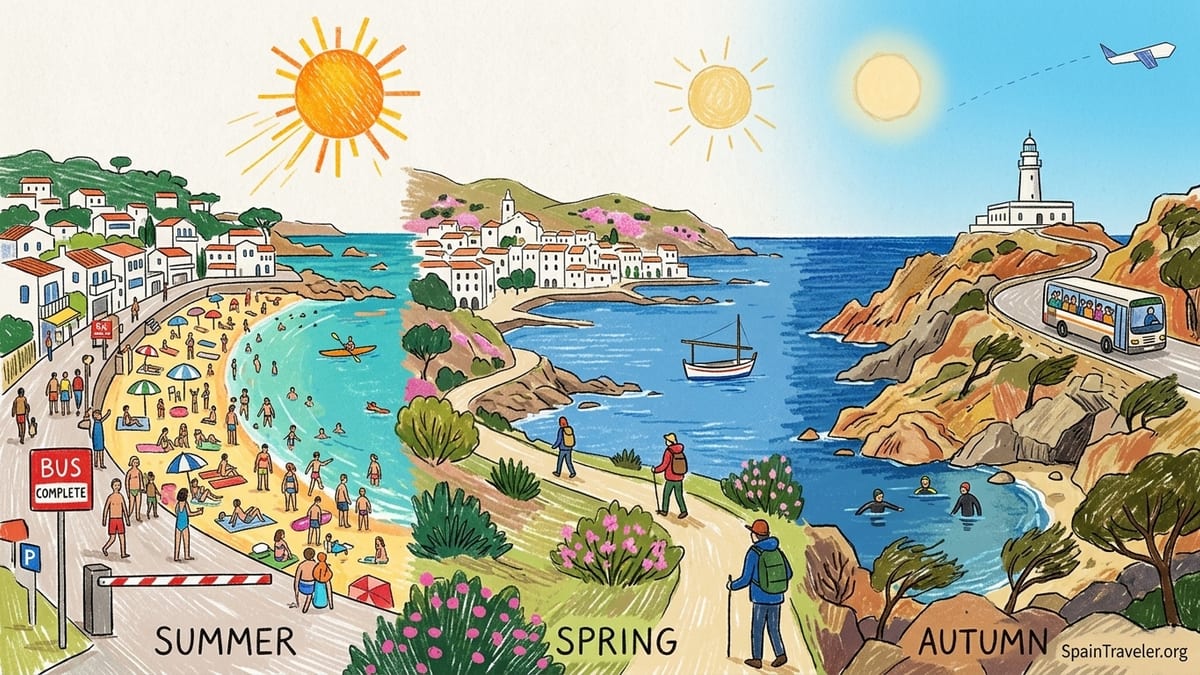
How the Costa Brava’s Seasons Really Feel
My first Costa Brava trip was a classic August beach week near Platja de Castell, just north of Palamós. The air was hot from mid-morning to late evening, the sand burned bare feet by lunchtime, and the sea felt like a giant saltwater pool. It was easy to float for half an hour without feeling cold. The trade-off was obvious as soon as I tried to park near the beach after 10 a.m. Every formal parking area had attendants waving cars away with “completo” signs, and improvised roadside parking was already taken. Walking the coastal path in the afternoon meant weaving between flip‑flops and beach umbrellas, and choosing short shaded sections instead of long hikes.
Later trips in May, late September and November, mostly around Cadaqués and the Cap de Creus peninsula, gave me a completely different Costa Brava. In mid May I woke to cool, clear mornings where a fleece felt comfortable in the shade, and by midday the sun was strong enough for a t‑shirt. Parking in Cadaqués was still competitive in the late morning, but there were open spaces in the municipal car park at the entrance to the village and even a few free spots near Platja del Ros. Restaurants could usually fit walk‑ins if I arrived at Spanish lunch time around 1.30 p.m., instead of needing reservations days ahead.
By late September in the same area, the sea had stored the summer heat and felt surprisingly welcoming. I could swim for ten to fifteen minutes at Sa Conca or Portlligat before the chill crept in. The paths between coves were still dry, but the light was softer and the evenings shorter. In November, I switched to long coastal walks and only brief, bracing dips at midday. The air was mild enough to walk in a light jacket and hiking trousers, yet the sea finally felt cold enough that most swimmers wore neoprene tops. Crowds had thinned to a mix of residents and a few weekend visitors, and I could park close to the old town without much stress.
Those trips anchored my own sense of the Costa Brava seasons. For other periods I have not personally experienced, such as January or the full depth of high summer in Lloret, what follows is based on official climate data, local tourism press kits and recent hiking and weather reports rather than personal memory.
Spring: Walking Weather, Uncertain Sea
March on the Costa Brava is a researched month for me. Climate records for the northern coast around Roses and Cadaqués suggest daytime highs often in the mid teens Celsius, with the sea still near 13 to 14 degrees. That can be pleasant for walking, especially when the sky is clear, but the season is unstable. Spring tramuntana events can bring very strong, dry northerly winds to the Alt Empordà and Cap de Creus area, dropping the perceived temperature sharply even in sunshine. On these days, exposed headlands like Cap de Creus feel several degrees colder than the forecast, with rough seas and whitecaps that make swimming unappealing for most visitors.
By April I have walked in Cap de Creus in a light jacket over a t‑shirt, with temperatures in the high teens on sheltered paths and cooler at viewpoints. Mornings started around 9 to 11 degrees in Cadaqués and warmed steadily in the sun. The sea still felt cold to enter; my dips rarely lasted more than three minutes before my hands and feet started to sting. However, the coastal paths between Cadaqués and Portlligat, and onward to Cala Nans, were at their most comfortable. The combination of cool air, strong sun and generally dry ground made six to eight kilometre walks feel easy, provided I carried a windproof layer in case the tramuntana rose during the day.
Parking and restaurants in April reflected this shoulder‑season balance. In Cadaqués, I could still roll into the paid Saba car park at the village entrance around 10.30 a.m. and find a space without circling. Free areas like Sa Conca and Platja del Ros had cars, but spaces opened regularly as day trippers came and went. Dinner was easier than in summer; popular spots on the seafront could usually offer an outside table if I accepted a later Spanish‑style dinner time around 9 p.m. Coastal villages further south, such as Calella de Palafrugell, felt even quieter midweek, with several beach chiringuitos still preparing to open fully for the season.
May has become my favourite compromise month. Around the second half of May near Palamós and Begur, daytime air temperatures reached the low to mid twenties Celsius on sunny days, but evenings could still call for a light sweater. The Mediterranean had warmed to the mid teens. That still felt cool when first entering, but I could swim comfortably for ten minutes once acclimatised, especially around sheltered coves like Tamariu or Aiguablava. The tramuntana was less frequent than in winter, yet a strong episode could still sweep in and flatten the sea one day while making north‑facing beaches feel chilly the next.
Summer: Warm Sea, Full Beaches and Restricted Roads
June in the Costa Brava, which I have experienced mainly around Sant Antoni de Calonge and Llafranc, marks the start of easy sea bathing. By mid June, local sea temperature records typically show values around 20 to 22 degrees Celsius. The first time I swam that month, I entered tentatively, expecting the same sharp chill as in May. Instead, the water felt cool but genuinely pleasant within a minute, and I stayed in for twenty minutes watching paddleboarders slip along the coastline. Air temperatures during the day often climbed into the high twenties, but evenings on seafront promenades still felt fresh enough for a light long‑sleeved shirt. Crowds built up around the weekend of Sant Joan, when fireworks and beach parties marked the informal start of high summer and parking began to feel tight even on secondary beaches.
July and August are the months when my expectations changed the most. Official tourism material for resorts like Lloret de Mar describes daytime highs regularly above 28 degrees, often over 30 inland, with warm nights and sea temperatures in the mid twenties. In practice, that meant stepping out from an air conditioned apartment in Lloret at 5 p.m. and feeling a wall of heat on the beachfront promenade, then finding the water itself close to body temperature. In small coves around Begur, the sea was similarly warm; I could snorkel for forty minutes in a short wetsuit without feeling cold. These are superb conditions if your priority is long, lazy beach days and late night swimming.
The trade‑off is density. By 10 a.m. at Sant Pol or Sa Riera in August, the main car parks were already full. I often saw drivers queuing in a slow loop, waiting for leaving bathers to free up spaces, while others parked in overflow fields that required a fifteen minute walk to the sand. Even walking the coastal path sections of the Cami de Ronda became a social experience. Between Llafranc and Calella de Palafrugell on an August morning, there was a slow procession of families, coolers and umbrellas along the paved promenade, with little of the solitude that path promises off‑season.
On the Cap de Creus side, summer 2026 adds a critical structural change for anyone planning to drive. In recent years, authorities have progressively restricted private motorized access to the road that connects Cadaqués with the Cap de Creus lighthouse during busy periods. For 2026, the municipality of Cadaqués and the Cap de Creus Natural Park have confirmed that from many dates in spring, and every day in July and August, motorized access to the integral natural reserve between Cadaqués and the lighthouse is restricted, with a shuttle bus service operating instead. Restrictions also apply every day through September 13 and on selected weekends afterwards. Cars and motorbikes without special authorization must be left closer to Cadaqués, often in designated car parks, and visitors complete the journey on shuttle minibuses or on foot.
In practice, that means an extra planning step. On a July visit, I parked at the main free car park signposted at the entrance to Cadaqués and followed signs to the shuttle departure point, near Corral d’en Morell. The shuttle fare for a return trip was under ten euros per adult, with reduced rates for children and people over 65, and ran roughly from early morning until late evening on regulated days. The gain was immediately visible at the lighthouse: far fewer private cars, a quieter car park and less traffic on the road that crosses the rocky interior of the peninsula. The downside was queueing for popular buses at peak times and losing the flexibility to stop at any cove on a whim.
Autumn: Warm Water Tapering Into Hiking Season
September on the Costa Brava has become my quiet favourite. Around Begur and Roses, the air often remains warm enough for beach days, while the crowds thin dramatically after the first week. Climate series for the region show average daytime highs in the mid twenties Celsius for early September, cooling as the month goes on, with sea temperatures still near their annual peak at around 24 to 25 degrees in the first half of the month. On my late September trip based in Cadaqués, I found the sea still warm enough for comfortable swims without any neoprene. The air in the middle of the day felt more like early summer in northern Europe, but the angle of the light and the earlier sunset gave hikes along the coastal cliffs a noticeably different mood.
The key operational change in 2026 is that the Cap de Creus shuttle regime now extends beyond high summer. Motorized access is restricted every day until September 13, with the same style of shuttle linking the town with stops at Guillola, Paratge de Tudela and the lighthouse. This matters if you plan shoulder‑season hikes that start or finish at the lighthouse. Instead of driving up for sunrise and leaving whenever you tire, you now need to check shuttle timetables and allow time to return to Cadaqués. The payoff is a calmer experience underfoot. On my own September walk that linked Portlligat, Paratge de Tudela and the lighthouse, the reduced vehicle traffic made the roadside segments feel safer, and the protected coves inside the reserve felt closer to the quiet, rocky landscapes painted by Dalí.
Parking and restaurant dynamics in September vary by location. In larger resorts like Lloret or Platja d’Aro, schools returning across Europe and Spain drain family crowds, and it becomes much easier to find promenade parking spaces even close to midday. In smaller villages, some beach bars and seasonal shops begin to close for the year once the main Catalan holiday period ends. In Cadaqués, I could still find a place in the central municipal car park in the late morning midweek, as long as I avoided peak weekend times. Restaurants continued to serve until late, but some menus grew shorter as suppliers shifted to off‑season rhythms.
October, which I have mainly researched rather than lived in the Costa Brava, is highlighted by several local walking companies as their favourite month for multi‑day hikes. Daytime temperatures are often in the high teens to low twenties, with cooler mornings and a greater risk of rain and wind. The tramuntana can return decisively in this shoulder season, bringing abrupt drops in temperature and very clear visibility on exposed stretches like those near Cap Norfeu. For hikers, this can be ideal if you carry proper layers: the cooler air means you can cover longer distances on the Cami de Ronda without overheating, and the lingering sea warmth allows brief, invigorating swims on calmer days. I would still plan for packed lunches outside the peak tourist centres, as some seafront chiringuitos may be closed.
Winter: Quiet Villages and Brisk Walks
Winter has been my slowest introduction to the Costa Brava. I have not stayed for a full week in January or February, so the impressions here are partially researched and partially based on November visits and conversations with local hoteliers. Climatology for the northern coast suggests that daytime temperatures in midwinter usually reach 12 to 15 degrees Celsius, with cold nights inland but milder conditions right on the coast. The sea cools to around 13 to 14 degrees, making long swims a niche pastime for well prepared winter bathers. When I visited Cadaqués in late November, mornings started around 10 degrees in the shade, rising to the mid teens under a clear midday sun. Hiking in long trousers and a light fleece felt perfect, and I was often the only person on sections of the coastal path.
The biggest winter wildcard is the tramuntana. Locals in Alt Empordà describe this northerly as the element that defines their climate. When it blows hard, even a forecast of 14 degrees can feel like single digits, especially near headlands. I experienced one November day when gusty tramuntana turned what was meant to be a relaxed walk to Cala Montjoi into a bracing, head‑down trek in swirling dust, and the sea became too rough to contemplate entering. In deep winter, similar episodes can be more extreme. On these days, the best plan can be to switch inland to sheltered villages, museums such as the Dalí House in Portlligat, or slow lunches indoors.
From a practical point of view, winter reduces crowd pressure almost everywhere. I was able to park close to the historic centre of Roses in November without thinking about it, and friends who live in Palamós describe January as a time when you can park on side streets within a short walk of the beach. Restaurant reservations are mainly necessary only at the most renowned addresses on weekends. However, some seasonal businesses close entirely, especially beachfront bars, small hotels and kayak rental outfits. Hiking the coastal paths in winter demands good footwear and attention to daylight; paths can be slippery after rain, and sunset comes early, so I planned walks that finished well before dark.
Cap de Creus access rules also loosen significantly outside the regulated periods, usually allowing private cars to drive to the lighthouse when there is no active restriction calendar. Even so, I found that winter storms can close certain minor roads or footpaths temporarily. Checking local notices at the town hall in Cadaqués or on natural park information boards at the start of a visit is a sensible habit.
How the Tramuntana Changes Your Plans
The tramuntana deserves its own section because it cuts across all seasons in the northern Costa Brava. Unlike the more predictable rhythm of daily sea breezes, this northerly wind is driven by regional pressure patterns and can arrive at any time of year. In the Alt Empordà, locals talk about it as both a cleansing and unsettling force, drying laundry in minutes and sweeping clouds from the sky, but also shaking shutters and leaving people restless after days of constant buffeting. On headlands such as Cap de Creus or near Port de la Selva, a strong tramuntana episode can bring gusts high enough to make walking difficult on exposed ridges.
On my own trips, the tramuntana changed my plans most obviously in spring and autumn. In May near Cadaqués, a forecast that suggested ideal hiking conditions turned into a fierce, dry wind by lunchtime. The shaded path into Paratge de Tudela remained pleasantly cool, but once I climbed towards exposed viewpoints the gusts made me shorten the walk. The sea looked crystalline, with unusually long visibility under the surface, but the surface chop meant snorkelling would have been uncomfortable. In late September, another burst of tramuntana cleared the sky so completely that the Pyrenees were visible from the coast, yet it also knocked the perceived temperature down several degrees and made evening terrace dining less appealing.
For beach days, tramuntana episodes create sharp contrasts. South‑facing coves like Sa Tuna or Aiguablava can offer relative shelter when north‑facing stretches near Roses feel raw. On one September stay, I started my day in wind‑whipped Cadaqués, drove half an hour south and swam near Begur in much calmer conditions. For hiking, the strategy is to stay lower and more sheltered when the forecast shows strong northerlies. Coastal path sections tucked just behind the first line of cliffs, or inland trails among cork oaks, become far more pleasant than exposed ridges or lighthouse walks.
This wind also complicates restaurant and terrace life. In Cadaqués, some seafront places deploy heavy transparent screens along their terraces on tramuntana days, creating a kind of impromptu greenhouse that feels cosy at lunchtime and stuffy by mid‑afternoon. In smaller villages without that infrastructure, I often shifted to interior dining rooms even when the sky was bright blue. Packing a compact windproof jacket, even in high summer, became a non‑negotiable lesson for me after underestimating one particularly sharp June episode.
Protected Areas and Seasonal Access Limits
One of the most important changes in how I plan Costa Brava trips concerns protected areas. Cap de Creus, Aiguamolls de l’Empordà and smaller coastal reserves around Begur all now apply seasonal restrictions to motorized access or specific activities in order to protect fragile habitats. The best known example is the road between Cadaqués and the Cap de Creus lighthouse, which in 2026 operates with a detailed calendar of restrictions. On many spring dates, every day in July and August, every day until September 13 and selected weekends afterwards, private motor vehicles cannot freely enter the integral natural reserve. Instead, visitors leave their cars in Cadaqués or other designated car parks and use regulated shuttle services or walk and cycle.
Experiencing this system first hand changed my assessment of the best time to visit. In August, the shuttle felt almost like a mobile viewpoint in itself, climbing through rocky outcrops dotted with low shrubs and cork trees. The reduction in private traffic meant that stepping off at the lighthouse felt safe and calm, and the rocky paths down to small inlets could be enjoyed without the constant backdrop of passing engines. At the same time, not having my own vehicle at the lighthouse limited my ability to explore back roads or exit quickly if the weather turned. In spring, when the calendar introduces partial restrictions, the dynamic is similar but with cooler temperatures and fewer people on board.
Other protected coastal areas follow comparable logics even if the specific rules differ. Around Begur, for instance, there are seasonal limits on where you can park near small coves like Aiguafreda or Sa Tuna, and local police patrol improvised parking on sensitive roadside verges. In the Medes Islands marine reserve off l’Estartit, diving and snorkelling are strictly channeled through licensed operators and daily quotas. During a September boat trip, our guide carefully outlined which rocky islets we could approach and which remained off limits to protect seabird nesting sites and underwater meadows. All of this means that a modern Costa Brava trip, especially in high and shoulder seasons, now starts with checking the latest rules for any protected area you want to visit and being ready to adapt by taking shuttles, walking further or choosing alternative coves.
From a practical standpoint, these measures influence parking and timing. On shuttle days to Cap de Creus, arriving at the main car park in Cadaqués before mid‑morning made the experience far smoother. After about 11 a.m., I saw lines forming at ticket points and shuttles leaving with all seats taken in peak season. For hikers, starting early still paid dividends. A 7.30 a.m. start on the path towards Cap de Creus meant covering several kilometres in cool peace before the first shuttles arrived, then using one of the later services to return tired legs to town.
The Takeaway
If your image of the Costa Brava is a monolithic summer beach destination, the reality on the ground is richer and more nuanced. My own trips have gradually shifted away from high August towards May and late September, because that is when sea temperature, air comfort, crowds and access restrictions have lined up best for what I enjoy: a mix of swimming, long coastal walks and unhurried meals. High summer remains unbeatable for warm, guaranteed sea time, but it now comes packaged with capacity limits on roads like Cadaqués to Cap de Creus, very busy beaches and the need to reserve parking and restaurants well in advance.
Spring and autumn bring their own trade‑offs. In April and early May, and again in October, the coastal paths are at their most enjoyable underfoot. The sea, however, may still feel bracing for many swimmers, and the tramuntana can impose its own schedule. Winter offers quiet villages and mild walking weather but demands flexibility with openings and a watchful eye on strong wind episodes. Across all seasons, the detail that changed my planning the most was recognising how specific micro‑conditions matter: whether the road to a lighthouse is open to cars that week, whether a north‑facing cove will be battered by the tramuntana that day, whether the sea has crossed the personal threshold from “refreshing” to “comfortable.”
For a first or next trip in 2026, I would choose late May or the second half of September for a balanced experience, especially if you want to hike sections of the Cami de Ronda and visit Cap de Creus without the full intensity of July and August crowds. I would still carry a windproof layer even in summer, budget for shuttle tickets where access is regulated, and reserve dinners in popular villages like Cadaqués and Begur on weekends. With those adjustments, the Costa Brava still delivers the mix of rocky drama, quiet coves and village life that has made it a classic Mediterranean coastline, but in a way that respects the pressures of the 21st century and makes room for your own comfort.
FAQ
Q1. When is the sea warm enough for comfortable swimming on the Costa Brava?
The sea usually becomes comfortably swimmable without a wetsuit from roughly mid June, peaks in warmth through July and August, and stays pleasant for most swimmers into the first half of September.
Q2. Which months are best for hiking the Costa Brava coastal paths?
The most comfortable hiking months are generally April, May, late September and October, when daytime temperatures are moderate and the paths are quieter than in midsummer.
Q3. How does the tramuntana wind affect a visit to Cadaqués and Cap de Creus?
The tramuntana can make exposed areas feel much colder than the forecast, roughen the sea and turn some cliff paths into bracing walks, so it is wise to carry a windproof layer year round and adjust routes on very windy days.
Q4. What should I know about driving to the Cap de Creus lighthouse in 2026?
In 2026, many spring dates, every day in July and August, every day through September 13 and selected weekends later in the season have restrictions on private motorized access between Cadaqués and the lighthouse, with shuttle buses replacing direct car access.
Q5. Do I need restaurant reservations in summer on the Costa Brava?
In July and August it is prudent to reserve dinners in popular villages such as Cadaqués, Begur or Calella de Palafrugell, especially for outside tables and weekend evenings, while in shoulder seasons walk‑ins are usually easier.
Q6. Is parking difficult near the beaches in high season?
Yes, in July and August main beach car parks around resorts like Lloret, Platja d’Aro, Begur and Roses often fill by mid morning, so arriving early, using official overflow areas or planning on a walk from more distant parking is sensible.
Q7. Are winter visits to the Costa Brava worthwhile?
Winter trips can be rewarding if you enjoy quiet villages, brisk coastal walks and softer light, but swimming is cold, some seasonal businesses close and strong tramuntana episodes can make exposed areas feel harsh.
Q8. When is the Costa Brava least crowded but still pleasant for some swimming?
Late May and late September often offer a good compromise, with fewer crowds than high summer, mild to warm air, and sea temperatures that many people find acceptable for shorter swims.
Q9. How do seasonal restrictions affect access to protected coves and reserves?
Protected areas such as Cap de Creus now rely on access calendars that can restrict private vehicles and channel visitors through shuttles or limited parking, especially in summer and busy spring and autumn weekends, so checking current rules before you travel is essential.
Q10. What clothing should I pack for a mixed hiking and beach trip?
Regardless of season, pack a light windproof jacket, sun protection, supportive footwear for rocky paths and layers for cooler mornings, then add swimwear and perhaps thin neoprene if you plan early or late season swims.