


Catalonia is marketed as a year-round destination, and in many ways it genuinely is. The Mediterranean coast, the Pyrenees and cities such as Barcelona, Girona, Tarragona and Lleida each have their own rhythm of weather, crowds and festivals. For travelers, the key is less about picking a perfect month and more about matching your trip style to the right season and region. This guide looks at Catalonia by meaningful travel seasons instead of raw climate tables, so you can decide when to come for first-time sightseeing, beach holidays, mountain hiking, skiing, cycling or wine country escapes.
Understanding Catalonia’s Regions and Climate
Before choosing a season, it helps to understand how varied Catalonia is in such a compact area. Barcelona and the Costa Brava or Costa Daurada share a classic Mediterranean climate, with mild winters and hot, dry summers. Inland areas around Lleida and the central plains see more extreme temperatures, with hotter summer days and colder winter nights. North and west, the Pyrenees form a high mountain wall where snow, alpine meadows and ski resorts shape a completely different calendar. The official Catalan Tourist Board promotes the Pyrenees as a 365-day destination, alongside separate year-round campaigns for the coast, cities and rural interior, and in practice that message reflects the reality on the ground.
In Barcelona itself, January daytime highs usually sit around the low to mid-teens Celsius, climbing steadily to pleasant low 20s in May and surging toward 30 in July and August. On the Costa Brava, sea temperatures lag behind the air, so even when it feels warm in May the water can still be brisk compared with late summer. Inland, places like Lleida often have several degrees more heat in midsummer, which affects how comfortable outdoor sightseeing or cycling will feel in the middle of the day. Up in the Catalan Pyrenees, winter snow brings ski seasons to resorts such as Baqueira Beret, La Molina and Masella, while late spring and early autumn are key times for hiking and rural tourism.
These regional contrasts mean that the “best time to visit Catalonia” is always a trade-off. A week that is perfect for cycling vineyards in Penedès might be too early for comfortable sea swimming near Tossa de Mar, yet ideal for wandering relatively uncrowded streets in Barcelona’s Gothic Quarter. Likewise, a blue-sky day that brings beachgoers to Sitges in October can simultaneously give you brilliant autumn foliage in Garrotxa’s volcanic landscapes or cool hiking conditions around Vall de Núria. The sections that follow break Catalonia into practical travel seasons so you can match them to your own plans.
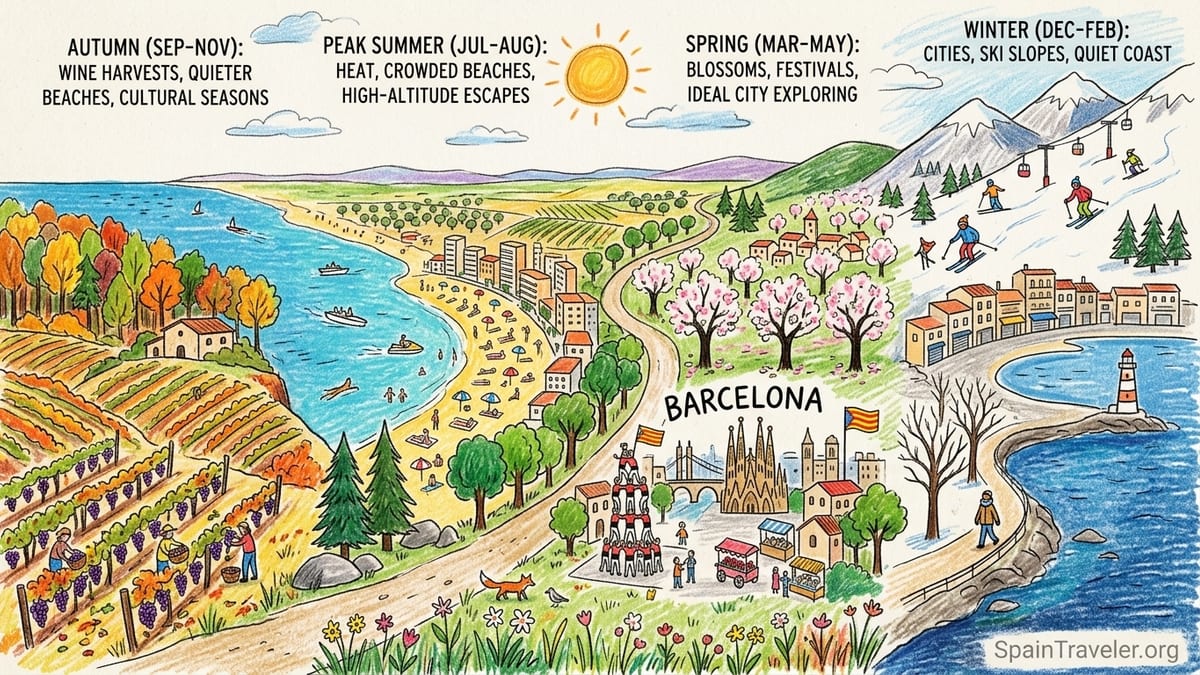
Winter: Cities, Ski Slopes and Quiet Coast (December to February)
Winter in Catalonia is defined far more by altitude than latitude. In Barcelona and along most of the coast, daytime temperatures often hover between 10 and 15 degrees Celsius, with occasional colder snaps but relatively rare prolonged frost. This makes the major cities surprisingly comfortable for first-time sightseeing. Museums such as the Picasso Museum or the National Art Museum of Catalonia feel less crowded, and popular outdoor spaces including Park Güell or Montjuïc are easier to enjoy without the queues and peak-summer glare. Hotel rates in Barcelona typically soften outside Christmas and New Year, so a central four-star property can be noticeably cheaper in late January than in late May.
For mountain travelers, winter is the prime season to treat the Catalan Pyrenees as a classic ski and snow destination. Resorts like Baqueira Beret in the Val d’Aran, Boí Taüll in Alta Ribagorça, and the La Molina and Masella area in Cerdanya usually run lifts from early or mid-December into late March or early April, depending on snowfall. Exact opening and closing dates vary every year, so skiers and snowboarders should always check current resort bulletins and live webcams before booking. In a typical season, February brings the most reliable combination of snow cover and longer daylight, which suits families taking lessons as well as more advanced skiers looking for off-piste options on guided outings.
On the Mediterranean, winter is more about atmosphere than swimming. Many Costa Brava resorts, from Lloret de Mar to Palamós, go quiet after All Saints Day in early November, and some seafront hotels and beach clubs close until spring. However, larger towns such as Sitges, Blanes or Roses retain a year-round local life, with seaside promenades popular for joggers and walkers bundled in jackets. For travelers focused on coastal scenery rather than sunbathing, January can be an appealingly calm time to walk sections of the camins de ronda, the old patrol paths that now serve as coastal hiking trails between coves. Restaurants often offer winter menus centered on local seafood and seasonal produce, and weekend lunch prices can be lower than peak-summer beach-club bills.
Winter also has its own cultural rhythm. Barcelona’s “festa major d’hivern” for Santa Eulàlia usually brings human towers, parades and family activities around mid-February, while much of Catalonia celebrates the Three Kings on 5 January with parades in cities and villages. For most visitors, though, winter’s main draw is the combination of uncrowded cities and the ski slopes. Travelers seeking beach-focused holidays or high-mountain hiking will be better served in later seasons.
Spring: Blossoms, Festivals and Ideal City Exploring (March to May)
Spring is arguably the most balanced season for a first trip to Catalonia, especially for visitors who want to combine Barcelona with day trips and light outdoor activity. March can still feel cool in the evenings, but by April and May daytime highs in Barcelona and the coast often run from the high teens into the low twenties Celsius. This is warm enough for sidewalk cafés on Rambla de Catalunya or tapas terraces in Girona’s Barri Vell, without the intense heat that July and August often bring. It is also when Catalonia’s festival calendar starts to accelerate, so city breaks can easily align with local culture.
One of the most emblematic dates is 23 April, when the Day of Sant Jordi transforms streets and squares in Barcelona and across Catalonia into open-air book and rose markets. Strolling along Passeig de Gràcia or Rambla de Catalunya that day gives visitors an immediate sense of contemporary Catalan life, with locals browsing new releases and gifting roses. In Girona, the “Temps de Flors” flower festival typically takes over the historic center for roughly a week in May, filling courtyards, stairways and the cathedral steps with floral installations. Recent editions have run around the second week of May and attracted hundreds of thousands of visitors, which means that accommodation in Girona and nearby Costa Brava towns sells out far in advance for those dates.
Spring is also an excellent window for lowland hiking and cycling. Trails in Garrotxa’s volcanic zone, the Montseny Natural Park or the vineyards of Penedès are usually green and fresh after winter rains. Guided e-bike tours through wineries near Vilafranca del Penedès or around Priorat’s terraced slopes are commonly available from April, when days are longer but midday temperatures are still manageable. Mountain hiking in the Pyrenees is more complicated in early spring, because snow can linger on high passes through May. Lower-elevation valleys and rail-accessible areas like Vall de Núria start to transition from snowshoeing to hiking as conditions change, but anyone planning serious mountain treks should consult local hiking associations, refuges or guiding companies for up-to-date information.
For Mediterranean beaches, spring is mostly a preview rather than the main act. Coastal towns such as Sitges, Calella de Palafrugell or Tossa de Mar begin to open more hotels and seasonal restaurants around Easter, and by late May some beach clubs and chiringuitos are operating on weekends. However, the sea remains cooler than in August or September. Travelers who are happy to sit on the sand, enjoy cliff-top walks and perhaps take brisk dips will be content in May, but those who prioritize long swimming days might prefer early or peak summer.
Early Summer: Beach Season Starts and Mountains Open Up (June)
June occupies a sweet spot in much of Catalonia, when the Mediterranean has warmed enough for comfortable swimming, the countryside is still relatively green and school holidays have not yet fully saturated the beaches. In Barcelona, daytime highs often sit in the mid to high twenties Celsius, warm enough for Barceloneta beach but still pleasant for morning visits to Sagrada Família or evening strolls in El Born. Along the Costa Brava and Costa Daurada, beach services such as lifeguards, loungers and many seasonal restaurants are operational by June, particularly from mid-month onwards, which makes this an attractive time for a dedicated seaside holiday.
Events help set the mood. Around late May or early June, Barcelona hosts major music festivals such as Primavera Sound, which draw international crowds and push up accommodation prices for those specific dates. Later in June, the night of Sant Joan around 23 June brings fireworks and bonfires to beaches across Catalonia, with Barceloneta, Badalona and coastal towns in Maresme and Costa Brava all seeing large local gatherings. Visitors seeking quiet should avoid staying right on major urban beaches that night, while those who want to experience the festivities can plan a late dinner and join the crowds.
Inland and in the Pyrenees, early summer is when hiking and rural activities really begin to shine. Snow has usually retreated from most mid-altitude routes, opening up marked trails in areas like Cerdanya, Alt Empordà’s Albera range or the Collsacabra cliffs. Family-friendly mountain resorts such as La Molina convert some ski lifts into summer operation, offering downhill biking parks, zip lines and panoramic viewpoints. For dedicated hikers, this is a good period to tackle routes in places like Vall de Boí or Aigüestortes i Estany de Sant Maurici National Park with more moderate temperatures than in August, though higher passes can still carry snow early in the season.
For city visitors, June offers long evenings on terraces and rooftop bars without the densest crush of summer tourists, although cruise ship calls and conference schedules can still make specific weeks feel busy. Travelers who prioritize cultural sightseeing in Barcelona or Girona but still want at least a couple of full beach days will often find that a mid-June itinerary splits the difference between comfortable exploration and true summer by the sea.
Peak Summer: Heat, Crowded Beaches and High-Altitude Escapes (July and August)
July and August bring full Mediterranean summer to Catalonia, with all of its advantages and trade-offs. On the coast and in Barcelona, average daytime highs often reach or exceed 30 degrees Celsius, and humidity can make the afternoons feel hotter. The beaches from Sitges and Castelldefels up to the Costa Brava’s resort towns of Lloret de Mar, Platja d’Aro and Roses are at their busiest, especially from mid-July through the third week of August when many local families take holidays. Beachfront hotels and apartments advertise their highest season rates, and last-minute bargains are rare in popular villages such as Calella de Palafrugell or Cadaqués.
For travelers who primarily want a classic beach holiday with reliable sunshine and warm sea temperatures, this is the most predictable time to come. Sea temperatures along the Catalan coast are usually at their highest in late August and early September, but already comfortable for long swims by July. Beach clubs, kayak rental outfits and sailing schools operate at full capacity. On the Costa Brava, for example, outfitters in towns like Llafranc or Sant Feliu de Guíxols rent sea kayaks and stand-up paddleboards for exploring coves that can be crowded if you arrive late in the morning. It is wise to pre-book sunbed packages or activities during weekends in August.
For major cities and inland plains, peak summer is more complex. Barcelona’s streets stay alive late into the evening, but midday sightseeing can feel punishing in direct sun. Visitors who must travel in July or August should plan a slower rhythm: early starts for Gaudí sites before opening, long shaded lunches, and evening museum visits or waterfront walks after 7 pm. Air conditioning is an important amenity to check when booking apartments inland and in Barcelona, as older buildings in neighborhoods like the Gothic Quarter or Gràcia can vary widely. Inland around Lleida and the central Ebro valley, daytime temperatures often climb higher than on the coast, which can restrict cycling or vineyard touring to early mornings and late afternoons.
Peak summer is also when the coast’s small towns host many of their festa major celebrations, with street parties, fireworks and human tower performances. Villages on the Costa Brava and Costa Barcelona regions fill their summer calendars with nightly concerts, sardana dancing and temporary fairgrounds. This creates a festive atmosphere that many visitors enjoy, but it also means louder nights in central locations. Travelers seeking quiet should favor rural stays a few kilometers inland from the sea or consider heading north and upward into the Pyrenees.
Indeed, the Pyrenees become a prime refuge during the hottest weeks. Mountain towns such as Vielha, Puigcerdà or Camprodon enjoy cooler daytime highs, and high-altitude routes offer both spectacular scenery and noticeably fresher air. This is the core season for multi-day treks between mountain refuges, as well as for family trips that combine modest hikes with activities like canyoning, via ferrata or rafting on rivers fed by snowmelt. Even in summer, though, weather in the high mountains can change quickly, so visitors should check daily forecasts, carry layers and confirm trail conditions with local offices or guiding companies.
Autumn: Wine Harvests, Quieter Beaches and Cultural Seasons (September to November)
Autumn might be the most versatile season for Catalonia, particularly for travelers who want to avoid peak heat and crowds without sacrificing outdoor options. In early September, the sea along the Costa Brava and Costa Daurada is often at its warmest, but many European families have returned home, so beaches gradually empty out. Daytime temperatures in Barcelona usually decline from the high twenties in early September to around 18 to 22 degrees Celsius by late October, creating comfortable conditions for intensive city sightseeing. Hotels in both the city and on the coast often reset to shoulder-season pricing outside specific festival dates.
Wine lovers and cyclists will find this a rewarding period. The grape harvest in regions such as Penedès, Priorat, Montsant and Empordà generally runs from late August into October, with local cooperatives and private wineries offering harvest-themed visits, tastings and occasionally hands-on experiences. Road cyclists and gravel riders appreciate the cooler air on routes around Girona, Olot or the Ebro Delta, where professional training camps have helped establish dedicated bike shops, guiding services and bike-friendly cafés. It is still important to start longer rides early in September, but by October conditions are usually ideal for full-day itineraries between villages.
In the mountains, September and early October extend the main hiking season, particularly in areas like Aigüestortes, Vall de Núria or Cadí-Moixeró. Alpine meadows are still accessible and lakes remain unfrozen, while forests, especially around Garrotxa and the Pre-Pyrenees, start to turn shades of gold and red. By November, higher elevations can see the first significant snowfalls of the new season, so late-autumn hikers often focus on lower routes and forested valleys. Rural accommodations, including masia farmhouses and small guesthouses, may reduce their services outside weekends, so advance confirmation of restaurant openings becomes more important.
Autumn is also rich in cultural programming. In Barcelona, the city’s biggest annual festival, La Mercè, usually takes place around 24 September with several days of concerts, fireworks, castellers (human towers) and parades. In Girona and the Costa Brava region, performing-arts festivals such as the autumn “Temporada Alta” concentrate theater, dance and music events from roughly October through December, particularly in Girona and nearby towns. On 31 October and 1 November, the traditional Castanyada and All Saints bring chestnut and sweet potato stalls to many streets, especially in Barcelona and inland towns. Visitors interested in seasonal food will find autumn mushrooms featured on rural restaurant menus, particularly in forested areas such as Berguedà and Osona.
For coastal travel, October can be especially appealing for those who value quiet coves and village life over buzzing nightlife. Many chiringuitos on smaller beaches begin to close by mid-October, and some resort hotels shut down for the season by early November, particularly in intensely summer-focused towns. Larger coastal communities like Sitges, Sant Feliu de Guíxols or Palamós keep more services open year-round, which makes them good bases for off-season walks along the coastal paths or visits to nearby medieval villages such as Pals and Peratallada. Even in November, a sunny midday on a sheltered beach can feel warm enough for a picnic, though swimmers will notice that the sea has cooled from its September peak.
Matching Seasons to Trip Types and Avoiding Pitfalls
Putting these pieces together, most first-time visitors who want a balanced mix of Barcelona sightseeing, at least one beach day, and perhaps a day trip to Girona or Montserrat might find late April, May, early June, late September or early October particularly appealing. These windows combine relatively mild weather in the cities with functioning beach infrastructure and moderately busy, rather than saturated, crowds on public transport and in old-town streets. Booking central accommodation near metro lines in Barcelona or near the historic cores of Girona and Tarragona will make it easier to adjust plans when a hot afternoon or rainy spell appears.
Dedicated beach holidays with children, where the priority is warm water, easy access to ice cream and fully staffed family facilities, are best aimed at late June through early September on the Costa Brava, Costa Barcelona or Costa Daurada. Families often choose resort areas such as Salou, Cambrils or Lloret de Mar where hotels advertise kids’ clubs and pools as prominently as proximity to the sand. To reduce the impact of peak-summer crowds, travelers can target the last week of June or the first half of September, when local schools are either just breaking up or already back in session, but sea temperatures are still attractive and many seasonal restaurants remain open.
Hikers and nature travelers should think in terms of altitude. For lowland areas and mid-altitude ranges, April to early June and mid-September to late October usually offer the best combination of stable weather and moderate temperatures. For high mountain trekking in the core Pyrenees, July through early September is safer, but still requires checking up-to-date conditions from park authorities, refuges or guiding outfits, especially for routes that cross high passes or traverse exposed ridges. Skiers will want to base their planning on individual resort calendars and snow reports rather than fixed dates; a trip framed around late January or February often captures some of the most consistent conditions.
Cyclists, including those coming to Girona or Barcelona inspired by professional teams, will find that March to early June and late September to November provide cooler temperatures and lighter tourist traffic on scenic secondary roads. Wine enthusiasts should align trips with the late-summer and autumn harvest activity in Penedès and Priorat, bearing in mind that some small producers may be busy with vineyard work and require advance reservations for visits and tastings. Travelers with limited flexibility on dates can still improve their experience by choosing their regional focus carefully; for instance, a mid-August itinerary could lean toward Pyrenean valleys and high-altitude lakes instead of dense urban sightseeing and midday beach time.
A final consideration for any season is that festival calendars and mountain conditions change every year. Large events such as La Mercè in Barcelona, Temps de Flors in Girona or international music festivals can dramatically influence hotel prices and availability for specific weeks. Similarly, winters can be snowier or drier than average, affecting ski openings and spring hiking conditions. Before locking in flights, it is worth cross-checking your preferred travel dates against the latest regional event calendars and, for mountain plans, official park or resort updates. This helps you decide whether to lean into a major festival or quietly route around it.
FAQ
Q1. What is the best month for a first-time visit to Catalonia?
For a balanced first trip that includes Barcelona, perhaps a day trip and some time by the sea, May, early June, late September or early October usually offer mild weather, functioning beach services and more manageable crowds than peak summer.
Q2. When is the sea warmest for swimming on the Costa Brava?
The Mediterranean along the Costa Brava tends to be warmest from late August into early September, when the water has absorbed summer heat and many families have already ended their holidays, so beaches are slightly less crowded than in early August.
Q3. Which months are best for hiking in the Catalan Pyrenees?
For mid and high mountain hiking, the safest window is usually from late June or early July to mid-September, though conditions depend on annual snowfall. Lower-altitude routes and pre-Pyrenean areas can be comfortable from April to early June and again from mid-September to late October.
Q4. When should I visit Catalonia for skiing?
Ski resorts in the Catalan Pyrenees typically operate from early or mid-December to late March or early April, with January and February often offering the most reliable snow. Travelers should always consult current resort and weather reports before confirming a ski trip.
Q5. Is August a bad time to visit Barcelona?
August is not necessarily a bad time, but it is hot and busy. Daytime temperatures can exceed 30 degrees Celsius, and crowds at major sites are heavy. If August is your only option, plan early-morning sightseeing, choose accommodation with air conditioning and consider day trips to cooler coastal or mountain areas.
Q6. What is the best season for a wine-focused trip in Catalonia?
Late summer and autumn, roughly from late August through October, are ideal for wine travel in regions like Penedès, Priorat, Montsant and Empordà, when grape harvest activity is underway and many wineries organize special tastings and vineyard visits, often requiring advance bookings.
Q7. Are Mediterranean beach towns in Catalonia open in winter?
Larger coastal towns such as Sitges, Palamós or Roses maintain year-round life, but many smaller, purely seasonal beach resorts see some hotels, restaurants and beach clubs close from roughly November to March. Visitors interested in off-season coastal walks should favor bigger towns with permanent residents.
Q8. When is Catalonia least crowded overall?
The quietest periods are usually from mid-January to early March, excluding carnival or special events, and again from mid-November to early December. During these times, cities and many inland and coastal areas see fewer tourists, though some seasonal services in beach towns may be limited.
Q9. What is the best time to visit if I want to experience major Catalan festivals?
Many of the largest festivals cluster between late spring and early autumn. Sant Jordi falls on 23 April, major flower and cultural festivals often take place in May, local festa majors run throughout summer, and Barcelona’s La Mercè festival unfolds around 24 September with several days of events.
Q10. How far ahead should I book accommodation around popular events and peak months?
For late July and August on the coast, as well as for major city festivals or events such as Temps de Flors in Girona or La Mercè in Barcelona, booking three to six months in advance is prudent, especially for small coastal villages, central old-town hotels or family apartments with specific amenities.