


Choosing the best time to visit Andalusia is less about finding a single “perfect” month and more about matching your plans to the region’s wildly varied conditions. The same week that coastal Málaga offers T-shirt weather and calm Mediterranean seas, inland Córdoba can edge toward 35°C, while the Sierra Nevada above Granada still holds reliable spring snow. This guide walks you through Andalusia season by season, comparing inland cities, coasts and mountains so you can decide when to come for city sightseeing, beach time, ski runs, road trips, hiking or big-name festivals.
Understanding Andalusia’s Climate Zones
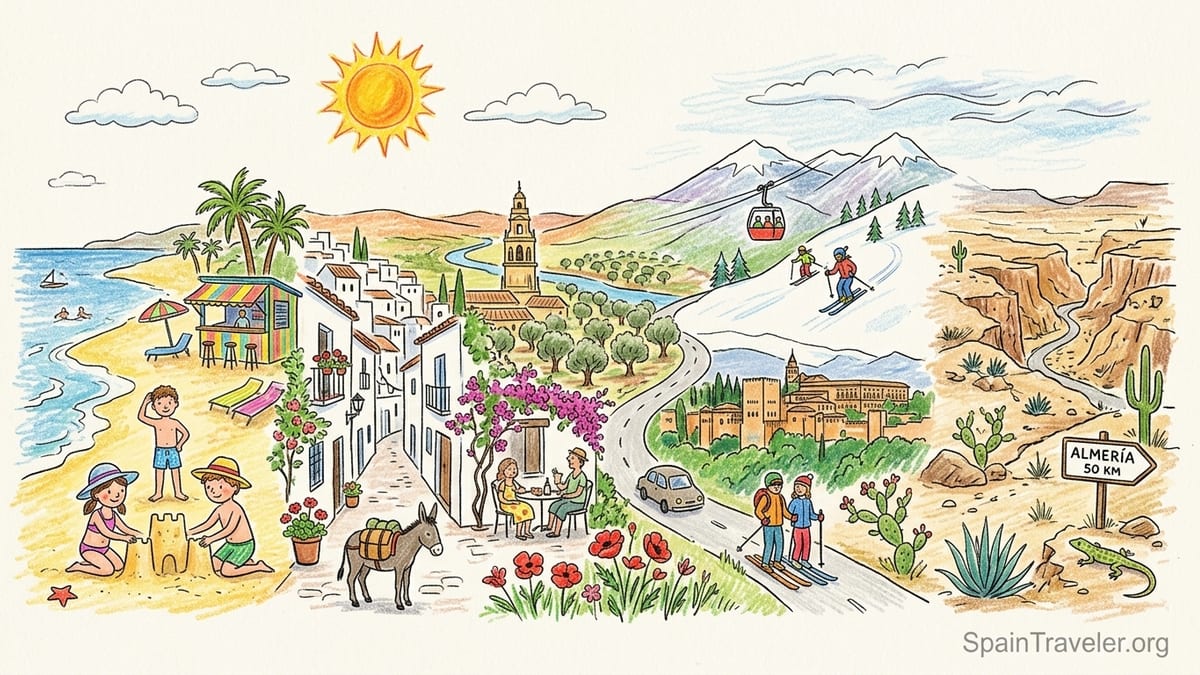
Andalusia stretches from the Atlantic around Cádiz to the Mediterranean east of Málaga, and up into the Sierra Nevada, home to mainland Spain’s highest peaks. Most of the region has a hot-summer Mediterranean climate, with mild, relatively wet winters and hot, dry summers. Within that broad pattern, conditions range from semi-desert in Almería’s Tabernas area to some of Spain’s wettest hills in the Sierra de Grazalema, and from scorching river valleys around Seville and Córdoba to the cooler, sea-tempered Costa del Sol and Costa de la Luz. Inland provincial capitals such as Córdoba and Seville routinely record some of the highest summer temperatures in Europe, with average midsummer highs around the mid-30s and occasional spikes over 40°C, while coastal Málaga averages closer to 30°C in August and usually stays above 20°C at night.
Elevation reshapes the picture again. Granada, at the foot of the Sierra Nevada, runs several degrees cooler than Seville in winter and can feel crisp on December evenings, while the Sierra Nevada ski resort, between roughly 2,100 and 3,000 metres, maintains a season that typically runs from early December to late April or even early May in good years. The result is that in March you can sit on a sunny terrace in Granada at 18°C at lunchtime, then be skiing a 10-minute gondola ride away on well-groomed pistes. Understanding these contrasts is key to choosing your dates, especially if you plan to combine city sightseeing with either beach days or mountain activities.
Rainfall also varies sharply across the region. Western and mountainous areas such as parts of Cádiz and Málaga provinces see some of the highest annual totals in Spain, including downpours and occasional Atlantic storms from November to March. Eastern zones like Almería are much drier, with annual rainfall in some coastal and desert pockets measured in just a few hundred millimetres or less. For most leisure travellers, the practical impact is that late autumn and winter city trips need a flexible plan for wet days, while beach holidays built around guaranteed sun and dry days land best between June and September on the Mediterranean coast.
Daylight is another factor that shapes the feel of each season. In June and early July, Andalusia enjoys long evenings, with usable light well after 21:30, perfect for late dinners and strolling in historic centres once the day’s heat has eased. By contrast, a January day in Seville offers roughly nine and a half hours of daylight, which still feels generous for winter sightseeing compared with much of northern Europe but shortens the window for rural drives or hikes. Pair those daylight hours with typical temperatures, rain patterns and local events, and you start to see why there is no single “best” time so much as several very different Andalusias through the year.
Spring: Sweet Spot for Cities, Fairs and First Beaches
For many first-time visitors focusing on Seville, Córdoba and Granada, late March through May is the most comfortable and atmospheric period. In Seville and Córdoba, average daytime temperatures in April sit in the low to mid-20s Celsius, rising toward the high 20s in May, warm enough for alfresco tapas without yet reaching the exhausting heights of midsummer. Granada usually runs a few degrees cooler, especially in the evening, so you might need a light jacket for late-night walks through the Albaicín, even when afternoons feel summery in the sun. Showers are still possible, particularly in March and early April, but all three cities are largely dry by late spring, and the orange trees that scent Seville’s old town blossom around late March and early April in many years.
Spring is also when Andalusia’s headline festivals transform prices and availability. Semana Santa, or Holy Week, moves with Easter and in 2026 runs from 29 March to 5 April, bringing dramatic religious processions to cities like Seville, Málaga, Granada and Córdoba. In Seville, local reports indicate that hotels regularly reach occupancies around or above 80 to 90 percent, with average nightly rates in popular years climbing well above 250 to 300 euros in central four-star properties, and top suites in landmark hotels often booked out many months ahead. Around the same time or shortly after comes Seville’s Feria de Abril, another week when central rates can easily run several times higher than in quieter shoulder months and availability can drop sharply. Travellers who want to see these events should book central rooms 9 to 12 months ahead, while those disturbed by crowds or premium pricing may prefer to avoid them entirely.
On the coast, spring gradually turns from jacket weather into credible beach time. Along the Costa del Sol, sea temperature information for popular spots such as Marbella and Málaga shows that the Mediterranean typically climbs from around 14 to 15°C in February to roughly 17 to 18°C by May, with most swimmers describing the water as “refreshing” rather than truly warm until it passes about 20°C in early summer. Air temperatures often reach the low 20s by late April and mid-20s by May, especially on sunny days shielded from wind. In practice, that means late spring is well-suited to mixed itineraries: you might spend a morning visiting Málaga’s Alcazaba, then sunbathe in the afternoon on La Malagueta or Playa de la Misericordia, but serious, long swimming sessions will feel bracing for many people until closer to June.
Spring also works beautifully for road trips and hiking. The white villages around Ronda and Grazalema, and the olive landscapes between Córdoba and Jaén, are still green from winter rains, and daytime highs mostly stay in the teens and low 20s. Trails in natural parks such as Sierra de Grazalema and Sierra de las Nieves can be muddy after storms but temperatures are usually comfortable for several hours of walking in the middle of the day. Up in the Sierra Nevada, the ski resort often remains open well into April, and in strong snow years may operate lifts into early May, which allows a rare combination of morning skiing followed by late-afternoon tapas on warm terraces in Granada.
Early Summer: Long Days and Growing Heat
June and the first part of July offer a powerful mix of long days, settled weather and a still-manageable level of heat for many travellers. In Seville and Córdoba, average June highs sit near 30°C, with many afternoons nudging slightly higher, while nights typically fall back into the high teens or low 20s. The risk of significant rain drops sharply, and blue-sky days become the norm. For city sightseeing, this is a time to build your days around the heat: plan indoor or shaded visits, such as Seville’s cathedral, Córdoba’s Mezquita or the palaces of the Real Alcázar and the Alhambra, for the mid-afternoon period, and use early mornings and late evenings for outdoor strolls in neighbourhoods like Triana, Santa Cruz or the Judería.
By contrast, the coasts are in their stride without yet being at their busiest. On the Costa del Sol, data collated from regional sea temperature monitors suggests that the Mediterranean usually reaches or exceeds 20°C sometime in June, then continues to climb through July. On land, Málaga’s typical June highs around the upper 20s or low 30s feel markedly more tolerable than the spikes further inland, partly thanks to sea breezes. This period is excellent for first-time beach holidays that also include cultural day trips, since driving from Málaga or Marbella to Ronda, Granada or Córdoba is practical without the relentless glare of late July and August. Beach clubs and chiringuitos along stretches such as Marbella’s Golden Mile or Nerja’s Burriana Beach are generally open daily by June, but you will still find some room to breathe on the sand outside local weekend peaks.
In the mountains, early summer flips the script. Ski season has finished, but the high Sierra Nevada becomes a magnet for hikers, cyclists and families escaping the heat. Daytime temperatures in villages like Pradollano and Capileira are usually significantly cooler than in Granada down in the valley, particularly in the evenings, and alpine meadows and high trails that are snowbound in winter open up for walking. This is an ideal moment for travellers whose main priority is to avoid extreme heat: you can base yourself somewhere like Granada, dividing time between shaded courtyards and rooftop bars in the city and excursions into the Alpujarras, where mid-afternoon temperatures are milder and nights are pleasantly cool.
Demand for accommodation rises in early summer, particularly around Spanish public holidays such as the Feast of San Juan around 23–24 June, when coastal towns often host bonfires and beach parties. Prices on the Costa del Sol and in major cities usually sit above spring shoulder-season levels by this point but are generally still below their absolute peak in August. For travellers willing to eat slightly later, as locals do, and to plan siestas or pool time in mid-afternoon, June and early July offer a very attractive compromise between cost, comfort and atmosphere.
Peak Summer: Heat, Crowds and Full-On Beach Season
Late July and August bring the most intense version of inland Andalusia. In Seville, Córdoba and much of the Guadalquivir valley, average highs in July and August sit around the mid-30s, but heatwave days commonly exceed 40°C, and overnight lows may remain above 24 or 25°C in the hottest spells. Recent extreme temperature records in Spain illustrate how fierce this can feel, with several Andalusian locations registering mid to high 40s during exceptional events. For many travellers, conventional city sightseeing becomes genuinely uncomfortable in the middle of the day at this time of year. Locals adapt by shifting life to the margins of the day: shops close for long lunch breaks in smaller towns, outdoor terraces fill late in the evening, and streets that seem deserted at 15:00 can be lively after 22:00.
On the positive side, this is when beach holidays work best. On the Costa del Sol, long-running temperature tracking shows that sea temperatures typically sit above the 20°C threshold from June through October, with August averages around 23°C in locations like Málaga and Marbella. That makes swimming comfortable for most visitors without wetsuits, and beach facilities are in full operation: lifeguard posts, sunbed rentals and water-sports concessions run predictable hours, and beach bars operate late into the night. Atlantic-facing Costa de la Luz, from Tarifa through Zahara de los Atunes to Cádiz, tends to be a degree or two cooler in the air and sea, with more wind, which attracts kitesurfers but can occasionally bring up choppy conditions or sand-blasting gusts on exposed beaches.
Peak summer is also when you will feel crowd pressure most strongly. Domestic tourism surges in August, when many Spaniards take their main annual holiday, and popular stretches such as Torremolinos, Benalmádena, Marbella and Nerja can feel densely packed in the first half of the month. Hotel and apartment prices on the main beaches generally hit their annual maximums, and traffic queues on coastal access roads are common on Saturdays. Inland cities see a different pattern: many locals leave, some smaller businesses close or run reduced hours, but there is still a steady flow of international visitors. In Seville in August, you may actually find decent availability in business-oriented hotels whose main corporate clientele are away, but you will pay for that with sweltering midday conditions.
For travellers determined to visit Andalusia in peak summer for scheduling reasons, a few strategies improve comfort. Consider basing yourself primarily on the coast, where sea breezes moderate the heat, and visiting Seville or Córdoba as day trips, arriving early and retreating to air-conditioned trains by mid-afternoon. The high-speed rail connections from Málaga to Córdoba and Seville make this feasible. Alternatively, choose mountain bases in the Alpujarras or around Ronda, where nights are cooler and days, while warm, rarely reach the extremes of the lowland valleys. In any case, rigid midday sightseeing plans in cordoned-off plazas, long outdoor queues for the Alhambra or midday walking tours in August are best avoided if you are sensitive to heat.
Autumn: Warm Seas, Softer Light and Unsettled Skies
September and October may be the most underrated months for Andalusia, especially for visitors interested in both beaches and cities. Along the Costa del Sol, sea temperatures measured at beaches from Torremolinos to Estepona typically remain at or above 20°C through October, with many days in September still recording water in the low 20s. Air temperatures in Málaga during this period often sit in the upper 20s in September, easing to the low to mid-20s by late October. That creates an appealing shoulder-season beach environment, where you can swim for long periods and dine outdoors in the evening, yet avoid the densest crowds of August and find somewhat more moderate pricing for hotels and rental apartments.
Inland cities see a welcome drop from peak heat. In Seville and Córdoba, typical September highs fall back into the low 30s, then down toward the mid-20s by late October, with cooler nights that make sleep more comfortable even without heavy air-conditioning. The change in light and temperature makes walking circuits through historic centres, visiting patios in Córdoba or exploring Triana and the riverfront in Seville much more pleasant during the late morning and afternoon. Granada, with its higher elevation, cools faster, and by November you may want a coat in the evening while daytimes remain suitable for café terraces and outdoor viewpoints over the Alhambra.
The main trade-off in autumn is a gradual increase in rain and the risk of occasional storms, particularly from late October into November. Western Andalusia, including parts of Cádiz and Huelva provinces and the Sierra de Grazalema, can see heavy downpours at this time of year, sometimes intense enough to disrupt hiking plans or make minor roads greasy and slow. However, these events are usually short-lived and separated by clear spells. For road trips, September is particularly attractive: traffic levels drop after the school holidays, rural accommodations from boutique country hotels to agriturismo-style cortijos often have space midweek, and grape harvests and local food festivals bring life to many villages.
Accommodation pricing in autumn tends to sit between summer highs and winter lows, with short spikes around local long weekends and festivals. For example, Spain’s National Day on 12 October and All Saints’ Day on 1 November can both prompt increased domestic travel, especially when they fall near a weekend. If those dates line up with your plans, book coastal or city stays a little earlier than you might otherwise. For flexible travellers, however, late September and early October often deliver an appealing combination of beach-friendly conditions, city comfort and moderate pricing.
Winter: Mild Cities, Quiet Beaches and Ski Season
From roughly late November through February, Andalusia moves into its coolest and, in many places, wettest season. Even then, by European standards it often feels gentle. In Seville and Málaga, average January highs sit around the mid-teens Celsius, with many sunny days still reaching 17 or 18°C in the afternoon. Málaga’s coastal position moderates winter lows, which typically hover in the single digits rather than plunging below freezing, and on bright days locals and visitors alike fill pavement tables in the old town wearing light jackets. Granada, further inland and higher, tends to see colder nights and more frequent frosts, though afternoons can still be surprisingly warm in the sun.
For city-focused travellers who dislike heat, this is a rewarding time. The absence of extreme temperatures makes it comfortable to climb the Giralda in Seville, wander along the Guadalquivir, or explore Granada’s steep lanes without worrying about midday exhaustion. Key sights are generally less crowded outside Christmas and New Year, so it can be easier to secure tickets for popular attractions like the Alhambra at short notice, and queues at major cathedrals and palaces are shorter. Many hotels run lower winter rates outside peak dates, which means you can often book centrally located four-star properties in cities like Córdoba and Seville for significantly less than in April or October.
Coastal areas are quieter. On the Costa del Sol, sea temperatures in December and January usually sit in the mid-teens Celsius, too cool for prolonged swimming for most visitors but fine for brisk dips and coastal walks. Many beach clubs scale back operations or close entirely until spring, and sunbed rows sit empty on weekdays. This creates a different kind of appeal: wide, open promenades ideal for cycling or jogging, easier parking near central beaches and a more local feel in bars and cafés. On stormy days, Atlantic beaches between Cádiz and Tarifa can feel wild and dramatic, although strong winds and rain will limit time outdoors.
Winter is the main season for Sierra Nevada skiing. As Europe’s southernmost major ski resort and the highest in Spain, the Sierra Nevada typically runs lifts from early December through late April, though exact opening and closing dates vary by snow and weather. In recent seasons, good snow years have allowed operations into early May. The resort offers a compact but varied network of pistes, and a typical week in January or February might combine several days of skiing with a day trip down to Granada for tapas and sightseeing. Weekends and Spanish school holidays see increased demand, both for lift passes and for accommodation in the main resort village at Pradollano, so anyone planning to ski around Christmas, New Year or February half-term weeks should secure lodging in advance.
Choosing the Best Time for Your Type of Trip
For a first-time cities trip centred on Seville, Córdoba and Granada, late March, April (excluding Holy Week if you wish to avoid crowds) and October stand out. Temperatures are comfortable for long days of walking and patio dining, and daylight hours are ample without the searing highs of midsummer. If you are interested in major cultural events and do not mind paying a premium, planning around Semana Santa or Seville’s Feria de Abril offers an unforgettable, if crowded, experience. News coverage and analysis of recent Holy Weeks suggest that average hotel rates in core Andalusian cities may rise by 20 percent or more compared with the surrounding weeks, with Seville and Málaga frequently among the highest-priced destinations in Spain during this window, so budgeting accordingly is important.
For a primarily beach-focused holiday on the Costa del Sol or Costa de la Luz, target late June through early September if warm water and fully active beach infrastructure are your top priorities. During this period, sea temperatures typically sit at or above the 20°C mark that many swimmers describe as comfortable, especially in August. Families constrained by school calendars often default to August, but couples or flexible travellers might prefer the second half of June or the first half of September for a sweet spot between pleasant water, long days and slightly lower prices and crowd levels. Those visiting with young children should consider the higher UV index and afternoon heat in July and August and prioritise shade, rash vests and early-morning or late-afternoon beach sessions.
Road trips tying together cities, villages and coastlines are particularly rewarding in April, May, late September and October. At these times, highland roads in areas such as the Alpujarras and the Serranía de Ronda are fully open, rural guesthouses and boutique hotels outside the big cities are operating at normal capacity, and midday driving is comfortable without the heavy strain on car air-conditioning that you encounter in August. Stopping in smaller towns like Ubeda and Baeza to explore Renaissance squares and olive-oil museums is more pleasant when temperatures sit in the teens and low 20s than when stones are radiating mid-30s heat.
Hikers will find best conditions in spring and autumn, especially March to May and late September to early November, when mountain and hill routes are largely snow-free but temperatures are not oppressive. Trails in parks such as Sierra de Grazalema, Sierra de las Nieves and Sierra de Aracena can be slippery after rain, yet cooler air and softer light make for excellent photo conditions and more comfortable climbs. Dedicated skiers should focus on midwinter and early spring, booking Sierra Nevada trips between late December and March for maximum snow reliability and avoiding Christmas and national holiday peaks if they prefer quieter slopes.
The Takeaway
There is no single best time to visit Andalusia. Instead, the region offers several distinct seasons, each with its own strengths and trade-offs. Spring brings blooming orange trees, comfortable city temperatures and some of Europe’s most dramatic religious and cultural festivals, at the cost of higher prices and large crowds during Holy Week and major fairs. Early summer delivers long days and increasingly warm seas, while peak summer swaps inland comfort for guaranteed beach weather and a buzzing coastal nightlife scene. Autumn extends swimming season on the Mediterranean while softening inland heat and opening space for road trips and wine or food-focused itineraries. Winter, finally, sees mild city days, quiet beaches and an active ski season in the Sierra Nevada.
The key to a rewarding Andalusian trip is to start with your priorities. If you want to wander Seville’s Santa Cruz without overheating, aim for March, April or October. If your dream is swimming off Nerja’s coves in reliably warm water, base your search around July and August or the shoulders either side. For mountain hiking, target spring or autumn, and for skiing, build around Sierra Nevada’s midwinter peak. Being clear about whether you are chasing festivals, warmth, quiet streets, low prices or a specific combination will help you read the calendar not as a fixed timetable, but as a menu of very different Andalusias to choose from.
FAQ
Q1. When is the best time to visit Andalusia for a first-time city-focused trip?
For first-time visitors concentrating on Seville, Córdoba and Granada, the best periods are late March to early May and October. These months usually combine comfortable daytime temperatures for walking, long enough daylight hours for full sightseeing days and manageable crowd levels outside Holy Week and major local fairs. You will still need to book key attractions in advance, but the experience of exploring old quarters and monuments is far more pleasant than in the peak summer heat.
Q2. When does city sightseeing in Seville and Córdoba become uncomfortably hot?
City sightseeing in Seville and Córdoba becomes challenging for many visitors from roughly late June through early September, especially in late July and August. During this period, afternoon highs often reach the mid-30s Celsius and can exceed 40°C in heatwaves, with warm nights that provide limited relief. Outdoor walking tours in the middle of the day can feel punishing, so travellers who must visit in summer should plan early-morning and late-evening activities and rely on air-conditioned indoor visits around midday.
Q3. What months are best for an Andalusian beach holiday with warm water?
For reliably warm sea temperatures and full beach services, plan an Andalusian beach holiday between late June and early September. Along the Costa del Sol, sea temperatures generally cross the 20°C comfort threshold in June and reach averages around 23°C in August, while air temperatures are warm enough for full beach days. September often offers a good balance of warm water, slightly thinner crowds and somewhat lower prices than peak August.
Q4. When is the ideal season for hiking and mountain travel in Andalusia?
The best seasons for hiking and mountain travel are spring and autumn, notably March to May and late September to early November. During these periods, temperatures in mountain areas such as the Alpujarras, Sierra de Grazalema and Serranía de Ronda are cool enough for multi-hour hikes but generally warm enough to avoid snow and ice on most mid-elevation trails. These windows also line up with greener landscapes in spring and clearer, softer light in autumn, which many walkers appreciate.
Q5. When can I ski in the Sierra Nevada, and how does that fit with city visits?
The Sierra Nevada ski resort above Granada usually runs its season from early December until late April, occasionally stretching into early May in snow-rich years. The core ski months with the highest probability of good conditions are January through March. Because Granada sits less than an hour from the main resort village by road, it is easy to base yourself in the city and make day trips up to the slopes, combining skiing with evening tapas and cultural visits such as the Alhambra.
Q6. How do Semana Santa and the spring fairs affect prices and availability?
Semana Santa and major spring fairs such as Seville’s Feria de Abril significantly raise hotel prices and reduce availability in key Andalusian cities. In Seville and Málaga, data from recent seasons shows average nightly rates during Holy Week often running well above normal spring levels, with many central hotels reaching occupancies near or above 80 to 90 percent on peak nights. Travellers who want to be present for these events should book accommodation many months ahead and budget for elevated room prices, while those who prefer quieter streets and lower costs should avoid these specific weeks.
Q7. What is the best time for an Andalusia road trip that combines cities, villages and coast?
April, May, late September and October are generally the best times for an Andalusia road trip that links cities, white villages and coastal stretches. In these months, inland temperatures are moderate for driving and walking around, roads in mountain areas such as the Alpujarras and Ronda region are fully passable, and coastal towns are lively without the full crush of peak summer. This timing also reduces the likelihood of either intense heat or the heaviest winter rains disrupting scenic drives.
Q8. When should heat-averse travellers plan their visit?
Travellers who are particularly sensitive to heat should avoid late June through early September in inland areas such as Seville, Córdoba and much of inland Granada province. Instead, they should target mid-October to mid-May, with special attention to November, February, March and early April, when daytime highs often sit between the low teens and low 20s Celsius. Basing in higher or coastal locations, such as Málaga, Cádiz or the Alpujarras, further improves comfort for those who prefer milder conditions.
Q9. Is winter a good time to visit Andalusia’s cities?
Yes, winter can be an excellent time to visit Andalusia’s cities, particularly for travellers from colder northern climates. From December through February, typical afternoon temperatures in Seville and Málaga often reach the mid-teens Celsius or slightly higher on sunny days, which makes outdoor sightseeing comfortable. While there is more rain than in summer, crowds at major attractions are thinner outside the Christmas and New Year period, and hotel rates are usually lower than in peak spring and autumn.
Q10. How far in advance should I book for popular months and festivals?
For popular spring and autumn months without major festivals, booking accommodation and key attraction tickets four to eight weeks ahead usually works well, especially in larger cities. For Semana Santa, Seville’s Feria de Abril and peak August weeks on the most in-demand beaches, it is wise to secure rooms several months in advance, and in the case of central Seville hotels near Holy Week routes, as much as 9 to 12 months ahead. This approach helps ensure both availability and a wider range of price options.