


The Spanish Pyrenees have quietly become one of Europe’s most compelling wellness destinations. Between Aragon and Catalonia, mountain villages like Panticosa, Vielha, Baqueira, Sallent de Gállego, Boltaña and Jaca now combine hot springs, serious spa circuits and high‑end hotels with easy access to ski slopes and summer hiking. This guide focuses on where to stay if the spa is as important as the scenery, from true thermal balnearios to contemporary hotels that simply add a sauna and pool to their mountain offering.
How the Spanish Pyrenees Became a Mountain Spa Playground
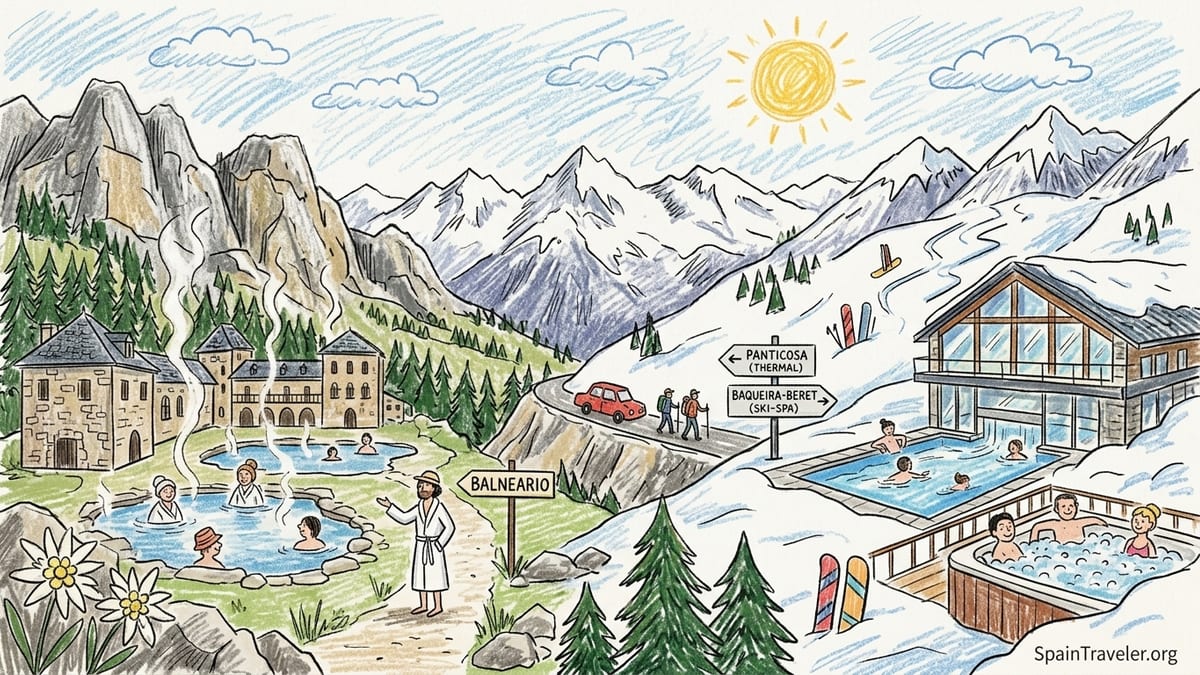
Mountain spa culture in the Spanish Pyrenees has deep roots, especially in Aragon. Places like Baños de Panticosa, high above the village of Panticosa, built their reputation in the 19th century around naturally mineralised waters used for therapeutic bathing. Today, that historic balneario complex has been reimagined as a modern mountain resort, with hotels such as the Gran Hotel and Hotel Continental directly connected to a full thermal spa circuit. The focus is still on water, but now paired with stylish rooms, restaurants and packaged wellness escapes.
On the Catalan side, the wellness story is more recent and tends to be anchored in contemporary hotel spas rather than historic springs. In Val d’Aran, for example, the Parador de Vielha Spa & Wellness combines an indoor-outdoor pool, sauna and massage rooms with panoramic views over the valley, while five-star properties near the Baqueira-Beret ski lifts offer private hydrotherapy pools, outdoor hot tubs and sleek treatment cabins. These are not balnearios in the classical sense, but they take spa facilities seriously enough to attract guests who would happily spend a whole day in a robe.
Further west in Aragon, monasteries and castles have been reborn as full-service spa retreats. The standout is the five-star Hotel & Spa Monasterio de Boltaña, which occupies a restored 17th-century monastery on a bend of the Ara River. Its vaulted stone corridors now lead not to cloisters but to a generous spa circuit with thermal pools, sensation showers and treatment rooms, positioned as much for couples and weekend escapees from Barcelona or Zaragoza as for hardcore hikers heading toward Ordesa National Park.
For travellers, this evolution means you can now build an entire trip around wellness in the Spanish Pyrenees. You can ski in the morning in Baqueira-Beret, then soak in a hot outdoor jacuzzi as snow falls on the slopes. You can hike the GR-11 trails above Panticosa or Sallent de Gállego, then return for a late-afternoon circuit through steam rooms and contrast pools. Or you can come in shoulder season, when room rates dip, and treat these spa hotels as quiet mountain retreats focused on rest, reading and long, slow meals.
Panticosa and Sallent de Gállego: Where Thermal Tradition Meets Ski Country
Panticosa is one of the few places in the Pyrenees where you get a genuine thermal balneario experience in a high-mountain setting. At the Balneario de Panticosa complex, located around eight kilometres above the main village, natural hot springs feed large indoor pools and treatment areas framed by steep cirque walls. Guests staying at the Gran Hotel or Hotel Continental can walk to the spa in a bathrobe, with many packages including a daily session in the thermal circuit and discounted massages. Prices fluctuate by season, but it is common to see wellness packages for two nights with breakfast and spa access starting in the low to mid hundreds of euros for a couple, outside the peak of August and winter holidays.
This is a proper medical-style spa environment rather than just a hotel pool. Expect a sequence of warm and hot pools, contrast showers and areas reserved for therapeutic treatments. Many Spanish visitors still come for rheumatism, respiratory issues or recovery after surgery, on the recommendation of their doctor. Yet the surroundings are far from clinical: huge windows look onto pine forests and granite peaks, and in winter you can watch snow fall as you soak. The experience is particularly appealing for couples who want a quieter, more contemplative atmosphere than they might find in a busy family hotel down in the ski village.
Back in Panticosa village and nearby Sallent de Gállego, the spa offering is more typical of mountain hotels that add wellness facilities for skiers and hikers. Properties such as Hotel Saliecho in Formigal-Panticosa or Villa de Sallent in Sallent de Gállego, for example, emphasise a compact spa zone with a small pool, sauna, sometimes a Turkish bath and a couple of treatment rooms. These spaces are ideal for a quick late-afternoon unwind after skiing in the Panticosa-Los Lagos or Formigal areas, but they do not have the same depth or medical orientation as the balneario up the valley.
For families, the village hotels around Panticosa and Sallent often work better than the balneario complex, thanks to shorter transfers to the ski lifts and family rooms that can sleep three or four. For couples, especially outside school holidays, a stay up at Baños de Panticosa feels more like a mountain retreat. In summer, it becomes a base for routes to lakes like Bachimaña and for multi-day hikes, with the reward of a long, quiet soak on your return.
Vielha and Val d’Aran: Valley Hub With Spa Choices for Every Budget
Vielha, the main town of Val d’Aran, acts as a year-round hub for the Catalan Pyrenees, and its spa hotels reflect that broader audience. At the top end, the Parador de Vielha Spa & Wellness sits on a hillside just outside the centre, with a large panoramic pool, a small spa circuit, sauna, jacuzzi and treatment rooms. Its views over the valley are a major draw: waking up to mist lifting off the mountains, or watching the lights of Vielha flicker to life at dusk as you sit in the outdoor pool, gives the place a distinct sense of escape even though you are only a short drive from town.
Inside, the Parador feels like a classic Spanish state-run hotel: wood panelling, generous lounges, an ample breakfast buffet with local products, and a spa menu that balances beauty treatments with more straightforward relaxation massages. In winter, many guests pair a day of skiing in Baqueira-Beret, roughly 20 minutes away by car or bus depending on traffic, with an early evening spa session before dinner. Room-only rates can vary significantly depending on the date, but outside the Christmas and February peak, it is often possible to find double rooms hovering around the low hundreds of euros per night, with spa access typically charged separately.
Vielha also offers a cluster of mid-range spa hotels that cater to families and active travellers. Chain properties like Hotel Vielha Val d’Arán, Affiliated by Meliá, usually provide a small indoor pool, simple sauna and fee-based access to a basic wellness zone. These are best suited to travellers who want “something” spa-like without paying for a full thermal complex. You might, for example, book a three-night stay with breakfast for a family of four in shoulder season for a sum that would barely cover two nights in a top-tier ski-in ski-out property, yet still have a warm pool to ease tired legs after hiking or biking.
Because Vielha is a living town rather than a purpose-built resort, it works particularly well for mixed-interest groups. One part of your party can head to the spa, others can wander the old quarter, shop for local Aranese products or linger over pintxos and wine. In summer, the town serves as a gateway for hikes toward Aigüestortes i Estany de Sant Maurici National Park and other high valleys, with spa hotels acting as comfortable bases between multi-day excursions.
Baqueira-Beret: Luxury Ski-Spas in the Catalan Snow Belt
If you are seeking five-star spa hotels with direct or near-direct ski access in the Spanish Pyrenees, Baqueira-Beret is where to look. The resort’s high-end inventory includes properties like Hotel Val de Neu, billed as a five-star Grand Luxury hotel, and the AC Baqueira Ski Resort, part of a major international brand. These hotels typically offer ski lockers close to the lifts, on-site equipment rental and dedicated concierges to organise passes and guides, while their spas provide the hot-water reward after a day in the cold.
In practical terms, the spa facilities in Baqueira’s luxury hotels often include indoor pools with hydro-massage jets, Turkish baths, dry saunas, outdoor jacuzzis and a menu of massages that range from sports-focused leg work to more indulgent couple rituals. In peak winter weeks, it is common to see early evening time slots sell out, so booking your treatment before arrival is wise if there is a particular day you want. Prices are in line with other upscale European ski resorts, with basic 50-minute massages typically running into low three figures in euros.
Not every hotel advertises itself as a full spa destination, though. Some four-star properties in Baqueira focus primarily on location and ski services, adding a compact wellness area with a jacuzzi and sauna as an extra rather than a central selling point. For travellers who prioritise first lift access and a lively après-ski scene over long spa days, these can be excellent value. For couples planning a romantic long weekend where the spa is the star, the five-star hotels with more elaborate circuits and adult-focused relaxation rooms are usually worth the premium.
Baqueira’s spa hotels really come into their own in shoulder seasons and summer, when the lifts may run for hikers and mountain bikers rather than skiers. Room rates drop compared to January or February, and the same infinity-style outdoor hot tubs that look onto snowy slopes in winter now frame green meadows and grazing horses. It is an appealing time for guests who prefer quiet trails and empty spa circuits to the buzz of peak ski season.
Boltaña and Jaca: Aragon’s Year-Round Spa Strongholds
On the Aragonese side of the Pyrenees, Boltaña and Jaca have emerged as strong year-round wellness bases, each with a distinct personality. Boltaña is dominated, in spa terms, by the Hotel & Spa Monasterio de Boltaña. This five-star property, set in a restored stone monastery near the Ara River, feels like a self-contained retreat. High, vaulted ceilings and cloistered courtyards give way to a modern spa zone with heated pools, saunas, Turkish bath, sensation showers and a selection of body and facial treatments. Many guests never leave the grounds over a long weekend, content to alternate between the spa, the restaurant and quiet walks along the riverbank.
The Monasterio’s spa is not thermal in the Panticosa sense; it uses heated water rather than direct hot springs. What it offers instead is atmosphere and convenience. You can arrive on a Friday evening from Zaragoza or Barcelona, check into a spacious room or villa, and slip into a bathrobe within minutes. Couples are a key market here, and the hotel reflects that with candlelit relaxation rooms and packages that bundle massages for two with a set dinner menu. In mid-season, it is common to see promotional offers that include breakfast and one spa circuit per day for prices that compare favourably with urban five-star hotels in Spain.
Jaca, meanwhile, is more of an all-purpose mountain town than a pure wellness retreat, but it offers several modern hotels with decent spa facilities. Properties like Eurostars Reina Felicia & Spa and Real Jaca Hotel & Spa, for instance, tend to feature compact wellness areas with a pool or hydrotherapy jacuzzi, sauna and sometimes a small gym. While not destination spas in themselves, they are ideal for travellers using Jaca as a base for exploring the western Pyrenees, San Juan de la Peña monastery or nearby ski hills like Astún and Candanchú.
For families, Jaca’s advantage lies in its infrastructure: skating rink, historic centre, restaurants and easy road access. You might spend a winter day taking children to ski school in Candanchú, return for a short late-afternoon session in the hotel spa pool, then wander out for tapas under the city walls. In summer, Jaca works well for active multi-generational trips, with the spa providing a gentle wind-down after canyoning, cycling or cultural excursions.
Catalan Mountain Retreats: Quiet Spas Beyond the Main Resorts
Beyond Baqueira and Vielha, Catalonia’s Pyrenean foothills and side valleys hide a string of smaller spa hotels and rural retreats. Some cluster around traditional villages, others sit on their own ridge or riverside, but most share a similar formula: a handful of comfortable rooms, a small but thoughtfully designed wellness area and ready access to hiking trails. These are the places to look if you want a spa escape without the feel of a ski resort.
Typical examples include country hotels and restored masías that have added a glass-walled pool, sauna and perhaps an outdoor hot tub with mountain views. You might find, for instance, a rural hotel above La Seu d’Urgell offering aromatherapy massages and yoga weekends, or a lodge in the Pallars region that pairs guided hikes in the morning with a simple thermal circuit in the afternoon. The spa spaces themselves are rarely large, but they are often reserved in time slots, which has the pleasant side effect of making them feel private even when the hotel is full.
Because these Catalan retreats are usually easier to reach from Barcelona than the deepest corners of Aragon, they lend themselves well to two- or three-night getaways. Many properties offer midweek packages that include half board and a daily spa access slot, sometimes combined with guided walks, snowshoeing in winter or visits to local producers of cheese and cured meats. For couples, they can provide a quieter alternative to Baqueira’s glitz; for solo travellers, they offer a gentle balance of nature and nurture without the pressure of a big resort.
One practical distinction to keep in mind is that few of these smaller retreats have true thermal water. Their wellness offering is about relaxation rather than balneotherapy. If your priority is medically oriented thermal bathing, Panticosa and certain historic spas in other parts of Aragon are more appropriate. If you mainly want a beautiful setting, a decent massage and a warm pool with a view, then these Catalan mountain hotels deliver exactly that.
Thermal Balnearios vs Simple Hotel Spas: What Really Matters
When comparing spa hotels in the Spanish Pyrenees, it helps to distinguish between thermal balnearios and hotels that simply have a wellness area. Balnearios like Panticosa are built around naturally emerging mineral waters, often with a history of medical use and specialised treatment programs. Their facilities usually include large thermal pools, dedicated areas for inhalation or mud treatments and medical staff on hand to design personalised regimes. You may see guests staying for a week or more to follow a particular program recommended by their doctor.
In contrast, most hotel spas in places like Baqueira, Vielha, Jaca and the Catalan retreats operate on a leisure model. They heat mains water, perhaps add some jets and lighting, and focus mainly on relaxation and beauty treatments. The experience can still be extremely pleasant, but the benefits are primarily about de-stressing and soothing muscles after sport rather than targeted therapeutic outcomes. This difference is especially relevant if you have specific health concerns, in which case it is sensible to consult your physician before booking and to look for balnearios that openly discuss their medical protocols.
The other big dividing line is scale. A full thermal spa complex might offer several pools at different temperatures, multiple saunas and steam rooms, contrast showers, Kneipp-style walking pools and extensive relaxation zones. A small hotel spa might be a single pool plus a sauna and Turkish bath. Both can be appealing, but they cater to different travel styles. If you are dreaming of spending half your holiday in a robe, drifting from one hydrotherapy station to the next, then larger balnearios or five-star resort spas are the better match. If you just need 45 minutes of hot water and quiet at the end of a ski day, a compact hotel spa is probably sufficient.
Pricing reflects this. Access to a full spa circuit in a high-end hotel or balneario can be a noticeable addition to your daily budget, especially if it is not included in the room rate and you add massages or beauty treatments. It is not unusual, for example, for a couple to spend an extra hundred euros or more on spa services over a weekend, on top of lodging and meals. At the simpler end, many hotel spas include pool and sauna access in the room rate, with only individual treatments charged separately. Checking what is and is not included before you book prevents surprises at check-out.
Choosing the Right Spa Hotel for Skiing, Hiking and Families
Because so many Pyrenean spa hotels are tied to outdoor activities, choosing the right one often comes down to how you plan to spend your days. If skiing is central, Baqueira-Beret and the Formigal-Panticosa area around Sallent de Gállego give you the widest choice of slopeside or near-slopeside hotels with decent spas. In Baqueira, look for properties within walking distance of the main lift stations in the 1500 or 1700 sectors. In Formigal-Panticosa, consider whether you prefer to be near the livelier nightlife of Formigal or the quieter, more traditional village atmosphere of Sallent and Panticosa.
For hikers and summer travellers, Panticosa’s balneario complex and the Boltaña-Jaca corridor are particularly appealing. From Panticosa, you can step out of the spa complex in the morning and be on a trail toward high lakes within minutes. In Boltaña, the Monasterio hotel makes a comfortable base for day trips into Ordesa and Monte Perdido National Park or the canyons of the Sierra de Guara, returning each afternoon to a structured spa circuit and a restaurant that leans into regional produce. Jaca, by contrast, suits travellers who want a mix of light hiking, historic sights and small-city amenities, with the spa as a pleasant extra rather than the main purpose of the trip.
Families should pay close attention to how child-friendly the spa facilities actually are. Many mountain hotels restrict children’s access to spa pools to certain hours or areas, and some reserve parts of the spa as adults-only zones. This can be a blessing if you hope for quiet time, but it also means that younger children may not be able to use the facilities as freely as a standard hotel pool. Reading the fine print and recent guest reviews helps here. In some properties, such as larger resorts in Baqueira or Vielha, you will find supervised kids’ clubs that operate while parents enjoy the spa, which can be a win for everyone.
Couples and adults travelling without children often value hotels that clearly signpost adults-only spa hours or zones. Properties like Monasterio de Boltaña and the more intimate Catalan retreats naturally skew toward couples, with later dining times, quieter bars and spa areas designed more for hushed conversation than splashy play. If your priority is an anniversary weekend or a romantic escape, choosing one of these over a big family-oriented ski hotel can make the difference between a restorative break and a slightly chaotic one.
The Takeaway
The Spanish Pyrenees offer far more than just ski runs and hiking trails. Between Aragon and Catalonia, the region has quietly built a portfolio of spa hotels that range from historic thermal balnearios in Panticosa to design-forward ski resorts in Baqueira and atmospheric monastery conversions in Boltaña. Whether you are seeking medically oriented thermal cures, a warm pool to ease ski legs or a romantic long weekend wrapped in mountain silence, there is a property to fit.
When planning, think about your priorities: true thermal waters or simple heated pools, ski-in convenience or valley-town atmosphere, adults-only calm or family-friendly flexibility. From Vielha’s all-purpose valley hub to the quiet charm of Sallent de Gállego and the solid year-round product of Jaca and Boltaña, each corner of the Pyrenees brings a slightly different balance of wellness and wilderness. With a bit of advance research and clear expectations, you can turn a simple mountain trip into a genuinely restorative escape.
FAQ
Q1. What is the main difference between a balneario and a regular hotel spa in the Spanish Pyrenees?
Balnearios like Panticosa are built around natural thermal springs and often have a medical or therapeutic focus, whereas regular hotel spas typically use heated mains water for relaxation and beauty treatments without a formal health program.
Q2. Which area is best if I want both serious skiing and a high-end spa?
Baqueira-Beret is the strongest choice, with several five-star hotels offering full spa circuits, outdoor jacuzzis and ski services within walking distance of the main lifts.
Q3. Are there good spa options if I do not plan to ski?
Yes. Monasterio de Boltaña, the Panticosa balneario complex and various Catalan rural retreats are all appealing bases for non-skiers focused on hiking, slow travel and wellness.
Q4. Is Panticosa suitable for families, or is it mainly for wellness travellers?
The balneario complex above Panticosa tends to attract wellness-focused adults and couples, while hotels in Panticosa village and nearby Sallent de Gállego are generally more convenient and flexible for families with children.
Q5. How expensive are spa treatments in Pyrenean mountain hotels?
Prices vary, but a standard 50-minute massage in an upscale resort often costs in the low hundreds of euros, while simpler hotels may offer shorter treatments at more modest rates; accessing basic pools and saunas is sometimes included in the room price.
Q6. Can children use the spa facilities in these hotels?
Policies differ widely. Many hotels allow children in the pool during specific hours but restrict access to saunas and quieter zones, and some offer adults-only spa areas, so it is important to check the rules before booking.
Q7. What is the best time of year to visit for a spa-focused break without crowds?
Late spring and early autumn usually offer the best balance of lower room rates, quieter spas and good weather for hiking, especially in Vielha, Boltaña and the Catalan retreats.
Q8. Do I need to book spa treatments in advance?
In peak winter and holiday periods, advance booking is strongly recommended for Baqueira, Vielha and major resorts, as evening slots fill quickly; in shoulder seasons, you often have more flexibility but booking ahead still helps secure preferred times.
Q9. Are there adults-only spa hotels in the Spanish Pyrenees?
Fully adults-only properties are still relatively rare, but several hotels, particularly high-end resorts and rural retreats, emphasise adults-focused atmospheres and reserved spa hours without children.
Q10. How can I decide between staying in a spa hotel in a ski resort versus a valley town like Vielha or Jaca?
If you want maximum ski convenience and are comfortable with higher winter prices, resort-based hotels in Baqueira or Formigal-Panticosa work best; if you prefer more dining options, local life and year-round activities, valley towns like Vielha and Jaca offer good spa facilities with a broader sense of place.