


Central Spain is one of Europe’s most rewarding regions for a short break or a longer road trip. Within a few hours of Madrid you can wander medieval walls, visit Roman theatres, eat slow lunches in stone plazas and be driving through open dehesa countryside before sunset. This guide compares the main historic cities and several smaller towns to help you choose where to go for culture, food, countryside, couples’ escapes and road trip itineraries.
How to Choose Your Base in Central Spain
The geographic “heart” of Spain is essentially a plateau radiating out from Madrid. Thanks to high speed trains and modern highways, the capital is a practical base even for short trips. Madrid is the cultural and nightlife hub, while a ring of UNESCO listed cities such as Toledo, Segovia, Ávila, Salamanca, Cuenca, Alcalá de Henares, Cáceres and Mérida can be reached in about one to three hours by train or car. For a five to seven day trip, many travelers combine two or three of these cities rather than trying to see them all.
Consider how you like to travel. If you prefer museums, galleries, shopping and late dinners, Madrid plus one historic city like Toledo or Segovia works well. Food focused travelers might add Salamanca for its tapas culture or Cáceres for its creative restaurants in renaissance palaces. Couples looking for romance tend to gravitate to compact, stone built towns such as Ávila and Cuenca, where you can walk everywhere and book small guesthouses with views of walls or gorges.
For a road trip feel, driving from Madrid in a loose loop makes sense. One realistic one week route runs Madrid to Ávila, then Salamanca, on to Cáceres and Mérida, and back to Madrid via Trujillo or Toledo, with driving days rarely exceeding three hours. Those relying on trains can still “city hop” effectively: for example, Madrid to Segovia in about half an hour on the AVE high speed service, then onward buses to smaller towns.
Budget and travel style matter too. Madrid and Salamanca have a wide range of hotels and apartments, including more international chains and boutique options. Smaller towns offer characterful two or three star pensiones and rural casas rurales, often with lower prices and easier parking. If you plan to move every one or two nights, think about luggage and parking convenience as much as pure sightseeing.
Madrid: Capital of Culture, Food and Nightlife
Madrid is the natural starting point for central Spain. It offers heavyweight museums like the Prado, Reina Sofía and Thyssen, elegant boulevards such as the Paseo del Prado and Gran Vía, and revitalized squares, including Puerta del Sol, which has recently been fully pedestrianized. Neighborhoods close to the historic center, like La Latina, Malasaña, Huertas and Chueca, are packed with bars and restaurants that stay lively until late. Many visitors spend at least three nights here, enough time for museums, a football stadium tour and an evening of tapas hopping.
From a practical standpoint, Madrid is also the easiest place to arrive and leave by air or rail, and the best connected for day trips. Trains from Atocha or Chamartín bring Toledo, Segovia, Ávila, Cuenca and Alcalá de Henares into realistic day trip range. You might, for example, catch an early morning train to Toledo, walk its medieval lanes and visit the cathedral and El Greco Museum, and still be back in the capital for a late dinner. For travelers nervous about driving in Spain, this makes Madrid an ideal hub without needing a car at all.
The food scene reflects both tradition and a more contemporary Spanish cuisine. Around Plaza Mayor and Sol you will see plenty of menus offering cocido madrileño, a hearty chickpea and meat stew, or callos a la madrileña, slow cooked tripe. In nearby neighborhoods like La Latina and Lavapiés, more informal bars serve raciones and pinchos alongside wine or vermut de grifo. Expect to pay somewhere in the region of a couple of euros for a coffee at the counter in a typical local bar, and around ten to fifteen euros for a basic menú del día lunch including first course, main, bread and drink.
For couples and culture lovers, Madrid works well either as the energetic start or comfortable end to a quieter road trip. Stay around the historic center if you want to walk everywhere, or pick Chamberí or Salamanca district for a slightly more residential feel, with tree lined streets, independent boutiques and classic cafés. If your priority is nightlife, Malasaña and Chueca offer dense clusters of bars and small venues, though they are noisier. Whatever your choice, public transport and taxis make it easy to return to a hotel after a late dinner or flamenco show.
Toledo, Segovia and Ávila: Classic Day Trips and Romantic Overnights
Toledo is often described as the most essential day trip from Madrid. The former capital of Spain sits dramatically above the Tagus River, with a tangle of medieval streets that reflect Christian, Jewish and Islamic heritage. Highlights include its cathedral, the Monastery of San Juan de los Reyes and views from the Mirador del Valle. Many visitors arrive on morning trains that take roughly half an hour from Madrid and feel rushed by mid afternoon, when coaches depart. Staying one night allows you to experience the city after the crowds leave, when orange streetlights and quiet alleys create a much more romantic atmosphere.
Segovia, to the northwest of Madrid, appeals with three headline sights packed into a small walkable area: its Roman aqueduct, one of the best preserved in Europe; a fairy tale castle known as the Alcázar; and a late gothic cathedral. You can be in Segovia in about half an hour by high speed train from Madrid, or around an hour and a half by car, making it easy to combine with nearby countryside such as the Sierra de Guadarrama. Restaurants around Plaza Mayor and the aqueduct often serve specialties like cochinillo asado, roast suckling pig with crisp skin, usually ordered for two or more people and presented table side.
Ávila is known above all for its intact medieval walls, which you can walk in several sections for sweeping views over the plain. About an hour and a half from Madrid by car, it is smaller and quieter than Toledo or Segovia, making it attractive for travelers seeking a slower pace. Couples often book small hotels or guesthouses with views of the walls, and plan a relaxed evening with a stroll at dusk and dinner in a traditional restaurant serving chuletón de Ávila, a large T bone steak from local beef. In colder months, this high plateau town can be quite chilly, so warm layers are useful even in spring.
For trip planning, these three cities work either as individual day trips from Madrid or as an arc on a road journey heading toward Salamanca. Drivers might visit Segovia for lunch under the aqueduct, continue to Ávila for an overnight stay, and then cross to Salamanca the following morning. Those relying on trains should check schedules in advance, especially outside peak times, as some services are less frequent on weekends or public holidays. Allow time for crowds at popular viewpoints and in main streets, particularly in peak season, but know that side alleys and lesser known churches are rarely busy.
Salamanca and Alcalá de Henares: University Cities and Nightlife
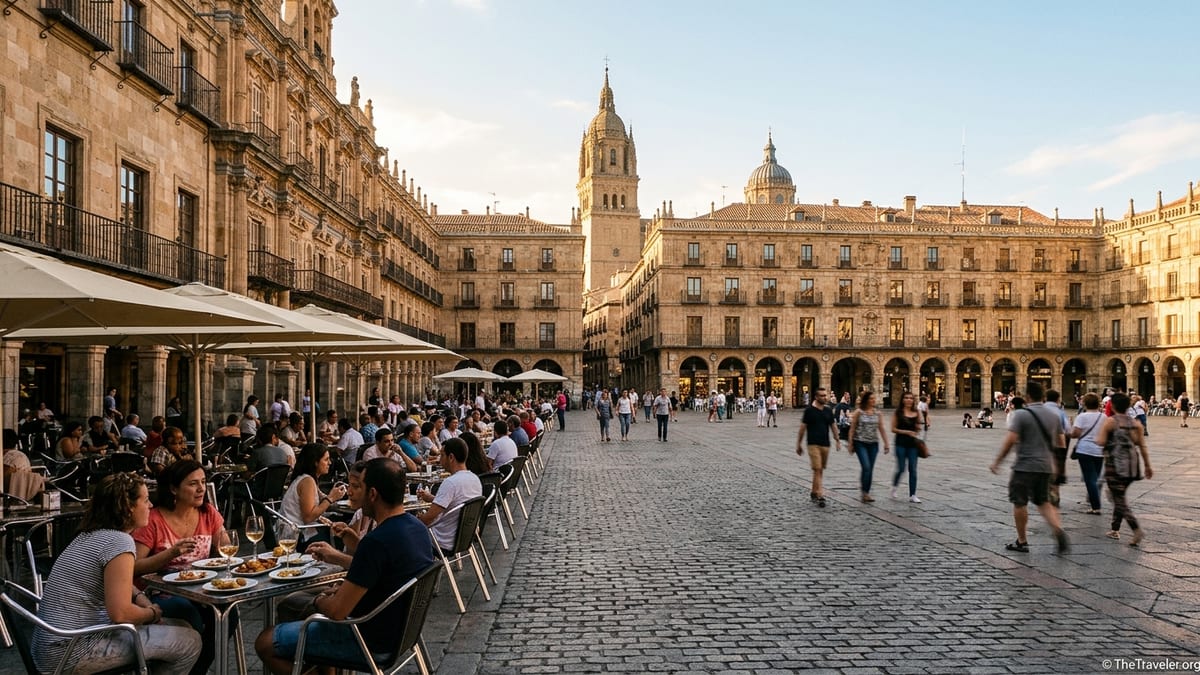
Salamanca has a distinct personality compared with other central Spanish cities. Its sandstone buildings glow honey colored at sunset, and its historic university, one of the oldest in Europe, gives it a youthful energy. The twin squares of Plaza Mayor and Plaza de Anaya are prime people watching spots, lined with cafés where you can order a coffee or a glass of local wine and watch students and visitors wander past. Many travelers time their first evening for a twilight stroll through the old town, when façades of the two cathedrals and university buildings are softly lit.
The city is a strong choice for travelers who value atmosphere and food almost as much as monuments. Streets like Calle Van Dyck just outside the old town are famous for tapas bars where you can try small plates such as hornazo, a local savory pastry, or pinchos morunos, marinated pork skewers, often for just a couple of euros each. Budget travelers appreciate that Salamanca’s student population keeps prices relatively moderate compared with Madrid. You can often find solid mid range hotels or guesthouses within walking distance of the cathedral and Plaza Mayor at prices that feel reasonable for a European university city.
Alcalá de Henares, much closer to Madrid, is another historic university town and birthplace of Miguel de Cervantes. It works especially well as a half day or day trip from the capital, reached in roughly half an hour by commuter train. The compact historic center focuses on a long central street filled with arcades, historic colleges and small restaurants. Couples often combine a stroll through the university courtyards with a leisurely lunch on the main square, ordering shared raciones and a bottle of wine before returning to Madrid in the evening.
Both Salamanca and Alcalá combine heritage with nightlife, though on different scales. In Salamanca, bars near the university and along certain streets can be lively until late, especially on Thursdays and Fridays during the academic year. This makes the city appealing to younger travelers and groups of friends. Alcalá is quieter but still offers several traditional bars that fill up with locals and weekend visitors. If you travel as a family or prefer calm evenings, look for accommodation just outside the noisiest streets, and check recent guest reviews mentioning noise before booking.
Cuenca and the Serranía: Cliffside Views and Quiet Countryside
Cuenca sits atop a rocky spur between deep gorges carved by the Júcar and Huécar rivers, which gives it some of the most striking urban scenery in central Spain. The historic upper town is known for its casas colgadas, or hanging houses, whose wooden balconies project over the cliff edge. A footbridge across the ravine provides classic photo views back toward the houses and cathedral. Driving here from Madrid takes around two hours along good highways, and there are also high speed trains to a more modern station outside the historic core, with local buses and taxis continuing uphill.
For couples seeking atmosphere, Cuenca can feel particularly romantic, especially outside peak daytime hours. Stone alleys, small squares and dramatic viewpoints offer plenty of excuses to wander. Evenings tend to be quiet, with a handful of restaurants and wine bars open in the upper town, more in the lower new town. Typical dishes might include morteruelo, a rich local pâté like spread often eaten warm, and ajoarriero, a cod and garlic dish served with bread. For those who prefer lighter or vegetarian options, it is worth checking menus in advance, as smaller traditional places can be meat heavy.
Cuenca is also a useful gateway to rural landscapes. The Serranía de Cuenca Natural Park to the north offers forested hills, rock formations and small villages, attractive for hikers and photographers. With a rental car, you could base yourself in Cuenca for two or three nights and plan day trips into the countryside, returning each evening to a comfortable hotel in the historic center. Road surfaces in the main park routes are generally decent, although some smaller roads can be narrow and winding, so cautious driving and allowing extra time are sensible.
Visitors weighing up Cuenca against other cities should think about how important food variety, nightlife and museum visiting are to their trip. Cuenca offers a couple of good museums, including a modern art museum housed in historic buildings, and a handful of interesting churches, but its main appeal is the townscape itself and the surrounding landscape. If you are happiest lingering in cafés, walking scenic routes and taking photos, it can be a highlight. If you want a dense cluster of galleries, bars and shops, Madrid, Salamanca or Toledo may suit better.
Cáceres and Mérida: Heritage Cities in the Dehesa
Heading southwest from Madrid, the landscape shifts toward Extremadura, a less visited region characterized by open dehesa countryside dotted with oaks and grazing Iberian pigs. Cáceres, roughly three hours by car from Madrid, has a remarkably well preserved old town of stone palaces and towers that has served as a filming location for historical and fantasy series. The walled core sits above a newer lower town, so many travelers spend the day exploring the historic streets and then return to modern hotels and restaurants just outside the walls.
Food is an important draw here. Extremadura is famous for jamón ibérico de bellota, cured ham from acorn fed pigs, and Cáceres restaurants often highlight it along with local cheeses and wines. In the evening, bars and restaurants in and near the old town fill with locals and visitors ordering shared platters of cured meats and regional dishes. Prices tend to be somewhat lower than in Madrid’s most central districts, making it an appealing destination for those who want to eat well without spending excessively.
Mérida, further south, is one of the best places in Spain to see large scale Roman remains. The city’s archaeological ensemble includes a theatre and amphitheatre, bridges, temples and a museum with mosaics and sculptures. Summer evenings sometimes feature performances in the Roman theatre, which makes for a memorable experience if your dates coincide and you book ahead. For travelers interested in ancient history, Mérida provides a very different feel to gothic cathedrals and medieval walls elsewhere in central Spain.
For a road trip through central Spain, Cáceres and Mérida slot neatly into a loop with Salamanca or Toledo. A possible itinerary might run Madrid to Salamanca, then Cáceres for a night or two, onward to Mérida to explore the Roman sites, and then back toward Madrid with a final night in Toledo or Ávila. Distances between these cities are manageable for drivers, usually two to three hours, although summer heat in Extremadura can be intense, so it is sensible to plan outdoor visits for mornings and late afternoons and keep a bottle of water in the car.
Smaller Towns, Scenic Drives and Practical Road Trip Tips
Beyond the headline cities, central Spain is dotted with smaller towns that reward unhurried visits. Trujillo, roughly halfway between Cáceres and Mérida, offers a hilltop castle and a handsome main square framed by arcaded houses that glow warmly in evening light. Plasencia, to the north of Cáceres, has a compact historic center and access to green areas such as the Jerte Valley, famous within Spain for its cherry blossoms in spring. Closer to Madrid, places like El Escorial and Aranjuez blend royal sites and gardens with town life, and can be combined with longer routes as short stops.
Driving in central Spain is generally straightforward. Major highways between Madrid and cities like Salamanca, Cáceres, Mérida and Toledo are modern, with service areas offering fuel, simple meals and clean facilities. Smaller regional roads to villages and viewpoints can be narrower and occasionally slow moving behind tractors or trucks, but traffic volumes are usually light compared with many other parts of western Europe. When renting a car, consider booking a vehicle with good air conditioning, particularly between late May and September, when afternoon temperatures on the plateau and in Extremadura often rise significantly.
Accommodation along a road trip can range from chain hotels at highway exits to paradores, historic buildings converted into hotels, and rural guesthouses. Paradores in cities like Salamanca or Cáceres often occupy former convents or palaces and combine heritage charm with reliable service, typically at mid to upper mid range prices. Rural casas rurales outside major towns offer quieter stays and the chance to wake up surrounded by countryside. Booking at least the first and last nights in advance, especially in school holiday periods, gives structure, while leaving some nights open can allow for spontaneous stops if a town you pass through catches your eye.
For couples and small groups, a balanced itinerary might start with two or three nights in Madrid, then move on to one or two contrasting historic cities and finish with one night in a quieter town before returning to the capital. Public transport remains a solid alternative for those who prefer not to drive. High speed and regional trains link Madrid with many of the cities described here, and buses often fill in the gaps between them. In all cases, carrying a light day bag, comfortable walking shoes and sun protection will make climbing cobbled streets and city walls more enjoyable.
FAQ
Q1: How many days do I need to see the main cities in central Spain?
For a first trip, five to seven days allows two or three nights in Madrid and visits to one or two nearby historic cities like Toledo, Segovia or Salamanca. With ten to fourteen days, you can add places such as Cáceres, Mérida, Cuenca and Ávila without rushing.
Q2: Is it better to rent a car or rely on trains and buses?
If you plan to focus on Madrid and a few major cities like Toledo, Segovia and Salamanca, trains and buses are practical and comfortable. Renting a car makes more sense if you want to explore smaller towns, natural parks or follow a flexible loop through Extremadura and the Castilian countryside.
Q3: Which city is best for food lovers in central Spain?
Madrid offers the widest range of restaurants, from traditional tabernas to contemporary spots, but Salamanca and Cáceres stand out for tapas culture and regional specialties. Mérida is particularly strong for combining Roman sightseeing with hearty Extremaduran cuisine, including cured ham and local cheeses.
Q4: What is the most romantic city for couples?
Many couples gravitate toward Toledo, Cuenca and Ávila for their compact historic centers, views and quieter evenings. Cuenca’s cliffside setting and hanging houses feel especially atmospheric at sunset, while Ávila’s illuminated walls create a dramatic backdrop for evening walks and dinners.
Q5: Can I visit Toledo and Segovia as day trips from Madrid?
Yes, both Toledo and Segovia work well as day trips. High speed trains link Madrid with each city in roughly half an hour, and returning to the capital in the evening is straightforward. Staying overnight in either city, however, gives you a chance to enjoy them once day trip crowds have left.
Q6: Are these cities suitable for families with children?
Most central Spanish cities are very walkable and family friendly, with plazas, parks and open spaces where children can run around. Attractions like Roman sites in Mérida, castles in Segovia and walls in Ávila often appeal to children, though cobbled streets and summer heat mean regular breaks and water are important.
Q7: When is the best time of year to visit central Spain?
Spring and autumn are generally the most comfortable, with milder temperatures and longer daylight hours. Summer brings festivals and outdoor events but also higher heat, especially on the plateau and in Extremadura, while winter can be cold in cities like Ávila and Segovia.
Q8: Which city should I choose if I only have one extra night outside Madrid?
Toledo is often the top choice for a single overnight trip from Madrid because of its dramatic setting, well preserved old town and easy train access. Segovia is a strong alternative if you are particularly interested in Roman engineering and castles.
Q9: How expensive is eating out in central Spain compared with other European destinations?
Prices vary by city and by how close you are to main tourist squares, but many travelers find central Spain good value. Simple set lunches that include two courses and a drink are often moderately priced, and sharing tapas in local bars can be more economical than sit down dinners in main plazas.
Q10: Do I need to speak Spanish to travel comfortably in these destinations?
Basic English is widely understood in central areas of Madrid and in main tourist zones of cities like Toledo and Salamanca. In smaller towns and local bars, staff may speak little English, so learning a few Spanish phrases and carrying written addresses or booking confirmations can make interactions easier.