


Spain’s Atlantic coast stretches from the French border down to the Strait of Gibraltar, curving past green headlands, fishing villages and long sweeps of sand. It is also one of Europe’s most varied coastlines for places to stay, from foodie city beaches and surf towns to quiet fishing ports and classic family resorts. This guide compares the main regions and gives you concrete examples of where to base yourself when you are choosing accommodation along the Basque coast, Cantabria, Asturias, Galicia and the Costa de la Luz.
How to Choose Your Ideal Stretch of the Spanish Atlantic
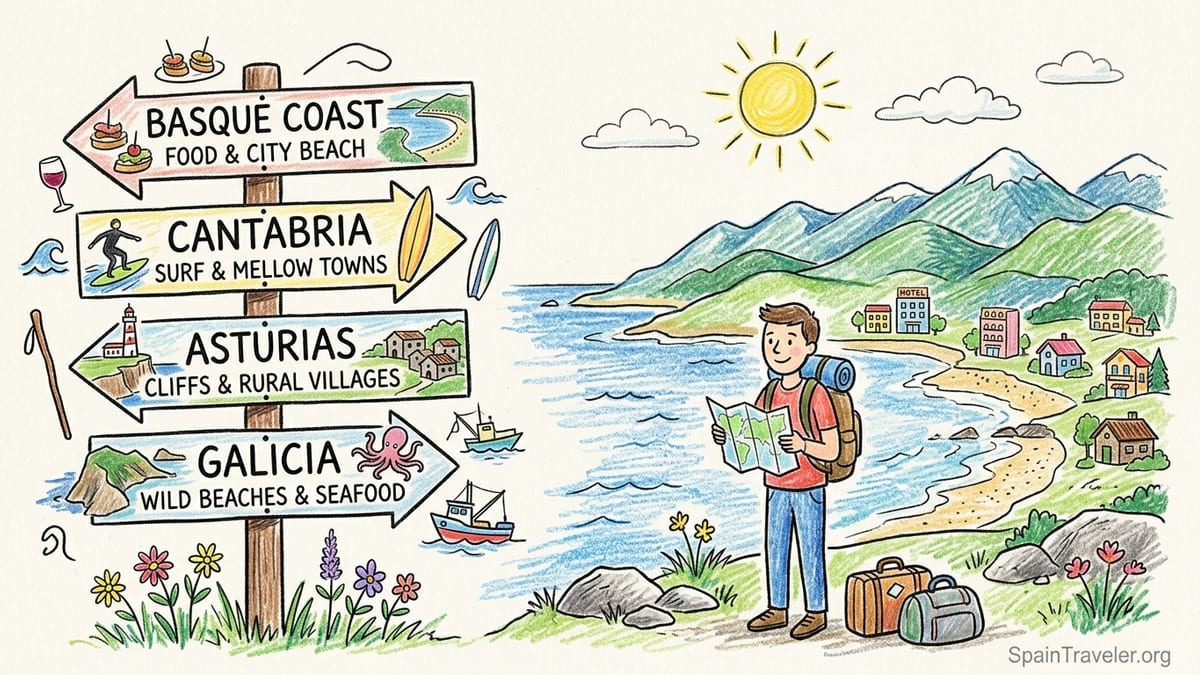
Think of Spain’s Atlantic and Cantabrian shoreline as five distinct holiday moods. The Basque coast with San Sebastián at its heart suits travelers who want city energy, a walkable beach and serious food. Cantabria mixes a small regional capital, Santander, with mellow surf towns such as Somo, Loredo and Suances. Asturias is about cliffs, rural villages and a slower pace. Galicia offers rugged capes, wild-feeling beaches and some of the country’s best seafood, while the Costa de la Luz turns south to Cádiz province and Huelva for classic sun, sand and family-friendly beach hotels.
Accommodation supply is not evenly spread. In 2026 there is especially deep inventory of beach hotels and apartments in Galicia, Cantabria and the Costa de la Luz, which generally keeps prices more competitive than in compact hotspots such as central San Sebastián or tiny Asturian fishing villages. For a peak August week, it is common to see double rooms in San Sebastián starting around mid to upper three figures per night, while equivalent three-star options in Cantabria or Galicia may undercut that by a noticeable margin, especially if you book outside the absolute seafront.
When choosing where to stay, first decide your priorities. If you want to step out of your hotel and into pintxo bars, San Sebastián or Cádiz old town make sense. If you are learning to surf, stretches such as Somo and Loredo in Cantabria or the beginner-friendly beaches near Sanxenxo in Galicia are practical, with clusters of surf schools, rental shops and surf houses. If you prefer quiet walks, rural guesthouses in Asturias or the Rías Altas of northern Galicia suit better. Use the regions here as a framework, then drill down to specific towns and hotel types that match how you actually travel.
San Sebastián and the Basque Coast: City Beach and World-Class Food
San Sebastián is the main decision point on the Basque coast. La Concha bay is often cited by tourism boards and travel media as one of the best city beaches in the world, and staying anywhere around the bay puts you within a short walk of both sand and pintxos. The Centro and Old Town areas are dense with pensions and small hotels above ground-floor bars, while the Gros neighborhood, across the river, backs onto Zurriola surf beach and has a younger, slightly less pricey feel with plenty of cafés and independent restaurants.
Typical visitors combine swims or stand-up paddling in La Concha with tapas crawls through the Old Town and perhaps a splurge meal at one of the Michelin-starred restaurants in the hills above the city. A mid-range hotel in the Centro, a design-led pension in Gros, or a serviced apartment with bay views are the classic choices. In high season you can expect minimum stays of two or three nights in popular places and rates that reflect year-round international demand. Availability is much tighter here than in most of Cantabria, Asturias or Galicia, so booking several months ahead is sensible if you aim for late July or August.
Beyond the city, the Basque coast has a string of smaller bases where accommodation feels less pressured. Getaria is a compact fishing town known for its grilled seafood restaurants and txakoli vineyards nearby; it has a small but characterful set of guesthouses and boutique hotels. Zarautz, a short train ride away, is a long, sandy surf beach with simple pensions and surf apartments at slightly softer prices than San Sebastián. These Basque options work well if you want the region’s food and culture but do not need to sleep right in a busy city center.
Cantabria: Santander and Surf Towns with Big Hotel Choice
Cantabria offers perhaps the best balance between accessible prices and choice of beach accommodation along the northern coast. Santander itself is a medium-sized city with beaches such as El Sardinero and a growing stock of modern hotels and serviced apartments, but many travelers base themselves in the surf towns on the eastern side of the bay. Somo and Loredo share a roughly seven kilometre sandy stretch that is one of the most consistent beach breaks in northern Spain, with multiple surf schools, surf camps and small hotels clustered behind the dunes.
In Somo you will find surf houses, simple hostels and mid-range hotels geared to people who want to spend most of the day in the water or on the sand. A typical double room in a surf lodge in summer might sit in the lower to mid three figures per night, often including breakfast and gear storage, while dorm beds and camp-style lodging bring costs down for solo travelers. Just inland, places like Latas anchor surf-focused complexes that combine shared houses, private rooms and small hotels with on-site bars and equipment rental, making logistics easy if your main goal is surf lessons or coaching weeks.
Further along the coast, Suances and Liencres appeal to intermediate surfers and families. Suances has a family-friendly beach at La Concha and a more exposed surf beach at Los Locos, together with a spread of two and three-star hotels, holiday apartments and campsites. Liencres, near the dunes of Valdearenas, has smaller guesthouses and rural hotels that feel more secluded but still offer easy access by car to Santander and the motorway. Inland valleys hide traditional stone inns where you can pay less for more space, driving thirty minutes to the beach each day.
Asturias: Green Cliffs, Fishing Villages and Rural Stays
Asturias is where the coast turns wilder and more rural. Here you are trading dense hotel districts for cliff-top paths and fishing villages that tumble down steep hillsides. Cudillero, often singled out in Spanish media as one of the prettiest villages in Asturias, is a good example: colorful houses stacked around a small harbor, a handful of small hotels and guesthouses, and steep lanes leading up to viewpoints. Accommodation is limited inside the old amphitheater-like port, so prices in summer can feel high relative to the level of luxury, and rooms often book out months in advance for August.
Ribadesella and Llanes offer a bit more capacity along this coast. Ribadesella has a crescent beach backed by a promenade with hotels and pensions facing the sea, while Llanes mixes an old town, a small port and multiple small beaches within a short drive. Inland, converted farmhouses and rural guesthouses known as casas de aldea provide good value, especially if you are happy to drive ten to twenty minutes to the nearest cove. Expect stone walls, wood-beamed ceilings and home-style breakfasts rather than big resort facilities.
Asturias suits travelers who care more about scenery than facilities. Day to day, a typical stay might involve a breakfast in a village bar, a drive to a nearby cove such as Playa del Silencio or Aguilar, a long walk along a section of the coastal path, then a seafood dinner in a fishing port. You will not find huge all-inclusive properties here, but you will find a dense network of rural hotels and small seaside properties listed on regional tourism sites. Prices are generally moderate outside the absolute peak weeks and can drop sharply in late September, when the sea is still relatively warm but crowds drop away.
Galicia: Rugged Coasts, Rías and Deep Beach-Hotel Markets
Galicia stretches from the Rías Altas in the north to the more visited Rías Baixas in the south, and it has one of the deepest hotel inventories on the Spanish Atlantic. The Rías Baixas, particularly around Sanxenxo, O Grove and the A Lanzada beach area, have a dense concentration of mid-range seaside hotels, apartment complexes and small resorts. Many of these properties are family-run and have pools, kids’ areas and easy beach access, catering to Spanish families who return year after year. For travelers, that translates into plenty of choice and a wide bandwidth of prices.
Sanxenxo itself feels like a classic seaside town with a busy promenade, while the long strand of A Lanzada and the O Grove peninsula combine dunes, surf schools and quieter stretches. It is relatively easy here to find a simple two or three-star hotel a short walk from the beach at moderate prices, especially if you are flexible on exact dates and do not need the very front line in August. Many hotels offer half-board options, and self-catering apartments are common, which helps keep overall holiday costs down if you are traveling as a family or group.
Further north, the Costa da Morte and Rías Altas feel wilder, with fewer big hotels but an increasing number of small boutique properties and rural guesthouses. Bases such as Malpica, Muxía or the area around Viveiro attract walkers, surfers and travelers seeking Atlantic drama. Here you are more likely to stay in a renovated stone house with just a handful of rooms than in a conventional resort. Seafood is a major draw across Galicia, with many travelers choosing accommodation specifically because it is walking distance from a cluster of marisquerías serving shellfish and grilled fish caught nearby.
Costa de la Luz Overview: Sun, Sand and Classic Beach Holidays
The Costa de la Luz, running along the Atlantic coasts of Cádiz and Huelva provinces, feels different from the northern regions. Summers are sunnier and drier, with long daylight hours ideal for traditional beach holidays. Hotel development has been more intensive than in Asturias or much of Galicia, so you will find a wide range of beach hotels, especially around Cádiz city’s seafront, the resort strip of Novo Sancti Petri near Chiclana, and the twin resort communities of Isla Cristina and Islantilla near the Portuguese border.
Broadly, the Cádiz side of the Costa de la Luz mixes historic towns with broad beaches, while the Huelva side is more about pine-backed dunes and self-contained resort zones. This is a region where all-inclusive and full-board options are common, kids’ clubs are easy to find, and seaside promenades stay lively late into the evening. Prices range widely: a seafront four-star property in August in Novo Sancti Petri can easily reach higher nightly rates, while inland guesthouses and older three-star hotels a few blocks from the beach will be more accessible.
For many international visitors, the Costa de la Luz works well at the end of an itinerary that might start in Seville or inland Andalusia. Good roads and bus connections link the major Costa de la Luz towns, so it is realistic to split a week between, for example, Cádiz and Tarifa, or Conil and Zahara, without renting a car the entire time, although a vehicle gives more flexibility to explore quieter stretches of sand and inland white villages.
Cádiz, Conil and Chiclana / Novo Sancti Petri: Urban Beach to Resort Strip
Cádiz city offers one of Spain’s most atmospheric bases for a beach holiday. The old town sits on a narrow peninsula with Cádiz’s main urban beach, La Victoria, stretching south along the newer districts. Staying in the historic center puts you within walking distance of tapas bars, flamenco venues and viewpoints, while still being a manageable stroll or short bus ride from the Atlantic surf. Hotels inside the old town are typically in historic buildings with smaller room counts: think restored townhouses, modest boutique properties and apartments above plazas. Along La Victoria, mid and upper-range seafront hotels give you modern rooms with balconies overlooking the beach and easy access to the promenade.
About forty minutes south by road, Conil de la Frontera feels like a whitewashed town that has grown into a substantial beach resort. The town center has pensions, apartments and small hotels tucked into narrow streets, while modern complexes line the cliffs and beaches to the north and south. The main beaches are wide and sandy, and in summer the seafront is busy with chiringuitos and beach bars. Conil is popular with Spanish families and younger couples, so expect a good spread of mid-range apartments and hotels, plus campsites and bungalows behind the dunes for those who prefer more informal stays.
Chiclana’s coastal area, particularly Novo Sancti Petri, is where you find one of the Costa de la Luz’s main resort hotel concentrations. Behind the long, golden beach of La Barrosa sit large four and five-star hotels with pools, gardens, golf courses and direct beach access via wooden walkways. These properties are designed for classic fly-and-flop holidays, with multiple restaurants on site, kids’ clubs and spa facilities. They are ideal if you want reliable sunshine, a big pool and minimal daily planning, but less suited if you crave a walkable historic center at your doorstep. Nearby residential areas offer villas and apartments that work well for longer family stays.
Tarifa, Zahara, Isla Cristina and Islantilla: Wind, White Villages and West-Coast Resorts
Tarifa, at the southern tip of mainland Europe, has a different energy from much of the Costa de la Luz. It is a world center for wind and kitesurfing, and the accommodation scene reflects that, with a mix of simple hostels for young kitesurfers, boutique guesthouses in the old town and relaxed beach hotels along the road out towards Punta Paloma. Wind can be strong here, so it is ideal if you enjoy water sports or do not mind breezy beach days. In the center, small hotels and apartments in old stone buildings put you near bars, vegetarian cafés and surf shops, while out of town you will find boho-style beach hotels that back directly onto sand or dunes.
Northwest of Tarifa, Zahara de los Atunes is smaller and more low-key, with a long beach backed by a mixture of low-rise hotels, apartment complexes and summer houses. It is known for tuna, which shows up on local menus in many forms during the almadraba season. Accommodation here is fairly seasonal: in August, prices for small beachfront hotels rise and minimum stays are common, while in shoulder months you can often find good deals. The atmosphere is more village-like than in Novo Sancti Petri, and you can walk from most lodgings to the beach and a compact center of bars and restaurants.
On the Huelva side, Isla Cristina and Islantilla form another of the Costa de la Luz’s major beach-hotel markets. Isla Cristina combines a working fishing port with long, dune-backed beaches and several sizeable hotels and apartment complexes, some set behind pine forests. Islantilla, developed jointly by neighboring municipalities, is more of a purpose-built resort with a line of hotels, golf courses and residential complexes parallel to the shore. Here you can expect large pools, kids’ clubs and easy parking, making it popular with families who drive in from Seville or inland Portugal. Prices in this western section of the Costa de la Luz can be slightly softer than in peak-demand spots nearer Cádiz, especially outside Spanish school holidays.
The Takeaway
If you want a city break with a real beach and some of Europe’s most celebrated food, San Sebastián and its Basque neighbors are hard to beat, though you will pay for the privilege in summer. If you are learning to surf or want a relaxed beach town backed by green hills, Cantabria’s Somo, Loredo, Suances and Santander area offer deep hotel and surf-camp inventory at generally more accessible prices. For landscape lovers who value quiet coves and rural life over big facilities, Asturias delivers, provided you are ready to book early in very small villages or stay a short drive inland.
Travelers seeking value, reliable beach weather and lots of mid-range hotel choice should look closely at Galicia’s Rías Baixas and the Costa de la Luz. Galicia layers seafood and rugged coastline with a dense supply of modest seaside hotels and apartments, while the Costa de la Luz adds historic cities such as Cádiz, bohemian windsurf hubs like Tarifa and large resort zones around Novo Sancti Petri, Isla Cristina and Islantilla. Start by deciding whether your holiday is more about food, surf, nature, seafood or straightforward beach time, then pick the stretch of coast that matches that mood and use specific towns mentioned here as your first accommodation search terms.
FAQ
Q1. What is the best place to stay for a short city-beach break?
For two to four nights focused on walking, food and an easy beach, San Sebastián and Cádiz stand out. Both combine compact historic centers with long urban beaches and a good spread of hotels and apartments within walking distance of bars and restaurants.
Q2. Where should I stay if I am learning to surf?
Cantabria is particularly good for beginners, especially Somo and Loredo, where long sandy beaches are lined with surf schools and surf houses. In Galicia, the A Lanzada and Sanxenxo area also works well, with several surf schools, forgiving beach breaks and plenty of affordable seaside accommodation.
Q3. Which region offers the best value for money in high season?
In peak July and August, Galicia, Cantabria and the western Costa de la Luz around Isla Cristina and Islantilla usually offer better value than compact hotspots like central San Sebastián or tiny Asturian fishing villages. You will typically find more mid-range three and four-star hotels and apartments to choose from, which keeps pricing more competitive.
Q4. Is a car essential for these coastal regions?
You can enjoy San Sebastián, Santander, Cádiz and Tarifa without a car because each has walkable centers and public transport links. However, for Asturias, much of Galicia and smaller Costa de la Luz villages, a car or at least occasional car rental makes it much easier to reach quiet coves, rural guesthouses and less frequent bus routes.
Q5. Which area is best for families with small children?
Families often gravitate to the resort zones of Novo Sancti Petri, Isla Cristina, Islantilla and the Rías Baixas around Sanxenxo and O Grove. These areas have wide, gently shelving beaches, plenty of mid-range hotels with pools and kids’ facilities, and many restaurants used to serving families on holiday.
Q6. Where can I find the quietest, most natural beaches?
If you prioritize scenery and relative solitude, look at Asturias, northern Galicia’s Costa da Morte and Rías Altas, or less built-up stretches of the Costa de la Luz outside main resort clusters. In these areas you will find dune-backed beaches, cliffs and coves with just a few small bars or none at all, especially if you are willing to walk a little from parking areas.
Q7. How far in advance should I book accommodation in summer?
For August stays in small villages in Asturias or Galicia, or central San Sebastián and Tarifa, booking three to six months in advance is prudent, especially for weekends. In larger beach-hotel markets like Novo Sancti Petri, Sanxenxo or Isla Cristina, you will still find options closer to the date, but the best-located or best-priced rooms tend to go first.
Q8. Are there options for travelers on a tight budget?
Yes. Surf camps and hostels in Somo, Loredo, Suances and Tarifa offer dorms and simple rooms, while inland villages in Asturias, Cantabria and Galicia have affordable guesthouses a short drive from the coast. Traveling in June, early July or September instead of August can also reduce nightly rates significantly across all these regions.
Q9. Which region is best for seafood-focused travel?
Galicia is the standout for seafood, with many visitors choosing bases specifically near marisquerías in towns such as O Grove, Cambados or coastal districts of A Coruña and Vigo. The Basque coast around San Sebastián and Getaria, and Cádiz province with its tuna and fried fish bars, also reward travelers who plan their stays around local dining.
Q10. Can I combine more than one of these regions in a single trip?
Yes. Many travelers link the Basque coast with Cantabria and Asturias in a single road trip, or pair an inland Andalusian city such as Seville with a few days on the Costa de la Luz. Distances are manageable, but for a one-week holiday it is usually best to limit yourself to one or two main bases to avoid spending too much time moving between hotels.