


Spain’s lush northern coast, branded as Green Spain, is where Atlantic weather meets centuries of food traditions. For travelers, it feels like four distinct culinary countries stitched together: Basque pintxos and crisp txakoli, Cantabria’s anchovies and seafood stews, Asturias’s cider and mountain cheeses, and Galicia’s shellfish and Albariño-based whites. Tourism boards now explicitly market gastronomy as the region’s calling card, and tour operators have responded with everything from two-hour city food walks to week-long itineraries hopping between vineyards, cider houses and fishing ports. This guide helps you decide which food and wine experiences best match your appetite, time and budget.
Understanding Green Spain’s Four Culinary Identities
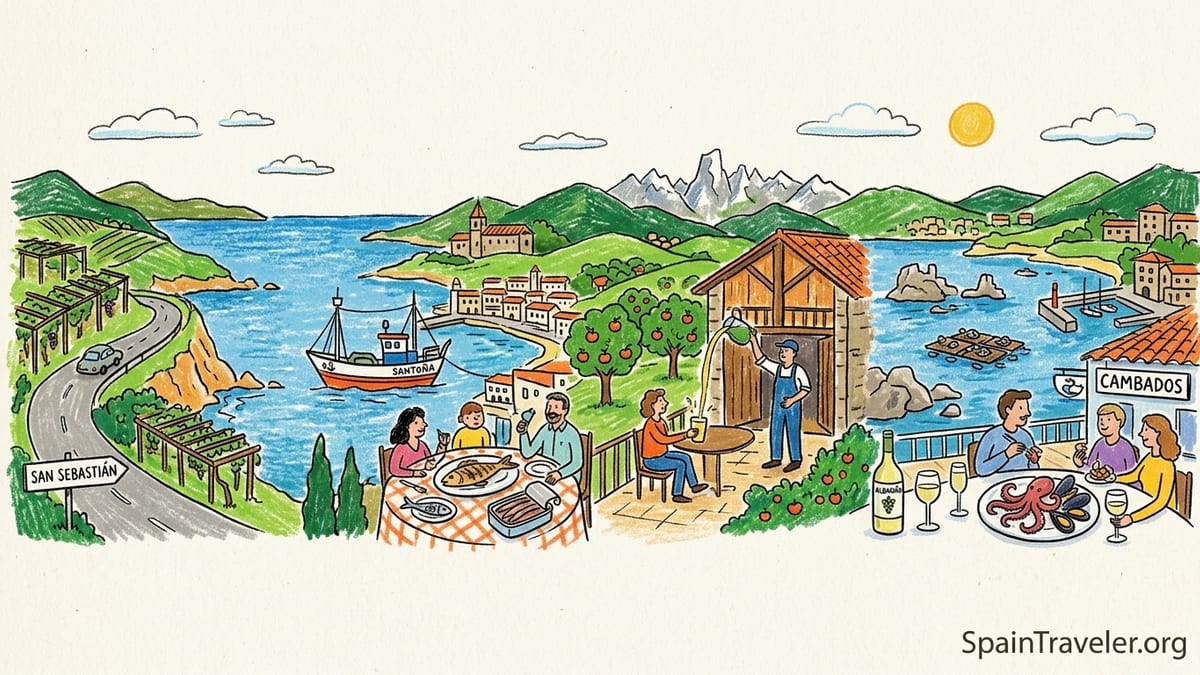
Green Spain stretches from the French border near San Sebastián to the wild capes of western Galicia. Within that Atlantic strip, food culture changes every few hours of driving. In the Basque Country, the focus is on elaborate pintxos served in buzzing bars in San Sebastián and Bilbao, washed down with tart, low-alcohol txakoli poured from high above the glass. Move west into Cantabria and you enter anchovy territory, with towns like Santoña known for tins of hand-cleaned fish and seafood restaurants that make the most of the cold Cantabrian Sea. Farther along, Asturias leans into hearty mountain cooking and the ritual of natural cider poured in a long arc. Finally, Galicia ends the route with barnacles, octopus and other shellfish paired mainly with Albariño and other local whites in coastal wine regions such as Rías Baixas.
For travelers, these differences matter because most tours are built around regional specialties. A Basque-focused day might revolve around a guided pintxos crawl through San Sebastián’s Parte Vieja and an afternoon visit to a txakoli winery in Getaria. A Cantabrian excursion could combine a stop at an anchovy producer in Santoña with lunch on freshly grilled fish in Santander’s fishing quarter. In Asturias you are more likely to visit a sidrería outside Gijón or Oviedo, tasting cider straight from the barrel alongside fabada bean stew and blue cheeses from the Picos de Europa. Galicia, by contrast, invites you to board a small boat in O Grove to see shellfish beds before sitting down to mussels and clams with glasses of local wine in a simple waterfront marisquería.
The decision is less about which area is “best” and more about which food culture you want as the backbone of your trip. Because distances are short, a ten‑day itinerary can touch all four, but if you only have three or four days it makes sense to pick one or two regions and choose tours that go deeper rather than racing along the highway.
Basque Country: Pintxos Walks and Txakoli Vineyards
The Basque Country is the easiest entry point for many food travelers, thanks to flight connections to Bilbao and San Sebastián’s reputation as one of Europe’s great dining cities. Pintxos tours are the default first-night experience. In San Sebastián’s old town, several local operators offer small-group evening walks that visit four or five bars, each chosen for a specific specialty such as grilled prawns, veal cheeks or the city’s famed burnt cheesecake. Expect to pay a moderate per-person fee that typically covers a short guided walk, a curated selection of pintxos and several drinks, often including a glass or two of txakoli and sometimes a Basque red.
Where these walks differ is in depth. Some companies keep it light, with two hours of bar-hopping and minimal cultural explanation. Others structure the night around understanding Basque culinary traditions, stopping at the Bretxa market or ending in a private gastronomic society where you might help prepare a simple dessert. Private pintxos tours are usually more expensive but allow you to avoid the most crowded bars and adapt the food to dietary needs, which can be crucial if you are gluten-free or do not eat pork or shellfish.
Txakoli-focused tours typically start from San Sebastián, Bilbao or the fishing village of Getaria. A typical half-day program might include a drive along the coast, a guided walk among pergola-trained vines overlooking the Bay of Biscay, and a tasting of several wines paired with Basque anchovies and Idiazabal cheese. Because txakoli is a relatively low-volume regional wine, visits often feel intimate, with family-run wineries explaining how they balance traditional pergola training with modern stainless-steel winemaking. Some operators combine the winery visit with lunch at a traditional asador where grilled turbot or txuleta steak is cooked over open embers, turning the excursion into a full gastronomic day out.
Travelers who want to dedicate most of a holiday to food can also find multi-day itineraries that weave together San Sebastián, Rioja Alavesa wine country and the Basque coast. These may include market visits, hands-on cooking classes and time built in for high-end dining, from rustic cider houses on the slopes of Mount Igueldo to Michelin-starred temples in San Sebastián’s suburbs.
Cantabria: Anchovies, Coastal Seafood and Quiet Food Walks
Cantabria tends to receive fewer international visitors than the Basque Country, but its food is a major draw for those in the know. The small port of Santoña has become synonymous with high-quality anchovies preserved in olive oil. Several producers open their doors to visitors for short tours where you can watch workers hand-clean, salt and fillet the fish before they are packed into tins. These visits usually end with a tasting, where anchovies are served simply on bread with butter or roasted peppers and paired with a glass of local white wine or cider.
Santander, the regional capital, now supports a small but growing set of food tours. A typical half-day walk may start at the Mercado de la Esperanza, where stalls display gleaming hake, squid and shellfish landed that morning. From there, guides often lead guests through the historic center, stopping at traditional bars for rabas (fried squid strips), quesada pasiega dessert or a portion of cocido montañés, a bean and cabbage stew from the inland valleys. Compared with San Sebastián, the scene feels more low-key; groups are smaller and the atmosphere is more about discovering neighborhood favorites than ticking off famous names.
Seafood excursions along the Cantabrian coast appeal to travelers who prefer fresh fish to structured wine tastings. From bases like Santander or the smaller town of Comillas, some operators arrange day trips combining short coastal walks with lunch at a family-run restaurant overlooking the sea. Typical menus feature grilled monkfish, hake cheeks cooked in green sauce, or simple mixed fish grills. These tours are rarely marketed as formal “food and wine tours,” yet in practice they deliver exactly that: hours in the sea air followed by multi-course meals paired with local whites or cider.
Because Cantabria sits between the Basque Country and Asturias, travelers often experience it as a bridge rather than a separate destination. However, if you care about preserved fish, want quieter markets and enjoy mixing coastline with inland mountain food, it is worth spending at least a full day here with a dedicated guide who can open doors to small producers not set up for walk-in visits.
Asturias: Cider Houses, Mountain Cheeses and Hearty Cuisine
Asturias is where the Green Spain narrative pivots from bar snacks to slow, hearty cooking and a deep cider culture. The region produces a large share of Spain’s natural cider, and the ritual of pouring it from a height so it splashes into the glass is at the center of many tours. Tourism initiatives such as Sidraturismo Asturias promote visits to cider houses and presses across the region. In practice, this means you can book guided experiences that begin among apple orchards near Villaviciosa or Nava, continue through the cidery itself and finish with tastings of different expressions of sidra, often pulled directly from large chestnut barrels.
Most cider house visits pair drinks with traditional Asturian dishes: tortilla, chorizo simmered in cider, fried corn cakes topped with cured meats, or plates of lacón and local cheeses. In Oviedo and Gijón, food-focused walking tours often dedicate at least one stop to a sidrería row, where guides explain ordering etiquette before everyone tries pouring a round. Some itineraries even build in time to watch workers disgorge and bottle sparkling styles that are slowly gaining attention beyond Spain.
Asturian cheesemaking adds another layer to local food tours. The Picos de Europa mountains shelter caves where blue cheeses such as Cabrales mature. Small operators in villages like Arenas de Cabrales organize half-day trips that combine a short hike with a visit to an affineur’s cave, followed by comparative tastings of Cabrales and milder local cheeses in a village bar. Multi-stop day tours may string together a cheese visit in the morning, lunch on fabada bean stew in a village restaurant and a mid-afternoon visit to a cider house, creating a tightly packed overview of Asturian flavors.
For travelers comparing regions, Asturias makes the most sense if you enjoy robust, rustic food and want your drinks to be as much about tradition as about grape varieties. Wine does feature at better restaurants near the coast, and some high-end places work creatively with Galician and Rioja bottles, but cider remains the default pairing. Tours tend to be less wine-focused and more about immersion in a way of life built around apples, mountain pastures and long, sociable meals.
Galicia: Seafood, Albariño and Atlantic Vineyards
Galicia forms the western edge of Green Spain and has become one of Europe’s most interesting white wine regions. Official tourism materials highlight five main denominations of origin, with Rías Baixas the best known internationally for its Albariño-based whites. Travelers can now choose from a growing number of wine-focused day tours departing from Vigo, Pontevedra or Santiago de Compostela, many of them concentrating on the Val do Salnés subregion around Cambados, often called the capital of Albariño.
A typical Albariño day tour might visit two or three wineries in the Salnés Valley and O Rosal, where pergola-trained vines overlook the Atlantic or the Miño River. At each stop, guests taste several wines and often walk through vineyards, learning how the humid Atlantic climate and granite soils shape the region’s fresh, high-acidity profile. Many tours integrate food directly into the program, pairing wines with local cheeses or ending with a lunch of mussels, razor clams and fish in a traditional furancho, a seasonal farmhouse restaurant that serves house wine alongside simple home cooking.
Seafood experiences are another Galician specialty. In coastal towns such as O Grove, Cambados or Vigo’s nearby fishing ports, operators run boat trips out into the rías where mussels and other shellfish are cultivated on floating rafts. These short cruises usually include a tasting of steamed mussels or clams on board, accompanied by a chilled glass of Albariño. On land, guides may lead you through a local market like Santiago de Compostela’s Mercado de Abastos before lunch at a marisquería known for octopus, crab or goose barnacles. The combination of seeing the source of the seafood and then tasting it with regionally appropriate wines is one of the region’s most compelling offerings.
Multi-day food and wine itineraries in Galicia often link the coast with inland wine regions such as Ribeira Sacra or Ribeiro, where terraced vineyards rise steeply above rivers. These trips might begin with shellfish and Albariño in Rías Baixas, shift to Godello and Mencía reds overlooking the Sil canyon, and finish with a final seafood feast in A Coruña or near Finisterre. Because Galicia covers a broad area and roads can be winding, guided packages can save considerable logistics time, particularly if you want to combine winery visits with remote viewpoints and small fishing villages that are difficult to reach by public transport.
Comparing Tour Types: Walks, Winery Days, Cider Houses and Multi-Day Routes
Once you know which regional flavors interest you most, the next decision is format. City food walks in places like San Sebastián, Bilbao, Santander, Oviedo, Gijón and Santiago de Compostela are ideal for the start of a trip. They orient you in the old town, introduce ordering habits and give you a shortlist of bars and dishes to return to independently. Most last two to four hours, cover enough food to function as a meal and are priced in a moderate bracket, making them accessible for a wide range of travelers.
Winery-focused day tours are most common in the Basque Country and Galicia. In the Basque case, that usually means txakoli cellars near Getaria or Hondarribia, sometimes combined with coastal sightseeing. In Galicia, it typically revolves around Rías Baixas subzones such as Val do Salnés and O Rosal, occasionally extending to Ribeiro or Ribeira Sacra. These tours tend to be slightly more expensive than city walks because they involve private transport and tastings at several wineries. They are best for travelers who already know they enjoy white wines with fresh acidity and want to understand the nuances between subregions and producers.
Cider-house visits in Asturias and parts of the Basque Country are a different kind of experience. Rather than hopping between multiple venues, you usually settle into a single sidrería for the evening or combine a visit to the cidery with an extended meal. The focus is on ritual and conviviality: learning how to pour cider properly, watching servers catch the stream of liquid in the glass without looking, and sharing large plates. These tours are typically less structured than wine days and are well suited to groups of friends or families who want an atmospheric evening more than detailed technical commentary.
Multi-day gastronomic tours, which can run from three to ten days, knit together several of these elements across regions. A sample itinerary might start with pintxos and txakoli in San Sebastián, continue through Cantabria for anchovy tastings, then move into Asturias for cider and cheese before finishing with Albariño and seafood in Galicia. These trips appeal to travelers who prefer to outsource driving and reservations, as guides handle ferrying you between small towns, booking hard-to-access restaurants and aligning winery opening times. They cost more upfront but can represent good value once you factor in private transport, lodging and the time savings of a well-honed route.
Planning Your Own Gastronomy Route Through Green Spain
Choosing between all these options largely comes down to practical factors: time, budget, season and travel style. With under a week, most visitors pick one base in the Basque Country or Galicia and add a second stop in Asturias or Cantabria. For example, you might fly into Bilbao, spend two nights there, then base for three or four nights in San Sebastián with one pintxos tour and a txakoli day trip. Alternatively, you could fly into Santiago de Compostela, take a Rías Baixas wine and seafood tour, then add a night or two along the coast near O Grove or Cambados.
Travelers with around ten days often design a loop: three nights between Bilbao and San Sebastián for pintxos, two in Santander or a nearby coastal town for anchovies and seafood, three around Oviedo or Gijón for cider and cheese, and two in the Rías Baixas for Albariño and shellfish. Working with a tour operator that specializes in northern Spain can streamline this, since they often maintain relationships with small wineries, cheese producers and cider houses that do not advertise in English or accept walk-in visitors.
Season also matters. Summer and early autumn are the busiest months for seaside destinations and wine regions, with local festivals and long evenings encouraging outdoor eating. This is prime time for Albariño tastings on Galician terraces, pintxos crawls that spill out into San Sebastián’s streets and boat trips to shellfish beds. Spring and late autumn can be cooler and wetter, especially in Galicia and Asturias, but kitchens are still active and crowds thinner. In winter, some coastal tours and smaller wineries reduce hours, yet cities like Bilbao, Oviedo and Santiago remain excellent bases for market visits and indoor tastings.
No matter when you go, it pays to reserve key experiences in advance: pintxos tours on weekends in San Sebastián, txakoli or Albariño winery days during harvest season, and cider houses popular with locals. Many travelers also build one or two self-guided days into their schedule between organized tours, using local recommendations from guides to explore additional bars, bakeries or markets at their own pace.
The Takeaway
Green Spain is not a single food destination but a chain of distinct culinary cultures linked by Atlantic skies and green hills. Basque pintxos and txakoli satisfy travelers who want high-density flavor in lively bars and sleek, coastal wineries. Cantabria rewards those who appreciate preserved fish, quieter markets and low-key seafood lunches with ocean views. Asturias is the choice for visitors drawn to cider rituals, mountain cheeses and slow, hearty cooking in stone villages. Galicia, meanwhile, offers some of Europe’s finest shellfish and crisp white wines in landscapes of rías, islands and terraced vineyards.
Instead of asking which region is objectively best, start with how you like to eat and drink. If you love strolling from bar to bar, prioritize city food walks in San Sebastián, Bilbao or Santiago. If you are passionate about wine, weave in txakoli days near Getaria and Albariño routes through Rías Baixas. If convivial communal meals appeal most, dedicate at least one evening to a sidrería in Asturias. Multi-day gastronomic tours that link all four regions can be a smart solution if you prefer not to drive and want someone else to coordinate tastings, transfers and restaurant reservations.
Regardless of the route you choose, give yourself time to linger. The real luxury in Green Spain is not ticking off as many tastings as possible, but sitting for an extra round of cider as the sidrería fills up, or ordering another plate of mussels because the Albariño in your glass demands something salty and local beside it. Build space for those unplanned moments, and the region’s food and wine culture will unfold naturally around you.
FAQ
Q1. How many days do I need for a Green Spain food and wine trip?
Most travelers find that five to seven days lets them explore one or two regions in depth, such as the Basque Country plus Rioja Alavesa or Galicia’s Rías Baixas. With ten days or more, you can comfortably link Basque pintxos, Cantabrian seafood, Asturian cider houses and Galician wine country in a relaxed loop.
Q2. Is it better to book organized tours or explore independently?
It depends on your priorities. Organized tours are extremely helpful for reaching rural wineries, cheese caves and cider houses that lack public transport or English-language booking. Independent travelers can manage city food walks and bar-hopping alone, especially in San Sebastián, Bilbao or Santiago, but still often benefit from at least one guided experience early in the trip to learn local etiquette and must-try dishes.
Q3. Which region should I choose if I am mainly interested in wine?
If wine is your focus, prioritize Galicia’s Rías Baixas and inland regions such as Ribeira Sacra or Ribeiro for whites and lighter reds, and consider adding a day in the Basque Country for txakoli. These areas have the highest concentration of structured wine-tasting tours, from small family-run cellars to larger estates that offer guided visits and food pairings.
Q4. Where is the best place to experience traditional cider culture?
Asturias is the heartland of Spanish cider, with dedicated cider routes around Villaviciosa, Nava, Oviedo and Gijón. Here you can visit presses, learn how cider is made and enjoy long dinners in sidrerías where staff pour cider from a height. Parts of the Basque Country also have historic cider houses, especially near San Sebastián, but Asturias offers the broadest range of cider-focused experiences.
Q5. Can I do Green Spain food tours without renting a car?
Yes, although your options will be more concentrated around major towns and organized excursions. City food walks and some winery or cider-house tours include transport from hubs like San Sebastián, Bilbao, Santander, Oviedo, Gijón, Vigo or Santiago de Compostela. If you want maximum freedom to stop in small coastal villages or mountain valleys, a rental car or a private driver arranged through a tour operator is the most flexible solution.
Q6. What is the best time of year for food and wine tours in Green Spain?
Late spring, summer and early autumn are the most popular times, with long evenings, lively terraces and frequent food festivals. Wine regions such as Rías Baixas and txakoli country are especially active around harvest, typically from late August into October. Winter can still be rewarding for hearty Asturian and Cantabrian dishes and indoor market visits, but some coastal tours and small wineries reduce their schedules.
Q7. Are Green Spain food tours suitable for travelers with dietary restrictions?
Many operators can accommodate common dietary needs such as vegetarian, pescatarian or gluten-free diets if informed in advance. However, regional cuisines are traditionally heavy on seafood, pork and gluten-based dishes, so flexibility varies. Private tours generally offer more room to adjust menus, while fixed-group pintxos crawls and set cider-house feasts may have limited alternatives.
Q8. How expensive are guided food and wine tours in northern Spain?
Prices vary widely, but short city food walks typically fall in a moderate range per person, including food and several drinks. Full-day winery or cider-house tours that include transport, tastings and lunch can cost more, while multi-day private gastronomic itineraries are at the higher end, especially if they include boutique hotels or fine-dining experiences. Booking outside peak summer and sharing private tours between several travelers can help manage costs.
Q9. Do I need to speak Spanish to enjoy these tours?
In major destinations such as San Sebastián, Bilbao and Santiago de Compostela, many guides and tour operators work comfortably in English and sometimes other languages. In rural Galicia, Asturias and Cantabria, English is less common at small family-run wineries or cider houses, which is one reason guided tours are popular. Even if you do not speak Spanish, knowing a few key food and ordering phrases will enrich independent bar and market visits.
Q10. Can I combine high-end dining with casual food experiences on the same trip?
Absolutely. One of Green Spain’s strengths is the easy mix of Michelin-starred restaurants, traditional asadores and simple bars serving excellent pintxos or seafood. Many travelers plan a couple of destination meals in places like San Sebastián or coastal Galicia, then fill the rest of their days with informal food walks, market snacks, winery lunches and cider-house dinners. Booking the fine-dining restaurants several weeks or months ahead and leaving other meals flexible usually works well.