

Spain’s Atlantic coast is less famous than the balmy Mediterranean, but for many travelers it delivers a richer, more elemental experience. From the forested shores of Asturias and Cantabria to the windswept dunes of Cádiz and the long sands of Huelva, this is a coastline shaped by swell, tide and wind. Choosing the best beach here is less about perfect postcards and more about matching your style of travel to the very different characters of these shores.
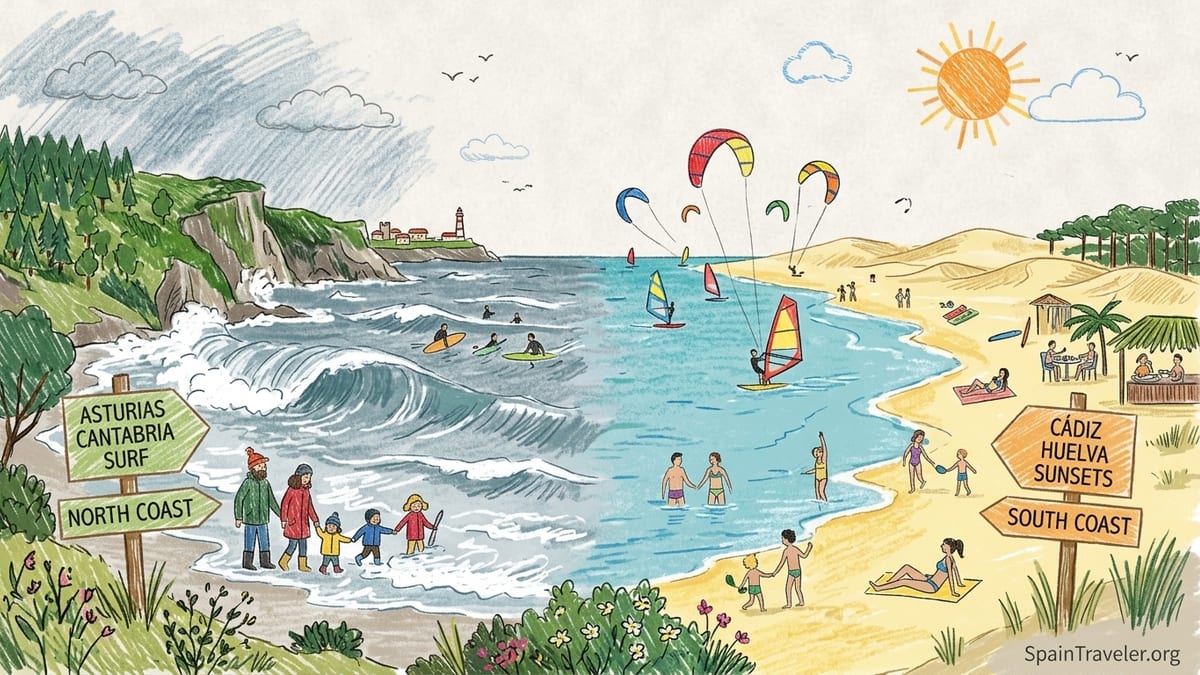
The Atlantic Personality: Colder Water, Bigger Skies, Wilder Feel
The first thing most visitors notice on the Spanish Atlantic is the temperature. In summer, sea temperatures on the northern coast around Asturias and Cantabria typically sit in the high teens to low twenties Celsius, so you will see locals in short wetsuits even in August, while hardy travelers dive in wearing just swimwear. Further south on the Costa de la Luz, around Cádiz and Huelva, the Atlantic is noticeably milder in summer and early autumn, making long swims at places like El Palmar or Matalascañas more comfortable, especially in the late afternoon when the sun is low.
The second defining feature is the swell. Unlike many Mediterranean resorts where the sea can feel like a lake, the Atlantic nearly always brings some wave action. That is good news if you want to surf or bodyboard, but it also means rip currents and shore breaks that demand respect. On a July afternoon at Playa de los Locos in Suances, for example, it is common to see strong sets rolling through while lifeguards keep swimmers between flag-marked safe zones and surfers further out.
Finally there is the sense of space and wildness. Forested cliffs in Asturias, estuaries backed by green hills in Galicia, towering dunes at Bolonia and Valdevaqueros, and the endless straight line of sand from Mazagón to Matalascañas in Huelva all feel very different from the built-up Costa del Sol. Even where there is development, such as at Punta Umbría or Isla Canela near Huelva, the buildings tend to sit behind wide dune systems, so you still get long unbroken views of ocean and sky.
With that Atlantic personality in mind, the question is not which beach is objectively best, but which combination of waves, wind, scenery and services suits your trip. The north generally wins for green landscapes and powerful surf, while the south excels in wind sports, sunsets and long, swimmable evenings.
Rodiles and the Asturias Coast: Green Cliffs and Serious Surf
Rodiles, in Asturias, sits at the mouth of the Villaviciosa estuary and embodies what the regional tourism offices promote about this coast: a sandy bay backed by dense forest and cliffs, with a proper Atlantic punch when swell wraps into the estuary. In summer, the main stretch of sand closest to the river mouth is lifeguarded and lined with chiringuitos set under the pines, where a coffee or a plate of fried calamari costs roughly what you would pay in a mid-range bar in Oviedo rather than a high-end resort town.
For surfers, Rodiles is known for a powerful rivermouth wave that can get heavy on the right conditions. On smaller days in July and August, families share the inside sandbanks with bodyboarders, but when autumn swells arrive many parents move children to the more sheltered inner estuary for safer splashing. If you are traveling with kids who like to play in the shallows, asking lifeguards about current strength on the day is essential, because the outgoing estuary flow can create strong rips even when the surface looks calm.
Elsewhere in Asturias, beaches like Salinas near Avilés or San Lorenzo in Gijón offer a more urban Atlantic experience, with surf schools directly on the promenade, rental shops selling day passes for boards and wetsuits, and plenty of cafés to warm up in after a chilly session. Here the water is cool but manageable in summer for casual swimmers, and the waves are usually friendlier than Rodiles’ rivermouth peak, making them more suitable for a first surf lesson or easy bodyboarding.
From a pure scenery point of view, Asturias is hard to beat: forest meeting sand, misty mornings giving way to bright afternoons, and often a backdrop of the Picos de Europa on particularly clear days. The trade-off is changeable weather and fresher water. If your priority is long, lazy swims and sunbathing without a breeze, you might find the region more appealing in late June and September, when the weather stabilizes and the beaches are quieter than in August.
Playa de los Locos and the Cantabrian Surf Scene
Just across the regional border in Cantabria, Playa de los Locos at Suances has become one of the flagship surf beaches on Spain’s north coast. Spanish tourism bodies and regional promotion materials consistently point to Los Locos as a reference point for surf in the area, and it has even been declared a Surf Natural Reserve. The beach sits below steep cliffs, which means access by stairs and dramatic views from the clifftop car park down onto the sand and the lineup of surfers waiting for sets.
The surf culture here is well established. On a summer day you will find multiple surf schools running group lessons near the shore break, vans from local surf shops parked at the viewpoints, and a mix of local and international surfers sharing the main peaks. Conditions range from fun waist-high waves ideal for learners to solid overhead days more suited to experienced riders. The same energy that makes Los Locos exciting for surfers can make it less ideal for timid swimmers: currents are strong, the beach is exposed, and lifeguards frequently flag restricted swimming areas when the swell or tide turns treacherous.
For families, Suances overall offers a balanced package. The sheltered La Concha beach within the town is a safer option for younger children and casual bathing, with calmer water and easy stroller access from the promenade. You can spend the morning on La Concha, have an affordable menú del día at a local restaurant a block back from the front, and then head up to Los Locos in the late afternoon just to watch surfers and sunset from the clifftop viewpoint.
In terms of water temperature and climate, Cantabria in high summer feels similar to Asturias: refreshing but not freezing, with locals sometimes wearing thin wetsuits for longer sessions. Afternoon sea breezes are common, so it is wise to bring a light layer for when the sun dips behind the cliffs, even on days that start warm in Santander or Bilbao.
Basque Country and Galicia: Wild Atlantic Energy and Empty Sands
East of Cantabria, the Basque Country offers another style of Atlantic beach, where surfing and dramatic scenery dominate. Names like Zarautz, Sopela and Mundaka are familiar to European surfers, each with its own character. Zarautz combines a long town-backed beach with consistent surf and a strong school scene, making it easier for beginners or intermediates. Sopela, closer to Bilbao, features golden sand beneath cliffs and reliable waves, while Mundaka is famed for a world-class rivermouth left that only really suits experienced surfers when it comes alive.
For swimmers and families, the Basque surf beaches are attractive on smaller days, but you must plan around tide and swell. A morning at Zarautz might be perfect for paddling with children in knee-deep water, followed by pintxos in the old town, but by mid afternoon an incoming tide and new swell can turn the shorebreak punchy. Many families choose to combine these open Atlantic spots with more sheltered bays in the region, such as those around San Sebastián, where the focus is swimming and city-beach atmosphere rather than raw surf.
Further west, Galicia feels wilder and more remote. Long, duned beaches such as Carnota or Praia do Rostro often have very few buildings in sight, and on non-peak weeks you may share the shore with only a scattering of other visitors. Waves are powerful and rips are common, which is why it is important to favor beaches with seasonal lifeguard posts if you plan to swim. On the Rías Baixas, estuary beaches like those on the Cíes Islands or around O Grove can offer clearer, calmer waters, though even here the Atlantic stays on the cool side, which many travelers appreciate after hot inland days in Santiago or Ourense.
In practice, Galicia suits travelers who value solitude, landscapes and authentic small-town life over amenities. Prices away from the most famous tourist hubs often remain moderate: a simple café on a Galician village square still tends to serve espresso and a pastry for much less than coastal capitals, and car parking at many beaches is free or inexpensive. Just be prepared for unpredictable weather and the need to drive between scattered coves if conditions on your first-choice beach turn out to be too rough for swimming.
Bolonia and Valdevaqueros: Dunes, Ruins and Relentless Wind
On the Costa de la Luz in Cádiz province, Bolonia and Valdevaqueros are two of the Atlantic icons most frequently highlighted by Spanish tourism campaigns. Bolonia combines a wide, pale sandy bay with a vast dune at one end and the Roman ruins of Baelo Claudia just behind the beach. On calmer days, families spread out across the bay, children slide down the dunes, and the water, though still Atlantic-fresh, feels inviting for long, shallow swims.
When the Levante wind blows from the east, however, Bolonia becomes a different place: sand whips across the surface, the sea chops up, and experienced travelers head elsewhere. Locals often advise checking the wind forecast before committing to a full-day trip, because even a picturesque picnic under the pines can turn uncomfortable if gale-force gusts funnel around the dunes. On quieter Poniente wind days, the beach is gentler but still has enough breeze to keep it feeling cool even at midday.
Just along the coast, Valdevaqueros is one of Europe’s great wind-sport arenas. The wide bay, centered on Punta Paloma, has conditions that attract windsurfers, kitesurfers and, more recently, wingfoilers from across the continent. Recent events like the Festival del Viento have underlined its reputation as a hub for wind-based sports, with lines of colorful kites often filling the sky. For non-kiters, this is both spectacular and slightly limiting: swimming areas are carefully marked, and the feeling can be more athletic beach park than quiet bathing spot.
Families considering Valdevaqueros need to factor in the constant wind and the offshore nature of some conditions. While there are schools offering taster sessions and gear rental, the learning curve is steep, and parents may prefer to stay on the sand, watch the freestyle displays and then move to a more sheltered cove for actual swimming. On the plus side, chiringuitos along the beach offer shaded seating, simple seafood dishes, and drinks at prices that, while not low, are in line with other high-demand coastal hotspots where you are paying as much for the view as for the food.
El Palmar and the Cadiz Coast: Surf, Sunsets and Laid-back Villages
Northwest of Tarifa, El Palmar has grown from a low-key village into a well-known surf and beach destination that still manages to feel human in scale. The beach is long and open to swell, with a sandy bottom that produces a mix of mellow and more powerful peaks depending on the day. This flexibility has made El Palmar one of the go-to spots for surf schools, which line the road behind the dunes offering multi-day packages, board rentals and group lessons that often undercut prices in more international surf towns.
For swimmers and families, El Palmar offers a more relaxed vibe than wind-focused Valdevaqueros. On moderate days, the waves stay manageable close to shore, and children can play in the shallows under the watch of lifeguards posted along the main access points in summer. Beachfront bars and restaurants tilt toward the casual and bohemian, with outdoor decks that fill at sunset when the sky behind the Atlantic turns deep orange and pink. Compared with northern regions, evenings are warmer and it is common to see people swimming or surfing until last light without neoprene in high summer.
The trade-off for this atmosphere is exposure. There is little natural shade on the sand, and when the Levante wind strengthens, sand can blow hard enough to make beach time uncomfortable. Seasoned visitors often keep a backup plan inland, such as a visit to Vejer de la Frontera, whose hilltop streets remain pleasant even on blustery days. Accommodation here ranges from simple surf hostels to family-run apartments, and prices are often lower outside the core summer holiday weeks, making shoulder-season trips attractive for budget-conscious travelers.
Elsewhere along the Cádiz coast, beaches such as Zahora, Caños de Meca and the main town beach in Conil de la Frontera offer variations on the same Atlantic theme: mix of surf and swim days, golden light at sunset, and a balance between Spanish holidaymakers and foreign visitors. Compared with the north, the overall experience is sunnier and warmer, with more consistent beach weather in late spring and autumn and a longer evening window for water activities.
Huelva’s Long Sands: Matalascañas, Mazagón and Beyond
Moving west toward Portugal, Huelva province shifts again the character of Spain’s Atlantic coast. Here the shore turns into vast stretches of sand, dunes and protected natural areas linked to Doñana National Park. National and regional tourism information regularly highlight Matalascañas and Mazagón among the standout beaches on this section of Costa de la Luz, especially for travelers seeking easy access combined with a sense of openness.
Matalascañas is the most urbanized of the Huelva beaches, with a seafront lined by apartments, hotels and beach bars. Its main selling point for families is practicality: long promenade, multiple lifeguard towers in summer, rental sunbeds and parasols, and shallow sandy entry into the sea that often feels gentler than the surfier coves of Cádiz. Water temperatures here in peak summer tend to be in a range many central and northern Europeans find ideal for extended bathing, and the beach’s width means that even on busy days you can usually find space by walking a little away from the main access ramps.
North of Matalascañas, Mazagón offers a slightly quieter experience while still providing services, parking and accommodation. The town beaches are backed by pine forests and dunes, and beyond them stretch largely untouched sections of coast where you can walk for quite some time without seeing significant construction. University and regional guides often point out that Huelva’s beaches are less built-up than other Spanish coasts, which is immediately obvious when you look along the shoreline and see more trees than towers.
From a water and wind perspective, Huelva’s Atlantic behaves similarly to Cádiz but with slightly fewer extreme wind days than Tarifa and Valdevaqueros. There is usually some small wave action for children to jump through, but serious surf is less consistent, so you see more families and casual bathers than dedicated surf travelers. For this reason, Huelva makes a strong case if you want a classic beach holiday feel with Atlantic light and space, but without the constant sway of boards and sails in the lineup.
Prices across Huelva tend to remain relatively accessible compared with Spain’s Mediterranean hotspots. Beachfront cafés in Mazagón, for instance, often advertise simple grilled fish lunches and daily menus at prices that are competitive even by inland standards, especially outside the busiest August weeks when domestic tourism peaks.
Comparing Surf, Swimming, Wind and Family Appeal Across the Coast
Looking across the Spanish Atlantic as a whole, clear patterns emerge. For serious surf, the northern coast around Rodiles, Suances and the Basque Country takes the lead. Beaches like Rodiles and Playa de los Locos are established surf destinations, with consistent swell and a community infrastructure of schools, rental shops and local riders. Galicia adds wilder, less crowded options for experienced surfers who are comfortable with powerful, less supervised surf. In the south, El Palmar stands out as the most surf-focused of the Costa de la Luz spots, with user-friendly sandbanks and a strong learner scene.
If swimming is your priority, particularly for less confident swimmers or young children, the sheltered parts of Suances like La Concha, urban bays in the Basque Country and selected stretches of the Cádiz and Huelva coasts generally feel more forgiving than the most exposed surf or wind spots. The Atlantic will nearly always have more movement than the Mediterranean, but on calm days in Matalascañas, Mazagón or the inner parts of the Rías Baixas, you can enjoy long, relaxed swims with manageable waves and wide sandy entries.
Wind divides the coast most clearly. Valdevaqueros and, to a lesser extent, Bolonia are temples of wind sports first and bathing beaches second. On a strong Levante day you may realistically spend more time watching kites and sails than swimming. By contrast, Asturias, Cantabria and much of Galicia see more moderate winds but more dramatic swell changes, which surfers love and parents of small children must monitor carefully. El Palmar sits somewhere between these worlds, with enough wind for kites on some days but a primary identity as a surf and swim spot.
For families, the decision often comes down to services and atmosphere. If you want lifeguards, promenades, playgrounds and easy access with a stroller, then Suances town beaches, El Palmar’s central section, Conil, Matalascañas and Mazagón all work well. If you are happy to walk down a cliff path or dune trail with a backpack and picnic, Asturias coves, some Basque and Galician beaches, and the wilder parts of Cádiz will reward you with quieter sands and more dramatic scenery. In every case, checking local flag systems, tide times and wind forecasts on the morning of your beach day is part of traveling smart on the Atlantic.
FAQ
Q1. Is the water on Spain’s Atlantic coast too cold for swimming in summer?
The water is cooler than the Mediterranean but generally comfortable in summer, especially from late June to early September. In Asturias, Cantabria and the Basque Country you will notice a refreshing chill when you first get in, and some people prefer short wetsuits for longer swims. In Cádiz and Huelva, the Atlantic is milder and many visitors happily swim for long periods without neoprene during peak season.
Q2. Which Atlantic beaches in Spain are best for beginner surfers?
For beginners, beaches with sandy bottoms and established surf schools work best. El Palmar in Cádiz is a strong option, with multiple schools offering group lessons and rental gear. In the north, Zarautz in the Basque Country and the more moderate days at San Lorenzo in Gijón or La Concha in Suances can be suitable. Playa de los Locos and Rodiles are excellent surf spots but can get powerful and are often better for progressing or experienced surfers.
Q3. Are Bolonia and Valdevaqueros suitable for young children?
They can be, but wind is the key factor. On calm or light-breeze days, Bolonia in particular offers shallow areas and plenty of space for families, plus the interest of nearby Roman ruins. When the Levante wind is strong, sand and waves can make both beaches uncomfortable and sometimes intimidating for small children. Families in those conditions often choose more sheltered beaches elsewhere in Cádiz province or along the Huelva coast.
Q4. How strong are currents on the northern Atlantic beaches like Rodiles and Playa de los Locos?
Currents on the northern Atlantic can be significant, especially around rivermouths and on bigger swell days. At Rodiles, the estuary outflow can create strong rips even when the surface looks manageable. Playa de los Locos is an exposed beach with reputably powerful waves and undertow on certain tides. In summer, lifeguards mark safer swimming zones with flags and often restrict bathing when conditions deteriorate, so it is important to follow their guidance and avoid venturing beyond flagged areas.
Q5. Which Atlantic beaches are best if I mainly want calm days for swimming and sunbathing?
If your priority is calmer water and long sunbathing sessions, consider the more sheltered or gently shelving beaches. Matalascañas and Mazagón in Huelva, the main town beaches in Conil or parts of Cádiz city, and La Concha in Suances often offer manageable waves on typical summer days. Even so, the Atlantic is rarely completely flat, so expect some wave action and always check the flags and local conditions when you arrive.
Q6. Is it easy to find surf schools and equipment rentals on the Spanish Atlantic coast?
Yes, especially at established surf and wind hubs. Rodiles, Suances, Zarautz, El Palmar, Bolonia and Valdevaqueros all have seasonal or year-round schools that rent boards, wetsuits and, in the case of Valdevaqueros, kitesurf and windsurf gear. Prices vary, but a two-hour beginner surf lesson including equipment often costs in line with rates at similar European surf destinations. Booking ahead in peak months like August is recommended, particularly on weekends.
Q7. How does the atmosphere differ between northern Atlantic beaches and the Costa de la Luz?
The north feels greener and more rugged, with cliffs, forests and a sometimes dramatic sky that changes quickly. Towns such as Gijón, Santander and San Sebastián combine urban life with surf culture, and summer days can include both beach time and cool evenings. The Costa de la Luz, by contrast, feels sunnier and more expansive, with big skies, dunes and long sunsets. Places like El Palmar, Conil, Bolonia and Matalascañas offer a lighter, more overtly beach-holiday atmosphere and warmer evenings.
Q8. Are Atlantic beaches in Spain crowded in August?
August is the busiest month almost everywhere on the Spanish coast, and Atlantic beaches are no exception. Popular spots such as El Palmar, Bolonia, Rodiles, Los Locos and Matalascañas can fill up, especially near main access points and car parks. The advantage of many Atlantic beaches is their size: walking ten or fifteen minutes along the sand often leads to quieter sections. Traveling in late June, early July or September is a good way to enjoy the same landscapes with fewer people.
Q9. What should I pack for a multi-region Atlantic beach trip in Spain?
For a trip that includes both northern and southern Atlantic coasts, pack layers and flexibility. A light wetsuit or at least a rash vest is helpful in Asturias, Cantabria, the Basque Country and Galicia, especially if you plan to surf or stay in the water for long sessions. A windbreaker or light jacket is useful for breezy evenings and strong Levante days in Cádiz and Huelva. Sun protection is essential everywhere, and sturdy sandals make it easier to navigate dunes, cliff paths and hot sand.
Q10. How do Spain’s tourism authorities view Rodiles, Playa de los Locos, Bolonia and the Huelva beaches?
Spain’s national and regional tourism bodies frequently highlight Rodiles and Playa de los Locos as flagship surf and nature beaches in the north, thanks to their scenery and consistent waves. In the south, official promotional materials and guides often spotlight Bolonia and Valdevaqueros for wind sports and dune landscapes, and Matalascañas and Mazagón in Huelva for their long sands and family-friendly facilities. Together, these beaches illustrate the diversity of the Spanish Atlantic, from rugged surf spots to accessible holiday resorts.