


I have been chasing beaches along the Catalan coast for several years, from dawn swims on the city sands of Barcelona to long, sleepy days under the pines near Tarragona and cove hopping around Begur. What follows is not a directory of every beach in Catalonia, but a selective account of the ones I have actually swum at, eaten on, and occasionally abandoned early. When I say I would go back, it is because I have already been twice or more and still think about the water, the sand, or the walk home.
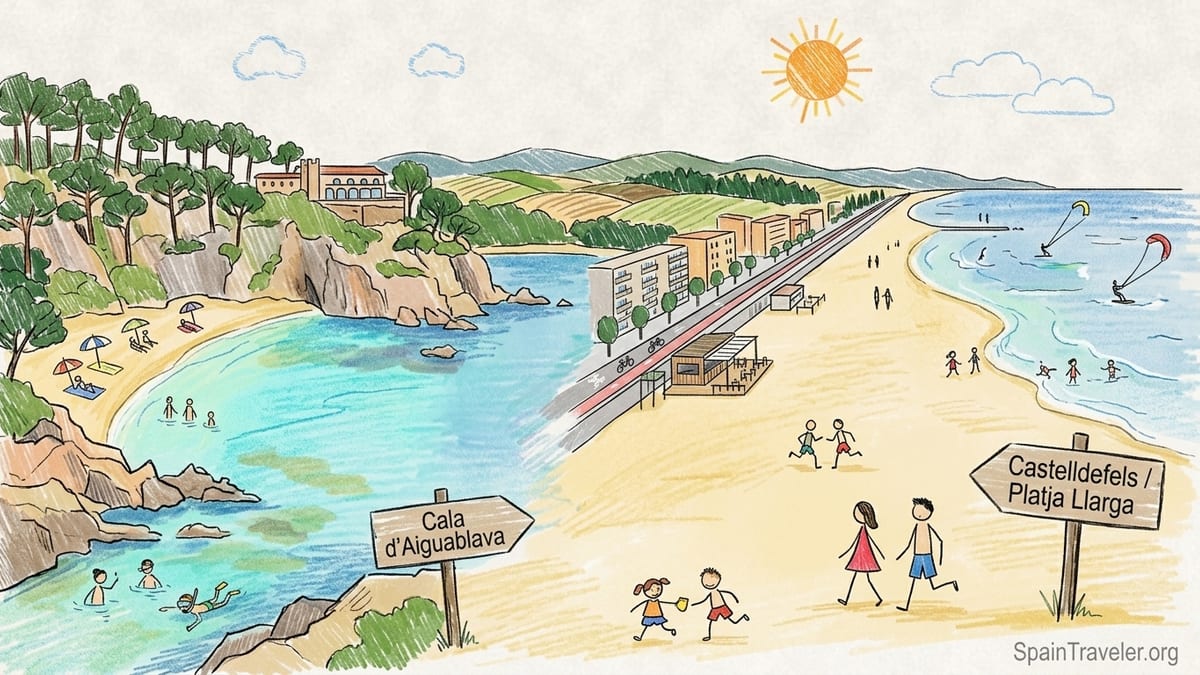
Cala d’Aiguablava, Begur: Clear-Water Coves and Easy Swimming
On the Costa Brava, Cala d’Aiguablava is the place I return to whenever I want to show someone what “blue water” really looks like. The cove sits under pine-covered cliffs just below the Parador de Aiguablava, with a short arc of fine golden sand and water that stays a luminous turquoise on bright mornings. Local tourism information describes the beach as shallow, with weak waves and very clear water, which matches exactly what I have found in repeated visits between June and September. I normally wade straight in and can still stand comfortably at ten to fifteen meters from shore, which makes it ideal for cautious swimmers and children.
For snorkeling, Aiguablava rewards slow exploration right and left along the rocky edges of the bay. The sand in the middle is pale and clean, but the life is on the rocks, where I have floated above shoals of small fish and watched people diving down between boulders. The seabed drops off more steeply near those rocks, so confident swimmers will enjoy it more, but you never feel exposed to swell because the headlands keep the cove very sheltered. This is one of the few Costa Brava beaches where I regularly spend a full day, from mid-morning until the late-afternoon shadows reach the back of the sand.
Facilities matter here, and Aiguablava is well set up. There are seasonal lifeguards, toilets and showers, and a handful of bars and restaurants directly behind the beach, including a seafood restaurant that serves grilled fish and rice dishes within a few steps of the sand. The parking area above the cove is small for such a famous spot, and in high summer it usually fills by mid-morning. When I do not arrive early, I park higher on the hill and descend on foot, which takes about ten minutes on a paved road. Shade in the middle of the day is scarce unless you rent umbrellas or hug the cliff at the back, so I always bring a decent beach umbrella when I plan to stay more than a couple of hours.
What Aiguablava does best is gentle swimming and long, lazy family days with a side of coastal walking. The GR-92 path passes close by, and I have combined a morning hike from neighboring coves with an afternoon here more than once. I would not come for nightlife and I avoid the peak August weekends, when the towels and sunbeds touch and every table at the beach restaurants is booked, but for calm, clear water and an accessible Costa Brava cove that still feels scenic, this is the beach I keep recommending and personally revisiting.
Platja de Castell, Palamós: Wild-feeling Sand and Coastal Paths
A short drive down the coast from Begur, Platja de Castell is where I go when I want a bigger canvas than a cove but still crave a natural setting. Local tourism boards describe Castell as one of the last large, undeveloped beaches on the Catalan coast, framed by pine forest and fields rather than tower blocks. On arrival, that matches what you see: a wide curve of pale sand, about several hundred meters long, backed by a low dune and a fringe of trees instead of apartments. The sand is fine enough for comfortable bare feet, but firm enough near the waterline to walk or jog on without sinking in deeply.
The water here deepens more gradually than in many Costa Brava coves, though not as slowly as on the long beaches near Tarragona. On calm days I have had waist-deep water after walking ten to twenty meters out, with soft waves that are easy to bob over. After a tramuntana or levante wind, the waves can become choppy and less friendly for small children, but even then the beach has a forgiving slope and no sudden drop-offs where I usually swim. Castell is not a top-tier snorkeling spot compared with rocky coves, but there are low cliffs and smaller coves just to the north and south along the coastal path where I have found clearer water and rockier seabeds for masks and fins.
Facilities are more limited than in urban beaches, which is part of the appeal. There is a paid parking area set back from the shore, a couple of seasonal beach bars, and basic showers, but no long promenade or dense strip of restaurants. In summer, the parking fee is a real line item, and by late morning cars queue at the access road, so I have learned to arrive before 10:00. Shade comes from the pines near the back of the sand and from personal umbrellas closer to the water. On one July trip I spent about six hours here, including a lunch break at the beach bar and a late afternoon walk along the GR-92 to small neighboring coves, and never felt crowded in the way I do on many city beaches.
Platja de Castell is especially good for days that mix swimming and scenic walking. The coastal path climbs away at each end of the beach, delivering views of the sea, small boat moorings and rocky inlets that give a taste of the Costa Brava’s famous coves without committing to tiny strips of sand. I would not choose Castell if you want built-up nightlife or restaurant-hopping directly on the waterfront, but when I think of a “long sandy day” on the Costa Brava that still feels rooted in nature, this is the place I would happily drive back to.
La Barceloneta and Somorrostro, Barcelona: City Beaches I Use but Rarely Love
Barcelona’s waterfront is often the first contact many travelers have with the Catalan coast. I have lived in the city and still swim regularly at La Barceloneta and the adjacent Somorrostro section, classified by local authorities as regenerated urban beaches with imported sand and breakwaters. The sand is medium to coarse, more compact and slightly gravelly compared with natural coves further north, which is comfortable enough for a towel but less pleasant for long barefoot walks. The artificial origin of much of the sand and the ongoing coastal engineering work are well documented, and you feel that underfoot.
The water here deepens more quickly than on many suburban beaches. On average days I find myself in shoulder-deep water by only a few steps beyond the shorebreak. Waves tend to be small, since the Mediterranean does not generate ocean-sized swell, but the shape of the seabed and the influence of storms mean short, steep waves are common and can knock over young children. On red-flag days authorities may even close the beach to bathers when the waves build. I have swum here dozens of times, usually for short dips of 30 to 60 minutes rather than full beach days, and the comfort of the swim can change markedly with rainfall and wind, including occasional days when jellyfish or floating litter become a nuisance.
Facilities and urban life are where Barceloneta and Somorrostro excel. There is a long, wide promenade with separate lanes for walkers and cyclists, plenty of municipal showers and toilets, and a dense strip of chiringuitos, tapas bars and ice cream stands. In recent years, drink prices at the temporary bars on the sand have generally reflected city-center rates, and I now treat them more as a sunset drink option than as an affordable lunch spot. Metro and bus connections mean you can go from a Sagrada Família visit to a swim in under an hour, and I often come down for an early-morning dip before work in shoulder seasons when the beach is almost empty.
These are not beaches I would recommend for those chasing pristine sand or quiet. In high summer the front rows of towels sit almost edge to edge, street hawkers work the sand with cold drinks and trinkets, and theft is a recurring topic in local news. I continue to use Barceloneta and Somorrostro because they are convenient and genuinely lively, and for the pleasure of walking or running along the promenade at sunrise, but when friends ask where to base themselves for a classic Catalan beach holiday, I advise treating these as half-day urban experiences rather than anchors for a week-long stay.
Castelldefels: Wide City Escape on the Costa Barcelona
About twenty minutes by commuter train from central Barcelona, Castelldefels offers a very different beach feel from the compact bays of the Costa Brava or the crowded sands of Barceloneta. The main beach is a long, open strip of fine, light-colored sand stretching for several kilometers south of the town. Each time I have visited, the first impression is of space. Even on peak July weekends there is normally room to spread out, and I have never felt the towel-to-towel pressure that defines central Barcelona in high summer.
The water here is shallow for a long way out, similar to parts of the Costa Daurada. Waist-deep water may be twenty to thirty meters from the shore, and small waves lap in rather than breaking abruptly. This makes Castelldefels one of the more comfortable places near Barcelona for families with small children or for anyone who prefers to wade and float rather than dive into deeper water immediately. On windy days, the same shallow, open bay attracts kitesurfers and windsurfers, so there can be more chop and activity in designated sports areas, but the main swimming zones remain manageable for casual bathers.
In terms of facilities, Castelldefels sits in the middle ground between a city beach and a resort town. There is a paved promenade with bike lanes and a mix of apartment blocks, small hotels and beach bars along the front. I have found a good range of places for a mid-range lunch, from seafood restaurants to simple burger and pizza spots, many of them with outdoor terraces facing the sea. Showers, toilets and seasonal lifeguards are in place, and there is ample street parking and paid lots behind the seafront, although in August the streets closest to the beach can fill by late morning.
I use Castelldefels for relaxed, long sandy days when I want an easy escape from Barcelona without committing to a long drive. It works well for family swimming, casual games on the sand and unhurried beachfront meals. What it does not deliver is the visual drama of rocky coves or the dense nightlife of Barceloneta. If you are staying in the city and want a more spacious, softer version of an urban beach day, this is where I would suggest spending at least one full afternoon, and it is a place I have willingly returned to several times.
Platja Llarga, Tarragona: Shallow Sands on the Costa Daurada
Moving south to the Costa Daurada, Platja Llarga near Tarragona is the beach where I have spent some of my longest uninterrupted days. Official descriptions give it around 3 kilometers of length and around 30 meters of width, which aligns with the feeling on the ground of a very long, straight ribbon of fine sand. The sand itself is softer and slightly more golden than the urban beaches around Barcelona, and the beach remains relatively low-rise and framed by pines and low dunes along much of its length.
The defining feature of Platja Llarga is the shallow water. On calm summer days I have walked out more than thirty meters from the shore and still been in chest-deep water. The waves are usually small, with long, gentle lines that are easy to step through, and there are no sudden shelves in the swimming zones where I usually go in. For families with small children or for nervous swimmers, it is one of the most forgiving stretches of sea I have used in Catalonia. Snorkeling possibilities are limited on the open central section, but at either end where rocks begin to appear, there is more interest under the surface.
Facilities are sufficient for a comfortable full day without overpowering the natural feel. There are seasonal chiringuitos set up on the sand, showers and toilets at access points, and a line of campsites and small accommodations set back from the beach. I have driven here several times and parked in the areas behind the dunes, which are usually paid in high season but still reasonably close to the sand. The lack of a continuous built-up promenade makes evening strolls quieter than in Barcelona or Sitges, and there are fewer late-night venues directly on the beachfront.
Platja Llarga is excellent for long sandy days that revolve around safe swimming, paddleball on the wet sand, and unrushed lunches at simple beach restaurants. I have spent entire days here from late morning until early evening without getting bored, precisely because there is little distraction beyond the sea, the sky and the occasional stand-up paddleboarder gliding by. If you are looking for dramatic coves or varied restaurants at your doorstep, this will feel too plain. For a classic Costa Daurada experience of shallow, family-friendly water in a largely natural setting, it is a beach I fully intend to keep returning to.
Beaches I Would Not Hurry Back To and Why
Not every Catalan beach I have visited has made me want to return. It is important to be specific about why, because many of these places are good in some contexts and frustrating in others. The most obvious example from my own experience is high summer at Barcelona’s central beaches. While I still use Barceloneta and Somorrostro for quick swims, I avoid them in July and August for full days. The dense crowds, frequent reports of petty theft, higher drink prices on the sand and occasional issues with water quality after heavy rain all add up to an experience I find stressful rather than relaxing if I stay more than an hour or two.
On the Costa Brava, there are a few small coves near heavily built-up resort towns that I have tried once and not felt compelled to revisit in peak season. These coves sometimes combine steep access lanes, very limited parking, and dense clusters of rental umbrellas that leave little room for anyone arriving with their own gear. In one case near Lloret de Mar, I spent less than ninety minutes on the beach before giving up on a swim because the nearshore water felt cloudy and boat traffic crowded close to the swimming area. Returning out of season might change that impression, but based on that firsthand visit in August, I have since directed my time to other spots like Aiguablava and Platja de Castell.
Even beaches I generally like can have conditions that put me off repeating a particular pattern. At Aiguablava, for example, I would not choose to arrive by car after 11:00 on a sunny August weekend again. One year, I spent almost forty minutes inching down the access road only to be turned back by a full parking area and ended up abandoning the plan entirely. I now treat the cove as a place for early starts or shoulder-season visits, when my actual time on the sand aligns more reasonably with the effort of reaching it.
Recognizing these limits has sharpened my appreciation of the beaches I do return to. When I describe Platja Llarga as somewhere I have comfortably spent entire days, or Castelldefels as a reliable escape from crowded city sands, that judgment is colored by the contrast with places where logistics, crowding or comfort pushed me to cut visits short. For travelers planning a Catalan coastal trip, the message is simple: the best beach for you is not only about sand and water, but also about how long you genuinely want to stay once you are there.
The Takeaway
Across Costa Brava, Costa Barcelona and the Costa Daurada, the beaches I most want to revisit share a few common traits. They have clear roles, whether that is calm coves for snorkeling and gentle swims, or long, shallow bays for family-friendly days. They balance facilities with a sense of place, offering enough showers, lifeguards and food options to make a full day realistic without completely surrendering their shoreline to concrete. Most importantly, they are places where I have happily stayed for hours and left already plotting a return.
If you want cove drama and clear water, Costa Brava spots like Cala d’Aiguablava deliver, provided you respect their limited parking and high-season crowds. For breathable, long sandy days within easy reach of Barcelona, Castelldefels and Platja Llarga near Tarragona offer forgiving water depth and more space to spread out. City beaches such as Barceloneta and Somorrostro work best as half-day urban experiences for people-watching, short swims and waterfront strolling, rather than as the centerpiece of a week-long beach holiday.
Official tourism bodies often frame the Catalan coast as a contrast between wild-feeling coves and broad, accessible sands, and from personal experience that divide is real. The trick for travelers is to decide not just which coastline appeals on paper, but which specific beaches fit the way you like to spend your time. If you picture yourself walking a coastal path with a small cove as your reward, you will likely favor Costa Brava. If your ideal day adds up to a flat stretch of sand, shallow water and easy logistics for a family group, the Costa Daurada might be the better anchor. Costa Barcelona bridges those worlds by adding fast public transport and lively promenades.
My own return list is a mix: Aiguablava for clear, sheltered water and simple seafood; Platja de Castell for long swims framed by pines and coastal paths; Castelldefels for wide, accessible sand close to the city; Platja Llarga for unhurried, shallow-water days in a softer landscape. Your list will be different, but grounding your choices in firsthand-style realities like depth, shade, facilities and crowding will help you find the Catalan beaches you will genuinely want to come back to, rather than just tick off once.
FAQ
Q1. Which Catalan beach is best for families with small children? Platja Llarga near Tarragona and Castelldefels on the Costa Barcelona offer very shallow water, soft sand and space to spread out, which I have found ideal for young children and cautious swimmers.
Q2. Where can I find the clearest water for swimming and snorkeling? On beaches I have personally visited, Cala d’Aiguablava near Begur stands out for very clear, calm water in a sheltered cove, especially around the rocky edges of the bay, and nearby coves along the same stretch of Costa Brava coastline also offer good visibility.
Q3. Are Barcelona’s city beaches good enough for a full beach holiday? In my experience, Barceloneta and Somorrostro work well for half days and quick swims thanks to their promenade, bars and easy access, but for a longer beach-focused stay I prefer to base myself on the Costa Brava or Costa Daurada and treat the city beaches as occasional outings.
Q4. How early should I arrive to park at popular Costa Brava coves? At Aiguablava and similar small coves, I now aim to arrive by car before 10:00 in July and August after past experiences of crowded roads and full parking areas when I tried to come closer to midday.
Q5. Is snorkeling worthwhile on the long sandy beaches of the Costa Daurada? On the central stretches of Platja Llarga and similar beaches, snorkeling is limited because of the sandy seabed, but at the rocky ends of these beaches and in nearby coves there is more to see, and I treat snorkeling there as a short diversion rather than the main purpose of the day.
Q6. What should I expect to pay at beach bars on urban Catalan beaches? On central Barcelona beaches in recent seasons I have encountered drink and snack prices that mirror other busy city-center venues, so for budget-conscious days I often bring my own water and snacks and save bar or restaurant visits for a single meal or sunset drink.
Q7. Are lifeguards present on the beaches you recommend? On the main beaches described here, including Aiguablava, Castelldefels, Barceloneta and Platja Llarga, I have typically seen seasonal lifeguards during the core summer months, although exact dates and hours can vary year to year, so I always check local signage and treat the sea with caution.
Q8. How do crowd levels compare between Costa Brava and Costa Daurada in summer? In my experience, small Costa Brava coves can feel crowded very quickly because of their limited size, while long Costa Daurada beaches like Platja Llarga and some Costa Barcelona sands like Castelldefels absorb more people before feeling packed, even though car parks and access roads can still be busy at peak times.
Q9. Can I combine coastal walking with beach days on the Catalan coast? Yes, beaches such as Platja de Castell and Cala d’Aiguablava lie on or close to the GR-92 coastal path, and I have often used them as swimming anchors for half-day hikes between coves, which gives a good balance of exercise and time in the water.
Q10. What is the best time of day for a quieter swim on popular beaches? From my visits, early mornings and later afternoons are noticeably calmer on most Catalan beaches, with softer light and fewer people on the sand, so I often plan main swims before 10:00 or after 17:00 in July and August, leaving the busiest hours for lunch or shade.