


Spain offers two powerhouse island groups for sun-seeking travelers: the Balearic Islands in the Mediterranean and the Canary Islands in the Atlantic. Both archipelagos deliver beaches, resorts and easy package deals, yet the experience on the ground feels very different. Choosing between a Mallorca or Ibiza style holiday and a Tenerife or Lanzarote escape can shape everything from the color of the sand under your feet to your budget in high season or winter.
Balearic vs Canary Islands at a Glance
The Balearic Islands sit in the western Mediterranean off Spain’s east coast and include Mallorca, Menorca, Ibiza and Formentera. They are compact, relatively close to mainland hubs like Barcelona and Valencia, and have a distinctly Mediterranean feel: pine-fringed coves, historic stone towns and a very seasonal summer buzz. In practice, that means beach clubs in Ibiza that open with fanfare in May and close again by late September, and resorts on Mallorca’s Bay of Alcudia that shift from sleepy to packed in a matter of weeks.
The Canary Islands lie much further south, roughly level with Morocco, in the Atlantic Ocean. Tenerife, Gran Canaria, Lanzarote and Fuerteventura are the best known, backed by smaller and wilder islands such as La Palma and La Gomera. This geography delivers bigger Atlantic swells, volcanic landscapes and a reputation for year-round sunshine. In January, when many Balearic beach bars are boarded up, visitors in shorts wander around Playa de las Américas in Tenerife or Costa Teguise in Lanzarote in warm afternoon sun.
Tourism profiles differ as well. The Balearics lean into Mediterranean lifestyle and culture alongside tourism, with historic centers like Palma’s cathedral quarter or Ciutadella in Menorca drawing as much interest as the nearest cove. The Canary Islands market themselves aggressively as climate-driven destinations, with official data showing that beach weather and value are the main reasons visitors choose these islands. In real terms, that means more all-inclusive resorts and winter charter flights, especially from northern Europe, heading to Tenerife, Gran Canaria and Lanzarote.
If you imagine lazy lunches by marinas, boutique fincas and quick hops to Barcelona, the Balearics will feel familiar and European. If you picture black-sand bays, desert dunes and a near-guarantee of t-shirt days in February, the Canaries come closer to a mini long-haul experience without leaving Spain.
Weather and Best Time to Travel
Weather is where the two archipelagos diverge most clearly. In the Balearics, summer is hot and dry, with July and August daytime highs on Mallorca and Ibiza usually in the low 30s Celsius and sea temperatures warm enough for long swims. Official climate guides put typical “beach season” on Ibiza from about May to November, with comfortable water and long daylight hours through early autumn. By contrast, winters can be cool and occasionally wet; in January in Palma, daytime highs tend to sit in the mid-teens Celsius, pleasant for sightseeing but not for reliable sunbathing.
In the Canary Islands, particularly Tenerife, Lanzarote and Gran Canaria, temperatures are mild all year. Tourism data based on long-term weather records shows average daytime highs on Tenerife’s southern coast around 21 to 23 degrees Celsius even in January and February. That means you can sit on Playa del Duque in January in a t-shirt while looking up at snow-capped Mount Teide, a combination that is impossible in the Balearics. The trade-off is that the Atlantic can feel cooler than the Mediterranean, and evenings, especially in the windier islands like Lanzarote and Fuerteventura, may require a light jacket even in summer.
For classic summer holidays, both island groups work well between June and early September. Families tied to school vacations will find crowded but reliably warm coves in northeast Mallorca and busy resort strips in south Tenerife during this time. For shoulder seasons, the Balearics shine in May, June, September and early October, when the water holds summer heat but the crowds thin. Hikers in particular time trips to Mallorca’s Serra de Tramuntana or Menorca’s coastal path in these months, when days are warm but not oppressive.
For true winter sun, roughly November to March, the advantage tilts decisively toward the Canary Islands. Resorts around Maspalomas in Gran Canaria and Costa Adeje in Tenerife stay busy with long-stay visitors escaping northern winters, while much of the Balearic coast shifts into low gear, with seasonal hotels and beach clubs closed and some ferry schedules reduced. If you want Christmas morning on a sand dune or a February half-term pool break, the Canary Islands are the safer bet.
Beaches, Landscapes and Outdoor Activities
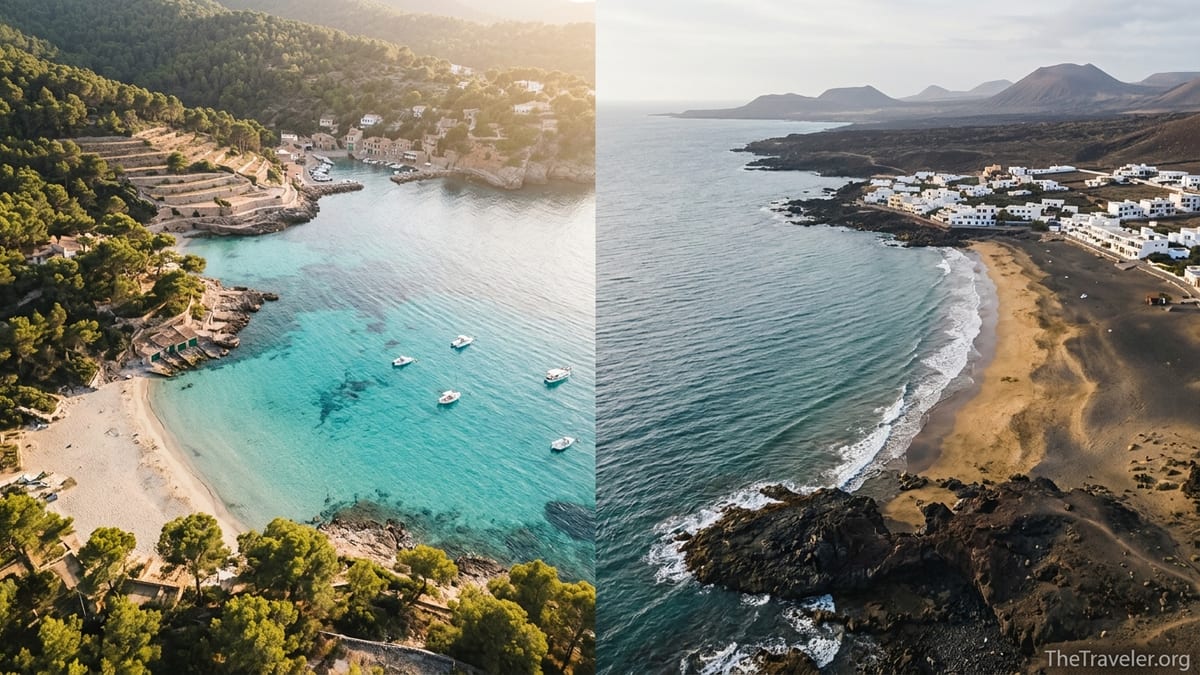
The Balearics are known for picture-postcard Mediterranean beaches: pale sand, turquoise water and pine trees framing sheltered coves. On Mallorca, examples include Cala Mondragó and Cala Llombards, reached by short drives followed by strolls down to almost lagoon-like bays. Menorca is full of similar scenes, with coves like Cala Macarella reached by dusty footpaths and attracting small-boat flotillas on summer afternoons. Ibiza mixes family-friendly beaches like Cala Llonga with rocky, sunset-facing spots such as Cala Comte, where people gather in late evening around simple beach bars.
The Canary Islands offer a much wider visual range. On Tenerife, yellow-sand beaches like Playa de las Teresitas share the island with black-sand stretches at Puerto de la Cruz. Gran Canaria has urban beaches such as Las Canteras, backed by a promenade of cafés and surf schools, plus the famous rolling dunes at Maspalomas that feel closer to a desert than a standard resort. Lanzarote combines pale, wind-gnawed sandy coves around Papagayo with dark volcanic rock pools. On Fuerteventura’s south coast, long arcs of almost Caribbean-looking sand run for kilometres, interrupted only by low dunes and the occasional kite-surfer.
Hiking and outdoor pursuits also contrast. In the Balearics, the standout is the Serra de Tramuntana on Mallorca, a World Heritage-listed mountain spine with stone villages like Deià and Valldemossa linked by well-marked trails. Spring and autumn see walkers tackling day hikes between Sóller and Fornalutx or multi-day routes on the GR-221 long-distance path, often combined with stays in rural fincas. Menorca’s Camí de Cavalls, a historic path looping the island, allows visitors to hike short coastal sections in morning cool before swimming in nearby coves.
The Canary Islands tilt towards more dramatic volcanic hiking. Tenerife’s Mount Teide National Park is the most obvious example, where visitors ride a cable car to high viewpoints or, with permits, hike to the summit for sunrise. Lanzarote’s Timanfaya National Park, with its lava fields and dormant craters, offers guided walks through landscapes that resemble another planet. On La Palma and La Gomera, networks of trails traverse laurel forests and ancient ravines, attracting walkers outside the hottest summer weeks. The trade-off is exposure: many Canary hikes are more open and wind-swept compared with shaded Balearic paths.
Resorts, Nightlife and Atmosphere
In the Balearics, resorts and nightlife are tightly tied to the Mediterranean summer season. Ibiza remains a global clubbing brand, with superclubs drawing international DJs from around May opening weekends through late September. Areas like San Antonio and Ibiza Town fill with younger crowds and music tourists, while quieter corners such as Santa Eulària des Riu still offer upscale beachfront hotels and late-night cocktail bars minus the all-night bass. On Mallorca, the contrast between party-focused Magaluf and family-oriented Alcudia or Port de Pollença is stark, though even in quieter towns, a long waterfront paseo lined with tapas bars and ice cream parlours gives evenings a gentle buzz.
The Canary Islands often feel more resort-driven and less urban. In Tenerife, south-coast zones such as Playa de las Américas, Los Cristianos and Costa Adeje have a high density of hotels, apartment complexes and all-inclusive resorts. Nightlife here is more pub-and-bar focused than club culture, with British-style sports bars, karaoke nights and casual restaurants dominating promenades. Gran Canaria’s Playa del Inglés and Meloneras follow a similar pattern, though Las Palmas, the island’s capital, offers a more local scene with tapas streets and a livelier cultural calendar tied to the city.
On Lanzarote and Fuerteventura, the vibe is generally calmer. Puerto del Carmen and Playa Blanca in Lanzarote or Corralejo in Fuerteventura offer bars and live music but rarely approach Ibiza-level intensity. Instead, evenings often centre on long terrace dinners overlooking the ocean and early starts for windsurfing or excursions the next day. Visitors who want nightlife but not superclub prices may find this model attractive, especially outside peak school holiday weeks.
For travelers sensitive to overtourism, it is worth noting that both archipelagos experience pressure in peak months, with housing and infrastructure debates common in local media. As a guest, you feel this most in the form of crowded beaches in August, busy roads into hotspots like Sóller’s valley or the Teide cable car, and high demand for restaurant reservations in resort strips on weekend evenings. Planning shoulder-season travel or basing yourself slightly away from the busiest resort cores can significantly soften the experience.
Costs, Flight Times and Practicalities
From northern Europe and the UK, flight times to the Balearic Islands are generally shorter, often around two to two and a half hours from hubs like London to Palma de Mallorca. Flights to the Canary Islands usually take closer to four to four and a half hours, reflecting their more southerly Atlantic position. For travelers departing from North America and connecting in Madrid or Barcelona, this difference is less noticeable in the context of a long-haul trip, but it can still matter for families with small children or for long weekends.
In terms of on-the-ground prices, both regions sit above the average cost of inland Spain but remain relatively aligned with each other. Recent cost-of-living data for the Balearics shows a typical domestic draft beer around three to four and a half euros in many bars, with supermarket beers under one euro and small café beers from roughly one and a half euros in local neighbourhoods. Restaurant guides for Mallorca suggest main courses at mid-range seaside restaurants clustering roughly between 15 and 25 euros, while a three-course meal for two at a mid-range venue averages around 60 euros before drinks. Similar figures appear in major Canary resorts, where long-established competition between pubs and restaurants helps keep everyday holiday spending relatively predictable.
Accommodation prices vary more by season than by archipelago. On Ibiza and parts of Mallorca, July and August hotel prices spike sharply, especially for boutique stays in fashionable areas like Ibiza Town’s old quarter or Mallorca’s southwest coast. Budget travelers sometimes switch to Menorca or inland Mallorca villages during these months to hold costs down. In the Canary Islands, pricing is more influenced by winter demand; January and February can be peak-priced in Tenerife South and Gran Canaria, while May or late November often bring better value package deals and hotel offers.
Car hire and transport costs are broadly comparable. In the Balearics, road networks are shorter and you can cross Mallorca by car in about an hour, making it easy to base in one spot and day-trip to different coves. In the Canary Islands, distances are longer on Tenerife and Gran Canaria, and volcanic terrain can mean winding roads and microclimates; however, public buses connect most main resorts to capitals like Santa Cruz de Tenerife or Las Palmas, and many visitors rely on hotel shuttles or organized excursions rather than renting a car for an entire stay.
Families vs Couples, Summer vs Winter
Both island groups cater well to families, but the type of holiday differs. In the Balearics, families often gravitate towards Mallorca’s Alcudia Bay, Cala Millor or the north coast for shallow beaches, kids’ clubs and waterparks. Many resorts here offer half-board rather than full all-inclusive, which encourages families to explore local restaurants in nearby towns. Menorca, with its slow pace and calm coves like Cala Galdana, has a strong reputation among families with younger children who prefer low-key evenings and short transfers from small airports.
The Canary Islands lean heavily into all-inclusive family resorts, especially around Costa Adeje and Playa de las Américas in Tenerife, Maspalomas in Gran Canaria and the main resorts of Lanzarote. Large properties here commonly offer kids’ pools, entertainment programmes and buffet dining, which can help keep budgets predictable for week-long stays in school holidays. Beaches like Playa de las Vistas in Tenerife or Playa Blanca in Lanzarote are wide and gently shelving, making them suitable for children learning to swim in the sea, though occasional Atlantic swells mean red-flag days are more common than in sheltered Balearic coves.
For couples, the Balearics offer romance through old-town ambiance and countryside stays. A weekend wandering Palma’s Gothic quarter followed by dinners in converted townhouses, or a rural hotel in Mallorca’s interior with stone terraces and olive groves, ticks the classic Mediterranean escape box. Ibiza can be surprisingly romantic away from the clubbing zones, with boutique hotels in the north and sunset dinners at quiet beach restaurants. In the Canary Islands, couples often choose adult-only hotels in Costa Adeje or smaller design-led properties in places like Lanzarote’s La Geria wine region, combining pool days with drives through volcanic scenery and excursions to vineyards.
Seasonality shapes these choices. Couples not tied to school calendars may find late September in the Balearics ideal: warm seas, quieter resorts and more adults-only atmospheres as families return home. Families, by contrast, might favour an Easter or Christmas break in the Canary Islands, when children can use pools and beaches in mild temperatures while European mainland cities are still in winter coats.
Mediterranean vs Atlantic: Which Vibe Suits You?
Beyond measurable factors like temperature and price, the choice often comes down to the feel of Mediterranean versus Atlantic travel. The Balearics deliver a classic Mediterranean aesthetic: terracotta roofs, stone churches overlooking harbours, fishing boats bobbing under city walls and long, late dinners that blend into the night. A day might start with coffee in Palma’s old quarter, continue with a drive to a cove like Cala Deià for a seafood lunch, and end with a walk along a promenade as yachts light up offshore. It is easy to pair a Balearic stay with cultural city breaks in Barcelona or Valencia on the same trip.
The Canary Islands feel more outward-facing and elemental. Landmarks like Tenerife’s Mount Teide or Lanzarote’s lava fields remind you that these are volcanic islands sitting in the open Atlantic, closer to the Sahara than to Madrid. A typical day might involve watching sunrise over volcanic cones, driving through cactus-studded plains to surf lessons on a windy beach, then finishing with grilled fish on a simple seafront terrace. Architecture outside the historic capitals is more modern and low-rise, with many resort areas purpose-built from the late twentieth century onward.
Sea conditions differ too. The Mediterranean around the Balearics is usually calmer in summer, ideal for paddleboarding, family boat trips and long swims, though jellyfish can appear in some coves when winds shift. The Atlantic around the Canary Islands brings more consistent surf and stronger currents, which appeals to surfers and windsurfers but means paying attention to flags and lifeguard advice. Even in sheltered spots like Puerto del Carmen or Costa Adeje, waves are more energetic than many Balearic coves, which some visitors find more exciting and others less relaxing.
For travelers dreaming of a “European summer” scene with beach clubs, chic marinas and proximity to mainland cultural cities, the Balearic Islands are the natural fit. For those wanting reliably mild winter temperatures, dramatic volcanic scenery and a slightly more off-mainland feel while staying within Spain, the Canary Islands tend to win out.
The Takeaway
If you strip the decision down to essentials, the Balearic Islands are the better choice for peak-summer Mediterranean holidays focused on coves, culture and nightlife, while the Canary Islands are stronger for winter-sun escapes, volcanic hiking and year-round resort reliability. Mallorca, Ibiza, Menorca and Formentera suit travelers who value historic town centers, short flights from European hubs and soft-sand coves framed by pines. Tenerife, Gran Canaria, Lanzarote and Fuerteventura reward those willing to fly a bit farther for big Atlantic skies, a high chance of December sunbathing and landscapes that feel distinct from mainland Europe.
In practice, budget-conscious families often lean toward the Canary Islands for winter or Easter all-inclusive deals, while couples and groups of friends chasing that Mediterranean summer feeling choose the Balearics between May and October. Both archipelagos offer quieter corners and rural stays if you step away from the biggest resorts, and both reward travelers who visit outside the absolute peak dates. Think first about when you plan to travel, how important nightlife is and whether you picture your ideal beach as a calm cove or an open Atlantic bay. From there, the right Spanish islands usually reveal themselves quickly.
FAQ
Q1. Which is better overall, the Balearic Islands or the Canary Islands?
The Balearic Islands are better for classic Mediterranean summers with coves and culture, while the Canary Islands are stronger for winter sun, volcanic scenery and year-round resorts.
Q2. Are the Balearic Islands or Canary Islands cheaper?
Everyday costs for food and drinks are broadly similar, but the Balearics can be more expensive in July and August, while the Canaries are priciest in peak winter and spring holiday weeks.
Q3. Which islands have the best beaches?
For sheltered turquoise coves, the Balearics shine, especially Mallorca, Menorca and Formentera. For long, open beaches and some black or golden volcanic sands, the Canary Islands stand out.
Q4. Where is the weather better in winter?
The Canary Islands have a clear advantage in winter, with daytime temperatures often around 20 degrees Celsius or more, while the Balearics are cooler and more changeable from November to March.
Q5. Which is better for nightlife, Ibiza or Tenerife?
Ibiza offers world-famous superclubs and a concentrated summer party scene. Tenerife’s nightlife is more year-round but leans toward bars and pubs rather than global club brands.
Q6. Are the Balearic Islands or Canary Islands better for families?
Both work well. Balearics offer many family-friendly coves and half-board hotels, while the Canaries have more large all-inclusive resorts and winter-friendly pools and beaches.
Q7. Which islands are best for hiking?
Mallorca’s Serra de Tramuntana and Menorca’s coastal paths are excellent, but for dramatic volcanic routes and high-altitude walks, Tenerife, La Palma and Lanzarote in the Canaries have the edge.
Q8. How much longer is the flight to the Canary Islands?
From many northern European cities, flights to the Balearics take around two to two and a half hours, while flights to the Canaries are typically closer to four hours or a little more.
Q9. Can I swim in the sea all year in the Canary Islands?
The sea is cooler in winter but many people still swim, especially in sheltered bays. It is generally comfortable from late spring to autumn, with hardy swimmers in the water year-round.
Q10. If I want both culture and beaches, which should I pick?
The Balearics offer stronger combinations of historic towns and nearby coves, such as Palma with its cathedral and nearby beaches. The Canaries offer culture mainly in their capitals, balanced with more nature-focused excursions.