


Food and wine are among the clearest ways to understand Andalusia. Across this large region of southern Spain, a simple plate of fried fish or a glass of pale sherry tells you whether you are on the Atlantic coast, in the olive groves of the interior, or in the hillier east. This guide looks at Andalusian gastronomy as a whole, explaining what to eat and drink and how flavors shift between western, central, coastal and eastern areas, with a special focus on wine, olive oil and tapas culture.
The Building Blocks of Andalusian Cuisine
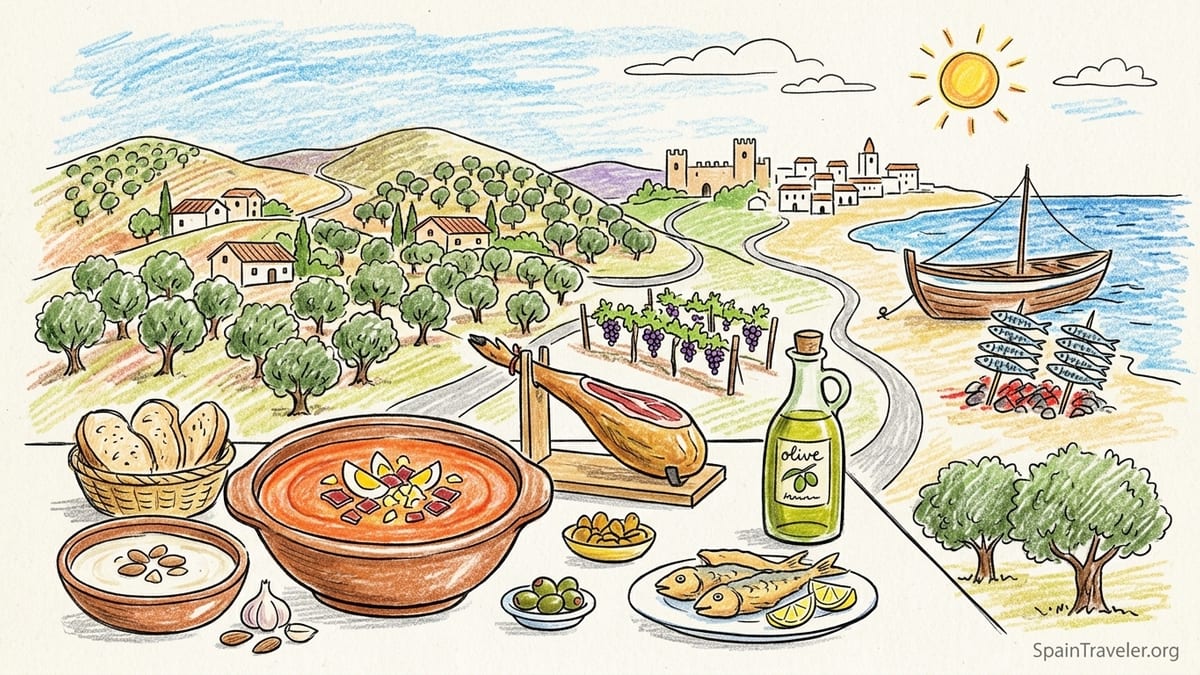
Andalusian cooking is rooted in a Mediterranean diet based on olive oil, cereals, pulses, vegetables, fish, nuts and modest amounts of meat. The region is one of the world’s great olive oil producers, with provinces such as Jaén and Córdoba blanketed in olive groves. Many bars cook almost everything in local extra virgin olive oil, from simple fried potatoes to elaborate stews, so the flavor of the oil itself is central to the cuisine.
History has layered different influences onto this base. Phoenicians and Romans introduced techniques for salting and preserving fish along the Atlantic, while the long period of Al-Andalus brought spices, citrus, almonds and new irrigation, which still shapes orchards and vegetable gardens today. This is why cold soups such as gazpacho, ajoblanco and salmorejo, made with bread, olive oil and seasonal produce, are standard on menus from spring through autumn rather than niche specialties.
Across the region there is a clear difference between coastal and inland cooking. On the coasts of Cádiz, Huelva, Málaga, Granada and Almería, seafood dominates: anchovies, sardines on skewers over beach coals, tiny puntillitas (fried baby squid), prawns from Sanlúcar and tuna from the Strait of Gibraltar. Inland, where fresh fish was historically scarce, cooks relied more on pulses, pork and offal. Dishes like rabo de toro (oxtail stew), pringá (a rich mix of slow-cooked meats) and chickpea stews are typical of cities like Córdoba and Seville.
Despite these variations, certain products unify Andalusia. Jamón ibérico from the dehesa oak woodlands of Huelva and Córdoba appears on bar counters from Almería to Huelva. Simple olives dressed with garlic and herbs are often the first thing to arrive at the table with your drink. Local wines, ranging from dry fino sherry to sweet Málaga moscatel, are part of everyday drinking culture rather than reserved for special occasions.
Western Andalusia: Atlantic Seafood, Sherry and Jamón
Western Andalusia, roughly covering Huelva, Cádiz and western Sevilla, is where the Atlantic Ocean and wine traditions meet. Along the Costa de la Luz, seafood is the star. In Cádiz province you will see freidurías, specialist fried-fish shops, offering paper cones filled with pescaíto frito: small fish like anchovies, chocos (cuttlefish), cazón en adobo (marinated dogfish) and boquerones. Portions often cost in the range of 8 to 15 euros depending on weight and mix, making them an affordable lunch for two to share with a salad and bread.
This is also a key area for almadraba tuna, a traditional trap-fishing method practiced in towns such as Barbate and Zahara de los Atunes. In spring, when the tuna runs are on, many restaurants build special menus around different cuts: ventresca (belly), morrillo (neck) or tarantelo. Visitors interested in food culture sometimes time trips to coincide with local tuna festivals, where tastings and cooking demonstrations explain how little of the fish is wasted.
Inland Huelva and the Sierra Morena marks the start of jamón country. Towns like Jabugo give their name to highly valued jamón ibérico de bellota, produced from acorn-fed pigs raised in dehesa pasture. In practical terms this means that in the west you are more likely to see entire legs of ham hanging behind bar counters, and many menus list different grades of ham by origin and feed. A small ración of top-quality bellota ham can easily cost 18 to 25 euros or more, while more modest jamón serrano will be cheaper but still carefully sliced to order.
On the wine side, western Andalusia is anchored by the Sherry Triangle and by the Condado de Huelva Denomination of Origin. Condado de Huelva, near the Portuguese border, produces dry and sweet white wines, including orange-scented fortified wines, that often appear by the glass in local bars but are less known abroad. Combined with Jerez, Manzanilla de Sanlúcar and the Atlantic seafood, this corner of Andalusia offers one of the most distinctive food-and-wine pairings in Europe.
Central and Inland Andalusia: Olive Oil, Stews and Salmorejo
The central belt of Andalusia, taking in provinces such as Córdoba, Jaén and much of Sevilla’s interior, is defined by olive trees and hearty cooking. Here the landscape is often an uninterrupted mosaic of olive groves, and many small towns have their own cooperative mills. Travelers can visit almazaras during the harvest season, typically from late autumn to early winter, to see olives arriving in trucks, being washed and pressed, and to taste different oils ranging from peppery and green to soft and buttery.
Olive oil shapes both simple breakfasts and long-cooked stews. A classic Andalusian breakfast in Córdoba or Jaén might be toasted bread drizzled generously with local extra virgin oil, sometimes rubbed with tomato pulp and a sprinkle of salt. For lunch, cooks rely on inexpensive cuts of meat, chickpeas and seasonal vegetables to create guisos, slow stews that change across the region. Rabo de toro, once linked to bullfighting cities, is now a restaurant standard, often priced between 14 and 20 euros a portion in mid-range establishments in Córdoba or Seville.
Córdoba is also the homeland of salmorejo, a thicker cousin of gazpacho. Made with ripe tomatoes, stale bread and olive oil and topped with chopped hard-boiled egg and jamón, it appears on virtually every menu in the city, often as a first course or a tapa. In Jaén, a lighter cold salad called pipirrana, featuring tomato, onion, pepper and boiled egg with plenty of olive oil, reflects the summer heat and ready access to vegetables but relatively less seafood compared with the coasts.
Inland meal structure in these areas is traditionally substantial at lunchtime and lighter at night. Restaurants in provincial capitals often serve a menú del día at midday on weekdays, typically three courses with bread and a drink at set prices that might range roughly from 12 to 18 euros. In the evening, people are more likely to go out for tapas or a few shared raciones rather than a full formal dinner, especially in smaller towns where kitchens may close earlier than in big coastal cities.
Coastal Andalusia: Fried Fish, Espetos and Beachfront Tapas
Coastal Andalusia stretches along both the Atlantic and Mediterranean and includes the Costa de la Luz, the Costa del Sol and the lesser-known coasts of Granada and Almería. Seafood variety is high almost everywhere, but there are local signatures that tell you where you are eating. On the Málaga coast, chiringuitos, casual beach restaurants, are famous for espetos: skewers of sardines or other fish arranged in boats filled with sand and grilled over open coals. A simple espeto of sardines might cost around 6 to 10 euros in a typical beach bar, depending on location and season.
Along both the Cádiz and Málaga coasts, fried fish is more than a tourist staple. Families order mixed platters of pescaíto frito to share, sometimes by weight. At busy freidurías you choose fish from a counter, and it is weighed and priced before being fried in very hot olive oil for a crisp but not greasy finish. Common species include boquerones (anchovies), adobo, calamari and small whole fish served bone-in, reflecting a nose-to-tail respect for seafood similar to the region’s approach to pork.
Further east, in Granada and Almería, the coastal zones connect more directly to mountainous inland areas. In practice this means menus often mix fried fish and grilled sardines with hearty inland dishes such as migas, a crumbly dish based on semolina or flour in the east, eaten with chorizo, garlic and peppers. Here you can eat pescaito frito on the seafront at lunchtime, then drive into the Alpujarra hills or the Sierra de los Filabres and encounter cured meats and stews that feel closer to central Spain.
The coast is also where cold soups are at their most refreshing. Gazpacho, ajoblanco made with almonds and garlic, and Málaga’s porra antequerana, a thicker bread and tomato soup related to salmorejo, are standard starters in the heat of summer. Many restaurants on the Costa del Sol and Costa Tropical offer menus translated into several languages, but the underlying dishes remain firmly local, especially when it comes to fish and shellfish sourced from nearby ports.
Eastern Andalusia: Granada, Almería and the Free Tapa Tradition
Eastern Andalusia, especially Granada province and parts of Almería and Jaén, has its own character that shows up on the table. The geography is more mountainous, with the Sierra Nevada and a series of high plateaus, so there is a stronger tradition of hearty winter dishes and cured meats. In mountain villages of the Alpujarra, for example, plates piled with morcilla (blood sausage), chorizo, patatas a lo pobre and fried eggs are common, often accompanied by locally produced wine or beer.
Granada city is known among Spanish travelers for maintaining the custom of a free tapa with each drink in many bars. Order a small beer or a glass of wine and you will usually receive a tapa at no extra charge. The tapa might be something simple such as a small montadito (mini sandwich), a spoonful of stew or some fried aubergine with cane honey. In practice, two or three drinks can add up to a light meal without ordering from the menu, which changes how locals and visitors approach an evening out.
In other parts of Andalusia you should not expect this. In Seville or Málaga you normally pay for tapas, and any small nibble that arrives free is more a gesture than a meal. The free tapa tradition is strongest in Granada and also appears in some towns of eastern Jaén and Almería, particularly in student neighborhoods and older bars. Travelers should be prepared for variations from place to place: one bar may keep generous free tapas, while another a few streets away may only offer olives and a printed tapas list at standard prices.
Eastern Andalusia also has distinct dishes connected to local produce. Almería’s long, sunny growing season supplies tomatoes, cucumbers and peppers across Spain, which helps explain why salads and vegetable-based tapas taste particularly vibrant here. In Granada province, stews with chickpeas, spinach and offal, and sweets with clear Moorish influence, underline that this was one of the last areas of the Iberian Peninsula under Muslim rule. Combined with the free-tapa social ritual, it gives the eastern part of the region a noticeably different feel from the sherry and fried-fish culture of the Atlantic.
Understanding Tapas Culture, Ordering and Meal Times
Tapas are central to how Andalusians socialize and eat, but the concept is often misunderstood by visitors. In Andalusia, tapas are small portions of food designed to accompany drinks and to be shared. In many bars each dish is available in three sizes: tapa (small), media ración (half portion) and ración (full plate). Locals will often order a few tapas to pick at while standing at the bar, then sit down and share one or two raciones among the table as the evening goes on.
Meal times run later than in many countries. Lunch is usually the main meal of the day and falls roughly between 2 pm and 4 pm. Many restaurants do not start dinner service before 8.30 pm, and peak dinner time is closer to 9.30 or 10 pm, especially in cities. For travelers this means that arriving at 7 pm and expecting a full dinner can be frustrating. At that hour, bars are more focused on drinks and light tapas, and kitchens may not yet be running a full menu.
When ordering, it is normal to start small. Two people might order two or three tapas to share along with a drink each, then add another plate or two depending on appetite. This staggered ordering suits the Andalusian habit of lingering and talking rather than eating everything at once. It is also flexible: in Cádiz you may notice every table sharing fried fish and simple salads, while in Córdoba the same approach brings salmorejo, flamenquín and grilled pork cuts.
There are some regional customs to keep in mind. In Granada and some eastern towns, a tapa may come automatically with each drink in traditional bars. In Seville, Córdoba or Málaga, tapas usually appear only when you order them from the menu, and you pay for each one. Standing at the bar often comes with quicker service and a slightly more informal atmosphere. At the end of the meal, you generally need to ask for the bill rather than expecting it to appear unprompted, and tipping is modest: small change left on the table or rounding up the bill is normal in casual places.
Wines of Andalusia: The Six Key Denominations of Origin
Andalusia’s wine map is dominated by six Denominations of Origin: Condado de Huelva, Jerez-Xérès-Sherry, Manzanilla de Sanlúcar, Málaga, Sierras de Málaga and Montilla-Moriles. More than two thirds of the region’s vineyards fall under one of these appellations, which together cover fortified wines, sweet wines and an increasing number of dry whites and reds. Although other Spanish regions like Rioja and Ribera del Duero are more famous internationally for table wines, Andalusia is essential for understanding sherry and sweet styles.
Jerez-Xérès-Sherry is centered on the towns of Jerez de la Frontera, El Puerto de Santa María and Sanlúcar de Barrameda. Here, white Palomino grapes are grown on chalky albariza soils and turned into base wines that age in solera systems to become fino, amontillado, oloroso and other sherry types. Manzanilla de Sanlúcar is a related but separate Denomination of Origin limited to wines aged in Sanlúcar itself, where the coastal microclimate and higher humidity influence the flor yeast that covers the wines during aging. This results in a particularly light, saline style that pairs naturally with the area’s seafood.
Further east, Málaga and Sierras de Málaga cover wines made largely from Moscatel and Pedro Ximénez grapes near the city of Málaga and in the surrounding hills. Historically these were famous dessert wines, sometimes aged for years in barrel to produce dark, raisiny flavors. Today visitors will find a broader range that includes fresh, lightly sweet moscatels served chilled on seaside terraces and modern dry whites and reds from higher-altitude vineyards in the Sierras de Málaga, often poured in wine bars in Málaga city and inland towns.
Montilla-Moriles, south of Córdoba, is a separate Denomination of Origin that also relies heavily on Pedro Ximénez. The climatic conditions are warmer and drier than in Jerez, so wines often reach high alcohol levels naturally on the vine. As a result, many Montilla finos and olorosos are not fortified but reach sherry-like strength naturally. This technical difference affects both taste and tradition. Montilla wines are common on Córdoba restaurant lists, where a glass of pale fino from the region is a classic partner for salmorejo or fried aubergines with honey. Condado de Huelva, on the Atlantic side, sits somewhat apart, producing aromatic whites, including orange-scented fortified wines that pair well with local shellfish and desserts.
Wine Tourism in Andalusia: From Bodegas to Day Trips
Wine tourism in Andalusia has grown steadily, supported by official wine routes associated with the main Denominations of Origin. The concept of enoturismo usually combines winery visits with tastings and sometimes vineyard walks or food pairings. In practice, most bodegas offer guided tours in Spanish, with scheduled tours in English or other languages on certain days or by prior arrangement. Booking ahead is almost always recommended, especially in smaller wineries that do not run continuous public tours.
In the Jerez and Sanlúcar area, some larger bodegas operate almost like visitor attractions, with fixed visiting hours, tasting rooms and small shops. A classic visit might last 60 to 90 minutes and include an explanation of the solera system while you walk among old barrels, followed by a tasting of three or four wines. Typical tour and tasting prices can range from roughly 15 to 30 euros per person at well-known sherry houses, depending on the number and quality of wines included and whether food pairings are part of the experience.
In contrast, wine tourism in Montilla-Moriles or Málaga’s inland Sierras often feels more intimate. Many wineries are family-owned, and visits might be limited to one or two slots per day. Guests are sometimes shown the vineyards themselves, which helps explain why Pedro Ximénez grapes in Montilla can reach such high sugar levels or how altitude cools the Sierras de Málaga vineyards at night. Tasting fees in these areas can be similar in absolute terms but the experience may involve fewer people and more direct contact with winemakers, especially during quieter weekdays outside peak summer.
As for logistics, some wine regions work well as day trips, while others merit at least one overnight stay. From Seville, Jerez de la Frontera is reachable by train in around an hour and often visited as a day trip focused on one or two bodegas plus a lunchtime tapas crawl. From Málaga city, nearby coastal moscatel producers and some Sierras de Málaga wineries can also be visited in a single day by car or on organized tours. Montilla-Moriles and Condado de Huelva are more spread out and rural, so staying overnight in Córdoba, Montilla or a coastal town in Huelva gives more flexibility to combine wine visits with local food and markets rather than rushing back the same day.
How Food and Wine Fit Together Across the Region
When you look at Andalusia as a whole, certain food and wine pairings emerge naturally from geography. On the Atlantic coast in Cádiz and Sanlúcar, manzanilla and fino sherries match fried fish, langostinos, clams and simple grilled seafood. Locals often drink these wines well chilled in small glasses, sometimes mixed with soda or lemonade in a spritz-like rebujito during fairs, although purists prefer them straight when eating.
In central inland areas like Córdoba and Jaén, richer stews, grilled pork and cured meats lean toward slightly fuller wines. Montilla-Moriles offers amontillado and oloroso styles that hold up to strong flavors such as rabo de toro or dishes based on pringá. At the same time, chilled young finos from Montilla are common aperitifs in Córdoba’s taverns, reinforcing that even in landlocked cities, local wine traditions remain closely tied to everyday cooking.
On the Málaga coast and in the Sierras de Málaga, moscatel and other local whites often accompany both seafood and lighter tapas. A cold glass of slightly sweet moscatel can be served with salty almonds and olives as an aperitif, while modern dry whites and reds from the hills are increasingly visible with grilled fish, rice dishes and contemporary fusion plates in Málaga city. Inland from the Costa Tropical and Almería, where mountain dishes and cured meats meet coastal fish, you may find a mix of local wines and bottles from other Spanish regions like Rioja on the same list, reflecting both tradition and modern consumer tastes.
Across Andalusia, beer is also a default partner for tapas, and many people simply order a caña, a small draft beer, with whatever they are eating. For visitors interested in wine, it can help to ask explicitly for regional options by the glass. Requesting “un fino de Jerez,” “un Montilla” or “un moscatel de Málaga” signals that you are open to local specialties, and staff are often happy to recommend matches with house dishes such as fried aubergine, stewed beans with ham or mixed platters of cured pork.
The Takeaway
Andalusian food and wine are best understood as a mosaic of local traditions rather than a single uniform cuisine. The Atlantic west leans into seafood, sherry and jamón; the olive-covered interior favors stews, cold soups and olive oil; the long coastline layers fried fish, espetos and cold soups onto beachfront tables; and the eastern provinces add mountain dishes and the distinctive free-tapa culture around Granada.
For travelers, this means that moving across the region is also a journey through flavors. A short train ride from Seville to Jerez shifts your glass from local table wine to fino sherry; driving from Málaga up into the Sierras brings you from sardines on the beach to modern mountain wineries; an evening in Granada’s tapas bars feels socially and gastronomically different from a night in Cádiz sharing plates of fried fish. Paying attention to what locals order and how they structure meals helps you tap into this diversity.
With more than 70 percent of its vineyards under six Denominations of Origin, Andalusia is one of Europe’s most distinctive wine regions, and its gastronomic culture is deeply commercial and social at the same time. Markets, bodegas, tapas bars and humble freidurías all play a role. Rather than treating food and wine as an add-on, approaching them as the main lens through which you experience the region will repay the attention many times over.
FAQ
Q1. Are tapas always free in Andalusia?
Tapas are not always free. In Granada and some towns in eastern Andalusia, a small tapa often comes with each drink, but in cities like Seville, Córdoba or Málaga you normally pay for tapas and any free snack is minor, such as olives or a small bite.
Q2. What time should I plan to eat lunch and dinner?
Plan lunch between about 2 pm and 4 pm and dinner from around 9 pm onward. Many kitchens do not open for dinner service before 8.30 pm, and late dining is part of local social life.
Q3. How do I order in a tapas bar without overdoing it?
Start with two or three tapas to share for the table and one drink per person, then order more if you are still hungry. You can mix small tapas with larger half or full portions, and it is perfectly acceptable to keep adding dishes gradually rather than all at once.
Q4. What is the difference between Jerez sherry and Montilla-Moriles wines?
Sherry from Jerez and manzanilla from Sanlúcar are fortified wines aged under a flor yeast in coastal conditions, while many Montilla-Moriles wines reach high alcohol naturally in a hotter inland climate and may not be fortified. The grapes also differ, with Palomino dominant in Jerez and Pedro Ximénez common in Montilla.
Q5. Do I need to book bodega visits in advance?
Booking is strongly recommended. Larger bodegas in Jerez or Sanlúcar may accept walk-ins at set tour times, but smaller wineries in areas like Montilla-Moriles or Sierras de Málaga usually require advance reservations, especially for visits in English or for weekend tastings.
Q6. Which wine regions make the easiest day trips?
From Seville, Jerez de la Frontera and the Sherry Triangle are common day trips. From Málaga city, nearby coastal moscatel producers and some Sierras de Málaga wineries are reachable in a day. More dispersed areas like Montilla-Moriles or Condado de Huelva are more comfortable as overnight destinations.
Q7. What should I drink with fried fish and seafood?
Local recommendations include chilled fino or manzanilla sherry on the Atlantic coast, young white wines from Condado de Huelva or Málaga, or a cold caña of beer. These drinks cut through the richness of olive-oil frying and highlight the salinity of the fish.
Q8. Is jamón ibérico worth the price for travelers on a budget?
Jamón ibérico de bellota is expensive, but you can experience it without ordering a huge plate. Ask for a small ración to share or choose a mixed cured-meat platter. If the price still feels high, good-quality jamón serrano offers a more affordable taste of Andalusian ham culture.
Q9. Can vegetarians eat well in Andalusia?
Vegetarians can find good options, especially in larger cities, but traditional cooking leans heavily on pork and tuna. Look for dishes like salmorejo without ham garnish, gazpacho, grilled vegetables, tortilla española, fried aubergine, salads and increasingly, clearly labeled vegetarian plates in contemporary tapas bars.
Q10. How much should I budget for a typical tapas meal?
In many Andalusian cities, a relaxed tapas meal with four to six shared plates and drinks for two people might cost in the rough range of 25 to 45 euros, depending on the city, whether you include specialty items like top-grade jamón and how many drinks you order.