


I thought I knew what to expect from a simple island boat trip, but my day out to Tabarca from Alicante turned into a much more textured experience. Between the forty-five minute crossing, the swim stops, the scramble to find lunch and the quiet walk through the walled village, I came away with clear lessons about what works on a four-hour organized tour and what I would do differently next time.
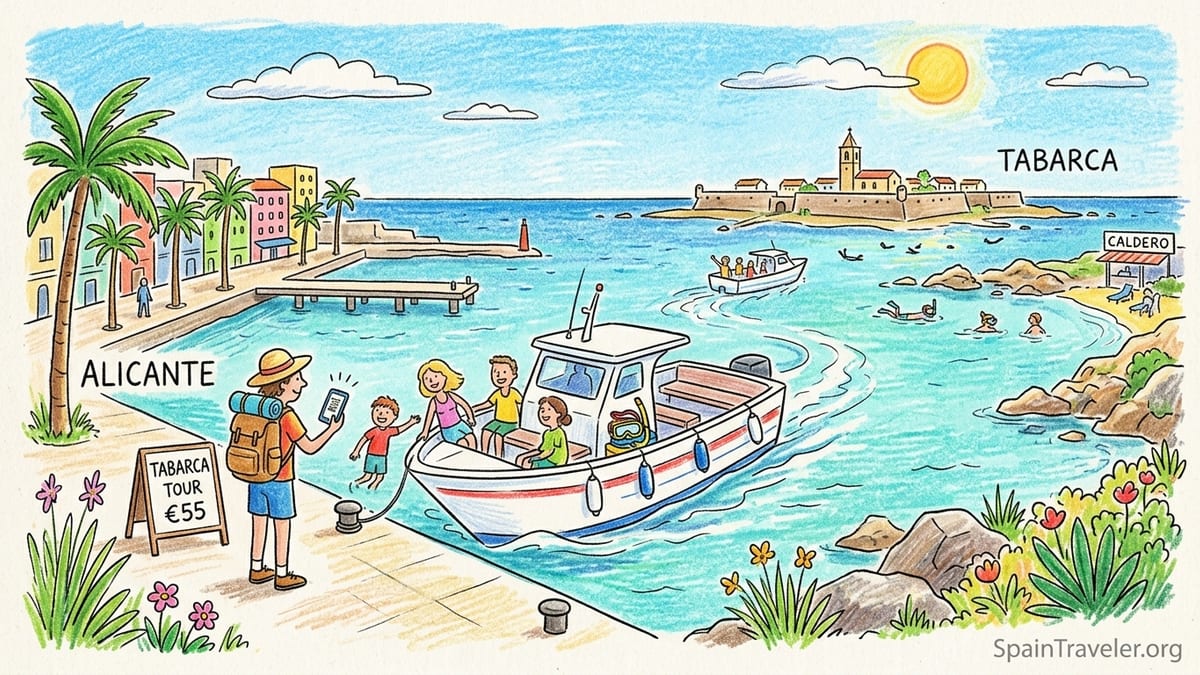
Booking the 55 Euro Tabarca Tour and Finding the Boat
I chose an organized Tabarca boat tour that Alicante tourism actively promotes for the 2026 season: a four-hour outing from the port of Alicante, priced at 55 euros per person. The tour runs roughly from mid-May to the end of September, with departures at 10:00 and a return around 14:00 on most days. The price includes the round-trip crossing, basic snorkeling gear, a short swim stop, about two hours ashore on Tabarca and a snack with a soft drink or beer. For a first visit without a car, it felt like a straightforward, all-in-one product.
I booked online the night before, paying 55 euros with a card and receiving a mobile voucher almost instantly. There was no need to print anything. The confirmation clearly stated to arrive fifteen minutes before departure at the marina, by the fuel station in Alicante’s main recreational port, so I planned to be at the meeting point by 9:45. That “fifteen minutes” turned out to be accurate. When I arrived just before 9:40, the crew and a small cluster of other passengers were already waiting on the quay.
Boarding takes place inside Alicante’s Marina Deportiva, a short walk from the Explanada promenade and the city centre. It is close enough that you can easily reach it on foot from most central hotels. I walked down past the cafes and moored yachts, following a small portable sign with the tour name until I saw a white motor launch with bench seating and snorkel gear stacked in plastic crates. The set-up was simple, but it immediately signalled that this was not a slow car ferry but a faster excursion boat.
At the pier, the crew scanned my voucher directly from my phone screen. There was no separate ticket office to visit and no queue of people trying to buy last-minute seats, which matched the operator’s advice to reserve ahead. In high summer, when Alicante is busy and multiple companies are running trips, this online booking step is increasingly important. For this particular 55 euro tour, the ticket price was identical on the day I travelled to what Alicante tourism lists for the 2026 season, which reassured me that I was paying the current advertised rate.
On Board: Boat Type, Seating and Sea Conditions
The boat itself was a medium-sized motor launch, advertised as a fast boat rather than a catamaran. It offered open-air seating with a small covered area towards the stern. There was no indoor cabin, no air conditioning and, importantly, no toilet on board. The crew reminded us of this just before departure and encouraged anyone who needed a last bathroom stop to use the facilities at the marina before we left. For a four-hour round outing, including time ashore, that limitation is manageable, but it is something to be aware of if you are travelling with children.
Seating was first-come, first-served. Families tended to sit under the canopy to avoid the direct sun, while couples and small groups gravitated to the bow and sides for clearer views of the coastline. I chose a spot along the side rail near the middle of the boat, which gave me both a good view and a handhold when the swell picked up. The benches were simple fibreglass with thin cushions, comfortable enough for a forty-five minute crossing but not the sort of lounge seating you might find on a large catamaran.
The sea conditions on my day out were typical for late summer on this part of the Costa Blanca. The morning started almost glassy inside the harbour, but as soon as we cleared the breakwater the swell made itself felt. The boat cut through short, choppy waves rather than long, rolling swells. The crew described this as a “moderate” sea. For most passengers it translated into a pleasantly bouncy ride, with occasional sprays of saltwater over the bow. For anyone prone to seasickness, though, this is exactly the sort of motion that can be challenging.
I had taken a motion-sickness tablet about half an hour before boarding and was glad I did. A few passengers who had not prepared were visibly uncomfortable by the halfway point, focusing hard on the horizon. The crew discreetly passed out sick bags and suggested people move to seats further aft, where the motion was slightly gentler. If you know you are sensitive, this is not the time to experiment; a simple pharmacy-brand tablet and a light breakfast without too much coffee or juice will make your crossing considerably more enjoyable.
The Crossing: From Alicante to Tabarca in About an Hour
Although Alicante tourism brochures sometimes describe the trip to Tabarca as taking “barely an hour,” the actual navigation time on this particular fast-boat tour was around forty-five minutes. We slipped lines almost exactly at 10:00, turned east past the city’s commercial docks and then followed the coastline south, with the castle of Santa Barbara slowly receding behind us.
The captain kept a steady speed once we were past the harbour, fast enough to feel like a proper excursion but not so quick that it became uncomfortable. We passed the headland near Urbanova beach, then the low land around the Cabo de Santa Pola came into view. Off our port side, Santa Pola itself and its fishing port were visible in the distance, which is where the regular ferries depart for Tabarca on fifteen to twenty minute crossings. From Alicante, though, you feel the full eleven or so nautical miles to the island, and the boat swings out across more open water.
About half an hour into the trip, the outline of Tabarca finally became clear. The walled village with its church, defensive gates and cluster of houses sat low on the horizon, with rocky coves and the small main beach visible beyond. As we approached, the captain throttled back to make a slow circuit just off the marine reserve area, giving us a preview of the turquoise water and the rocky seabed that make this such a popular snorkelling spot.
We arrived a few minutes before 10:45, in line with the planned forty-five minute crossing time. That timing is important when you consider the structure of the four-hour tour: roughly forty-five minutes out, about two hours on the island, then another forty-five minutes back, leaving a small buffer for boarding and disembarking. There is very little slack in the schedule. From the moment we stepped onto the jetty, the clock was already ticking on how to make the most of our short time ashore.
First Impressions: Landing, Swimming and Snorkelling
Disembarkation took place at the main pier on the northern side of Tabarca, where other excursion boats from Santa Pola and Torrevieja were also tying up. The crew helped steady the gangway and reminded us of our return time, written on a small sticker they handed out as we left the boat. We had “two hours on the island” according to the tour description. In practice, with the time needed to walk off with the group and orient ourselves, it worked out closer to one hour and forty-five minutes of usable time.
Our guide for the day, who travelled on the boat with us, handed out a simple printed map showing the main streets of the village, the church, the fortified gates and the central sandy beach. There was no rigid walking tour or commentary, which I appreciated. Instead, the guide gave a short orientation talk by the pier, pointing out the direction of the main beach, the quieter coves to the west and where to find the public toilets and a few recommended restaurants. After that, we were free to choose how much of our island time to spend swimming, snorkelling or wandering through the village.
I decided to head straight for the water before the day heated up even more. The tour provided basic snorkelling gear on loan for the duration of our stop: a mask and snorkel but no fins. The equipment was functional but not new, and you could tell it had seen heavy use over the season. If you are particular about fit or hygiene, bringing your own mask is a good idea. Still, the combination of clear water and rocky seabed meant there was plenty to see, even with a simple setup. Small bream and wrasse darted between patches of seagrass, and the occasional larger fish cruised the deeper pockets near the rocks.
The designated swimming area near the main beach can feel busy when several boats arrive at the same time, and in our case there were also visitors who had come earlier by regular ferry from Santa Pola. The tour’s “swim stop” is really just your own decision to spend part of the island time in the water. There is no separate boat-based swim session during the crossing on this specific four-hour product. That means every minute spent swimming is a minute not available for exploring the back streets of the village or sitting down to lunch in a restaurant, a trade-off that becomes more apparent the closer you get to departure time.
Lunch and a Whirlwind Tour of the Village
After about forty minutes in and out of the water, I rinsed off under the beachside freshwater showers and changed into dry clothes. The snack included with the tour was a small packaged sandwich and a drink, offered by the crew near the pier. It was enough to take the edge off hunger but not a substitute for a proper meal. Tabarca’s restaurants are known for fish stews and rice dishes, particularly caldero, and I did not want to leave without at least sitting down for a starter and a drink. The challenge was time.
By the time I had finished swimming, it was close to midday, and many of the most popular restaurants along the waterfront were fully booked or holding tables for larger groups who had reserved in advance. Menus were posted prominently, with main rice dishes for two people usually starting around the mid-twenties per person, and simpler plates of fried fish, salads or grilled cuttlefish priced a bit lower. For solo travellers or those on a tighter schedule, it can make more sense to order a couple of tapas-style dishes and a drink rather than committing to a full multi-course meal.
I eventually found a small table free at a quieter side-street restaurant just beyond the main seafront. I ordered grilled sardines, a simple salad and a cold beer, conscious that any delay in the kitchen would eat into my remaining time. The service was efficient, but even then the process of sitting down, ordering, eating and paying consumed almost forty minutes. By the time I returned to the pier, I had just enough space left for a quick loop through the narrow lanes inside the fortified walls and a short stop by the church.
This is where the four-hour structure of the tour feels most compressed. The island’s historic core is compact and easily walkable, but combining a swim, a sit-down lunch and a proper wander through the village streets and viewpoints is ambitious in under two hours. I left feeling that I had sampled each aspect superficially rather than experienced any of them in depth. Travellers who are content with a simple snack and a stroll will find the time comfortable. Those who want both water time and a lingering lunch will feel the squeeze.
The Return Journey and How Rushed the Schedule Felt
We were asked to be back on the pier ten minutes before the scheduled departure for Alicante. The crew counted passengers carefully as we boarded, checking against a printed manifest from the morning. A few people arrived in the last couple of minutes, slightly flustered from a last dash across the village, which underlined how easy it is to underestimate walking times when you are still half focused on drying off or settling a restaurant bill.
The return crossing followed the same route in reverse. The sea had picked up slightly, and the afternoon heat made the open seating feel more exposed. Some passengers who had sat in the bow on the way out moved under the canopy for shade. The mood on board was noticeably quieter on the way back. People scrolled through photos, compared fish sightings from their snorkelling sessions and, in a few cases, closed their eyes and dozed against the rail.
The forty-five minute journey back confirmed my sense of the overall schedule. Once you removed ninety minutes of pure travel time and a small margin for boarding and disembarking, you were left with that tight window of island time. For a first orientation visit, the format works. You see the coast from the sea, step inside the walled village, swim in the reserve and taste a little of the local seafood culture. As an in-depth experience of Tabarca, however, it is constrained.
If you are someone who gets stressed by the idea of missing a boat, the constant quiet calculation of minutes may reduce your enjoyment. The tour does not leave you stranded if you are late, but it also cannot hold the schedule for a long time without affecting the rest of the day. I found myself checking my watch more than I usually would on a relaxed island visit, which is telling for a supposedly leisurely outing.
What I Would Pack Differently Next Time
Looking back on the day, my packing choices made a real difference to how comfortable the trip felt. I brought the basics: swimwear, a quick-dry towel, sunscreen, a hat, sunglasses and a light shirt to wear over my swim gear. Those were all essential, and I would not travel without them. Sitting in the open on a boat for forty-five minutes each way and then spending time on a beach in early afternoon sun adds up to significant exposure, even when there is some shade on board.
What I regretted not bringing was my own snorkel mask. The loaned equipment did its job, but the fit was not perfect, and I had to clear occasional leaks. Given that the tour price already includes gear, it may feel redundant to pack your own, but a mask you know and trust makes it easier to relax and fully enjoy the underwater views in the marine reserve. Fins are less critical given the short distances involved, but a pair of lightweight water shoes would have been useful for the rocky entries at some coves and for walking around the village straight from the beach.
Another item I missed was a small insulated water bottle. While the tour includes a drink with the snack, staying properly hydrated under the sun needs more than a single soft drink or beer. Bottled water is available at kiosks and restaurants on Tabarca, but prices are understandably higher than on the mainland, and it is easy to forget to buy enough in the rush between swimming and eating. Filling a reusable bottle at your accommodation before leaving Alicante is an inexpensive way to avoid that problem.
Finally, I would bring a slightly larger dry bag to keep my phone, wallet and a spare T-shirt safe during the swim. On my trip I used a simple zip pouch, which meant I had to leave it on the beach while I was in the water, always half watching it from a distance. A small roll-top dry bag that you can clip to yourself or keep on a nearby rock where splashes will not reach the contents makes the whole experience more relaxed, especially if you are travelling alone and do not have someone on shore to watch your things.
Would I Leave From Alicante Again or Choose Santa Pola?
After taking the organized tour from Alicante, I started to compare it mentally with the regular ferry services that depart from Santa Pola. Those boats are the workhorses of Tabarca transport, with multiple operators offering crossings of about fifteen to twenty minutes each way and return prices for adults published from around 9 to 15 euros depending on the company, boat type and whether you buy online or at the kiosk. Children under four often travel free, and there is usually flexibility to choose your return time later in the day.
The obvious trade-off is convenience versus control. Leaving from Alicante means you can walk from a central hotel to the marina in fifteen or twenty minutes and be on your way without thinking about bus connections or driving and parking in Santa Pola. The 55 euro tour is designed precisely for visitors who want an easy, packaged experience with a fixed time window and a bit of added value through the snack, basic gear and guidance.
From Santa Pola, you have to factor in the journey from Alicante, whether by interurban bus or rental car, but once there you gain much greater flexibility on Tabarca itself. Many ferries from Santa Pola run throughout the day in the main season, with departures starting from mid-morning and returns going into the early evening. That gives you the option to spend a full day on the island, to have a leisurely lunch without looking at your watch and to explore further afield, including quieter coves away from the main beach and the western lighthouse area.
Knowing what I know now, if I were travelling with friends who enjoy slow days in the water and long lunches, I would probably choose Santa Pola next time. I would take an early ferry over, plan for at least six hours on the island and bring my own snorkel gear. For a visitor with limited time in Alicante or someone who prefers a clearly structured half-day outing that fits neatly into a city break schedule, I would still recommend the Alicante 55 euro tour as a good first introduction. It all depends on whether you value simplicity or freedom more highly.
The Takeaway
My day trip to Tabarca from Alicante taught me that a four-hour organized boat tour can deliver a satisfying snapshot of the island, but it also highlighted the limits of a compressed schedule. The 55 euro price felt fair for what was included: a scenic forty-five minute crossing each way, loaned snorkel gear, a small snack and drink, and light guidance on how to use the short time ashore. The crew were professional, the boat was in good order and safety was taken seriously, particularly in reminding passengers about sea conditions and the lack of a toilet on board.
At the same time, the format left little room for lingering. I managed a swim, a brief meal and a quick walk through the village streets, but nothing at a truly relaxed pace. If I had not prepared for seasickness, the choppy mid-morning swell might have coloured my memories of the day, and if I had arrived at the pier without a booking in high season, I might not have found a seat at all. The experience reinforced the importance of planning details that are easy to overlook: advance reservations, basic medication, sun protection and modest but effective gear like a good mask and a dry bag.
Tabarca itself lived up to its reputation as a rewarding excursion from Alicante. The combination of the marine reserve’s clear water, the fortified village and the seafood-centred restaurant scene makes it more than just a beach stop. The choice between leaving from Alicante or arranging your own trip via Santa Pola comes down to how deeply you want to engage with the island. For a first-timer, the organized Alicante tour offers a convenient and enjoyable taste. For a return visit, I would opt for the freedom and longer island time that Santa Pola’s regular ferries provide, using what I learned on this initial outing to shape a slower, more immersive second trip.
FAQ
Q1. How much did the Tabarca boat trip from Alicante cost in 2026?
The organized four-hour Tabarca boat tour from Alicante cost 55 euros per person in the 2026 season, including the round-trip crossing, basic snorkeling gear, a snack and a drink.
Q2. How long did the boat crossing from Alicante to Tabarca take?
On the fast motor launch used for this tour, the one-way crossing from Alicante marina to Tabarca took about forty-five minutes under typical sea conditions.
Q3. Did the boat have toilets or indoor seating?
No. The boat operated as an open-deck fast launch with some shaded seating but no indoor cabin and no toilet, so passengers were advised to use facilities in the marina before departure.
Q4. Is seasickness a big concern on this route?
The sea can be choppy once you leave Alicante’s harbour, and the motion of a smaller fast boat can bother sensitive travellers, so taking a motion-sickness tablet in advance is sensible.
Q5. How much time did you actually have on Tabarca Island?
From docking to final boarding call, there were roughly two hours scheduled, but once disembarkation and re-embarkation were factored in, usable time on the island felt closer to one hour and forty-five minutes.
Q6. Was lunch included in the tour price?
No. The tour included only a small snack and a drink. Any proper meal in a Tabarca restaurant, such as fish or rice dishes, had to be paid separately on the island.
Q7. Was the snorkelling equipment provided on the tour sufficient?
The tour provided functional masks and snorkels without fins. They were adequate for casual use, but bringing your own well-fitting mask can significantly improve comfort and enjoyment.
Q8. Did the four-hour schedule feel rushed?
Yes. It was possible to swim, have a quick meal and walk through the village, but there was little margin for lingering, and I found myself watching the time more than I would have liked.
Q9. Would you recommend departing from Alicante or Santa Pola?
For convenience and a simple half-day outing, departing from Alicante works well. For longer island time, more flexible returns and lower transport costs, Santa Pola is the better base.
Q10. What are the most important things to pack for this trip?
Essential items include strong sunscreen, a hat, swimwear, a quick-dry towel, a reusable water bottle, a secure dry bag and, ideally, your own snorkel mask and basic seasickness tablets.