


Spain’s classic first timer route linking Madrid, Barcelona and Seville gives you grand museums, modernist architecture and Moorish palaces all in a single trip. Thanks to an extensive high speed rail network and well served international airports, it is easy to stitch these cities into a smooth 7, 10 or 14 day itinerary, with the option to weave in Córdoba or Granada if you want a deeper taste of Andalusia.
How Long To Spend In Madrid, Barcelona And Seville
For a first visit, most travelers find a minimum of two full days in each of Madrid, Barcelona and Seville workable, but three nights in each city is a more comfortable starting point. That gives you time for the headline sights plus a few evenings to linger over tapas or a long lunch. A typical balanced split for a 10 day trip is three nights in Barcelona, three in Madrid and three in Seville, with your final night near your departure airport.
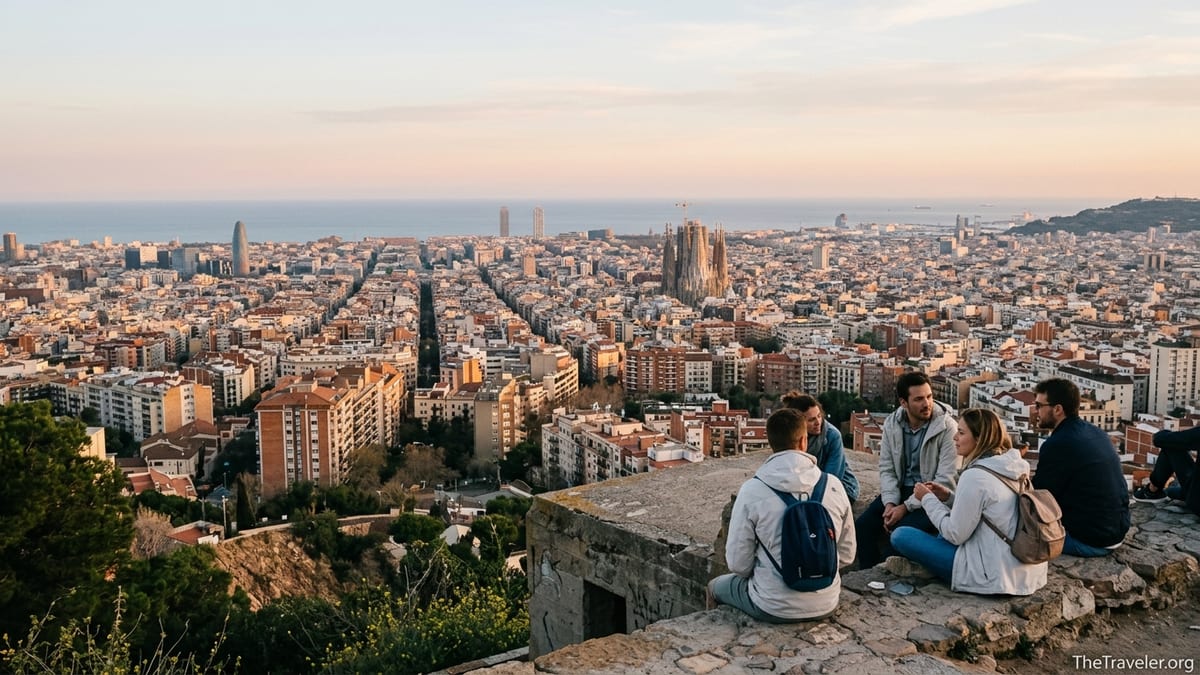
Barcelona rewards more time if you love architecture and the sea. Many itineraries give Barcelona one extra night, especially in warmer months when you are likely to spend an afternoon on Barceloneta Beach or take a half day trip to Montserrat or coastal towns like Sitges. In practice that might look like four nights in Barcelona, three in Madrid and three in Seville on a 10 night itinerary.
Madrid’s strength is its museums and day trip options. Two full days let you cover the Prado and Reina Sofía, stroll the Retiro Park and explore one neighborhood like La Latina or Malasaña. A third day lets you add an easy rail excursion to Toledo or Segovia. Seville, by contrast, is more compact. Two days is enough to see the Royal Alcázar, the cathedral and Plaza de España, though three nights allows a slower pace and an evening flamenco performance in a neighborhood like Triana.
If you are planning a 14 day trip and want to add Córdoba or Granada, consider a structure such as four nights in Barcelona, three in Madrid, three in Seville and two to three nights split between Córdoba and Granada. If you prefer to travel more slowly, keep the classic three city triangle and simply stretch each stay, accepting that you will not see every Moorish monument on your first visit.
Airports, Entry Points And Logical Route Order
Madrid and Barcelona are Spain’s main international gateways, and most long haul travelers from North America, Asia and the Middle East will find the best flight options into one of these cities. Madrid’s Adolfo Suárez Madrid Barajas Airport uses the code MAD and is the primary hub for Iberia and a major entry point for European and intercontinental flights. Barcelona El Prat Airport uses the code BCN and also offers plentiful connections across Europe plus some nonstops from the United States and Latin America.
Seville’s San Pablo Airport, with the code SVQ, is much smaller but still useful if you are connecting from elsewhere in Europe on carriers such as Iberia, Vueling or low cost airlines. Many itineraries are built as “open jaw” or “multi city” tickets, for example flying into Barcelona and out of Madrid, or into Madrid and out of Seville via a European connection. Booking this way avoids unnecessary backtracking on the ground and often costs only slightly more than a simple return ticket.
The most efficient route order depends on where you find the best flights. A geographically smooth triangle for many travelers is to land in Barcelona, travel by high speed train to Madrid, then continue south to Seville before flying out of Seville or looping back by train to Madrid for your return flight. Others prefer to arrive in Madrid, head to Seville, then finish with Barcelona before flying home. The high speed rail lines make any of these sequences workable, and your final choice often comes down to airline schedules and price.
When comparing flights, look at total travel time including airport transfers. A nonstop overnight from New York to Madrid that lands early in the morning can put you in the city center by mid morning via the airport express bus or suburban train. From many European hubs you can land in Barcelona by mid afternoon and still have time to stroll the Gothic Quarter before dinner. Aligning your first city with an early arrival can help you fight jet lag by spending your first day mostly outdoors.
High Speed Trains And Practical Connections Between Cities
Spain’s AVE and other high speed trains are the backbone of this itinerary. The Madrid to Barcelona high speed line connects the two cities in roughly two and a half to three hours, with trains leaving from Madrid Puerta de Atocha Almudena Grandes station and arriving at Barcelona Sants. National tourism information states that Madrid is linked by high speed trains to major cities such as Barcelona and Seville in three hours or less in many cases, which matches most current timetables. Booking several weeks ahead, advance fares between Madrid and Barcelona can often be found from around 25 to 40 euros in standard class with dynamic pricing.
Between Madrid and Seville, the original AVE high speed corridor runs from Madrid Puerta de Atocha to Seville Santa Justa. Typical journey times are around two and a half hours on the fastest services, and there are multiple departures spread across the day. Regional tourism information for Seville highlights the AVE train as the quickest option for reaching the city from Madrid, usually in under three hours. Advance purchase fares can be comparable to the Madrid Barcelona route, though exact prices fluctuate with demand, operator and how close to departure you buy.
From Madrid to Córdoba, which many travelers use as a stop on the way to Seville, AVE and other fast trains can make the trip in about one hour and forty five minutes according to recent timetable summaries. Córdoba’s compact historic center is about a 20 minute walk or short taxi ride from the station, making it a feasible stop for a same day visit or a one night stay. Madrid to Granada on the current high speed line typically takes around three and a half to just under four hours, with a small number of daily departures, according to recent timetable tools.
Barcelona to Seville has fewer direct high speed services and usually takes around five and a half hours on the fastest trains, often with a change in Madrid if you opt for a wider choice of departures. For most first time visitors who want to include both Catalonia and Andalusia, it is usually more comfortable to break the journey in Madrid rather than ride the longest sector in one stretch. In practical terms this means structuring your route as Barcelona to Madrid to Seville or the reverse.
When And How To Add Córdoba Or Granada
Córdoba and Granada are the two most tempting additions to a first trip, thanks to their headline monuments. Córdoba is home to the Mezquita, a former mosque turned cathedral famous for its forest of candy striped arches, while Granada’s Alhambra palace complex is one of Europe’s great sights and requires advance timed reservations in most seasons. Both cities sit in Andalusia, south of Madrid, and are reachable by high speed or fast trains, though Córdoba is notably easier to slot into a busy schedule.
If you have 7 days or fewer in Spain, Córdoba works well as a day trip or one night stop from Madrid or Seville. For example, you could take an early AVE from Madrid to Córdoba in roughly one hour and three quarters, store your luggage at the station, walk into the old town to explore the Mezquita and Jewish Quarter, then continue by late afternoon train to Seville, arriving in time for an evening stroll through the Santa Cruz neighborhood. Tickets from Madrid to Córdoba can dip as low as around 7 to 15 euros in promo classes when booked far ahead, although typical prices are higher.
Granada requires more time. Recent rail information suggests typical Madrid Granada journey times of about three and a half to just under four hours on direct services, and about two and a half to three hours between Seville and Granada by a combination of train and sometimes coach connections. Because of the Alhambra’s ticketed entry system and the city’s hilly layout, most travelers are happier giving Granada at least two nights so that they can visit the Alhambra in one half day and still have time for the Albaicín district and evening views from Mirador de San Nicolás.
On a 10 or 14 day trip, a common pattern is to add Córdoba as a stopover on the way between Madrid and Seville, and add Granada either before or after Seville. A logical flow could be Madrid to Córdoba to Seville to Granada to Barcelona, using high speed trains and regional services for each leg. Another is to keep Granada for a future dedicated Andalusia itinerary and simply prioritize Córdoba as the single Moorish highlight added to your Madrid Barcelona Seville triangle.
Sample 7, 10 And 14 Day Itineraries
With seven days on the ground, you have to make choices. One workable plan for a first visit focused on the classic triangle is to fly into Madrid, spend two nights, then take the AVE to Seville for two nights, then take a high speed train to Barcelona for three nights before flying home. In this model your time breakdown might be: Day 1 arrival in Madrid and gentle sightseeing, Day 2 Madrid museums and tapas, Day 3 morning train to Seville and evening flamenco, Day 4 Seville sights, Day 5 train to Barcelona, and Days 6 and 7 in Barcelona with Gaudí architecture and a half day at the beach.
If you are keen to see the Alhambra within a week, you might instead focus on Madrid and Andalusia. For example, land in Madrid and spend two nights, travel by high speed train to Córdoba for one night, continue to Seville for two nights, then on to Granada for two nights before departing from either Granada or looping back to Madrid by train for your flight. This is a more transportation heavy week but showcases a strong mix of Moorish and Spanish Renaissance heritage along with Seville’s patios and tapas culture.
With 10 days you gain flexibility to include all three big cities plus one additional stop. A sample route might be Barcelona for three nights, Madrid for three nights, Córdoba as a one night stop and Seville for three nights. That gives you a full day in Córdoba to see the Mezquita without rushing, and allows you to take a day trip from Madrid to Toledo or Segovia if you wish. Another option is Barcelona four nights, Madrid three nights and Seville three nights, using Madrid as a base for one or two day trips while skipping the overnight in Córdoba.
On a 14 day itinerary, you can add Granada without feeling overly rushed if you cap the total number of hotel changes. One balanced structure is four nights in Barcelona, three nights in Madrid, one night in Córdoba, three nights in Seville and three nights in Granada. Many independent travelers discussing similar routes frequently mention that five cities in 14 days is ambitious but manageable if you are accustomed to moving every few days. If you prefer fewer moves, consider three base cities and use Córdoba as a long day trip from Seville by high speed train, which takes under an hour in some cases.
Choosing Neighborhoods And Typical Hotel Budgets
In Barcelona, first time visitors often gravitate toward the Eixample, the Gothic Quarter or El Born. Eixample places you within walking distance of Casa Batlló and La Pedrera on Passeig de Gràcia and offers a grid of wide streets with plenty of modern hotels. In practical terms, a midrange boutique hotel here might cost in the region of 150 to 250 euros per night in shoulder season, rising in summer and around major events. The Gothic Quarter and El Born offer a more medieval atmosphere and narrow lanes handy for evening tapas bars and small plazas, with similar pricing but a more atmospheric, sometimes noisier setting.
Madrid’s Centro district, including neighborhoods like Huertas, La Latina and the area around Gran Vía, works well for short stays. You can walk to the Prado, Plaza Mayor and Mercado de San Miguel, and access the Atocha rail station quickly by taxi or a short ride on the metro. Reasonably central three star and four star hotels here often run around 120 to 220 euros per night outside the peak of summer and special events. If you want a quieter atmosphere, the Salamanca district northeast of the Retiro Park offers upscale hotels, designer boutiques and calmer streets with prices trending higher.
Seville is more compact. The Santa Cruz and El Arenal neighborhoods are popular because they allow you to walk easily to the cathedral, the Alcázar and the riverfront. A traditional Andalusian boutique hotel built around an interior courtyard, sometimes with a small plunge pool on the roof, might start around 100 to 180 euros in spring and autumn, though rates can spike during Semana Santa and the Feria de Abril when the city fills with visitors. Triana, across the river, offers a more local feel with flamenco bars and ceramics shops, and has a growing choice of apartments and small hotels at slightly lower prices.
Córdoba and Granada have smaller, more concentrated hotel markets. In Córdoba many travelers aim for hotels or guesthouses within a short walk of the Mezquita, often in restored houses around small patios. Prices can be relatively gentle outside major festivals, with pleasant midrange options sometimes under 120 euros per night. In Granada, the Albaicín and areas near the cathedral are popular. Because of hilly streets, some travelers prefer to stay closer to the modern center to minimize climbs, using taxis or local buses to reach the Alhambra. As always, prices fluctuate with season, school holidays and major events, so advance research is important.
Cost And Booking Considerations
Spain remains relatively good value compared with some other Western European countries, but costs vary by city and season. Barcelona, for example, tends to be somewhat more expensive for hotels and dining than Seville or Córdoba, particularly in late spring and early autumn when demand from European city breakers is strong. Madrid sits somewhere in the middle, with high end options priced similarly to other capitals but a generous supply of modest hotels and apartment rentals that keep prices competitive in the midrange.
For trains, dynamic pricing means early booking usually secures the best fares, especially on popular corridors like Madrid to Barcelona or Madrid to Seville. On some routes, low cost high speed operators offer basic fares that can be significantly cheaper than fully flexible tickets, but may include restrictions on baggage, changes or refunds. Many travelers now use official national rail websites or established aggregator apps to compare departure times and prices across different operators. It is common to see wide fare spreads on the same train depending on how far in advance you buy.
At the sightseeing level, entry fees to star attractions like the Sagrada Família in Barcelona, the Prado Museum in Madrid or the Alcázar in Seville can add up across a trip. Many visitors now prebook timed entry slots online to avoid long queues and guarantee access. For example, timed tickets for Sagrada Família and Park Güell often sell out on popular weekend days, while Alhambra tickets in Granada can book out well in advance during peak months. Building some flexibility into your daily plan while still locking in the key reservations is a helpful balance.
Food and daily expenses fluctuate with your habits. A simple morning coffee and pastry standing at a bar might cost only a few euros, while a sit down tasting menu in a well known Barcelona restaurant will quickly push your daily budget upward. Tapas culture in Madrid and Seville makes it relatively easy to control spending by ordering small plates and a glass of wine at each stop rather than committing to long multi course meals. Many travelers on moderate budgets find that a mix of simple breakfasts, a main meal at lunchtime and a lighter tapas style dinner keeps both energy and costs in balance.
The Takeaway
The classic Madrid Barcelona Seville itinerary gives first time visitors a rich cross section of Spain’s art, architecture and everyday life in a manageable loop. With a week you can sample each city at a brisk pace. With 10 days you can add a deeper experience in one or two destinations or weave in Córdoba as a stop. With 14 days you have room to include Granada and the Alhambra or to slow down and simply enjoy more unstructured time in your favorite city.
The keys to a smooth trip are thoughtful route planning, early booking of high speed trains and major sights, and realistic expectations about how many hotel changes you enjoy. Start by anchoring your flights into Madrid or Barcelona, sketch the broad arc of your route based on rail connections, then refine how many nights you will spend in each place. Whether you end your days watching the sunset over Barcelona’s skyline, strolling through Madrid’s Retiro Park or listening to late night guitar in a Seville courtyard, this first trip often becomes the foundation for future returns to explore Spain in even greater depth.
FAQ
Q1. What is the most efficient route order for Madrid, Barcelona and Seville?
Many travelers find it efficient to fly into Barcelona, take a high speed train to Madrid, then continue south to Seville before flying out of Seville or returning to Madrid. The reverse order also works well if flights into Madrid are better for you.
Q2. How many nights should I spend in each city on a 10 day trip?
A balanced 10 day plan is often three nights in Barcelona, three in Madrid and three in Seville, with the remaining night used near your departure airport or as a stop in Córdoba if you want to see the Mezquita.
Q3. Do I need to book high speed train tickets in advance?
Advance booking is strongly recommended, especially on Madrid Barcelona and Madrid Seville routes. Buying several weeks ahead usually secures better prices and more choice of departure times than purchasing on the day.
Q4. Is Granada realistic to include on a 7 day itinerary?
Granada is possible in 7 days but makes the schedule tight. If you include it, consider focusing on Madrid and Andalusia only, using a route such as Madrid, Córdoba, Seville and Granada rather than adding Barcelona as well.
Q5. Should I do Córdoba as a day trip or overnight?
Córdoba works well either way. A day trip from Madrid or Seville by high speed train is easy, but an overnight stay lets you experience the Mezquita area in the quieter evening and early morning.
Q6. Which city is best to use as a base for day trips?
Madrid is particularly good for day trips, with fast trains to Toledo, Segovia and sometimes Córdoba. Barcelona also offers easy excursions to Montserrat or coastal towns, while Seville connects well to Córdoba and smaller Andalusian cities.
Q7. Are open jaw flights worth it for this itinerary?
Open jaw or multi city tickets, such as flying into Barcelona and out of Madrid or Seville, usually reduce backtracking and save you several hours of train travel. The fare difference compared with a simple round trip is often modest.
Q8. What is a reasonable daily budget for midrange travelers?
Budgets vary, but many midrange visitors planning comfortable hotels, trains, main sight admissions and restaurant meals find a daily spend in the low to mid hundreds of euros per couple realistic, excluding international flights.
Q9. When is the best time of year to follow this route?
Spring and autumn are generally the most comfortable times, with pleasant temperatures in Madrid and Barcelona and more manageable heat in Seville and Córdoba than in high summer. Winter can be quieter and less expensive but cooler.
Q10. Is it better to stay in apartments or hotels for this kind of trip?
Both options work. Hotels simplify short stays and early departures, especially near major train stations, while apartments can be attractive for longer stops, giving you more space and the option to cook. Your choice comes down to travel style and budget.