


For many families, Madrid is the gateway to Spain: world-class museums, big city parks and lively plazas. Yet some of the region’s most rewarding moments with children happen beyond the capital, in the villages, landscapes and small adventures scattered across the Community of Madrid. With short driving distances, heritage towns, mountain valleys and playful activities, it is surprisingly easy to turn a city break into a wider family escape if you plan with ages, weather and logistics in mind.
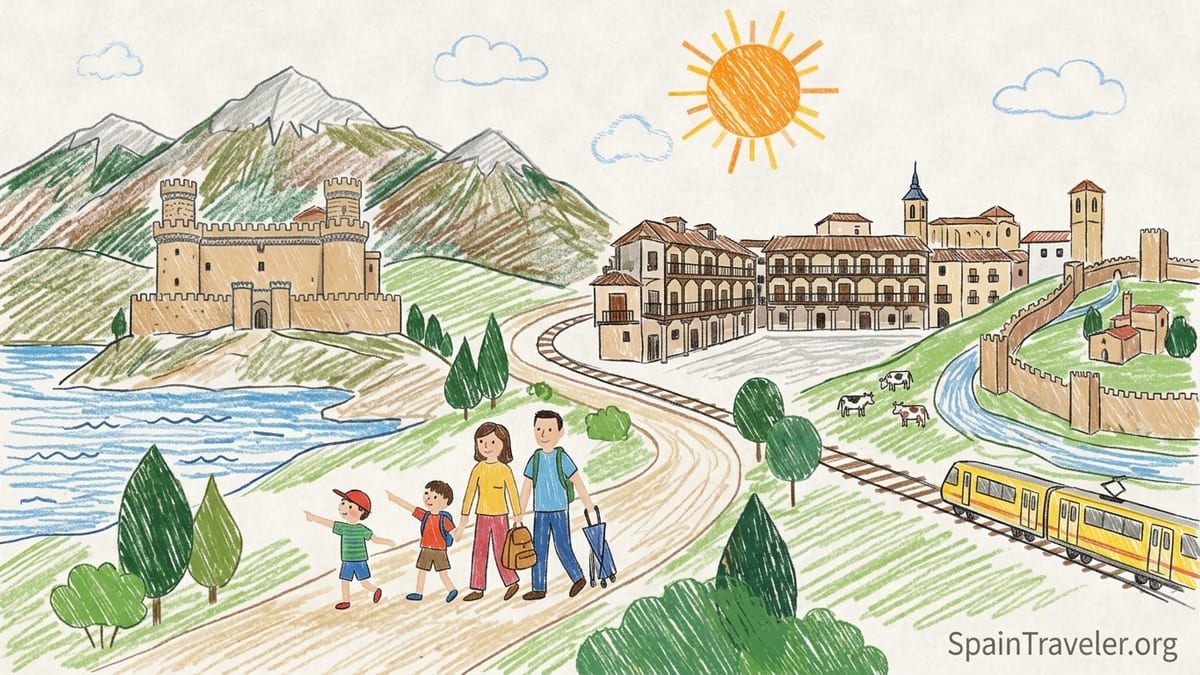
How the Community of Madrid Thinks About Family Travel
The regional tourism authorities explicitly promote the Community of Madrid as a destination for families, highlighting culture, picturesque towns, nature and leisure spread across the region rather than only in the capital. Their family travel materials group ideas under themes such as cultural visits, science and technology, attractions, sports and nature, and they consistently point parents toward manageable day trips and short breaks instead of long, complicated itineraries. The result is a network of experiences that can be stitched onto a Madrid stay according to your children’s ages and energy.
Distances are one of the big advantages. Manzanares el Real, a gateway to the Sierra de Guadarrama, sits roughly 45 to 50 minutes by car from central Madrid. Aranjuez, the historic royal town to the south, is under an hour by commuter train from Atocha. Buitrago del Lozoya in the north, wrapped by medieval walls and the Lozoya River, is around 75 minutes by bus or car depending on traffic and time of day. These journey times matter with young children, who often cope better with one simple transfer under an hour than with complex combinations of trains and buses.
At the same time, the region promotes its protected natural areas such as the Sierra de Guadarrama National Park, river valleys like the Lozoya and Jarama, and agricultural landscapes along the Tagus around Aranjuez. Official guides show a scale of hiking difficulty and information on parking, picnic spots and viewpoints, which helps parents choose short, safe routes. Many of the visitor centres in these areas run weekend activities specifically designed for families, including storytelling walks, easy nature trails and occasional stargazing evenings suitable for school-age children.
For families, this approach means you can combine a castle visit with playground time, or a short mountain walk with a café stop, instead of trying to tick off too many “sights” in one day. It is more about rhythm than quantity: shorter moves, more fresh air, and just enough culture to feel meaningful without testing everyone’s patience.
Heritage Towns and Castles: Big Stories in Small Distances
If you want a day that feels different from central Madrid but does not involve a long journey, heritage towns are an excellent first step. Manzanares el Real, Buitrago del Lozoya, Chinchón and Aranjuez all offer strong visual impact, real historical content and fairly compact centres. They are also promoted in official regional routes such as the Castles, Fortresses and Watchtowers itinerary, which highlights places like Manzanares el Real’s well-preserved castle and the defensive walls of Buitrago del Lozoya.
Manzanares el Real is especially good with mixed-age groups. The late medieval fortress often called the Castle of the Mendoza dominates the town and is considered the best-preserved castle in the region. Families can typically visit the courtyard, walls and exhibition rooms with standard admission tickets sold on-site and through official channels, and prices for adults and children are usually modest compared with big city attractions. Because the castle stands on a slope with stone steps and uneven floors, a baby carrier is far more practical than a stroller inside the monument, though you can use a stroller around the lakefront and in the town itself, which has reasonably level pavements near the centre.
Further north, Buitrago del Lozoya enchants children with its complete wall circuit that hugs the river. The old town is compact, and viewpoints over the Lozoya River give a sense of adventure without much walking. Surfaces are mostly stone and often irregular, so lightweight travel strollers with decent wheels, or again a carrier, are helpful. Here the heritage interest leans toward older kids and parents, but younger ones usually enjoy exploring the ramparts, watching the water and searching for birds along the riverbanks.
To the southeast, Chinchón is famous for its Plaza Mayor, lined with wooden balconies and used historically for markets, festivals and even bullfights. Many families concentrate their visit around this square, the church and short viewpoints over vineyards and olive groves rather than trying to explore every side street. The terrain is hilly, with cobbled slopes leading down to the plaza, which can make strollers cumbersome. For toddlers, it can be enough to let them run on the flat part of the plaza when it is quiet, then linger over a drink or snack at one of the cafés with chairs spilling onto the square.
Aranjuez, with its royal palace and formal gardens along the Tagus, offers a different style of outing. The main palace, gardens and tree-lined avenues are spacious and stroller friendly, especially the Jardín del Príncipe and Jardín de la Isla. Families can walk shaded paths where children can safely toddle or ride small bikes, watch ducks along the canals and rivers, and pause for picnics on the grass where allowed. It is an ideal place to show older kids how royal residences were designed to control water and landscape, while younger ones simply enjoy the scale and greenery.
Nature Days in the Sierra de Guadarrama and Beyond
For many children, the real highlight of the Community of Madrid lies in the surrounding mountains and forests. The Sierra de Guadarrama, partly protected as a national park, offers an array of family-oriented trails, from short riverside walks to more demanding routes that appeal to active teenagers. Official park information classifies trails by difficulty and length, often indicating whether they are circular, where parking is available and if there are viewpoints or picnic areas along the way. This takes much of the guesswork out of choosing a route that matches your family’s abilities.
Areas like La Pedriza near Manzanares el Real, the high valleys around Puerto de Cotos, or riverside routes near Rascafría combine striking scenery with relatively short walking times if you choose the easier options. Some local tourism boards and dedicated Sierra Guadarrama family guides suggest itineraries that can be done in under two hours at a child’s pace, including routes that follow old forest tracks or visit small waterfalls, pools or viewpoints. For young children, these shorter loops work best in the morning to avoid the stronger midday sun and give everyone ample time for snacks and unstructured play among rocks and trees.
Mountain weather is one of the main planning challenges. Conditions in the Sierra can be several degrees cooler than Madrid city and change quickly, especially in spring and autumn. Official guides for the park recommend layers, waterproofs and proper footwear even for short walks, and they advise checking forecasts carefully before heading up from the plains. In summer, families often aim for early starts to benefit from cooler temperatures at altitude and more available parking, then return to lower ground by mid-afternoon.
Beyond the high Sierra, other green areas closer to Madrid provide softer introductions to nature with shorter transfer times. The regional network of environmental education centres and green routes promotes riverside walks, forest parks and agricultural landscapes that can be explored from towns like Rascafría, Guadarrama or San Martín de la Vega. These spaces are useful if you have limited time, children who are not used to hiking, or simply want to combine an hour’s walk with a relaxed lunch in a village restaurant.
Cycling Routes and Tourist Trains with Children
The Community of Madrid has invested in cycling tourism under the brand of a regional cycling network that links many historic towns and landscapes. While multi-day circuits are more common among adult cyclists, families can tap into short, accessible sections that connect to places like Aranjuez or the edge of the Sierra. These shorter options are most suitable for older children who already ride confidently, or for families using child seats or trailers on relatively flat terrain. Official information usually recommends helmets for all riders and highlights routes on quieter roads, rural tracks and designated bike paths where available.
In practice, a family might drive or take the train to a town such as Aranjuez, then follow a simple riverside section on bikes before returning for lunch in the historic centre. Around Manzanares el Real and the Sierra de Guadarrama, some signposted routes use forest tracks and old cattle trails to offer gentle off-road cycling through pine woods and open meadows. These can be combined with visits to wineries, farms or rural guesthouses that welcome children with gardens and outdoor space. When planning, check elevation profiles and surface types and keep distances realistic, allowing plenty of time for breaks and photos.
Tourist trains add an extra layer of excitement for many children. One of the best-known in the region is the heritage train linking Madrid and Aranjuez, often called the Strawberry Train due to the region’s agricultural history. According to recent published fare tables, combined tickets that bundle the vintage train journey with activities and visits in Aranjuez can cost on the order of several dozen euros per adult and a reduced amount for children, depending on the chosen route and season. Operation typically concentrates on selected weekends in spring and autumn, with departures from Madrid’s historical stations and return journeys in the afternoon.
For families, the appeal lies as much in the atmosphere as in the journey itself. Vintage coaches, staff in period costumes and simple tastings of local produce often form part of the experience. Because dates, prices and exact inclusions change from year to year, it is important to confirm current details with official operators and to book in advance. With younger children, consider pairing the train ride with a relaxed stroll in the palace gardens and a casual meal rather than trying to fit in every optional tour.
Rural Stays, Heat, Weather and Daily Rhythm
One question many families face is whether to stay overnight outside Madrid or to return to the city each evening. With babies and toddlers, day trips of under an hour each way are often manageable, particularly to stroller-friendly destinations like Aranjuez or some of the lower valleys of the Sierra. However, an overnight rural stay can significantly reduce fatigue if you plan to explore the mountains, visit several villages or take part in morning activities at nature centres. Towns such as Manzanares el Real, Rascafría, Cercedilla and other Sierra communities offer a mix of small hotels, apartments and rural houses that give children gardens, quiet streets and earlier access to trails.
Heat is a serious factor from late spring through early autumn, particularly in the river plains and open agricultural landscapes to the south and southeast. Afternoon temperatures in July and August in places like Aranjuez or Chinchón are often high, and pavements around historic squares and palace courtyards can radiate extra warmth. Families with younger children usually do best with early-morning departures from Madrid, long lunch breaks under shade or indoors, and plans that keep physically demanding activities for the cooler hours. Stroller sunshades, hats, refillable water bottles and light clothing make a noticeable difference to comfort.
In the mountains, cooler air can be a relief but also a risk if you underestimate wind and storms. Even in summer, afternoons can bring sudden showers and temperatures that feel chilly once the sun drops, especially above 1500 metres. Layering is essential for both adults and children, and many local guides advise onsite decisions about exact routes based on current conditions. In winter, some high passes and forest car parks may be affected by snow or ice, and families should heed any local advisories or temporary access restrictions posted by park authorities.
Daily rhythm in Spain also influences family logistics. Traditional lunch hours run late compared with many countries, often between 2 pm and 4 pm, and kitchen service may pause afterwards before dinner. In popular excursion towns, however, you will often find cafés, bakeries and informal restaurants that serve food throughout much of the day, especially around main squares and near tourism hotspots. Families who prefer early meals might book accommodation offering half-board or self-catering facilities, or they might rely more on picnics and light snacks during odd hours.
Practicalities: Car Seats, Strollers and Picnic Planning
Most family trips beyond Madrid work best with a car, especially when combining more than one town or aiming for trailheads and rural accommodation. Spanish regulations require children below a certain height and age to use approved child restraint systems in private vehicles, generally adapted to their size and placed in rear seats. Rental car companies at Madrid’s airport and train stations usually offer infant and child seats for an additional daily fee, but availability varies, so it is wise to book the right seat category in advance. Some airlines allow you to bring your own car seat; if you do, check compatibility with European seat belts or isofix systems.
For strictly urban or rail-based excursions, you can manage with a stroller and public transport to certain towns served by frequent commuter trains, such as Aranjuez. In these cases, folding strollers are easier on busy platforms and in older stations without full lifts. Around castles and walled towns, expect irregular pavements, cobbles and slopes. Lightweight off-road strollers handle these better than minimalist city models, but there are always places where a soft-structured baby carrier is more comfortable and safer than trying to push wheels up stone steps or along narrow ramparts.
Picnic planning is a simple way to keep flexibility with children. Supermarkets and traditional markets in Madrid or larger towns provide fruit, bread, cheese and cured meats that travel well for a day. Many official recreation areas in the region offer designated picnic tables, sometimes with fountains and basic facilities. In sensitive natural areas, authorities often request that you pack out all rubbish, avoid lighting fires, and keep noise low, both for safety and to protect wildlife. Reusable containers, rubbish bags and a compact blanket or ground sheet mean you can stop almost anywhere permitted without relying on restaurant schedules.
Hydration and sun protection are especially important. Even in spring, the combination of altitude and clear skies in the Sierra can lead to strong sun exposure. Families should carry enough water for the entire outing, since fountains on some mountain routes are seasonal or not recommended for drinking without treatment. Wide-brimmed hats, sunscreen applied before setting out and re-applied during the day, and lightweight long-sleeved shirts all help reduce the risk of sunburn and heat exhaustion.
Choosing the Right Destination by Age Group
Age shapes almost every decision when exploring the Community of Madrid with children. For toddlers and preschoolers, the sweet spot often lies in open, car-accessible spaces with short walking distances, such as the palace gardens of Aranjuez, lakeside walks around Manzanares el Real or lowland parks promoted by regional environmental centres. Here, you can combine stroller-friendly paths with frequent breaks and playground visits, and retreat quickly to accommodation if naps or meltdowns demand it.
Early primary school children usually enjoy places that give them roles as explorers, such as following waymarked nature trails, crossing small bridges or climbing gently up to viewpoints. An easy circuit around a forest education centre in the Sierra, a walk along the Lozoya River near Buitrago or a visit to small local museums in heritage towns can be enough stimulation for a day. Interpretive panels, simple audio guides and the chance to spot animals or old defensive towers often keep this age group engaged.
Older children and teenagers can handle more ambitious days. Castle visits become more meaningful when connected to concrete stories about medieval borderlands or royal politics, and longer mountain routes of several hours at a steady pace become realistic goals if they are reasonably fit. Activities such as guided canyon walks, via ferrata routes, horse riding or night-time astronomy sessions in the Sierra may be appropriate, depending on providers’ age limits and safety requirements. Parents should always verify current regulations and qualifications of active tourism companies through official channels or local tourist offices.
Regardless of age, it helps to limit the number of distinct locations tackled in a single day. Instead of attempting both a morning hike in the Sierra and an afternoon castle visit an hour away, choose one focus and do it well, adding only low-stress extras such as a riverside ice cream stop or a playground on the way back. This keeps travel times contained and leaves room for unexpected discoveries.
The Takeaway
Exploring the Community of Madrid with children is less about checking off a list of towns and more about combining manageable journeys, open spaces and vivid stories. Short transfers from the capital reach places like Manzanares el Real, Buitrago del Lozoya, Chinchón, Aranjuez and the valleys of the Sierra de Guadarrama, where castles, palaces and walled streets sit alongside riverbanks, pine forests and mountain trails. With a realistic sense of your children’s ages and stamina, you can choose outings that feel like adventures without turning into endurance tests.
Heat in the plains, fast-changing mountain weather and Spain’s later meal times all matter, but they are easy to manage with early starts, flexible picnics and attention to local advice. Car seats, strollers and appropriate footwear do more than tick safety boxes; they make it possible to enjoy uneven castle steps, forest paths and historic squares without constant worry. When a day feels full, an overnight in a rural guesthouse or village hotel can transform a rushed excursion into a gentle escape, giving everyone time to rest between one adventure and the next.
The official family travel focus of the region means trails are signposted, heritage sites provide visitor information, and local tourism offices are accustomed to fielding practical questions from parents. Whether you choose an easy garden stroll in Aranjuez, a half-day walk in the Sierra, a cycling stretch between villages or a nostalgic ride on a heritage train, the Community of Madrid rewards those who slow down just enough to let children set the pace beyond the capital.
FAQ
Q1. Is it better to rent a car or rely on public transport for family day trips from Madrid?
For most families, a rental car offers more flexibility, especially for reaching trailheads, rural guesthouses and smaller towns with irregular bus services. Public transport works well to larger destinations like Aranjuez or some Sierra towns, but schedules may limit your options with children who need naps or early dinners.
Q2. Which destination near Madrid is most stroller friendly for a first excursion with a baby?
Aranjuez is a strong candidate because the palace gardens and main avenues are largely flat and paved, with plenty of shade and open space. You can move easily with a stroller, stop often on benches and retreat quickly to the train station or car park if needed.
Q3. Are the castles in Manzanares el Real and Buitrago del Lozoya suitable for very young children?
Both castles welcome families, but their stone steps, narrow passages and uneven floors can be challenging for toddlers. A baby carrier is safer than a stroller inside, and parents should be ready to supervise closely on walls and towers. Very young children may enjoy the atmosphere without grasping the full historical content.
Q4. How can we avoid the worst of the summer heat when visiting towns like Chinchón or Aranjuez?
Plan early starts from Madrid, focus on outdoor walks before midday, and schedule long lunch breaks under shade or indoors. In the hottest weeks, consider visits in late spring or early autumn instead of high summer and always carry water, hats and sun protection.
Q5. What kind of hiking routes in the Sierra de Guadarrama are realistic with small children?
Short, well-marked circuits near visitor centres, river walks with minimal elevation gain and routes that can be completed in under two hours at a child’s pace work best. Visitor centres and official park guides can suggest specific family-friendly options based on current conditions.
Q6. Is cycling a good option for exploring the region with kids?
Cycling can be excellent for older children who ride confidently or for families using child seats or trailers on flat sections. Focus on signposted cycling routes, riverside paths or quiet rural tracks, keep distances modest and always use helmets and reflective gear where appropriate.
Q7. When does the heritage train to Aranjuez usually run, and is it worth it with kids?
The heritage train typically operates on selected weekends in spring and autumn, with combined tickets that include the journey and activities in Aranjuez. It can be very appealing for children who enjoy vintage trains and themed experiences. Check current dates, prices and inclusions with official operators before planning around it.
Q8. Should we plan an overnight stay in the Sierra with children, or is a day trip enough?
For a single easy walk or short visit, a day trip is enough. If you want to try longer hikes, several villages or early-morning activities, an overnight stay in a mountain town such as Manzanares el Real, Rascafría or Cercedilla reduces driving time and gives everyone more rest.
Q9. How do Spanish restaurant hours affect families used to early dinners?
Many restaurants serve lunch later than in some countries, and dinner service often starts after 8 pm. Families who prefer earlier meals may rely more on self-catering, accommodation with flexible dining, or picnics and light snacks, then choose one main restaurant meal at a time that fits local customs.
Q10. Are there safety concerns parents should keep in mind on mountain trails and at historic sites?
In the mountains, monitor weather forecasts, carry appropriate clothing and stay on marked paths. At castles and walled towns, supervise children closely near drop-offs, parapets and uneven stairs. Following official signs and local advice goes a long way toward keeping family outings safe and enjoyable.