


Central Spain is one of Europe’s easiest regions to explore by rail. High speed lines radiate out from Madrid to historic cities like Toledo, Segovia, Cuenca and Salamanca, while slower regional routes and highways fill in the gaps. The challenge for many visitors is not whether to take the train, but when a rail ticket makes sense, when to switch to a rental car and how to combine both without wasting time or money. This guide walks you through the main routes, ticket strategies and real world examples so you can plan a smooth trip across the heart of Spain.
Understanding Spain’s Train Network Out of Madrid
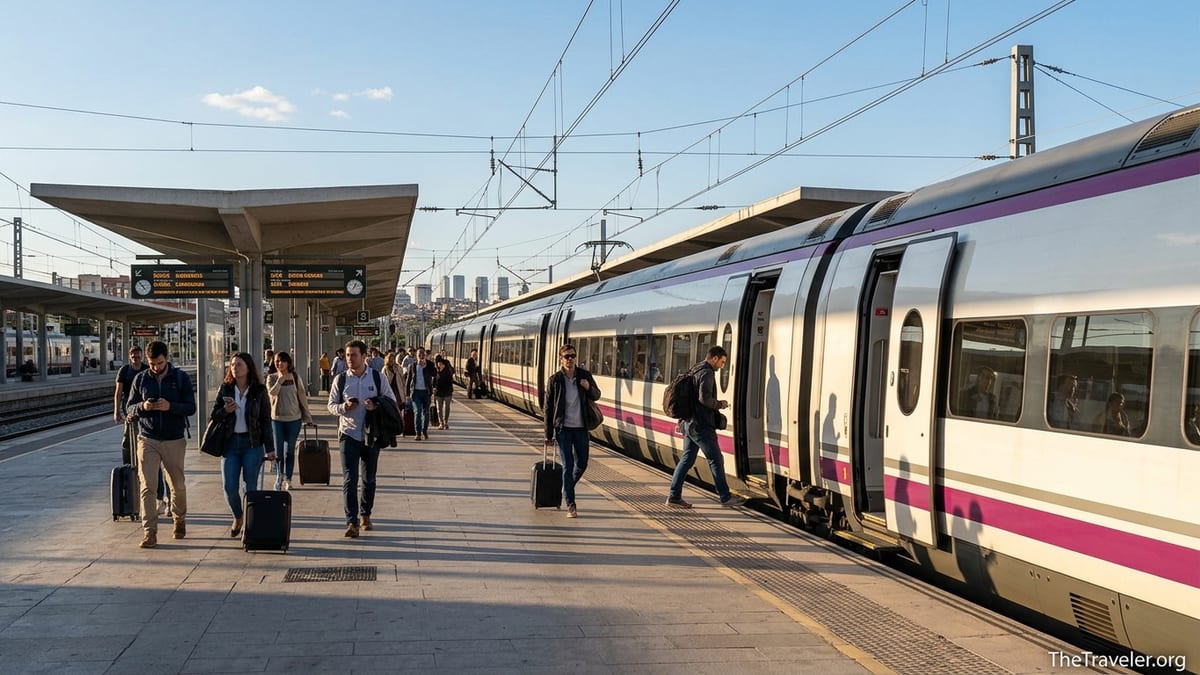
Madrid is the hub of Spain’s rail system, and most central Spain trips start at one of two big stations. Madrid Puerta de Atocha–Almudena Grandes handles most southbound and eastern high speed services, including trains to Toledo and Cuenca. Chamartín–Clara Campoamor in the north of the city is the gateway to Segovia, Valladolid and Salamanca, plus many northern routes. Cercanías commuter trains and the metro connect both stations in around 15 to 20 minutes, so changing between them is usually straightforward.
On these routes you will encounter several types of Renfe trains. AVE and Avlo are the flagship high speed services, reaching up to around 300 km/h on dedicated lines. Avant are medium distance high speed trains, often used on shorter commuter-style routes such as Madrid to Segovia or Toledo. Alvia trains mix high speed and conventional tracks, for example on the Madrid to Salamanca route, where they use the high speed line as far as Medina del Campo before switching to classic rails. You may also see Media Distancia regional trains, which are slower but sometimes a little cheaper.
Prices vary depending on how early you book, the time of day and the fare type. For popular day trip routes, advance one way tickets on Avant or Alvia trains often fall in the range of about 8 to 25 euros in second class, though flexible last minute fares in peak hours can cost more. For most visitors, it is worth checking prices a few weeks ahead of travel, especially in summer and around holidays, to lock in lower fares and guarantee a seat.
Several private high speed companies now run on some corridors from Madrid, such as low cost operators on parts of the Madrid to Valladolid line that also serves Segovia. For central Spain day trips, however, Renfe remains the main operator and the simplest starting point. When searching, selecting “Madrid (todas)” as the origin can help show both Atocha and Chamartín departures on third party booking sites, but be sure to note exactly which station your ticket uses before you plan your transfers.
Madrid to Toledo: Classic Day Trip on Rails
The Madrid to Toledo run is one of Spain’s most popular rail day trips and also one of the simplest. Avant high speed trains leave from Madrid Puerta de Atocha–Almudena Grandes and reach Toledo in about 30 to 35 minutes. Typical one way fares hover around 9 to 15 euros in Turista class if bought in advance, with limited seat reservation required. Services are fairly frequent during the day, which allows flexibility for late starts or long lunches in Toledo’s old town.
Toledo station sits about 1.5 km from the historic center. You can walk uphill in around 20 to 25 minutes, take a short taxi ride or use the city bus that stops outside the station. Many visitors time their return train around sunset, when the cathedral and Alcázar are floodlit. For example, a traveler staying near Madrid’s Plaza Mayor might take a mid morning Cercanías train or metro to Atocha, catch the 10:20 Avant to Toledo, spend six hours exploring, then return on a 17:30 or 18:25 train and be back in central Madrid before dinner.
Driving this route rarely makes sense for a short visit. The motorway from Madrid to Toledo is straightforward and takes about an hour, but by the time you navigate out of the city and pay for parking near the old town, the train is usually quicker, cheaper and less stressful. A rental car begins to make sense only if Toledo is one stop in a wider loop, for instance Madrid to Toledo, then on to the windmills of Consuegra and the wine region of La Mancha, finishing in Córdoba or back in Madrid.
For luggage, the Avant trains are comfortable for travelers with roll-aboard suitcases or backpacks. Overhead racks above the seats hold small and medium bags, while larger suitcases can go in dedicated luggage spaces at the ends of coaches. There is no airport-style weight control; the main limitation is whether you can handle your own bag through the station and onto the train.
Madrid to Segovia and Ávila: High Speed vs Scenic Routes
Segovia is another classic day trip, especially for its Roman aqueduct and fairy tale Alcázar. High speed Avant trains depart from Madrid Chamartín and reach Segovia Guiomar station in about 30 to 35 minutes. Advance one way fares on these Avant services often start around 10 to 15 euros, with some promotional prices lower at off peak times. Trains are all reserved seat, so even if you buy on the day you will be assigned a specific seat.
Segovia Guiomar station sits roughly 7 km outside the historic center. An urban bus links the station to the aqueduct area, typically in about 15 to 20 minutes, and taxis wait outside most trains. Many visitors underestimate this transfer when comparing bus or car options. In practice, a morning high speed train around 09:00 from Chamartín, plus a short bus to the city, still puts you under the aqueduct well before 10:30, making it an easy full day visit from Madrid.
There is also a slower, more scenic route using regional trains. From Madrid you can take a Cercanías commuter train to Cercedilla and connect to a Media Distancia train towards Segovia’s older Estación de Segovia. This trip can take around two hours or more, and seats are usually unreserved. This option is mainly of interest to rail fans or those wanting to see the Sierra de Guadarrama landscapes at a slower pace. For most travelers, the high speed Avant is the practical choice.
Ávila, famous for its intact medieval walls, pairs well with Segovia by train or by car. From Madrid Chamartín, Media Distancia trains reach Ávila in roughly 1.5 to 2 hours, with modest fares and no compulsory reservation. If you plan to visit both Segovia and Ávila in one day, the train schedules can be tight. In that case, renting a car for a loop Madrid–Segovia–Ávila–Madrid can make sense, particularly for small groups who want flexibility to stop at viewpoints and rural restaurants between the two cities. Expect around 1 hour by car from Madrid to Segovia, another hour from Segovia to Ávila and just over an hour back to Madrid, mostly on good highways.
Madrid to Cuenca and the Eastern High Speed Corridor
Cuenca, with its hanging houses over a deep gorge, lies on the high speed line between Madrid and Valencia. AVE and low cost Avlo trains from Madrid Puerta de Atocha–Almudena Grandes reach Cuenca Fernando Zóbel station in about 50 minutes to 1 hour. Advance one way tickets can be very good value when booked early, sometimes under 15 euros on Avlo in standard class on quieter dates, though typical prices on popular departures are higher.
Cuenca Fernando Zóbel is located a few kilometers outside the historic center. A shuttle bus and taxis connect the station with the old town, usually in 10 to 15 minutes. Many travelers combine Cuenca as a stop on the way between Madrid and Valencia or Alicante. For example, you might leave Madrid mid morning, spend the afternoon and evening in Cuenca, stay overnight, then continue to the coast the next day on another high speed train. In this case, be sure your ticket type allows stopovers or buy separate legs Madrid to Cuenca and Cuenca to Valencia.
If your goal is mainly to enjoy Cuenca’s compact historic core and its museums, the train plus local taxi or bus is ideal. However, some of the area’s best landscapes, like the Serranía de Cuenca natural park, require your own wheels. A traveler interested in hiking or visiting viewpoints like Ventano del Diablo might take the train to Cuenca, rent a car at a city agency for two days to explore the surrounding region, then return the car before continuing onward by rail.
The eastern high speed corridor is also an example of how luggage and comfort differ between train types. AVE trains typically have generous luggage racks and power outlets at most seats, while some low cost services limit the number and size of bags unless you pay extra. When comparing a slightly cheaper Avlo fare to a standard AVE ticket, factor in any baggage supplements, especially if you are traveling with more than one medium suitcase per person.
Madrid to Salamanca and the Castilian Plateau
Salamanca, known for its golden sandstone university buildings, lies to the northwest of Madrid on a partly high speed route. Renfe Alvia services from Madrid Chamartín–Clara Campoamor use the fast line as far as Medina del Campo and then continue on conventional tracks to Salamanca. Typical journey times are around 1 hour 40 to 1 hour 50 minutes on the fastest direct trains, with a mix of Alvia and Media Distancia services filling out the schedule.
One way fares for Madrid to Salamanca start at roughly 18 to 25 euros in Turista class on Alvia when booked ahead, with higher prices likely close to departure or at peak times. Media Distancia regional trains can sometimes be a little cheaper but take longer, often over three hours with changes. For most visitors on a short trip, the direct Alvia is worth the modest premium in price for its speed and comfort, including air conditioning, assigned seating and onboard catering on many departures.
Salamanca station is about a 20 to 25 minute walk from Plaza Mayor, with local buses and taxis available outside. If you are landing at Madrid Barajas Airport and heading straight to Salamanca, a common pattern is to take the Cercanías train from Terminal 4 to Chamartín in around 25 minutes, then connect to an afternoon Alvia. Many language schools and universities in Salamanca advise students to allow at least three hours between scheduled flight arrival and train departure to cover passport control, baggage collection and the transfer across Madrid.
A rental car becomes attractive if you plan a multi day loop across the Castilian plateau. For example, a traveler with a week could take the train from Madrid to Salamanca to enjoy two nights in the historic center without worrying about driving, then pick up a rental car in town to explore nearby villages, the Arribes del Duero canyon area or continue on to Zamora and León. Returning the car in a different city often adds a one way fee, so comparing a round trip loop back to Madrid versus a point to point rental is worth the effort.
Tickets, Seat Reservations and Luggage in Practice
On most high speed and long distance services out of Madrid, including AVE, Avlo, Avant and Alvia, seat reservations are compulsory and included in the ticket price. When you buy a ticket online you will either be assigned a seat automatically or given the option to choose one. For many travelers the main decision is between different fare classes. Basic or similar names usually mean the cheapest, least flexible tickets: limited or no changes, partial refunds at best and sometimes stricter baggage rules on low cost brands. More flexible fares allow changes and cancellations for a fee, which can be worthwhile on busy travel days or when connecting from a flight.
If you are considering a rail pass such as an Interrail or Eurail pass, note that Spain’s high speed services often require separate reservation fees, and availability on some popular departures can be limited in peak periods. On short central Spain routes like Madrid to Toledo or Segovia, individual tickets are usually better value and easier to manage than a multi country pass, unless Spain is only one part of a longer European itinerary.
Luggage rules on Renfe trains are generally generous compared with low cost airlines. In practice, a typical traveler with one medium suitcase and one cabin bag or backpack faces no special scrutiny. There are no routine weigh-ins at the station. The main concern is physical space near your seat. On double decker trains and some older rolling stock, larger bags are best stored in the dedicated racks at coach ends or in the middle of the carriage, while smaller bags fit overhead. For day trips, consider bringing only a small backpack with a light jacket, water and any valuables, leaving large suitcases at your hotel in Madrid.
At stations, allow some buffer time for security checks. Many Spanish long distance trains use simple bag scanners at boarding gates. Queues are typically short, but arriving 20 to 30 minutes before departure is wise, especially at Atocha where walking distances can be long. For early morning day trips, buying tickets in advance and going straight to your gate saves valuable time compared with queueing at ticket machines during the commuter rush.
When to Rent a Car Instead of Taking the Train
Although trains cover most of the headline destinations around Madrid, there are clear situations where a rental car is more practical. One is when you want to string together several smaller towns that are not on the same rail axis. For instance, combining Segovia, Pedraza, Sepúlveda and the Hoces del Duratón nature reserve in two days is almost impossible by public transport but very manageable by car from Madrid. Another is when traveling as a family or group of four or five, where the per person cost of a compact rental car and fuel can undercut multiple train tickets, especially on routes without strong competition.
Driving can also make sense when you want to stay overnight in rural hotels or paradors outside city centers. Consider a traveler keen to sleep in the Parador de Ávila and then spend a night in the countryside near the Sierra de Gredos. Trains will get you to Ávila, but reaching a village inn tucked in the mountains often requires a car or expensive taxi transfers. In such cases, a logical pattern is to start your trip by rail between big cities, then rent a car for the rural portion, returning it before reentering Madrid’s traffic.
On the other hand, for purely urban visits to Toledo, Segovia, Cuenca and Salamanca, trains are usually simpler. Parking inside historic cores can be tricky and sometimes expensive, with narrow one way streets and strict parking regulations. Spanish authorities also use low emission zones in some larger cities, which may restrict older rental cars from entering central areas. With trains, you arrive near the center and rely on short taxi or bus rides, avoiding parking altogether.
A hybrid strategy works well for many itineraries. For example, you might spend three nights in Madrid using trains for day trips to Toledo and Segovia, then rent a car for four days to visit Ávila, Salamanca, a rural wine region like Ribera del Duero and loop back to Madrid. This keeps driving days to a manageable number while still giving access to vineyards, castles and small villages beyond the rail map.
The Takeaway
Central Spain is one of the easiest regions in Europe to explore by a mix of high speed and regional trains, with Madrid as the obvious hub. Avant services make quick work of day trips to Toledo and Segovia, AVE and Avlo trains plug Cuenca into the eastern high speed corridor and Alvia services link Madrid with Salamanca in under two hours. For most first time visitors focused on historic cities, rail is the most time efficient and least stressful option.
However, the train map does not reach every appealing village or natural park. As soon as you want to join dots between smaller places, chase rural restaurants or stay in countryside inns, a rental car starts to add value. The key is to look at your itinerary day by day. Use trains where they are clearly superior, particularly between large hubs and popular day trip cities, and insert short rental periods to cover the gaps rather than driving the entire trip.
Finally, a bit of planning goes a long way. Booking key trains a few weeks ahead, confirming which Madrid station you depart from, and allowing time for simple security checks will prevent most common headaches. Think realistically about luggage and connection times, especially when linking trains with flights. With those basics in place, the railways and roads of central Spain open up a rewarding mix of grand plazas, hilltop fortresses, quiet plateaus and deep river gorges, all within a few hours of the capital.
FAQ
Q1. Do I need to buy train tickets from Madrid to Toledo or Segovia in advance?
For Avant and other high speed trains it is strongly recommended, especially in summer and on weekends, as seats can sell out on popular morning departures. Buying at least several days ahead online usually gives you more timetable options and often better prices than purchasing at the station on the day.
Q2. Which Madrid station do trains to Toledo, Segovia, Cuenca and Salamanca use?
Trains to Toledo and Cuenca generally leave from Madrid Puerta de Atocha–Almudena Grandes, while high speed trains to Segovia Guiomar and Alvia services to Salamanca depart from Madrid Chamartín–Clara Campoamor. Always check your ticket carefully, as traveling to the wrong station is a common mistake for visitors.
Q3. How early should I arrive at the station before my train?
For most long distance and high speed services, arriving 20 to 30 minutes before departure is sufficient. This allows time to pass simple security checks, find your platform and board without rushing. At peak holiday times or if you are unfamiliar with the station, adding an extra 10 minutes is a sensible buffer.
Q4. Are trains in central Spain suitable if I have large suitcases?
Yes, most AVE, Avant, Alvia and Media Distancia trains have overhead racks for smaller bags and luggage spaces at the ends of carriages for larger suitcases. There are usually no weight checks, but you must be able to lift and manage your own luggage on and off the train and through the station.
Q5. When is it better to rent a car instead of taking the train?
A car is preferable when you want to combine several rural destinations in one trip, such as small villages, natural parks or wineries that lack frequent public transport. It also becomes attractive for families or groups where the total cost of several train tickets may exceed a compact rental and fuel, especially outside the busiest routes.
Q6. Can I visit both Segovia and Ávila in one day from Madrid by train?
It is possible but tight. Train timetables do not always align well for a comfortable double visit, and you may feel rushed. If you want to see both cities in the same day with more flexibility to stop at viewpoints or have a leisurely lunch, renting a car for a day loop from Madrid is usually more practical.
Q7. Is driving into historic city centers like Toledo or Salamanca difficult?
Driving into the cores of historic cities can be challenging because of narrow streets, one way systems, pedestrian zones and strict parking rules. Many visitors prefer to park at a lot outside the old town and walk or take a taxi in. For short stays without a car, arriving by train and using local transport or walking is generally simpler.
Q8. Are there discounts on trains for children, seniors or groups?
Renfe and some private operators often offer reduced fares for children, and there can be promotional fares for seniors holding specific discount cards or for groups traveling together. The exact conditions change over time, so it is worth checking the current options when you book rather than assuming a particular discount will apply.
Q9. Can I bring food and drinks on board Spanish trains?
Yes, you can bring your own snacks and non alcoholic drinks on most trains, and longer distance services often have a café bar or trolley service. Many travelers buy a simple picnic at Madrid’s stations or nearby supermarkets to eat on board, which is particularly convenient on routes of more than an hour.
Q10. Is a rail pass worthwhile for central Spain routes from Madrid?
For trips limited to Madrid and a few nearby cities like Toledo, Segovia, Cuenca and Salamanca, buying individual tickets is usually more economical than a rail pass, especially once reservation supplements are added. A pass may make sense only if you are combining Spain with several other countries over a longer period and plan to take many cross border or long distance journeys.