


The Community of Madrid is one of Spain’s most season‑sensitive regions. A July afternoon in the city feels nothing like a misty January morning in the Sierra de Guadarrama, and the spring gardens of Aranjuez bear little resemblance to the baked riverbanks of late August. Planning around these contrasts is the key to a rewarding trip. This guide looks at how each season affects Madrid itself, its historic towns such as Aranjuez and San Lorenzo de El Escorial, and the Guadarrama mountains, with specific examples of weather, events, crowds and transport to help you decide when to come and where to go.
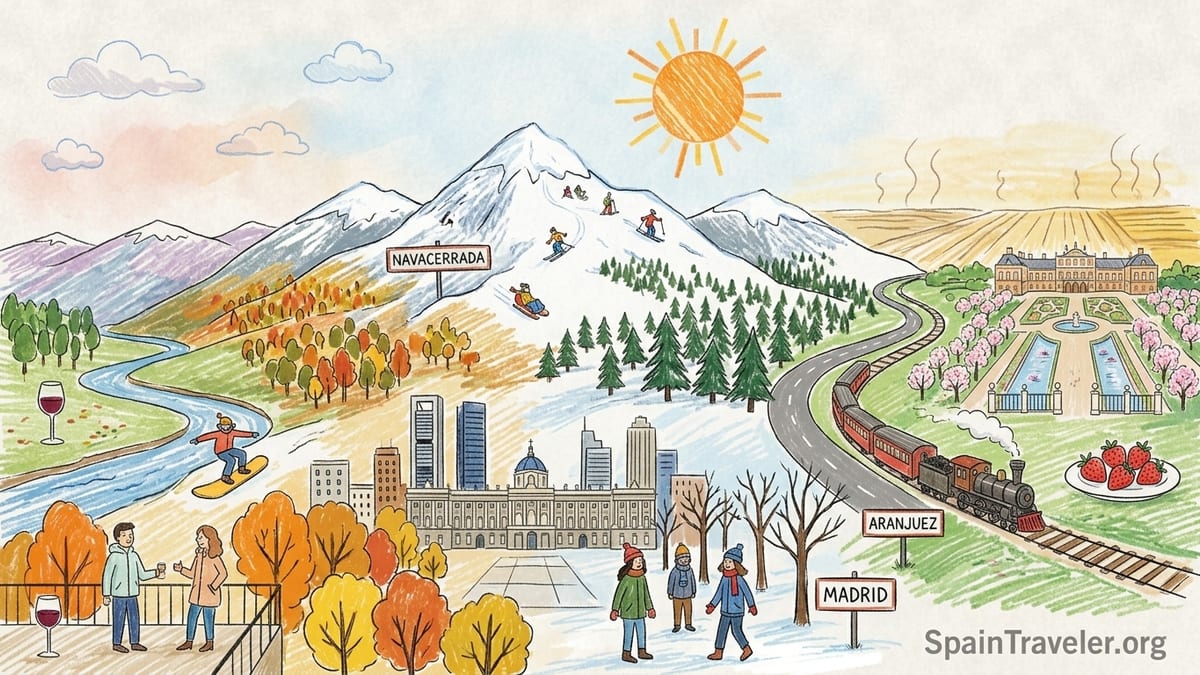
How Madrid’s Seasons Shape Your Trip
The regional tourism boards like to say that you can enjoy Madrid in every season, and they are broadly right. The city has a dry continental climate with cold but usually sunny winters, short shoulder seasons with very pleasant daytime temperatures, and long, hot, very dry summers. In central Madrid, January daytime highs often sit around 9 to 11 degrees Celsius with cold nights, while July and August frequently climb into the low to mid 30s, especially in the afternoon. Rainfall is limited and tends to concentrate in late autumn and early spring, which is why blue skies are common for most of the year.
The surrounding towns at lower elevations, such as Aranjuez and Chinchón, feel these swings even more in summer. Lack of shade, reflective paving and wide open squares mean that walking in the middle of a July or August day can quickly become uncomfortable. By contrast, Madrid’s large parks and the tree cover of neighborhoods like Chamberí or Salamanca give the capital more places to duck into shade or air conditioned interiors. This difference in microclimate is one of the reasons that day trips demand more seasonal planning than a pure city break.
Higher up, in the Sierra de Guadarrama, everything changes again. Mountain passes such as Navacerrada at nearly 1,900 meters see regular snowfalls from roughly December into March, and the national park authority highlights that precipitation here often arrives as snow outside the summer months. Winter weekends can bring windchill of minus 6 to minus 8 degrees at the passes, while July afternoons in the high valleys remain fresh enough for hiking in short sleeves. As a result, the same weekend in February that feels perfect for a sunny city stroll might require full winter gear in Cotos or on the Peñalara approaches.
Beyond weather, the annual calendar of events also shapes when it is best to come. Spring strawberry trains to Aranjuez, autumn wine fairs in the Madrid wine region, and the winter rush to sledding slopes around Navacerrada all create short, intense peaks in demand. Understanding when these happen, and how they affect crowds on specific days, allows you to choose between joining the action or deliberately avoiding it.
Spring: Ideal for City Wandering and Aranjuez Gardens
Spring, from late March through May, is widely regarded as the best overall season for the Community of Madrid. In the city, daytime temperatures usually climb from the mid teens in March to the low to mid 20s in May. Mornings are cool enough for a light jacket, afternoons feel warm without being oppressive, and evenings on outdoor terraces in neighborhoods such as La Latina or Malasaña are comfortable with only a thin sweater. It is an excellent time for classic urban sightseeing: the Prado and Reina Sofía museums, Retiro Park with its fresh new leaves, and walks between Plaza Mayor, the Royal Palace and the Temple of Debod.
This is also when Aranjuez looks most like the royal spring residence it was designed to be. The palace gardens managed by Patrimonio Nacional reopen fully after winter pruning. In April and May, the Jardín de la Isla and the riverside Jardín del Príncipe display tulips, irises and plane trees in bright green leaf, while the Tagus runs higher from winter and spring rains, making the canals and fountains feel alive. Local guides and specialist sites routinely describe April and May as the optimum months for the palace and gardens, both for blossom and for mild temperatures that allow long walks without heat stress.
Spring brings one of the region’s most atmospheric seasonal experiences: the Tren de la Fresa, or Strawberry Train. Operating on selected weekends from late March into early June, this heritage rail service runs from the historic Delicias area of Madrid to Aranjuez using vintage carriages. On board, staff in period costume offer tastings of the strawberries that made Aranjuez famous, and packages often bundle guided palace visits or free time in the gardens. For visitors who enjoy slow travel and rail history, planning a weekend in Madrid around one of these departures can be a highlight.
In the mountains, spring is more complex. Lower trailheads around towns such as Cercedilla, Miraflores de la Sierra or Manzanares el Real start to become attractive for hiking from April onward, but snow can linger well into May on north facing slopes and in high cirques like Peñalara. Official park leaflets and local councils recommend checking conditions for routes above 1,800 meters, since late snowfall is not unusual. For most casual visitors, however, late April to early June offers pleasant, cool hiking along waymarked routes like the Fuenfría valley paths, with green meadows, running streams and relatively light crowds compared with summer weekends.
Summer: City Heat, Quiet August Streets and Busy Mountains
Summer divides opinion more than any other season. In Madrid city, from late June through August, the combination of strong sun, clear skies and limited shade means that midday heat can be intense. July and August daytime highs frequently sit above 32 degrees, and heat waves can push them several degrees higher. Locals adapt by shifting daily life later: shops maintain long midday closures, restaurants fill after 9 or 10 in the evening, and families head to parks or Madrid Río after sunset. For visitors, this rhythm means planning museum visits and long lunches during the hottest part of the day, then exploring neighborhoods on foot in the mornings and late evenings.
Despite the heat, August can be an attractive time for certain travelers. Many Madrid residents leave for the coast or their home villages, so the central districts feel quieter, traffic is lighter and hotel rates can drop compared with popular spring and autumn weekends. Key sights such as the Prado, Royal Palace and main plazas remain open and uncrowded by European summer standards. The trade off is that smaller neighborhood restaurants and independent shops in low tourist barrios may close for all or part of August, especially in the second half of the month, so spontaneous exploring away from the centre can be less rewarding.
In contrast, summer transforms the Sierra de Guadarrama into one of Spain’s busiest weekend playgrounds. The same temperature that makes downtown Madrid uncomfortable makes 1,500 to 2,000 meter altitudes feel pleasantly cool, so Madrileños flock to passes like Navacerrada and Cotos, and to valleys such as La Pedriza and the Lozoya. On hot Saturdays it is common for parking areas inside and around the national park to fill early in the morning, forcing late arrivals to park far down the access roads or rely on the limited rail and bus services. Public agencies have introduced occasional traffic regulation measures when snow or extreme crowding is expected, reinforcing the need for early starts.
If you plan summer hiking, aim to take the first trains out of Madrid to Cercedilla or Collado Mediano, or drive up before 9 in the morning. Popular family routes, for example around the Navacerrada reservoir or the low hill circuits in La Barranca, can feel very crowded by midday, especially on Sundays. Heat is not absent either. South facing rock landscapes like La Pedriza can become surprisingly hot from early afternoon, with reflected sun making conditions similar to a lowland day in late spring. Carry more water than you think you will need and consider shaded woodland walks, particularly if traveling with children.
Autumn: Wine, Culture and Sierra Colours
Autumn in the Community of Madrid, from late September through November, offers a blend of good weather, cultural events and striking landscapes. The city experiences a second period of very comfortable temperatures similar to spring, with daytime highs around the low to mid 20s in late September and gradually cooling through October. This is a favourite season for residents, who return from summer holidays to a rich calendar of exhibitions, theater performances and food events, and for visitors who prefer café terraces under golden plane trees to intense summer heat.
Across the region, vineyards and agricultural areas enter their most evocative period. In the Madrid wine country south and southeast of the city, around towns like Chinchón, Colmenar de Oreja and San Martín de Valdeiglesias, grape harvest takes place from late August into September depending on the variety and elevation. Many wineries open their doors for harvest themed visits on weekends, often including vineyard walks, cellar tours and tastings of local styles such as crisp young whites or structured crianza reds. While each bodega publishes its own programme and prices, it is common to find small group visits with tastings for a modest fee per person.
Autumn is also when Aranjuez shows a different form of beauty. After the peak greenery of spring and early summer, the plane trees and poplars that frame the Tagus and line the palace avenues turn vivid yellow and amber from late October through much of November. Travel writers and local photography communities regularly highlight this as one of the best fall foliage displays near Madrid, especially on clear afternoons when low light catches the leaves. Temperatures remain suitable for long walks, and the summer crowds are gone, but some fountains may be drained for maintenance and the days are noticeably shorter.
In the Sierra de Guadarrama, autumn brings perhaps the richest palette of the year. Beech and oak groves in areas such as the Lozoya valley and the slopes near Rascafría turn copper and red, and high pines stand dark green against often very clear skies. Mid October to mid November is typically the best window for color, depending on altitude and the year’s rainfall. Hiking conditions are excellent on most weekends, with cool but not yet cold air and reduced high summer traffic. However, early winter storms can arrive as soon as November, suddenly dropping snow on passes like Cotos and making some high trails unsuitable for casual walkers, so it remains important to check mountain forecasts.
Winter: City Light, Mountain Snow and Weekend Crowds
Winter, roughly December through February, splits the region into two very different experiences. Madrid city is cool or cold, often with bright sunlight and relatively little rain compared with many European capitals. Daytime highs usually sit just under 10 degrees in January, with overnight lows close to freezing, but sharp cold snaps do occur. For urban sightseeing this can be a pleasant time, especially for travelers who prefer layering up to managing summer heat. Museums feel less crowded than in peak school holiday weeks, hotel rates tend to be more competitive, and Christmas lighting and seasonal markets in December add atmosphere around Plaza Mayor and the historic centre.
Lower elevation heritage towns experience similar conditions but with fewer indoor options. Toledo, Segovia and Alcalá de Henares can feel very exposed on windy days at this time of year, and early sunsets limit how many sites you can comfortably visit in one day trip. Aranjuez in particular is off its visual peak in mid winter. The palace and museums remain open, but the formal gardens are pruned, fountains may be dry, and many deciduous trees stand bare. For travelers who care mainly about horticulture and riverside walks, it is better to choose spring or autumn.
For the Sierra de Guadarrama, winter is high season in a different sense. When snow arrives at accessible elevations above roughly 1,500 meters, weekend crowds surge to Navacerrada, Cotos and nearby ski areas such as Valdesquí. Families drive up for sledging, first attempts at skiing and simple snow play among the pines, while more experienced hikers equip themselves for winter routes. This popularity has grown to the point that regional authorities now deploy special traffic control operations whenever heavy snowfall is forecast, managing access to the mountain passes in order to reduce gridlock and maintain safety.
If you plan to enjoy the snow, treat a winter weekend trip to the Sierra like a small alpine excursion. Expect slow traffic on blue sky Saturdays after fresh falls, dress for subzero windchill and bring waterproof footwear and spare layers. For a less stressful experience, consider traveling on weekdays if your schedule allows, or use the suburban rail line from Madrid to Cercedilla and onward mountain trains to Navacerrada and Cotos when they are running, avoiding the worst of the road congestion. Always check official park and weather information before setting out, since sudden storms can close passes and higher trails entirely.
Event Timing: Trains, Festivals and Local Life
Several recurring events in the Community of Madrid have a direct impact on when it is best to visit specific places. The Strawberry Train to Aranjuez, mentioned earlier, concentrates extra visitors into a limited spring weekend window, typically from late March until early June. On operating days, the palace and historic core see spikes of mid morning arrivals, especially on Saturdays and Sundays. If you prefer quieter experiences, choose a weekday in April or May without train service, when school groups and guided tours can still appear but overall numbers remain moderate.
Within Madrid city, the annual calendar influences hotel prices and availability more than day to day sightseeing. Major holidays such as Semana Santa around March or April and the early May long weekend create brief surges in demand, while the large Pride events in late June and early July draw substantial international crowds. During these periods, central hotels and apartments book out further in advance and rates tend to be higher, but the main daytime attractions operate normally and the added atmosphere can be a draw rather than a drawback for many visitors.
In wine country and the Sierra foothills, autumn is a significant period. Many wineries around San Martín de Valdeiglesias, Navalcarnero or Arganda del Rey host special harvest or new wine events from late August through October, combining tours, tastings and sometimes small local festivals. These can make weekend lunches in popular villages busier than usual and temporarily push up demand for rural guesthouses. At the same time, the mountains may host organized trail races, cycling events or cultural festivals in towns like Cercedilla and Manzanares el Real, briefly filling local accommodation and parking.
Winter snowfalls create their own event like peaks. News outlets in the region regularly report on weekends when new snow collapses the usual traffic patterns in Navacerrada and Cotos, with cars queued for kilometres and car parks saturated early in the day. Authorities now publicize in advance when special access controls will apply, such as limiting road access or reinforcing rail and bus services. For casual visitors, it can make sense to avoid the very first clear weekend after a major snowfall, and instead choose a weekday or a later weekend when the novelty has faded but snow cover remains good.
Practical Seasonal Strategies by Trip Type
The best time to visit the Community of Madrid depends heavily on the kind of trip you want. For a city focused break centered on Madrid itself, including the classic trio of Prado, Royal Palace and Retiro, the prime windows are generally April and May, then late September and October. These months combine comfortable walking temperatures, long daylight hours and a full cultural calendar without peak summer heat. Hotel prices in central areas such as Gran Vía or Huertas can be high during Easter and some convention weeks, but competitive deals often appear for midweek stays.
For a city stay plus heritage day trips, spring and autumn again stand out. Aranjuez, Segovia, Toledo and El Escorial involve more time outdoors with limited shade, so cooler conditions matter more. A sample April itinerary could pair three or four nights in Madrid with day trips by train to Segovia for its Alcázar and Roman aqueduct, and Aranjuez for gardens and the palace, using the Strawberry Train for the latter if its schedule fits your dates. In October, you might swap Aranjuez for a wine country excursion combined with a long lunch in Chinchón’s porticoed main square.
Hikers and nature enthusiasts aiming for the Sierra de Guadarrama have two main choices. Late spring and early summer, from May into early July, offer clear trails, flowing streams and wildflowers at medium altitude, provided you monitor high level snow. Early to mid autumn, from late September to early November, presents cooler air and rich colours in the beech and oak forests. Avoid the highest heat of late July and August for strenuous routes in sun exposed areas, and be prepared for sudden winter conditions from November onward. If you must visit in peak summer, consider early morning departures and routes that stay partly in pine forest.
Wine travelers should focus on September and early October, when vineyards are active and many wineries welcome visitors for harvest related experiences. Plan ahead by booking tastings with specific producers rather than relying on walk in visits, and allow time to explore historic wine towns such as Colmenar de Oreja or the medieval streets of Chinchón. Families may find late spring and early autumn the sweetest spots overall. Outdoor pools and playgrounds in Madrid are open, day trip destinations are comfortable for children, and in the Sierra there is enough warmth for picnics without worrying about either heat stroke or icy paths.
The Takeaway
No single month is objectively best for visiting the Community of Madrid, but patterns are clear. Spring and autumn provide the most balanced conditions, especially if you want to combine Madrid city with heritage towns and light hiking. Summer suits night owls who do not mind reorganizing their day around the heat and families who value the cooler air of the Sierra de Guadarrama, though they must accept crowds at mountain trailheads and occasional closures of small urban businesses. Winter offers bargains, calm museums and the possibility of snow adventures in the mountains, at the cost of shorter days and more planning around weather and access.
The key is to match your timing to your priorities. If Aranjuez’s gardens and the Strawberry Train appeal, target April or May. For vineyard landscapes and mellow city afternoons, look to late September or October. Travelers intent on snow play around Navacerrada or Cotos should monitor forecasts from December through February and avoid the very busiest post snowfall weekends. Throughout the year, remember that conditions in the lower elevation towns, the capital and the Sierra differ markedly, so check separate forecasts and local advice when planning each outing.
Whatever the season, you will find that the Community of Madrid rewards those who lean into its rhythms rather than fight them. That might mean an afternoon siesta before a 10 p.m. dinner in August, a 7 a.m. train to Cercedilla for a quiet spring hike, or a Wednesday visit to Aranjuez in November to have the autumn avenues almost to yourself. With realistic expectations and a flexible plan, the contrasts between city, plain and mountain become the very elements that make your trip memorable.
FAQ
Q1. What is the single best month to visit Madrid city for first timers?
For most first time visitors who want comfortable weather for walking and café culture, October is an excellent choice, with mild days, cool evenings and a full cultural calendar.
Q2. When is the best time to visit Aranjuez for its gardens?
The best period for Aranjuez gardens is April and May, when flowers are in bloom, the Tagus river is higher and temperatures allow long walks without intense heat.
Q3. Is August in Madrid really too hot to enjoy?
August is very hot in the daytime, but mornings and evenings can be pleasant, streets are quieter and major sights stay open. Plan indoor activities for mid afternoon and stay hydrated.
Q4. When does snow usually arrive in the Sierra de Guadarrama?
Snow can fall as early as late November and is most reliable from December through February at higher elevations such as Navacerrada and Cotos, though conditions vary year by year.
Q5. What is the best season for hiking in the Sierra de Guadarrama?
Late spring and early summer, then again in early autumn, offer the best combination of open trails, moderate temperatures and long daylight hours for most hikers.
Q6. Are there particular weekends I should avoid in the mountains?
It is wise to avoid the first sunny weekend after major snowfalls in winter and some high summer Sundays, when roads and car parks at Navacerrada and Cotos can become saturated early.
Q7. When do wine events and harvest activities take place near Madrid?
Harvest time runs from late August into September in the Madrid wine region, with many wineries hosting special visits and tastings through September and early October.
Q8. How far in advance should I book accommodation for spring and autumn trips?
For popular months such as April, May, September and October, booking central Madrid hotels four to eight weeks ahead is usually enough, though Easter and major events can require more.
Q9. Is winter a good time for a family trip to Madrid?
Winter can work well for families who enjoy museums, festive lights and occasional snow excursions to the Sierra, provided you pack warm clothing and plan around shorter daylight hours.
Q10. What is the best strategy to avoid peak summer heat during a city stay?
In summer, concentrate sightseeing before noon and after 8 p.m., use the hottest hours for museums and long lunches, choose accommodation with air conditioning and make use of parks and shaded streets.