


Spain is no longer a simple “Barcelona plus beaches” destination. With high speed trains, affordable low cost flights and boutique hotels opening across the country, travelers in 2026 can mix Gothic cities, Atlantic surf towns, volcanic islands and some of Europe’s best food in a single itinerary. The hard part is not finding places to visit, but choosing the right ones for your travel style, time and budget.
How to choose where to go in Spain
Spain is large by European standards, roughly the size of Texas, and moving between regions can take more time and money than many first time visitors expect. Madrid and Barcelona are about 2.5 to 3 hours apart on the fast AVE train, while a flight from mainland hubs like Madrid or Barcelona to the Canary Islands often takes around 3 hours plus airport time. Before locking in flights, decide what kind of trip you want: a culture heavy city break, a relaxed beach holiday, a food pilgrimage, or a bit of everything.
Transport costs vary but are predictable enough to plan around. A one way high speed train ticket between Madrid and Barcelona often ranges from about 35 to 80 euros in standard class if booked a few weeks ahead, while low cost flights to islands such as Mallorca or Tenerife can drop below 60 euros one way outside peak August dates, then rise sharply in school holidays. Budget for airport transfers too: a taxi from Barcelona El Prat to the city center typically runs around 30 to 40 euros, while Madrid’s flat airport to city fare sits in a similar bracket.
Accommodation price patterns are also important. Coastal cities like San Sebastián, Ibiza Town and Palma de Mallorca can see central hotel rooms start from 180 to 250 euros per night in July and August for mid range properties, while inland cities such as Granada or Valencia can still offer decent double rooms in the 90 to 140 euro range outside major festivals. For many travelers it makes sense to combine one expensive “treat” city or island with one or two more affordable bases.
Seasonality shapes the experience as much as geography. Andalusian cities like Seville and Córdoba can regularly reach daytime highs above 38 degrees Celsius in July and August, which pushes sightseeing to early morning and late evening. Northern regions such as Galicia and the Basque Country usually sit closer to the low to mid 20s in summer and stay mild and green, so they appeal to hikers and road trippers who dislike intense heat. The Canary Islands are often in the low to mid 20s much of the year, so they function as winter sun destinations for Europeans.
Madrid vs Barcelona: culture, nightlife and first time appeal
Madrid and Barcelona are the default starting points for many international arrivals, each with major airports that handled tens of millions of passengers in the most recent pre pandemic years. Madrid is the political and geographic capital, with the Prado, Thyssen Bornemisza and Reina Sofía museums forming one of Europe’s strongest art triangles, while Barcelona offers a mix of seafront, modernist architecture and nightlife around areas such as El Born and Eixample.
For museum lovers and food focused city trippers, Madrid can be the better value choice. A typical day might include a morning at the Prado, a long lunch of tapas in La Latina or Lavapiés where individual plates can still be found from around 3 to 5 euros, then evening drinks along Calle Ponzano. Neighborhoods such as Malasaña and Chueca offer a mix of independent boutiques, cocktail bars and small galleries, with mid range hotels often slightly cheaper than comparable properties in central Barcelona outside major events.
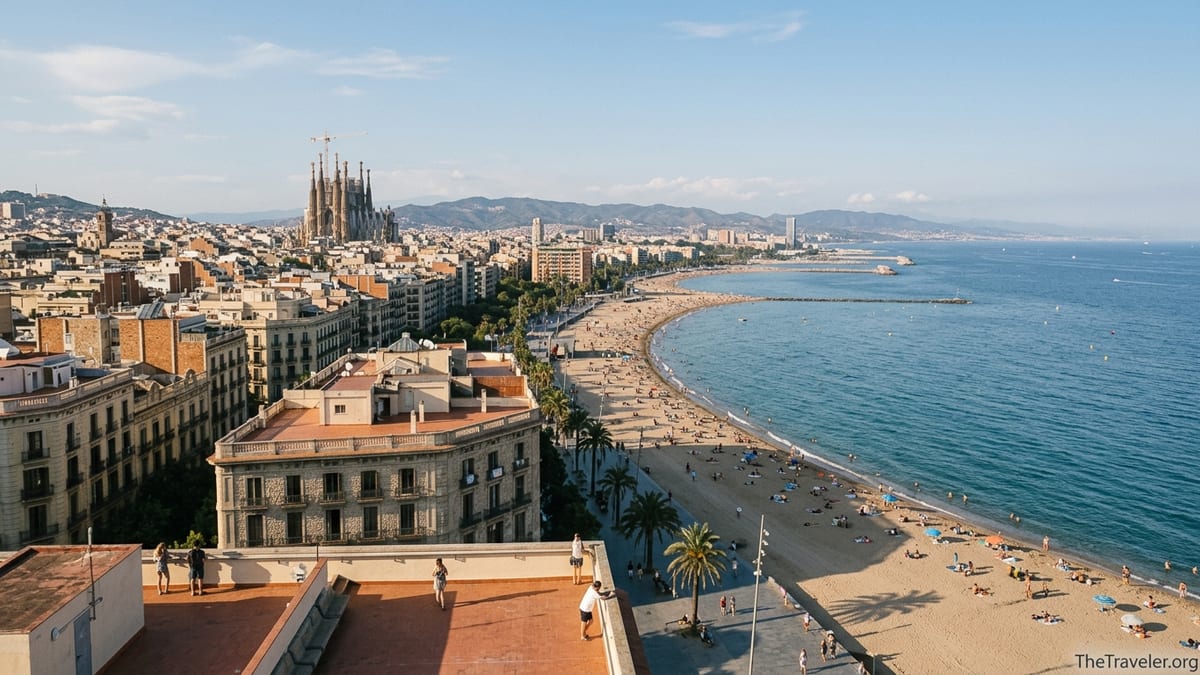
Barcelona, by contrast, tends to suit travelers who want iconic architecture, urban beaches and a strong nightlife scene in a compact area. Walking between La Sagrada Família, Passeig de Gràcia and the narrow streets of the Gothic Quarter in one day is realistic, and Barceloneta Beach sits within a short walk or metro ride of the historic center. Expect higher prices in the core tourist belt: a seafront paella in Barceloneta will usually cost considerably more than a similar dish in less famous beach towns, and central bars can charge 5 to 7 euros for a beer where neighborhood spots further inland might charge 3 to 4.
First time visitors with 7 to 10 days often pair Madrid and Barcelona with one side trip. From Madrid, classic excursions include Toledo or Segovia for medieval streets and castles, both reachable in roughly 30 minutes by fast train. From Barcelona, many travelers opt for Girona or the Costa Brava for a taste of the smaller Catalan towns and rocky coves that contrast strongly with the busy city beaches.
Andalusian classics: Seville, Granada and Málaga
Andalusia feels like Spain as many overseas visitors imagine it: flamenco bars, Moorish palaces, orange trees and late nights in tiled plazas. Seville and Granada are the headline acts, with Málaga increasingly popular as both a flight hub and a livable city that combines culture with beaches. High speed rail now links Madrid with these cities in roughly 2.5 to 3.5 hours, making them realistic even on shorter itineraries.
Seville works especially well for couples, culture lovers and travelers who enjoy slow evenings. The Real Alcázar, Seville Cathedral and Plaza de España can easily fill two full days, and a third day leaves time to simply wander Triana or the Santa Cruz quarter. In spring, travel during festivals such as Semana Santa or Feria de Abril brings dramatic processions and traditional dress but also higher prices and crowded streets, so book months ahead if those events appeal.
Granada is defined by the Alhambra, one of the most visited monuments in Spain, sitting on a hill above the whitewashed Albaicín district. Timed entry tickets often sell out days or weeks in advance in high season, and many organized tours include early morning or evening visits to avoid the strongest sun. Beyond the palace complex, Granada suits budget conscious travelers and students, with a longstanding tapas tradition where a small plate often arrives automatically with each drink in many local bars, particularly in less touristy neighborhoods.
Málaga has shifted from being mainly an airport city for the Costa del Sol to a destination in its own right, helped by a revitalized port area, the Picasso Museum and contemporary art spaces. It makes a convenient base for families who want both city comforts and easy day trips to smaller beach towns such as Nerja or cultural stops like Ronda. Flight connections from northern Europe are usually strong, and onward links to other Andalusian cities by bus or train are straightforward, which keeps transfer times under control on multi stop trips.
Food pilgrimages: San Sebastián, Bilbao, Galicia and Valencia
For travelers who build itineraries around meals rather than monuments, northern Spain and the eastern coast offer some of the country’s most rewarding food experiences. San Sebastián in the Basque Country has long been associated with both high end restaurants and casual pintxo bars, where counters are stacked with small plates costing only a few euros each. In neighborhoods like Parte Vieja, it is easy to turn an evening into a moving feast by having a drink and one or two bites in each bar.
Bilbao, once more associated with heavy industry, has reinvented itself as an art and design city centered on the Guggenheim Museum. It offers a good balance for travelers who want Basque flavors without the intense summer demand and prices of San Sebastián. Both cities sit near green hills and beaches, so it is possible to combine a morning swim at spots like Playa de la Concha or Sopelana with an afternoon of museum visits and bar hopping.
Further west, Galicia appeals to those who prioritize seafood, coastal scenery and cooler weather. Cities and towns such as Santiago de Compostela, A Coruña and Vigo offer different takes on Galician life, but across the region visitors commonly find plates of octopus, shellfish and grilled fish in simple marisquerías. Portions are often generous, and menus del día at lunchtime can still represent strong value compared with more touristed parts of the Mediterranean coast.
On the Mediterranean side, Valencia has quietly grown into one of Spain’s favorite city breaks for food focused travelers. Birthplace of paella, it offers both traditional rice dishes cooked over wood fires and modern interpretations in contemporary restaurants around neighborhoods like Ruzafa. The futuristic City of Arts and Sciences and a long urban beach front add visual appeal, while prices for hotels and restaurants often undercut Barcelona. For visitors who want a mix of food culture, sandy beaches and family friendly attractions without extreme crowds, Valencia is a strong candidate.
Beach towns, islands and coastal escapes: Ibiza, Mallorca, Tenerife and Costa Brava
Spain’s coastline and islands cover very different moods, from hedonistic clubbing to quiet fishing coves and year round hiking. Choosing between them depends less on scenery, which is generally beautiful across the board, and more on atmosphere, budget and season. Flight times from Madrid or Barcelona to Ibiza and Mallorca are often around one hour, while connections to the Canary Islands like Tenerife are closer to three hours.
Ibiza has a split personality. On one side are legendary nightclubs, beach clubs that charge premium entry and cocktails, and sunset bars around San Antonio or Playa d’en Bossa that attract an international party crowd. On the other are quieter northern villages and small coves where family friendly hotels and agroturismo properties nestle among pine trees. Accommodation near major clubs and beach hotspots can reach several hundred euros per night in July and August, so those on tighter budgets often travel in May, June or late September instead.
Mallorca, the largest of the Balearic Islands, offers more variety. Palma de Mallorca has a historic center, cathedral and dining scene that work well for city breakers, while coastal areas range from resort strips in the south to more rugged, quieter stretches in the northwest near the Serra de Tramuntana mountains. Many visitors rent a car for at least a few days to explore smaller calas, with daily rates for compact cars sometimes falling below 40 euros in shoulder seasons when booked ahead, then spiking in high summer.
Tenerife in the Canary Islands delivers a different kind of island trip. Its volcanic interior, dominated by Mount Teide, appeals to hikers and road trippers who want dramatic landscapes as much as beaches. The north of the island, with towns like La Laguna and La Orotava, tends to feel more traditional and lush, while the south concentrates larger resort complexes geared to package holidays. Winter is high season for many international visitors chasing mild weather, so shoulder periods in late spring and early autumn can bring quieter trails and moderate prices.
On the mainland, the Costa Brava north of Barcelona is prized for its mix of rocky coves, blue water and medieval towns like Tossa de Mar or Pals. It generally attracts a more relaxed crowd than the high density resort strips further south. Driving the coastal roads or using regional buses, visitors can hop between small beach towns, clifftop walking paths and inland villages, making the area well suited to independent travelers and families who prefer apartment rentals or smaller hotels over all inclusive complexes.
Who should go where: matching destinations to traveler types
Solo travelers who enjoy city life and nightlife often gravitate toward Madrid, Barcelona or Valencia as primary bases. These cities have extensive hostels, co working friendly cafes and social bars, plus regular events. It is realistic for a solo visitor to spend 5 to 7 nights in Madrid, working during the day and exploring museums and tapas bars in the evenings, then tack on a weekend in Valencia or Seville using budget airlines or fast trains without complicated logistics.
Couples looking for romance and atmosphere may prefer Seville, Granada, San Sebastián or small towns along the Costa Brava or in Mallorca. Evenings spent sharing pintxos in San Sebastián’s Old Town, watching sunset from a mirador above Granada, or wandering Seville’s orange scented streets can feel more intimate than Barcelona’s busiest quarters. Boutique guesthouses in restored townhouses or rural hotels in olive groves often cater specifically to this market, with prices that vary widely but can be comparable to mid range city hotels outside peak holiday weeks.
Families with school age children typically benefit from basing themselves in cities or islands with straightforward transfers, safe swimming options and accessible day trips. Málaga, Valencia, Palma de Mallorca and parts of Tenerife meet these criteria well. For example, a family could fly into Málaga, spend a few days exploring the Alcazaba, port and city beaches, then take short bus rides to Nerja or smaller nearby towns for extra beach time. Similarly, Valencia’s combination of a long urban beach, cycling paths and the Oceanogràfic aquarium creates an easy environment for children.
Outdoor enthusiasts and road trippers are usually happiest in northern Spain or the Canary Islands. Renting a car in Galicia or Asturias and following the coastline reveals cliffs, beaches and fishing villages that are hard to reach by public transport, while the Picos de Europa mountains and interior national parks suit hikers. In Tenerife, well marked trails through volcanic scenery can be tackled on day hikes from coastal bases, though visitors should check access rules for Mount Teide and book cable car slots in advance when needed.
Practical planning tips for 2026 Spain trips
By 2026, Spain’s high speed rail network links most major cities travelers are likely to visit, including Madrid, Barcelona, Valencia, Seville, Málaga and Granada. Booking directly with main rail operators or through official partners several weeks in advance usually yields better fares than last minute purchases, particularly on popular weekend routes. Many services offer different fare types with varying refund policies, so more flexible tickets can be worth the small extra cost if your dates are not fixed.
Domestic flights connect the mainland with islands and between some distant city pairs, but airports and transfers add time. For journeys such as Madrid to Barcelona or Madrid to Valencia, trains are typically more efficient door to door than flying. On the other hand, flights are almost always necessary to reach Tenerife, Gran Canaria and most Balearic island routes from outside Spain, so factoring in baggage fees and transfer times at booking stage helps avoid surprises.
In terms of daily budgets, Spain can still feel more affordable than some northern European countries, but coastal hotspots and top tier restaurants quickly add up. A realistic mid range budget in many cities might include 12 to 20 euros per person for a simple lunch, 25 to 40 euros for dinner without premium wine, and 2 to 3 euros for a standard coffee. Tasting menus at well known restaurants or club nights in Ibiza can easily exceed 100 euros per person, so travelers who want a mix of experiences often combine modest everyday meals with one or two splurge nights.
Advance booking remains essential for key attractions like the Alhambra in Granada, the Real Alcázar in Seville and La Sagrada Família in Barcelona, especially from late spring through early autumn. Many travelers now secure timed tickets or guided tours weeks ahead, then plan their accommodation and transport around those anchor points. Shoulder seasons in April to early June and late September to October often deliver a good balance of pleasant weather, manageable crowds and reasonable prices across much of the country, with the exception of regions that rely on specific festivals or pilgrimage periods.
The Takeaway
There is no single best place to visit in Spain, only destinations that fit some travelers better than others. Big hitting cities like Madrid and Barcelona are ideal for art, nightlife and first visits, while Andalusia’s Seville, Granada and Málaga offer the palaces, courtyards and slower evenings many people imagine when they picture southern Europe. Food driven travelers can build entire trips around San Sebastián, Bilbao, Galicia and Valencia, and those chasing beaches or winter sun can look to Mallorca, Ibiza, Tenerife or the Costa Brava.
The most satisfying Spain itineraries in 2026 tend to focus on two or three regions that complement each other rather than racing across the map. Combining a major city with either an inland historic town or a coastal stretch gives contrast without exhausting travel days. Thinking honestly about your heat tolerance, nightlife expectations, budget and interest in museums or hiking will help narrow the list far more effectively than any generic ranking of “top 10” places.
With fast trains, a competitive domestic flight market and more boutique hotels and guesthouses than ever, it has rarely been easier to match Spain’s cities, beaches, islands and food destinations to your own travel style. Start with how you like to spend a perfect day on the road, then pick the Spanish regions that make those days as easy and rewarding as possible.
FAQ
Q1. Is Madrid or Barcelona better for a first trip to Spain?
Both work well, but Madrid often suits art lovers and food focused travelers who like late nights and traditional bars, while Barcelona appeals more to visitors who want beaches, Gaudí architecture and a strong nightlife scene in a compact area. Many first time travelers split a week between the two using the fast train link.
Q2. How many Spanish destinations can I realistically visit in 10 days?
For most travelers, two main bases plus one or two day trips is a comfortable pace. For example, you might spend five nights in Madrid with a day trip to Toledo, then four nights in Seville or Valencia. Trying to include Madrid, Barcelona, Andalusia and an island in 10 days usually leads to too much transit time.
Q3. Which Spanish cities are best for food focused travel?
San Sebastián and Bilbao in the Basque Country, Valencia on the Mediterranean coast and many parts of Galicia stand out for strong local food cultures. Madrid and Barcelona also offer excellent dining, but the northern and northwestern regions in particular attract travelers who plan days around markets, pintxo bars and seafood restaurants.
Q4. Where should beach lovers go: Costa Brava, Balearic Islands or Canary Islands?
Costa Brava offers picturesque coves and small towns near Barcelona, the Balearics such as Mallorca and Ibiza combine beaches with nightlife or quiet countryside, and the Canary Islands like Tenerife provide year round mild weather and volcanic scenery. Your choice depends on whether you value short travel times, party scenes, hiking or winter sun most.
Q5. Are Seville and Granada too hot to visit in summer?
July and August can be extremely hot in inland Andalusia, so sightseeing often shifts to early morning and late evening with midday breaks indoors. If you prefer milder conditions, consider visiting these cities in spring or autumn, or pair them with cooler northern regions if summer is your only possible travel window.
Q6. Which Spanish destinations are best for families with children?
Málaga, Valencia, Palma de Mallorca and parts of Tenerife are particularly family friendly, with safe beaches, parks and a wide range of accommodation. Cities like Madrid and Barcelona can also work well if you balance museum visits with time in playgrounds, urban beaches and interactive attractions.
Q7. Is it necessary to rent a car in Spain?
In major cities and many popular routes, trains and buses are usually enough, so a car is not required. Renting a car becomes more useful in rural regions such as Galicia, Asturias, the Costa Brava interior and some parts of Mallorca or Tenerife where public transport is less frequent and the most scenic spots sit between towns.
Q8. How far in advance should I book attractions like the Alhambra or La Sagrada Família?
In high season, it is wise to book key attractions at least one to three weeks in advance, sometimes more for the busiest days or guided tours. Outside peak months you may find availability closer to the date, but planning around a few timed tickets helps structure your itinerary and avoid disappointment.
Q9. What is a reasonable daily budget for a mid range traveler in Spain?
Budgets vary by region, but many mid range travelers outside the most expensive resorts can plan on covering meals and local transport with roughly 40 to 70 euros per person per day, not including accommodation or major splurges. High end dining, clubbing and peak season coastal hotels can lift costs significantly.
Q10. Which lesser known Spanish regions are worth considering beyond the main cities?
Galicia and Asturias in the northwest, the Picos de Europa mountains, smaller towns in Andalusia such as Ronda or Cádiz, and quieter parts of the Costa Brava or inland Catalonia all reward extra time. These areas typically offer a slower pace, strong local food traditions and landscapes that contrast with the big city and resort experience.