


Southern Spain’s Andalusia region is one of Europe’s richest areas for culture, food and sunshine. Yet when you start planning a trip, the sheer number of “must see” names can be overwhelming: Seville or Granada, Málaga or Cádiz, Marbella or Nerja, white villages or big cities? This guide compares the main destinations in southern Spain to help you choose the right mix for your style of trip, whether you care most about culture, beaches, nightlife, romance or family time.
How to Think About Southern Spain When You Plan Your Trip
Andalusia covers a large area, roughly the size of Portugal, and its highlights cluster into a few distinct zones: inland cultural cities such as Seville, Granada and Córdoba; coastal hubs including Málaga, Cádiz, Marbella, Nerja and Almería; and the "pueblos blancos" or white villages scattered through the mountains between Cádiz and Málaga. With limited days, combining too many of these can leave you mostly on trains, buses and highways. A realistic first trip often means focusing on one inland base and one coastal base, with a day or overnight in the white villages.
Distances are manageable but not trivial. High speed trains link Madrid to Seville, Córdoba and Málaga in 2.5 hours or less, but public transport between smaller coastal towns and villages is slower and sometimes infrequent outside summer. Renting a car for a few days around Ronda and the white villages can open up memorable routes, while sticking to trains and buses works well for a culture-focused loop such as Seville–Córdoba–Granada–Málaga.
Costs remain reasonable compared with many parts of western Europe, though prices in peak summer and during big festivals rise sharply. Tapas in neighborhood bars in Seville or Granada can still start around 2 to 3 euros and a coffee rarely exceeds a few euros, while a seafront dinner in Marbella or a boutique cave hotel in Granada’s Albayzín can climb into big-city price territory. Thinking about what you value most will help you decide whether to pay a premium for a sea view, a historic view, or a quieter village setting.
Season matters more here than in many regions. July and August can be extremely hot in inland cities, with afternoon temperatures often above 38 degrees Celsius. In those months, Cádiz, Málaga, Nerja or Almería feel more comfortable thanks to coastal breezes. Spring and autumn are ideal for pairing cities with white village hiking, while winter sun seekers will often find mild days on the Costa del Sol even when hill towns are chilly at night.
Seville, Granada and Córdoba for Culture Lovers
If culture, architecture and food are your priorities, Seville, Granada and Córdoba form the classic inland triangle. Seville is the largest, a confident regional capital where evenings spill into tapas bars in neighborhoods like Triana and Alameda de Hércules. Here you can visit the ornate Seville Cathedral, climb the Giralda tower, and wander the Mudejar courtyards of the Real Alcázar before ending the day with plates of grilled prawns, spinach with chickpeas and a glass of local sherry in a packed standing bar.
Granada feels more compact and atmospheric, with the Sierra Nevada mountains visible from the city. The Alhambra, a sprawling hilltop complex of palaces, gardens and fortress walls, is the single most sought-after sight in southern Spain and tickets often sell out days or weeks in advance in busy seasons. Staying overnight in the old Moorish Albayzín quarter, in a small guesthouse with views across to the illuminated Alhambra, can be one of the most romantic experiences in Andalusia. The city still has a strong tapas tradition where you receive a small dish automatically with each drink in many bars, which can make evenings surprisingly affordable.
Córdoba is smaller again and lends itself well to a one or two night stay or a long day trip from Seville. The highlight is the Mezquita, a mosque-cathedral whose forest of red and white arches and later Christian additions tell the story of the city’s layered past. Around it, the historic Jewish quarter and flower-filled patios give Córdoba a slower pace than Seville or Granada. If you are traveling with children, the compact size makes it less overwhelming, and the Roman bridge and riverside paths provide space to run around between cultural visits.
For culture-focused itineraries outside peak summer, a typical first-time route might be four nights in Seville, two in Granada and one in Córdoba, adding a white village day trip if you are willing to rent a car. If traveling in high summer and heat is a concern, you might reduce time inland and add more nights on the coast instead.
Málaga, Cádiz and Almería: City Breaks by the Sea
Málaga has changed significantly over the past decade, evolving from a simple airport gateway into a lively, attractive city break destination. Its restored historic center, anchored by the cathedral and the hilltop Alcazaba fortress, is now full of small hotels, rooftop bars and contemporary restaurants. Along the waterfront, the redeveloped port area and city beaches such as La Malagueta make it easy to combine morning sightseeing with an afternoon swim. Culture fans will also find several notable museums, including branches dedicated to Picasso, who was born in Málaga.
Cádiz, by contrast, feels older and more laid back. Often described as one of the oldest continuously inhabited cities in western Europe, it sits on a narrow peninsula almost surrounded by water. The historic center has a maze of streets, small plazas and baroque churches, and the city beaches such as Playa de la Victoria and La Caleta have a more local, less resort-like atmosphere than parts of the Costa del Sol. In the evening, you are as likely to share a table with Cádiz residents at a seafood bar as with fellow tourists, especially outside the main summer weeks.
Almería, further east on the Mediterranean, sees fewer international visitors than Málaga or Cádiz but appeals to travelers who want a more stripped-back coastal city. The Alcazaba fortress dominates the skyline and nearby beaches stretch both east and west. From Almería, it is relatively easy to reach the Cabo de Gata natural park, which offers arid landscapes and protected coves that feel very different to the built-up Costa del Sol. For independent travelers, this can be a good base if you enjoy combining simple seafood restaurants, quieter beaches and some driving.
For city-by-the-sea stays, Málaga suits travelers who want a mix of culture, nightlife and easy transport connections, including frequent trains to inland cities. Cádiz fits visitors looking for a more traditional atmosphere and a base for exploring the Atlantic coast and sherry towns such as Jerez. Almería and its surroundings tend to attract repeat visitors to Spain and those who are happy to trade big-city museums and shopping for wilder landscapes and fewer crowds.
Marbella and Nerja for Classic Beach Holidays and Nightlife
If your ideal southern Spain trip centers on the beach, long evenings outdoors and some nightlife, Marbella and Nerja are two of the most discussed names on the Costa del Sol. Marbella has a split personality: the old town, with its orange tree-lined plazas and whitewashed streets, and the modern stretch of beach clubs, luxury hotels and marinas such as Puerto Banús. Here you will find upscale shopping, cocktail bars, and beach restaurants where a simple lunch can cost more than in other Andalusian towns but comes with sea views and comfortable sun loungers.
Marbella’s nightlife draws a mix of international visitors and well-heeled Spaniards, especially at weekends and in July and August. For groups of friends or couples who like to dress up, book beach clubs and stay out late, this is one of the strongest bases in southern Spain. Families who stay here often choose self-catering apartments or resort-style hotels a little outside the main nightlife areas, taking advantage of long sandy beaches, boardwalks suitable for strollers, and easy day trips inland to Ronda or Mijas Pueblo.
Nerja, about an hour east of Málaga, is smaller and more relaxed. The town center clusters around the Balcón de Europa viewpoint, with narrow streets of low-rise buildings rather than high-rise hotel blocks. Beaches such as Burriana offer a mix of sand and shingle, rows of family-friendly chiringuito restaurants that grill sardines over open fires, and facilities such as showers, sunbed rentals and kayak hire. Many visitors combine time on the beach with a visit to the Nerja Caves, an extensive underground system with impressive stalactites and an audio-guided route appropriate for most children.
For couples, Nerja can feel romantic without being overly polished, especially if you choose a small hotel or guesthouse on a quieter side street and visit in May, June, September or October, when sea temperatures are pleasant but crowds are manageable. For families, the mix of walkable beaches, relaxed restaurants and safe swimming often proves easier than navigating the busiest parts of the Costa del Sol. Nightlife here exists in the form of late-opening bars, live music and summer terraces, but it is not on the same scale or intensity as Marbella.
Ronda and the White Villages: Romance, Scenery and Slower Travel
Between the coast and the inland cities, Ronda and the surrounding white villages offer some of the most memorable scenery in southern Spain. Ronda itself sits dramatically on a cliff edge, split by a deep gorge crossed by the iconic Puente Nuevo bridge. The views from the bridge and from footpaths that drop below the town are striking, particularly in late afternoon light. The historic center has a mix of small museums, Spain’s oldest bullring, and streets lined with restaurants and guesthouses that cater to visitors without losing all local life.
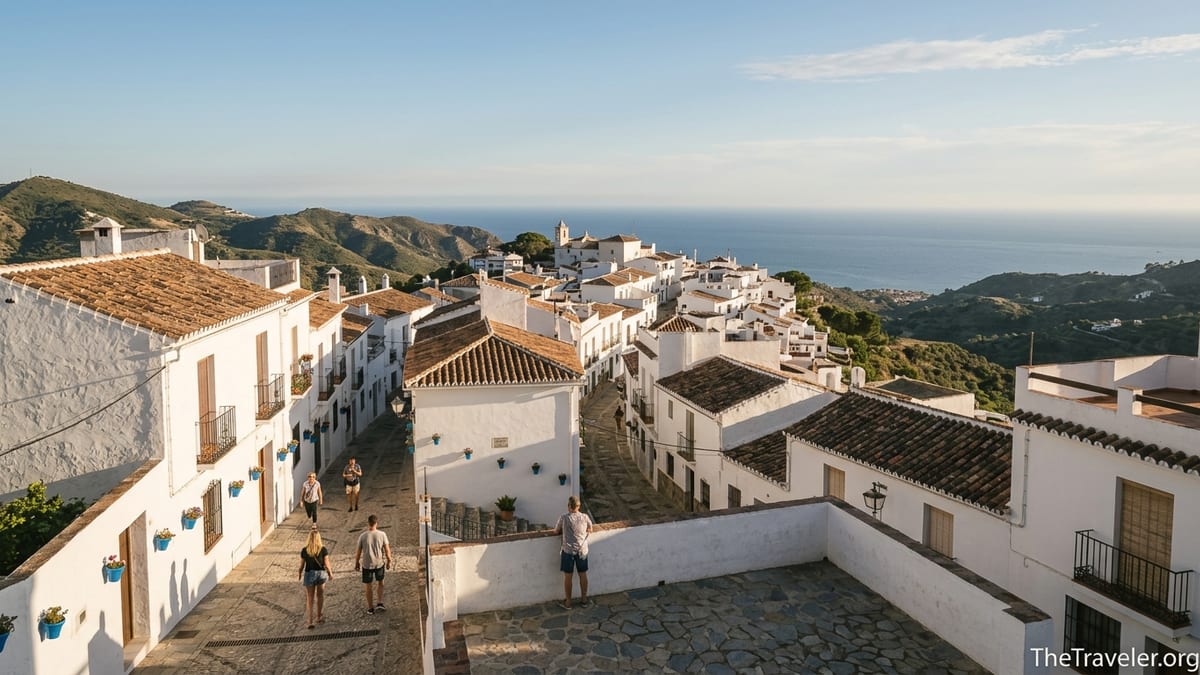
The nearby "pueblos blancos" are whitewashed hill and mountain villages whose simple facades and tiled roofs stand out against deep green valleys and limestone peaks. Places such as Zahara de la Sierra, perched above a turquoise reservoir, Grazalema, tucked into a high rainfall mountain valley, and Setenil de las Bodegas, with houses built into rock overhangs, are often linked together as a driving route. On the Málaga side, Frigiliana and Mijas Pueblo combine white village charm with relatively easy access from the coast and are popular as day trips.
For couples, especially on a honeymoon or anniversary trip, a night or two in Ronda or a smaller white village can provide a powerful contrast to days in busier cities. Waking up to church bells and roosters, having breakfast in a small plaza, and hiking a marked trail through oak woods and past goat farms creates a different kind of Andalusian memory than a rooftop cocktail bar. Boutique guesthouses and small rural hotels in and around these villages often offer rooms with terraces, pools and views for prices that, while not budget level, can compare favorably to coastal resorts.
Families who enjoy nature and do not mind some driving will also find value here. Short, well-marked walks around villages such as Grazalema and Zahara can be managed with school-age children, and many local restaurants are used to welcoming families for hearty lunches featuring regional dishes such as venison stews, grilled meats and local cheeses. Be aware that in the height of summer, afternoon temperatures in the mountains can still be high and shade scarce on some trails, so morning outings followed by long siestas often work best.
Matching Destinations to Trip Styles and Travelers
Choosing between these destinations often comes down to your priorities and who you are traveling with. For a culture-heavy first trip focused on iconic sights, Seville and Granada are hard to beat, with Córdoba added as a day trip or short stay. A couple visiting in spring might spend three or four nights in Seville for the cathedral, Alcázar and tapas, then take a train to Granada for the Alhambra and old quarter, finishing with two or three nights in Málaga or Nerja for the sea.
For families, especially with younger children, a base on the coast can make logistics easier. A week in Nerja or near Málaga allows for relaxed beach days, simple seafood meals, and occasional excursions such as a half-day in Málaga’s historic center or a drive to Frigiliana. Older children and teenagers might enjoy the variety of a split stay, for example combining three nights in Seville with five nights on the coast, using the high-speed train and a rental car for day trips rather than moving hotel every day.
Nightlife-focused groups may prefer Marbella or Málaga city, with their concentration of bars, beach clubs and late-night options. A practical pattern for a long weekend might be to base in Málaga, enjoy tapas and rooftop bars the first two nights, then spend a night in Marbella or along the coastal strip, using taxis or ride-hailing services to move between bars without needing a car. This setup also gives you museums and cultural sights by day, which many groups appreciate after late evenings.
Travelers seeking quieter, more reflective experiences will generally do better away from the most built-up coastal strips. A combination of Cádiz and a white village such as Grazalema or Zahara, or a loop of Ronda plus smaller villages between Seville and Málaga, can provide a slower pace with strong local character. Booking small, family-run accommodations and traveling in shoulder seasons like April, May, late September or October will further reduce crowding and heat while keeping most services open.
Practical Tips: Transport, Budget and Timing
Getting around southern Spain is straightforward if you understand a few basics. High-speed and regional trains link major cities such as Seville, Málaga, Córdoba and Granada efficiently, and advance purchase tickets can often be significantly cheaper than last-minute fares. Intercity buses cover routes not served by fast trains, including many coastal stretches and connections to Almería and Cádiz. Within cities, local buses, trams, and in some cases bicycle and scooter rentals help you move around without a car.
Renting a car becomes most useful when you want to explore the white villages or combine multiple small coastal towns in a short time. Roads are generally in good condition and signposted, and driving times between major points such as Málaga and Ronda or Ronda and Cádiz are manageable for a half-day of travel. However, parking in historic centers is often limited and sometimes restricted, so choosing accommodations that confirm on-site or nearby parking can save time and stress.
Accommodation options range from simple guesthouses and hostels to luxury hotels and rural cottages. In Seville, Granada and Málaga, you will find a dense mix of apartments and small hotels in the historic centers, often within walking distance of main sights. Along the coast, beachfront hotels and apartment complexes are common, while in the white villages and countryside you may encounter converted farmhouses, small inns and boutique hotels. Booking earlier is particularly important for visits during Holy Week, local ferias or major summer dates, when much of the region sells out.
Finally, be realistic about heat and crowds. If you are locked into traveling in late July or August and do not enjoy very hot weather, consider limiting time in inland cities to quick visits and spending more nights on or near the coast. If you have flexibility, months such as late April, May, early June, late September and October usually offer a fair balance of good weather, open facilities and tolerable visitor numbers. In winter, many travelers enjoy quieter city breaks in Seville, Málaga or Granada, with occasional mild days suitable for outdoor cafés and walks, even if swimming is less likely.
FAQ
Q1. If I only have one week in southern Spain, which places should I prioritize?
For a first visit, many travelers focus on Seville and Granada for culture, then add either Málaga or Nerja for time by the sea. This combination keeps travel times reasonable while covering major highlights like the Alcázar, Seville Cathedral, the Alhambra and at least one city or town with a beach.
Q2. Is it worth renting a car to visit Ronda and the white villages?
A car is not essential for major cities but is very useful for Ronda and the white villages, where public transport can be infrequent. Renting a car for two or three days from Málaga, Seville or the Costa del Sol and driving a loop through Ronda, Zahara, Grazalema or Frigiliana gives you more flexibility to stop at viewpoints and small villages along the way.
Q3. Which destination is best for families with young children?
Coastal towns such as Nerja, parts of Málaga and some areas around Marbella work well for families, thanks to accessible beaches, pedestrian-friendly promenades and a wide choice of apartments and family rooms. Inland cities like Seville and Granada are rewarding but can be tiring in extreme heat, so many families visit them as short stays or day trips rather than week-long bases in mid-summer.
Q4. Where should couples go for a romantic trip?
Granada and Ronda are particularly appealing for couples. In Granada, staying in a small hotel in the Albayzín with views of the Alhambra feels very atmospheric, especially at night. In Ronda, cliffside hotels or guesthouses with views into the gorge, combined with walks at sunset and dinners in the old town, make for a memorable romantic stay.
Q5. Which places have the best nightlife in southern Spain?
For nightlife, Marbella and Málaga stand out. Marbella, especially around Puerto Banús and the beach clubs, is known for late-night bars, clubs and a glamorous summer scene. Málaga city offers a more mixed crowd of locals and visitors, with dense clusters of tapas bars, rooftop terraces and music venues that stay busy well into the night, especially on weekends.
Q6. Are the white villages suitable if I do not like hiking?
Yes, you can still enjoy the white villages without serious hiking. Many villages like Frigiliana, Mijas Pueblo, Zahara and Grazalema have short, gentle walks around the historic core and to viewpoints. You can have lunch on a plaza, stroll narrow streets, visit small churches and enjoy the scenery without committing to long mountain routes.
Q7. How should I split my time between cities and beaches?
For a ten-day trip, a common pattern is five or six nights in cities such as Seville, Granada and Córdoba, and four or five nights by the coast in Málaga, Nerja, Marbella, Cádiz or Almería. For a shorter one-week stay, many visitors choose roughly four nights inland and three nights on the coast, adjusting the balance depending on how important swimming and beach time are to them.
Q8. Is Cádiz a good alternative to the Costa del Sol?
Cádiz appeals to travelers who prefer a more traditional city with local character over a resort strip. Its Atlantic beaches, historic center and seafood bars feel less built up than parts of the Costa del Sol. However, it has fewer large resort-style hotels and international chains, so it suits visitors who are comfortable with a more local, less packaged experience.
Q9. When is the best time to visit southern Spain to avoid extreme heat?
Generally, April, May, early June, late September and October offer warm but more manageable temperatures than July and August, especially in inland cities like Seville, Córdoba and Granada. Coastal areas such as Málaga, Cádiz and Nerja are often comfortable through much of summer, but even there midday can be very hot, so planning sightseeing for mornings and evenings helps.
Q10. Can I visit Almería, Granada and the Alpujarra in the same trip?
Yes, but it works best with either a rental car or careful bus planning. Many travelers combine Granada with a day or overnight trip into the Alpujarra mountain villages, then continue east to Almería for a few days of quieter beaches and access to Cabo de Gata. With around ten days you can experience all three without rushing, while a shorter trip might be more comfortable focusing on two of them.