


Southern Spain offers two very different Mediterranean and Atlantic beach worlds separated by only a few hours of driving: the developed, easygoing Costa del Sol around Málaga and Marbella, and the wilder, wind‑kissed Costa de la Luz stretching through Cádiz and Huelva. Both promise sunshine, seafood and whitewashed towns, but they deliver completely different travel experiences. Understanding those differences is the key to deciding which coastline is better for your next beach escape.
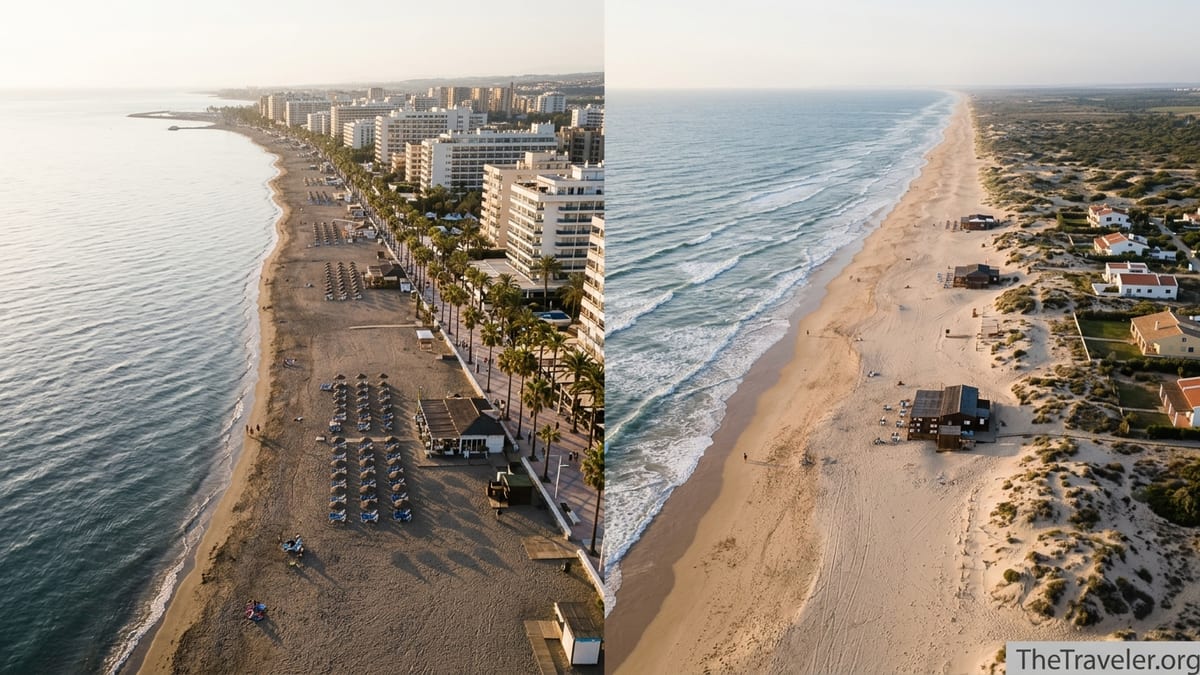
Costa del Sol vs Costa de la Luz at a Glance
If you fly into Málaga, the Costa del Sol begins almost at the airport door. Within 20 minutes on the local train you can be on the sand in Torremolinos or Benalmádena, and in about an hour by bus you reach Marbella’s promenade and Puerto Banús. This coast has decades of tourism behind it, with long urban beaches like La Malagueta in Málaga and Bajondillo in Torremolinos that come lined with cafés, beach clubs, kids’ play areas and rental apartments stacked behind the promenade.
By contrast, the Costa de la Luz feels more remote and untamed. From Málaga or Seville, reaching Tarifa, Zahara de los Atunes, Conil de la Frontera or El Palmar involves at least a couple of hours’ drive on highways and local roads. Once there, however, you swap high‑rise hotels for low‑rise houses, campsites and small hotels set behind dunes. Beaches such as El Palmar or Bolonia are vast, open Atlantic sands with barely any development directly on the waterfront.
In simple terms, Costa del Sol suits travelers who want convenience, facilities and nightlife built into the seafront. Costa de la Luz is better if you picture wild dunes, sunsets over the Atlantic, and a more bohemian, surf‑town energy. Both coasts can work for families, couples or groups, but in very different ways.
Prices also differ in feel. Marbella in high summer frequently records some of Spain’s highest hotel rates, with average daily room prices in July often over 300 euros in upscale properties, while a beach apartment in Conil or El Palmar can still be found for significantly less outside peak August. Eating out in both regions can be good value, but day‑to‑day costs like parking, sunbeds and club entry tend to be higher on the Costa del Sol, especially around Marbella and Puerto Banús.
Beaches and Sea: Calm Mediterranean vs Wild Atlantic
The Costa del Sol’s Mediterranean waters are typically calmer and slightly warmer during peak summer, ideal for children or casual swimmers. Urban beaches like La Malagueta in Málaga or Carihuela in Torremolinos are wide, gently shelving and well serviced with lifeguards, showers and rental sunbeds. Farther east, around Nerja and Maro, the coastline becomes more dramatic, with coves backed by cliffs and notably clearer water that attracts snorkelers and kayakers.
On the Costa de la Luz, the Atlantic dominates the experience. Long beaches such as Zahara de los Atunes, Bolonia, El Palmar and La Barrosa near Chiclana stretch for kilometers with fine, pale sand and rolling waves. Here the sea often has stronger currents and more surf, which appeals to confident swimmers and surfers rather than parents seeking a perfectly calm paddling zone. The reward is a sense of space that is increasingly rare in European beach destinations, especially outside the peak weeks of late July and August.
If you plan to be in the water every day with small children, the Costa del Sol’s sheltered coves around Nerja, or the gently lapping waters of Marbella’s smaller beaches like El Faro and La Venus, may feel more reassuring. Hiring a couple of sunbeds and a parasol on a central Marbella beach will typically cost around 15 to 20 euros for the day, and you will have cafés and shops just behind the promenade.
For travelers who dream of long walks on near‑empty sand and do not mind some wind, the Costa de la Luz is hard to beat. At El Palmar, for example, there are long stretches with only a wooden boardwalk, a few chiringuitos and low dunes. Even in mid‑summer, you can usually find plenty of personal space if you walk a little away from the main access points. The trade‑off is that services may be more scattered and the waves rougher than on the Mediterranean side.
Accommodation, Budgets and Value for Money
Málaga and the western Costa del Sol offer the broadest range of places to stay in southern Spain, from modest guesthouses in Málaga’s old town to large all‑inclusive resorts in Torremolinos and adults‑only hotels in Benalmádena and Estepona. Marbella adds a full spectrum of luxury, from grand beachfront resorts with multiple pools and spas to boutique hotels in the old town and high‑end villas tucked into the hills. Summer room rates at luxury hotels in Marbella can easily reach 400 to 600 euros per night in August, especially in resorts with direct beach access and on‑site beach clubs.
In practical budget terms, if you are prepared to stay one or two streets back from the promenade in Málaga or Torremolinos, you can often find mid‑range hotels in high season from around 150 to 200 euros per night for a double room, sometimes including breakfast. Apartment rentals may bring that cost down for families willing to stay slightly away from the prime seafront zones.
On the Costa de la Luz, accommodation stock is smaller but often more relaxed and good value. Conil de la Frontera mixes simple pension‑style guesthouses in the whitewashed center with modern seafront hotels overlooking La Fontanilla or Los Bateles beach. El Palmar is mostly low‑rise holiday rentals, surf lodges and small guesthouses, sometimes with shared pools and communal barbecues rather than formal hotel facilities. Tarifa offers a combination of historic‑center boutique hotels, countryside fincas converted into rural hotels, and a few modern beachside options along Playa de los Lances.
In peak weeks, a comfortable double room in a small hotel or well‑located guesthouse in Conil or Tarifa might sit around 120 to 200 euros per night, depending on proximity to the beach and time of booking. Self‑catering houses at El Palmar or Zahora can be surprisingly affordable for groups and families outside early August, though you may need to book months ahead for the most desirable weeks. Overall, Costa de la Luz often feels better value for travelers who prioritize space, simple comforts and local character over polished resort facilities.
Nightlife, Dining and Atmosphere
If you are looking for classic Mediterranean nightlife with a wide choice of bars, clubs and late‑opening beach venues, the Costa del Sol remains the heavyweight. Málaga’s historic center has become a year‑round destination for tapas, rooftop cocktails and live music. Neighborhoods close to the port and around Plaza de la Merced fill with locals and visitors well into the night, especially at weekends.
Torremolinos, Benalmádena and Marbella add another layer of seafront nightlife. In Torremolinos, the Los Álamos stretch is known for beach clubs and DJ sets that start with sunset cocktails and can continue into the small hours. In Marbella and Puerto Banús, upmarket beach clubs offer daybeds, bottle service and international DJs, attracting a more glamorous, big‑spend crowd. This scene sits alongside more relaxed chiringuitos where you can eat grilled sardines and drink cold beer with your feet almost in the sand.
The Costa de la Luz has a different rhythm. Tarifa is the liveliest town, with narrow lanes packed with tapas bars, cocktail spots and late‑night hangouts in summer, often filled with a mix of kite surfers, backpackers and Madrileños escaping the city heat. The atmosphere leans more toward bohemian than exclusive, and dress codes rarely matter. Nearby, beach bars on Playa de los Lances and Valdevaqueros shift from chilled afternoon lounges with beanbags to low‑key party spots around sunset.
In Conil, Zahara de los Atunes and El Palmar, nightlife is more about long dinners of tuna, fried fish and grilled cuttlefish followed by a few drinks in simple beach bars or music venues. During July and August, chiringuitos along El Palmar put on live bands or DJs several nights a week, but closing times and intensity are generally softer than on the most commercial parts of the Costa del Sol. If you want one or two lively evenings within a mostly relaxed week, this balance can be ideal.
Families, Couples and Different Types of Travelers
For families, the Costa del Sol’s infrastructure is a clear advantage. Easy airport transfers, frequent local trains and buses, and a dense network of supermarkets, pharmacies and medical centers make logistics straightforward. Beach towns like Benalmádena, Fuengirola and Torremolinos are packed with family‑friendly hotels and apartment complexes that offer pools, kids’ clubs and buffet restaurants. Attractions such as water parks, aquariums and cable cars add rainy‑day or non‑beach options.
On the sand, urban beaches like Bajondillo in Torremolinos or Burriana in Nerja have play areas, shallow water and plenty of lifeguard coverage in summer. A typical family day might involve renting sunbeds, ordering plates of fried fish and paella from the nearest chiringuito, and taking an evening paseo along the promenade for ice cream. For parents traveling with infants or grandparents, the ability to step off the promenade almost directly onto the sand can be worth more than any untouched scenery.
Couples, meanwhile, might lean toward different corners of each coast. On the Costa del Sol, Marbella’s old town and the nearby hills offer stylish boutique hotels with spa facilities, rooftop pools and romantic courtyards. Dining options range from Michelin‑recommended restaurants to atmospheric tapas bars tucked into narrow streets. East of Málaga, Nerja’s cliff‑top setting, small coves and cave excursions create a softer, more small‑town romantic vibe than the big resorts farther west.
On the Costa de la Luz, couples who value space, sunsets and long walks may gravitate to places like Zahara de los Atunes, Vejer de la Frontera paired with nearby El Palmar, or rural hotels in the countryside between Conil and Caños de Meca. Evenings here often revolve around lingering over grilled tuna and local wines before watching the sun drop into the Atlantic from a dune or a wooden beach bar terrace. It is less about table reservations at celebrity restaurants and more about shared time in big coastal landscapes.
Surf, Wind and Outdoor Activities
Surfers and wind sports enthusiasts generally favor the Costa de la Luz. Tarifa is widely regarded as one of Europe’s leading windsurfing and kitesurfing hubs thanks to the strong Levante and Poniente winds that sweep through the Strait of Gibraltar. Playa de los Lances, Valdevaqueros and Punta Paloma are lined with schools and rental centers, and it is perfectly normal to see dozens of kites on the water on a windy afternoon. Surf schools along El Palmar and surrounding beaches run lessons and board rentals, particularly from autumn to spring when Atlantic swells are more consistent.
Even outside specialist sports, the Costa de la Luz encourages an active style of holiday: horse riding along the dunes near Zahora, hiking the coastal paths above Caños de Meca, or cycling country lanes between white villages like Vejer and Medina Sidonia. Water conditions can shift quickly, so flags and lifeguard advice are taken seriously, especially on days when the Levante wind is strong.
The Costa del Sol is not a core surf destination, but it offers calmer‑water activities. In Nerja and Maro, kayak and stand‑up paddleboard tours explore sea caves and small waterfalls that tumble directly into the sea from the cliffs. Around Marbella and Benalmádena, operators offer boat trips to spot dolphins, jet ski rentals and parasailing. The calmer summer sea is perfect for paddleboarding directly from urban beaches at first light, before they fill with swimmers and sunbathers.
For hikers and cyclists, both coasts have easy access to inland mountains. From Málaga or Marbella, day trips into the Montes de Málaga, Sierra de las Nieves or the Caminito del Rey offer shaded trails and dramatic gorges. From the Costa de la Luz, the Alcornocales Natural Park and the inland white villages provide wooded walks, viewpoints and rural restaurants serving game stews and hearty mountain dishes, a pleasant contrast to seafood‑heavy meals on the coast.
Crowds, Seasons and Practical Costs
Both coasts are busiest in late July and August, particularly the first half of August when domestic Spanish tourism peaks. On the Costa del Sol, this often means fully booked beachfront hotels in Torremolinos, Benalmádena and Marbella, crowded promenades well into the night and heavy traffic along the main coastal highway. Sunbeds on the most central beaches can sell out by late morning, and restaurant reservations become advisable for popular spots.
On the Costa de la Luz, the picture is slightly different. Towns like Conil, Zahara and Tarifa also fill up with visitors from Madrid and Seville in high summer, but the sheer width and length of beaches such as El Palmar, La Barrosa and Zahara usually absorb crowds more easily. Even so, parking close to the sand can be challenging in peak weeks, and lines form outside favorite tapas bars in Tarifa and Conil’s historic centers after dark.
Shoulder seasons are arguably when the differences stand out most. In May, June, September and early October, the Costa del Sol keeps much of its infrastructure open, with regular flights into Málaga and a steady flow of visitors. You might find double rooms in mid‑range hotels in Málaga, Torremolinos or Benalmádena dropping to around 100 to 140 euros per night, with fewer crowds on the beaches during weekdays.
On the Costa de la Luz, April to June and September to early November can be magical for walkers, surfers and those chasing sunsets, but some seasonal beach bars and smaller accommodations scale back hours or close entirely outside the summer core. Costs remain generally lower day to day than in Marbella: parking is often free or inexpensive away from the most central summer car parks, and a seafood lunch with drinks at a simple chiringuito in Conil or El Palmar can be noticeably cheaper than a comparable meal on Marbella’s Golden Mile.
Which Coastline Suits You Best?
Choosing between these two coasts is less about which is objectively better and more about matching the coastline to your priorities. If you want a quick, low‑effort beach break with reliable facilities, public transport, a wide choice of hotels and plenty of nightlife options, the Costa del Sol is usually the easier fit. Landing at Málaga and being able to reach your hotel in Torremolinos or Benalmádena in less than an hour without hiring a car is a strong practical advantage for many travelers.
For first‑time visitors to southern Spain who want to combine city culture with the beach, staying in Málaga itself or nearby can be especially attractive. You can spend mornings at the Picasso Museum or the Alcazaba, then wander down to La Malagueta or Pedregalejo for an afternoon on the sand and an evening of seafood skewers grilled over open fires. Day trips to Granada, Córdoba or the Caminito del Rey are straightforward from this base.
If your main image of a perfect holiday involves wide empty sands, big sunsets, surfing or kitesurfing and a more relaxed, low‑rise aesthetic, the Costa de la Luz is the stronger candidate. Here, small surf schools, yoga retreats and family‑run guesthouses replace large hotel complexes. Evenings revolve more around simple pleasures like watching the light change over the water at El Palmar or Bolonia than around late‑night clubs and shopping malls.
Travelers who enjoy both styles sometimes split their time: a few nights in Málaga or Marbella for culture and nightlife on the Costa del Sol, followed by several quieter days in Conil, Zahara or Tarifa to decompress on the Atlantic. With driving times of roughly three to four hours between Málaga and the main Costa de la Luz towns, this combination works well on a one‑ or two‑week itinerary.
FAQ
Q1. Is the Costa del Sol or Costa de la Luz better for a first trip to southern Spain?
The Costa del Sol is usually better for a first trip thanks to Málaga’s major airport, easy public transport, wide hotel choice and the ability to mix beaches with city sightseeing in one place.
Q2. Which coast has nicer beaches overall?
The Costa de la Luz generally has wilder, wider and more natural beaches, while the Costa del Sol offers more urban, serviced beaches with calmer water and closer facilities.
Q3. Where will I find better nightlife, Málaga and Marbella or Cádiz and Huelva coasts?
Málaga, Torremolinos, Benalmádena and Marbella usually offer more intense and varied nightlife, while Tarifa and Conil provide smaller scale, more bohemian evenings on the Costa de la Luz.
Q4. Which coast is cheaper for hotels and day‑to‑day costs?
Outside of peak August, the Costa de la Luz often feels cheaper for accommodation and meals, while areas like Marbella on the Costa del Sol are among Spain’s more expensive seaside destinations.
Q5. Is the Costa de la Luz too windy for a beach holiday?
It can be windy, especially around Tarifa when the Levante blows, but many days are pleasantly breezy. Families often choose more sheltered spots or visit in calmer months like June or September.
Q6. Which area is better if I will not rent a car?
The Costa del Sol is better without a car because you can reach many resorts by train or bus from Málaga airport, and local public transport along the coast is frequent in high season.
Q7. Where should surfers and kitesurfers go, Costa del Sol or Costa de la Luz?
Surfers and kitesurfers generally prefer the Costa de la Luz, particularly Tarifa and El Palmar, which offer stronger Atlantic swells and reliable winds along with numerous schools and rental shops.
Q8. Which coast suits families with small children best?
The Costa del Sol usually suits families with small children better due to its calmer Mediterranean waters, shorter transfers, and abundance of family‑oriented hotels, playgrounds and attractions.
Q9. Is it realistic to visit both coasts on one holiday?
Yes, many travelers combine them by spending a few nights around Málaga or Marbella and then driving three to four hours to stay in Conil, Zahara or Tarifa on the Costa de la Luz.
Q10. When is the best time of year to visit each coast?
Late May, June, September and early October are ideal for both coasts, with warm weather and fewer crowds. July and August are hottest and busiest, especially on central Costa del Sol beaches.