


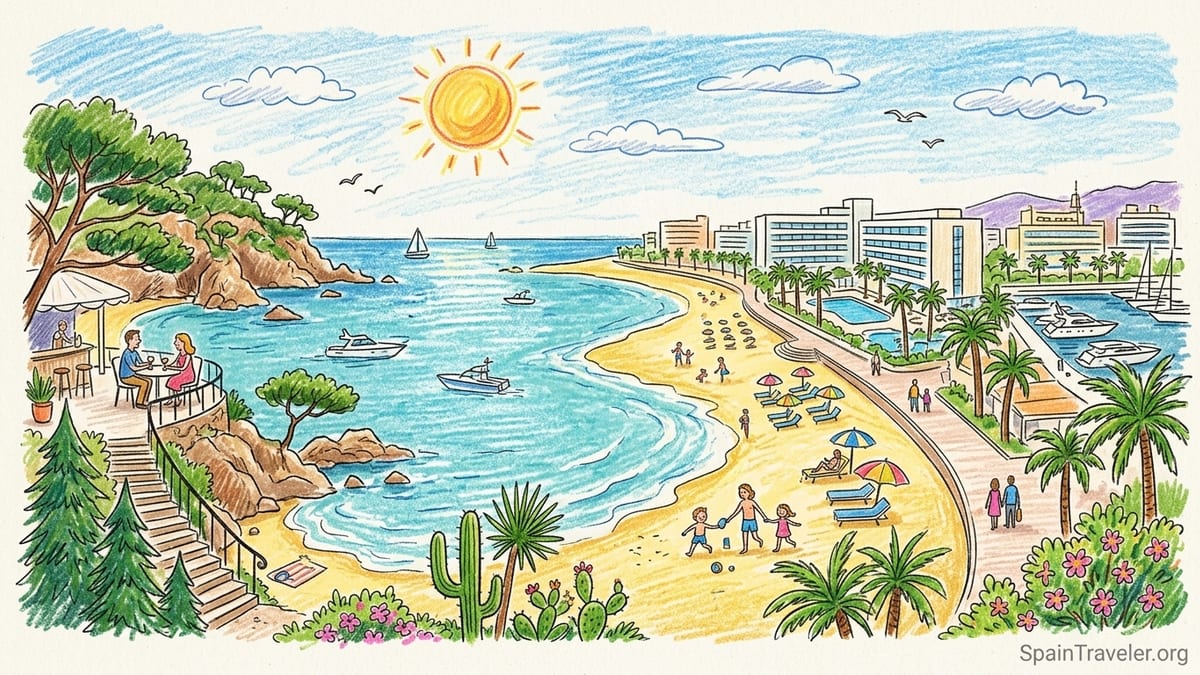
The Spanish Mediterranean coast is one of Europe’s most diverse beach playgrounds. From the pine-framed coves of the Costa Brava to the long, golden strands of the Costa Daurada, the white-sand bays of the Costa Blanca and the glamorous promenades of the Costa del Sol, each stretch of shoreline has carved out its own identity. Rather than chase an all-purpose “best” hotel, the smartest travelers choose a resort that fits how they like to travel: luxury, family time, nightlife, or simple, easy beach days.
How to Choose the Right Spanish Mediterranean Beach Resort
Spain’s Mediterranean resorts share some constants: warm summers, lively promenades, and a deep beach culture that runs from morning churros to late-night tapas. Yet the experience can feel entirely different from one costa to the next. The Costa Brava, running north from Barcelona to the French border, is defined by rocky headlands and smaller coves backed by pine forest and pretty towns like Tossa de Mar and Calella de Palafrugell. The Costa Daurada, south of Barcelona, opens into wider, sandy bays and purpose-built resort communities such as Salou and La Pineda that cater strongly to families.
Farther south, the Costa Blanca, around Alicante and Benidorm, offers a mix of traditional Spanish towns like Altea and upmarket enclaves near Jávea with large modern resorts and long, shallow beaches. The Costa del Sol, centered on Málaga, Marbella and Estepona, adds a layer of jet-set polish with beach clubs, marinas, golf courses and some of Spain’s most established luxury beach hotels. Deciding where to stay starts with how you travel: couples may gravitate to intimate coves and fine-dining hotels on the Costa Brava, while parents with young children may value the big pools and kids’ clubs of the Costa Daurada or Costa del Sol.
Before you book, think in practical terms: do you want to step straight onto the sand from the hotel garden, or are you happy with a five-minute stroll? Are you traveling in July or August, when places like Lloret de Mar or Benidorm can feel full-on, or shoulder season, when prices ease and the beaches thin out? And what is non-negotiable for you: a full-service spa, kids’ club, adults-only policy, or a walkable old town just behind the promenade? With those questions in mind, the following guide highlights real resorts that perform especially well for luxury, direct beach access, couples, families, nightlife and quieter stays along the Costa Brava, Costa Daurada, Costa Blanca and Costa del Sol.
Best for Luxury: Iconic Resorts and New Five-Star Hideaways
For classic Mediterranean glamour, the Costa del Sol still sets the tone. On the “Golden Mile” between Marbella and Puerto Banús, Marbella Club Hotel blends beachfront lawns with mature subtropical gardens, a refined spa and polished service that appeals to couples and well-heeled families. Nightly rates in peak summer typically start in the high hundreds of euros and can rise well above four figures for suites or private villas, but in return guests get thoughtful touches like kids’ activities that do not intrude on the hotel’s overall serenity, and easy access to Marbella’s old town and upscale dining.
Further west near Estepona, Kempinski Hotel Bahía is a good example of modern Costa del Sol luxury without the feel of a mega-complex. It offers several lagoon-style pools, manicured lawns leading straight to the sand and sea-view rooms that routinely sell from mid to high triple digits per night in summer. Many guests treat it as a self-contained resort, moving between the spa, beachfront breakfast terraces and sunbeds, then heading into Estepona or Marbella by taxi for an occasional evening out. Travelers who prefer a similarly upscale feel but want a more intimate setting might look at smaller five-star properties dotted between Málaga and Nerja, where the coastline becomes a little more rugged.
On the Costa Brava, luxury is more about atmosphere and setting than sheer scale. One of the region’s standout historic hotels sits above a rocky cove near S’Agaró, combining sea-view pools, classic architecture and fine dining. This part of the coast attracts travelers who will happily trade an all-inclusive wristband for tailored experiences such as boat charters to hidden coves or wine tastings in the Empordà region inland. Newer arrivals on the Costa Brava include design-led resorts and suite-only properties with spas and rooftop pools, often pricing below Costa del Sol icons but still firmly in the upscale bracket, especially in high season.
The Costa Blanca also has its share of luxury. Around Jávea and Denia you will find contemporary resorts with infinity pools facing the Mediterranean, often paired with wellness programs and high-end gastronomy. These hotels tend to draw Northern European and Spanish guests who come for a week of sun and spa, and you can expect prices similar to or slightly below equivalent properties on the western Costa del Sol. If budget is flexible and you value service, look for resorts that cap guest numbers relative to pool and sunbed space, which helps preserve a relaxed feel even in August.
Best for Direct Beach Access: Step From Pool to Sand
Travelers who want to wake up, slide into flip-flops and be on the sand in under a minute should plan carefully, because not every “beach hotel” in Spain is truly beachfront. On the Costa del Sol, many of the better-known resorts between Torremolinos and Estepona run directly along the seafront promenade. Properties here often have gates from the garden or pool area onto the paved paseo and the beach just beyond, so moving from a sunbed to a chiringuito for lunch is easy. When browsing options, check whether sun loungers on the sand are operated by the hotel itself or by independent beach clubs that charge a daily fee.
On the Costa Blanca, Benidorm’s skyscraper skyline hides several hotels that sit almost directly on Levante and Poniente beaches, but these stretches can feel crowded in summer and suit travelers who enjoy a high-energy scene. For a softer, more family-friendly version of direct access, look toward resort areas like La Zenia or the bays south of Alicante, where modern four-star hotels back onto wide, gently shelving beaches. Parents with strollers, or anyone with limited mobility, tend to appreciate the flat terrain and minimal steps in these purpose-built areas.
The Costa Daurada is particularly strong for straightforward, step-to-the-sand resorts. In Salou, La Pineda and Cambrils, many midrange and upper-midrange hotels have pools that almost blend into the promenade, and some complexes integrate beach clubs or snack bars right by the sand. For example, several well-known family resorts in La Pineda sit only a short stroll from long, shallow beaches where children can paddle safely. Staying here also keeps you within a short transfer of PortAventura World and Ferrari Land, which explains why many hotels build packages around park tickets.
The Costa Brava offers a different kind of beach access. Because much of the shoreline is rocky and indented, properties that truly open straight onto a sandy beach are rarer and often command a premium. One family-friendly eco-resort near L’Escala, for instance, sits directly behind a wide sandy bay, with guests walking from pine-shaded gardens to the water in a few steps. Elsewhere, expect short downhill walks to smaller coves or hotels perched slightly above the shoreline, trading immediate access for those classic Costa Brava views over cliffs and coves.
Best for Couples: Romantic Escapes and Adults-Oriented Resorts
Couples looking for romance often find their sweet spot on the Costa Brava, where pine-fringed coves, whitewashed fishing villages and cliffside walking paths create a quieter, more intimate atmosphere than the big southern resorts. Small, design-forward hotels in places like Calella de Palafrugell, Begur or near Cadaqués often feature sea-view rooms, rooftop terraces and tasting-menu restaurants that focus on local seafood and Empordà wines. Many of these properties are not adults-only in a strict sense, but they tend to attract a grown-up crowd outside of school holidays, and prices reflect that, especially June to September.
On the Costa del Sol, couples gravitate toward adults-oriented areas between Marbella and Estepona, or to smaller boutique hotels in and around Nerja. Some resorts operate adults-only sections or separate pool zones with later bar service and quieter atmospheres. If you are celebrating a honeymoon or anniversary, consider paying for a junior suite or club-level room; perks might include dedicated check-in, evening canapés, and late checkout, which can make a short break feel more indulgent. In high season, plan for nightly rates that often start from the mid-hundreds of euros at well-reviewed four and five-star properties.
The Costa Blanca has become popular with couples who want beach time mixed with good dining and easy day trips. Towns like Altea, with its old town on the hill and pebble beaches below, support several small hotels that lean into adult tastes with spa facilities, sea-view jacuzzis and sunset cocktail terraces. Meanwhile, in and around Jávea, you will find low-rise resorts combining apartment-style suites with hotel services, ideal for couples who want more space and the option to cook occasionally. Shoulder seasons in May, June, September and early October are particularly attractive for couples seeking warm sea temperatures without school-holiday crowds.
For a more low-key couples’ escape, consider the Costa Daurada outside peak summer. Resorts around Altafulla, Cambrils and the quieter ends of Salou offer long evening promenades, seafood restaurants looking straight onto the beach and a calmer feel than the main nightlife strips. If you prefer small-scale charm over large resort complexes, focus on seafront boutique hotels in these towns rather than the cluster of big properties near PortAventura, which are more family-oriented.
Best for Families: Pools, Kids’ Clubs and Easy Logistics
Families often prioritize three things: shallow, lifeguarded beaches; large pools; and activities that keep children happy without parents having to plan every hour. In this respect, the Costa Daurada is one of Spain’s strongest all-round family options. Towns like Salou, La Pineda and Cambrils are packed with four-star resorts featuring multi-pool complexes, splash areas, mini-clubs, playgrounds and evening entertainment. Many hotels advertise package deals that combine stays with entrance to PortAventura World and its water park, which can be cost-effective for a week-long holiday. For example, a family of four in mid-summer might expect to pay a mid-range nightly rate that includes half-board plus theme-park tickets, compared with booking each element separately.
On the Costa del Sol, family-friendly resorts tend to cluster around Torremolinos, Benalmádena and Fuengirola, as well as in the larger complexes near Marbella and Estepona. Here you will often find kids’ pools, waterslides, multi-sport courts and activity teams running everything from mini discos to beach volleyball. Some properties operate “all-inclusive” or “full board” plans that appeal to families who want predictable spending; this can be particularly useful when traveling with teenagers who snack all day. Check carefully which extras are included, such as branded ice creams, certain soft drinks or water-park access, since these details vary by hotel.
The Costa Blanca’s resort towns of Benidorm and Alicante’s nearby bays continue to attract families from across Europe. High-rise hotels here sometimes offer excellent value, especially outside August, and many have adapted to family expectations with kids’ clubs, entertainment programs and simple, buffet-style dining. Parents who prefer something a touch calmer can look at smaller resort areas like Albir or the beaches north of Alicante, where midscale hotels sit right on sandy bays yet feel less hectic than Benidorm’s main strip.
The Costa Brava is often seen as more grown-up, but it also hosts solid family resorts in places like Platja d’Aro, Roses and L’Estartit. There you will find apartment-style resorts and hotels with kids’ clubs, water slides and easy access to deep beaches or sheltered bays. One advantage of the Costa Brava for families is the range of excursions beyond the beach: Greco-Roman ruins at Empúries, Dali-themed sights in Figueres and Cadaqués, and inland adventure parks. These help break up a week-long stay, particularly if younger children tire of sand and sea after a few days.
Best for Nightlife: Lively Promenades and Late-Night Energy
Spain’s Mediterranean costas are famous for staying up late, and certain resorts have built their reputations around nightlife. On the Costa Brava, Lloret de Mar and Platja d’Aro stand out, with dense clusters of bars, clubs and late-opening beach bars that draw a younger crowd. Hotels here range from budget-friendly two and three-star properties to full-service four-star resorts. If you plan to stay in these towns primarily for nightlife, look for accommodation either close to the center, to minimize nighttime taxi costs, or deliberately one or two streets back from the main strip if you prefer to sleep before sunrise.
The Costa del Sol offers a more upscale style of nightlife, particularly around Marbella and Puerto Banús. Here, beach clubs, cocktail bars and late-night restaurants line the seafront and marina. Resorts within walking distance of Puerto Banús or Marbella’s old town allow guests to head out for dinner at 10pm, linger over drinks and still be back in their room without navigating long taxi queues. Expect cover charges or minimum spends at some beach clubs in high season, particularly on weekends, which can add noticeably to your overall budget.
On the Costa Blanca, Benidorm remains one of Europe’s classic party towns. Its mix of live-music bars, cabaret venues and nightclubs keeps visitors out until dawn, and many hotels tailor their entertainment programs accordingly. Properties along Levante Beach in particular see a strong nightlife crowd, and guests often select half-board packages that allow them to eat early at the hotel before heading into town. If you prefer to sleep away from the noisiest streets, consider staying near Poniente Beach or in nearby Albir, then taking a short taxi ride into the center at night.
The Costa Daurada’s nightlife is concentrated in Salou, especially along its main avenues where Irish bars, karaoke spots and dance clubs cluster together. Many family-oriented resorts sit only a few blocks from this nightlife, so if you are traveling with children and prefer quieter evenings, pay attention to hotel reviews that mention noise. Conversely, groups of friends who want daytime beach time and affordable, sociable nights out will find Salou a convenient base, with many hotels offering simple, all-inclusive packages that include local drinks.
Best for Quieter Stays: Slow Travel and Sleepy Seafronts
Not every traveler wants pool games and karaoke. The Mediterranean coast still harbors quieter corners where the loudest sound is the clink of cutlery in a seafront restaurant. On the Costa Brava, locations like Calella de Palafrugell, Tamariu and the coves around Begur offer a calmer feel than bustling resort towns. Accommodation tends toward small hotels and apartment-style properties, some with rooftop or cliffside pools rather than sprawling complexes. Prices reflect the demand for tranquility, especially in July and August, so consider May, June or September if you want lower rates and space on the sand.
The Costa del Sol also has its gentler side. East of Málaga toward towns like Rincón de la Victoria and Torre del Mar, seafronts feel more Spanish and less dominated by international tourism. Hotels are generally midrange and smaller in scale, but they deliver what many quieter travelers value most: morning swims, unhurried seafood lunches and evening strolls along largely local promenades. Westward, Estepona’s old town area and some low-rise developments outside the main urban strip provide a softer alternative to Marbella’s buzz, with plenty of beach but fewer late-night clubs.
On the Costa Blanca, look beyond Benidorm’s towers to towns like Villajoyosa, with its colorful seafront houses, or to the bays around Moraira. Here, low-rise hotels and villa-style resorts hide among pines and citrus groves, and beach life is about small coves, clear water and relaxed chiringuitos. Travelers who rent a car will find it easy to string together beach days with inland drives to hilltop villages, returning to the coast in the evening. Many of these quieter properties operate on a bed-and-breakfast basis, encouraging guests to explore local restaurants rather than rely on buffets.
The Costa Daurada’s quieter pockets include towns like Altafulla and some stretches of coast between Tarragona and Cambrils, where development is more restrained. Resorts here often cater to Spanish and French families looking for a calm beach break, with simple kids’ facilities but less of the organized entertainment found in Salou. This can be a good compromise for travelers who want family-friendly infrastructure without the intensity of a purpose-built resort town.
The Takeaway
Choosing a beach resort on Spain’s Mediterranean coast is less about finding a single “best” hotel and more about matching the right costa and property to your travel style. The Costa Brava shines for romantic coves, design-led boutique hotels and dramatic scenery. The Costa Daurada stacks family-friendly resorts beside wide, sandy beaches and major theme parks. The Costa Blanca blends value-focused high-rises with charming smaller towns and a growing number of upmarket spa resorts. The Costa del Sol layers in classic glamour, beach clubs and some of Spain’s most established luxury hotels.
Before you book, define your priorities clearly: beach at your doorstep or a room with a sweeping sea view, big pools and kids’ slides or a candlelit rooftop bar, all-inclusive predictability or the freedom to explore tapas bars each night. Then focus your search on the costas and specific resort areas that consistently deliver those experiences. With a bit of planning, you can land in a Spanish beach resort that feels not only beautiful on Instagram but also perfectly tailored to how you like to travel in real life.
FAQ
Q1. Which Spanish costa is best for a first-time beach trip?
For a first visit, many travelers choose the Costa del Sol or Costa Blanca because they offer large resort inventories, easy airport access via Málaga or Alicante, and a wide range of budgets and hotel styles. If you prefer smaller coves and a slightly more local feel, the Costa Brava is also an excellent first-time choice.
Q2. When is the best time of year to visit these beach resorts?
Late May, June, September and early October are often ideal: sea temperatures are pleasant, most services are fully open, and prices are typically lower than in late July and August. High summer brings the hottest weather and liveliest atmosphere but also higher rates and busier beaches.
Q3. Are Spanish Mediterranean beach resorts suitable for young children?
Yes. The Costa Daurada, Costa del Sol and parts of the Costa Blanca are particularly well set up for families with young children, with shallow, lifeguarded beaches, kids’ clubs, splash pools and buffet dining. Check individual hotel descriptions to confirm facilities like cots, highchairs and babysitting services.
Q4. Do I need to rent a car for a resort holiday on the Spanish coast?
Not necessarily. If you plan to stay mostly in your resort and along the promenade, airport transfers and local taxis or buses are usually enough. Renting a car is most useful on the Costa Brava and quieter stretches of the Costa Blanca, where it opens up coves, villages and inland sights that are harder to reach by public transport.
Q5. How expensive are luxury beach resorts in Spain compared with other parts of Europe?
Top-end resorts on the Costa del Sol and prime spots on the Costa Brava can reach prices comparable to high-end properties in France or Italy in peak season, especially for suites and villas. However, Spain generally offers a broad midrange where four-star beachfront hotels can be more affordable than equivalent properties on the French Riviera.
Q6. Are there good adults-only options for couples?
Yes. Many larger resorts on the Costa del Sol and Costa Blanca either operate as adults-only or maintain adults-only wings and pool areas. On the Costa Brava, fully adults-only hotels are less common, but several boutique properties primarily attract couples and maintain a quiet, grown-up atmosphere outside school holidays.
Q7. Which costas are best if I want nightlife close to my hotel?
If nightlife is a priority, look at Lloret de Mar and Platja d’Aro on the Costa Brava, Salou on the Costa Daurada, Benidorm on the Costa Blanca and Marbella or Puerto Banús on the Costa del Sol. In these areas you can usually walk from seafront hotels to bars and clubs within minutes.
Q8. Can I find quiet resorts even in peak summer?
It is possible, but you will need to be selective. Focus on smaller towns and low-rise developments away from the main nightlife strips, such as Calella de Palafrugell or Tamariu on the Costa Brava, parts of Altafulla or Cambrils on the Costa Daurada, and quieter corners of the Costa Blanca and Costa del Sol. Booking early helps secure rooms in these sought-after spots.
Q9. Are all-inclusive resorts common on the Spanish Mediterranean coast?
All-inclusive options exist, especially on the Costa Daurada, Costa del Sol and in some Costa Blanca resorts, but they are not as dominant as in some long-haul beach destinations. Many Spanish hotels still operate on bed-and-breakfast, half-board or full-board plans, which allow guests to sample local restaurants as well as hotel buffets.
Q10. How far in advance should I book a popular beach resort?
For peak July and August dates, it is wise to book several months in advance, particularly if you want family rooms, interconnecting rooms or specific room types with sea views. For shoulder seasons, you can often wait a little longer, but booking early still gives you the best choice of properties and often better rates.